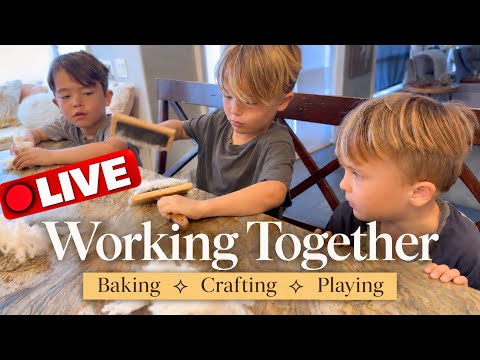
LIVE Circle Time | Fall Kindergarten | Day 11
Welcome to the LIVE audio version of our homeschool vlogs. In these videos, you'll hear the delightful voices of the children, my verbal instructions to the children (often too much instruction) and the quiet and slow between the projects, and the laughter and joy of the play.
Day 11, Thursday, 24, 2026, of homeschooling my four-year-old triplet nephews for our Waldorf-inspired kindergarten began in the kitchen because I had a project I knew would immediately catch their attention. I had been plant dyeing some wet-felted wool balls with madder root, and the children were completely inspired by them. Since we have already made wet-felted wool balls together, it felt very natural to add another one to our upcoming projects so they can experience dyeing their own.
From there, we headed into the kindergarten room where we are beginning to establish a really lovely rhythm for the start of our day. We begin with our weather gnomes so the children can observe what the weather is like, and we also use our calendar gnomes to find the day of the week and the season. I love having these simple little rituals at the beginning of class because they create such a gentle transition into the rest of our morning.
For today, I had prepared a basket filled with fall-inspired materials. There were some wool felt leaves that I had planned to use for an embroidery project, but the children were much more interested in some of the other things tucked inside the basket, so we simply followed their curiosity.
They were completely charmed by the little wet-felted pumpkin and immediately wanted to make one of their own. I have not made that project in more than 10 years, since my own children were little, so I am absolutely delighted to bring it back for my nephews. Their sense of wonder, excitement, and curiosity over these simple handmade things brings me so much joy.
Inside the felted pumpkin were walnuts in their shells, which led us into our next activity. We used a wooden walnut cracker and each child took a turn trying to open one. These walnuts had actually been stored for many years, so I warned the children that they probably would not taste very good anymore. They did taste just a little, but because walnuts have such a high fat content, they had gone rancid. Thankfully, there were no little critters living inside.
Even though we could not eat them, the shells are still useful. I would love to turn some of them into tiny walnut-shell sailboats that actually float, and I also want to experiment with the shells for another natural dye project later in the season. I love when one activity naturally leads into another and even something that can no longer be eaten still has a purpose in our work.
The nutcracker was a little challenging at first, but eventually the children were able to crack their walnuts and see what was inside. They have eaten walnuts before, of course, but they had never really experienced them still inside their shells. It turned something very ordinary into such an interesting little experience.
After that, we went back into the kitchen for our cooking project. I had found a red kuri squash at the grocery store along with one of my favorite varieties, honeynut squash. We cut both open and the children scooped out all of the seeds.
My 11-year-old nephew took responsibility for processing the seeds. He washed them, dried them, and labeled everything so that we can try planting them later in the season. He also peeled a pomegranate for us, and we saved all of the skins because I want to use those for another plant dye experiment as well.
Once the squash and chicken were cooked, we sat down together to enjoy our fall meal. I was especially excited for the children to try the different varieties of squash and experience another seasonal meal made from the foods we had just worked with.
The children love this kind of play, especially when my 15-year-old daughter joins them. She enjoys creating little scenarios with them and becoming part of their world, and they absolutely love having her involved. It is fun for her, but I think it is even more exciting for the children.
This is also the part of our kindergarten day that I continually feel we do not leave enough time for. Once they become deeply engaged in their imaginative play, they need time to build on their ideas, work together, create their own little worlds, and simply stay immersed in the experience.
Eventually, it was time to collect their belongings, put on their shoes, and say goodbye after another beautiful fall kindergarten day filled with seasonal work, curiosity, food, handwork, and play.