
Arithmetic

Waldorf Math in the Elementary Years
Math can be a daunting subject area to tackle. We may have experienced our own math trauma in school which led up to grow up believing we weren't good at math resulting in a fear or dislike of the subject. Some of us did well in math. We learned the exactness of math and the clear answers it expects and rested in the solid belief that there is an answer in math and we will persevere to find it.
I remember talking with friends in school as a young student, and finding that students fell into one of two categories: Those who loved Math and Science and those who loved English and History. I reflect with sadness. I wish I didn't grow up believing I didn't like Language Arts and History because I wasn't good at them...what a tragedy to miss out on so many wonderful educational opportunities because I had already made up my mind that I wasn't good at those subjects. Same with those of us who felt that way about math and science.
"What makes 12?" The teacher asks the students. Not just one answer makes 12, as one student offers, "3 x 4", and another student offers " 2 x 6" and yet another student says "24 divided by 2", and soon the whole class erupts in answers. You could answer this question every second of the day for an entire school day and still have more answers. In fact, you'd never run out of answers because there are an infinite number of solutions to make 12.
Math is dynamic and exact, beautiful and chaotic and always mind blowing.
Do you still dislike math? Are you still worried you can't teach math to your children?
It's my opinion that the best mathematicians in the world are probably not the best at teaching Math. They are wonderful, brilliant mathematicians, but they are not brilliant teachers. They may be impatient, befuddled if you are not understanding something that seems basic for them yet challenging for you, and may not be skilled at breaking down complex math concepts for the average person. They may think much of Math is obvious. And it is for them! Their brain has been trained or was built in a way to understand complex math differently than others. I truly believe that those of us who struggled the most with math make the best teachers, and here's why. I believe that if you struggled with math, disliked it and feared it for any number of reasons, you end up being a patient and empathetic and a resourceful teacher because you remember how lost, helpless and small you felt as student in math class. It was probably too fast for you. Maybe too complex. And once you stumble in math, it's extremely hard to pick yourself up in time to catch up with your class.
Let's create a new experience for math. One that will cultivate a love for math in your children and heal your math trauma. Let's start with some beautiful math materials to spark the curiosity and inspire a love of learning.
-
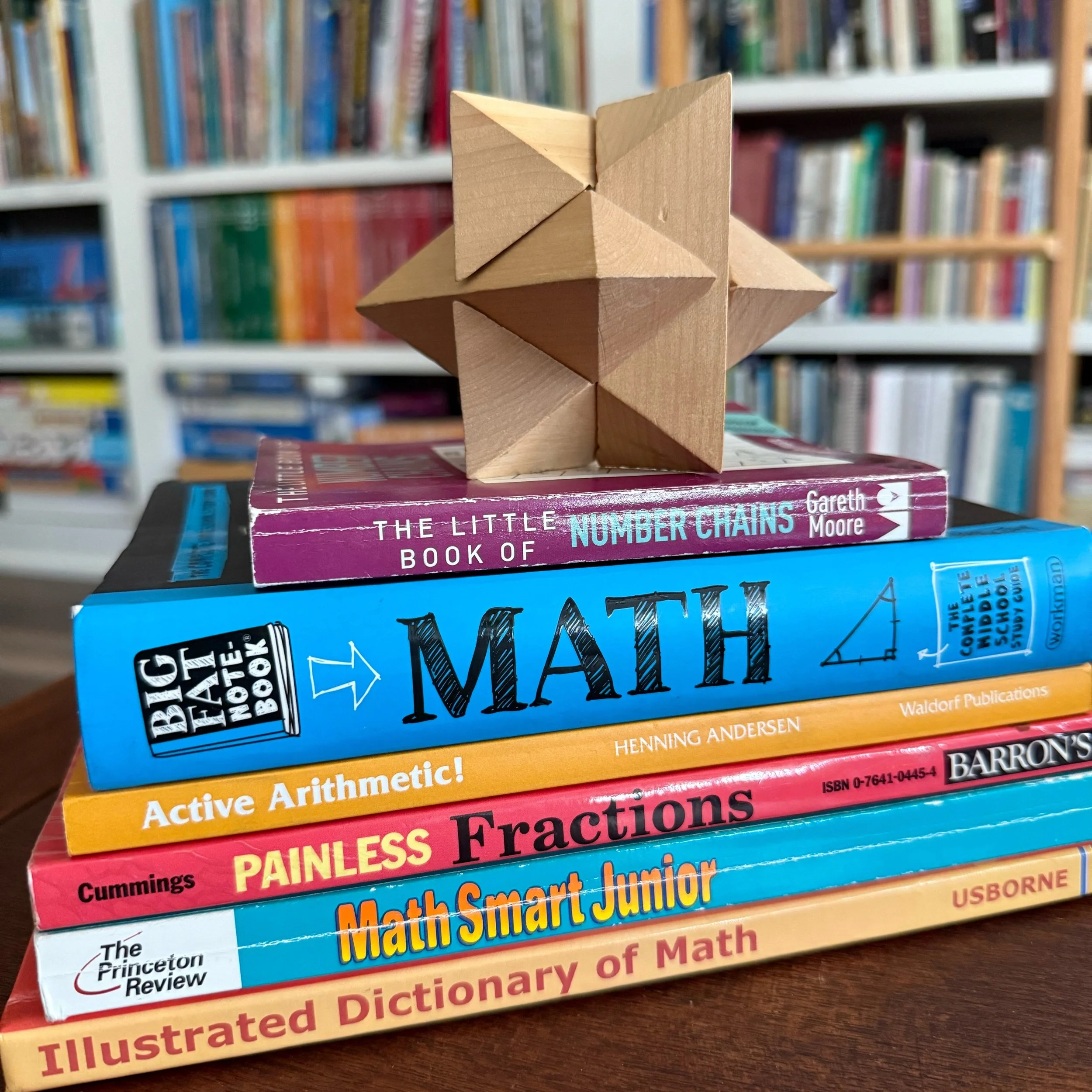
Math Resources
Math resources for elementary math range from curriculum to living books. Often with our Waldorf inspired math main lesson block or math unit study, we would support the learning with books, games and other activities. I share the resources we use for these unit as we master basic arithmetic including fractions.
-
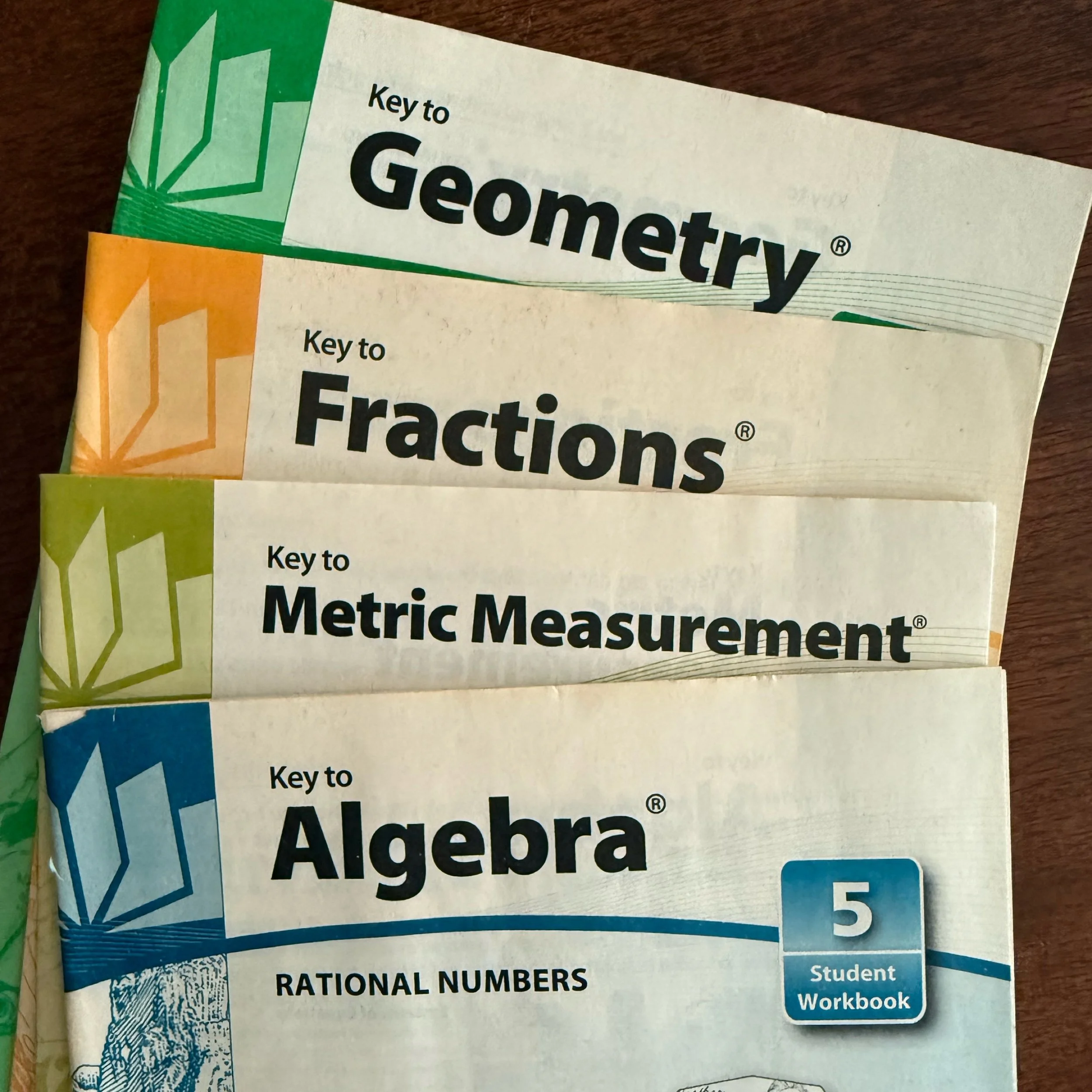
Math Workbooks
While we avoid worksheet based lessons in general, I fully support worksheets when achieving math proficiency and mastery. In fact, we use worksheets in math as part of our daily work as well as starting in grade 4 with the Key to Fractions and Key to Measurement workbooks. Usually I prefer to use workbooks after a lesson is taught and understood well, then a worksheet is used to practice the new learning. On occasion, the Key to Curriculum has been used to introduce a new math topic.
-
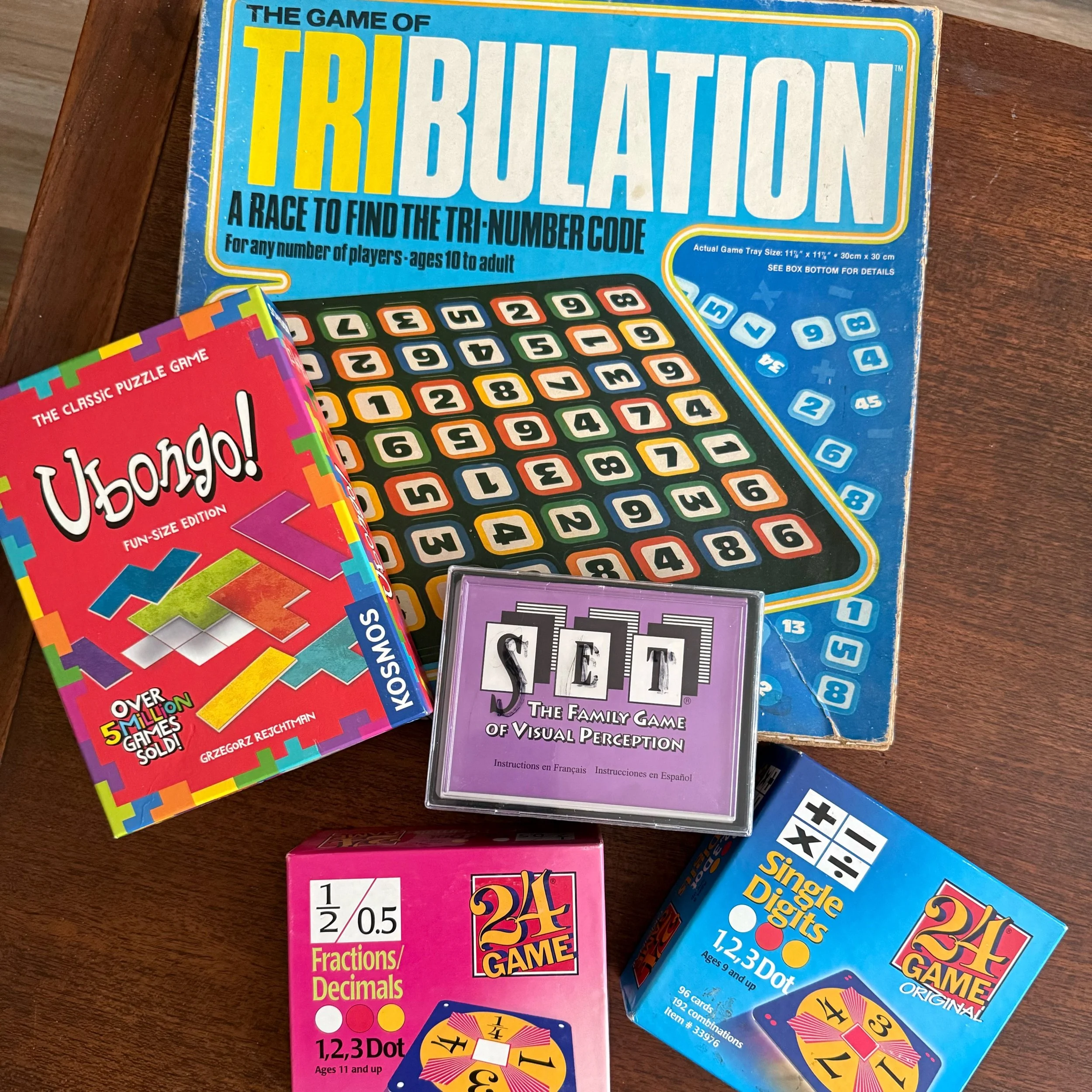
Math Games
We have mastered more math concepts with games than in any other way. This is no an exaggeration! Truly games are the hidden treasure to math mastery. Even games like Monopoly are fabulous for teaching math covertly. Often the math is necessary for the game, not the point of the game, and this is some of the best opportunities to learn math practically and enjoyably. However, there are a lot of math games whose purpose is math and those are the ones I’m sharing the most,
Elementary Math Resources
-

Waldorf and Montessori Math & Arabic Haul
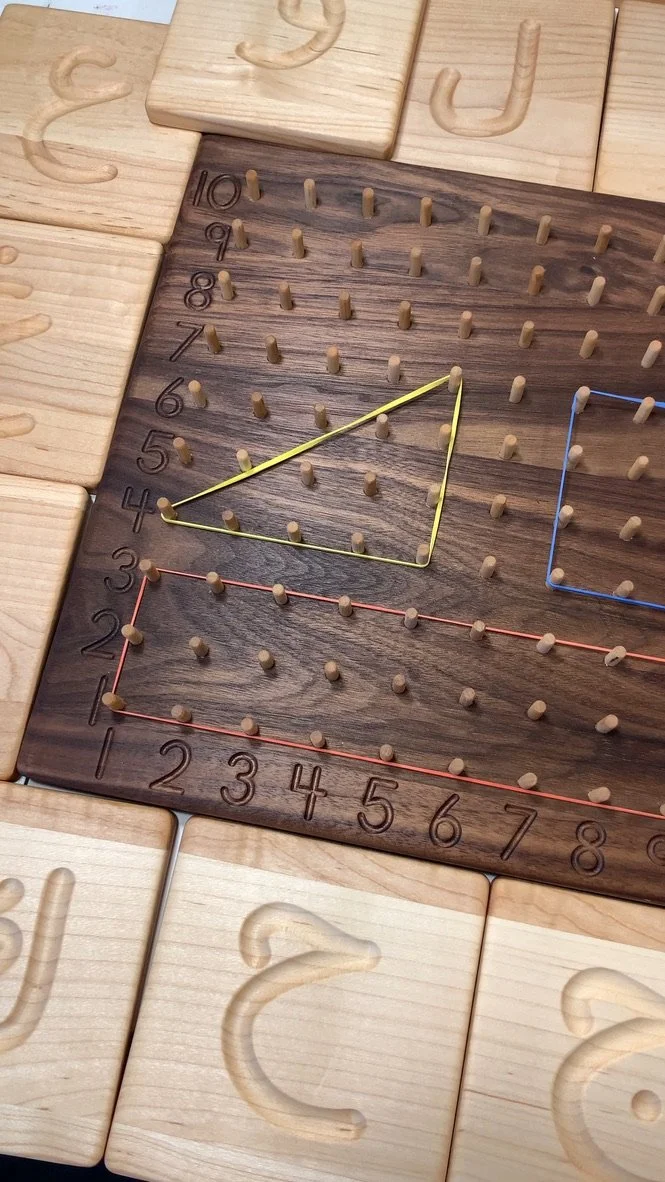
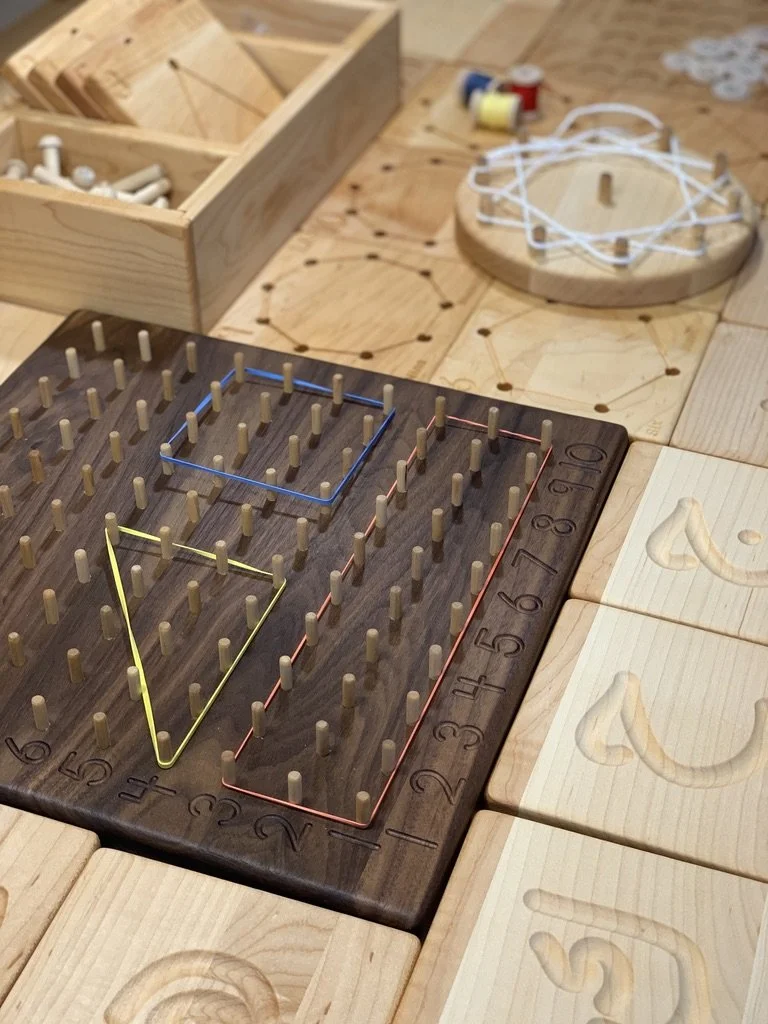
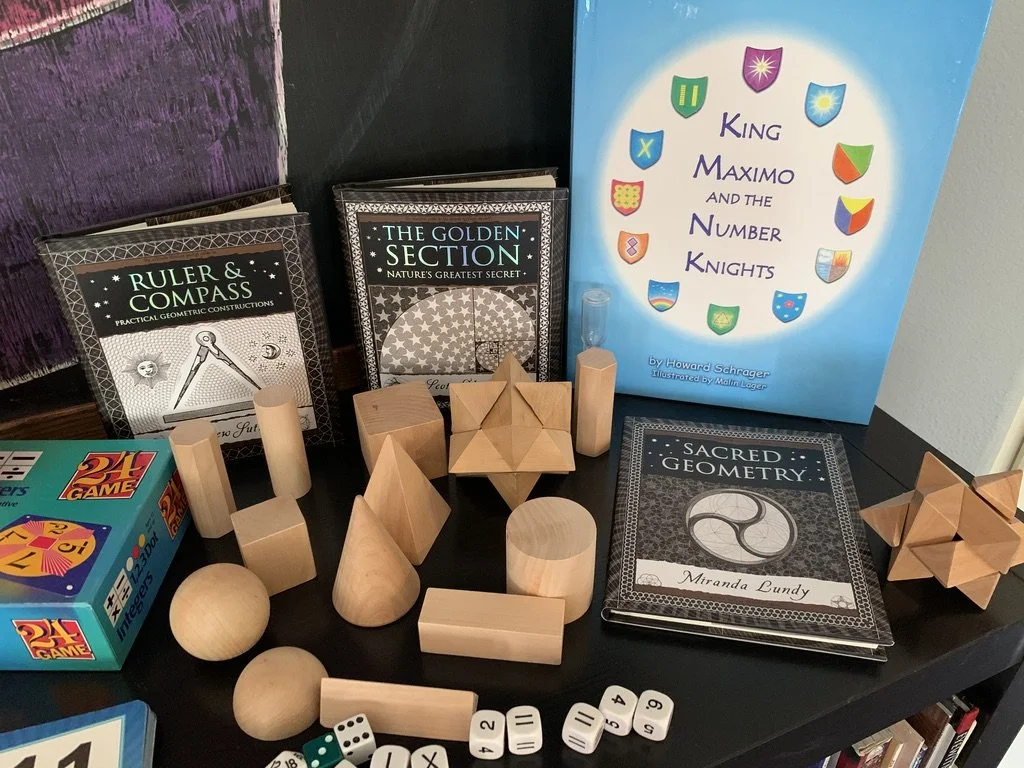
These wooden educational products by Treasures from Jennifer are some of the most beautiful pieces in our homeschool room. They are well made, durable and all natural. They are also expensive and take up lots of room.
-
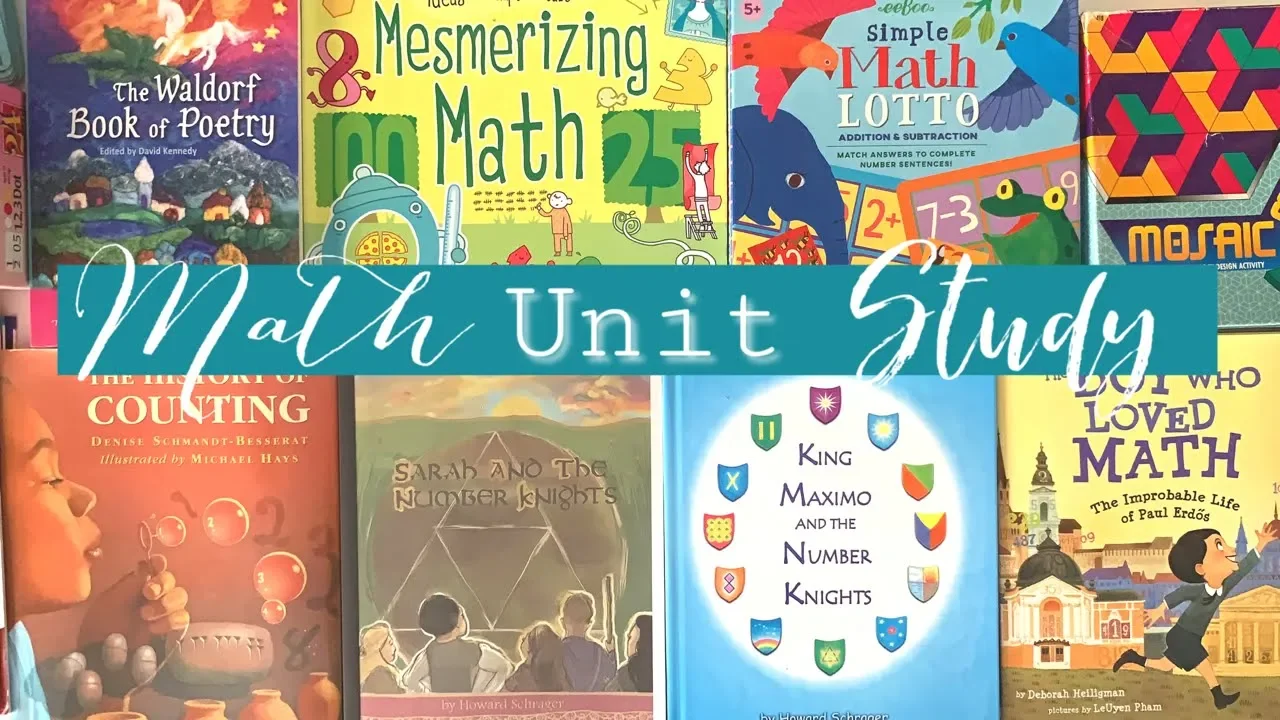
Waldorf Math | Living Books | Grade 1-3
Do you want to make math meaningful, educational and enjoyable? It may seem like an impossible task, but it can be achieved! I've collected a number of living books and games to enhance our math main lesson block. These materials are suitable for students grades 1-3 but can be enjoyed by older students as well.
-

Math Picture Books Worth Owning
We just finished our math unit and we used nearly all the math books below during our six week unit. The exceptions were the reference books at the bottom of this list. Here’s how this list can be helpful to you. I’ve included the name of the book with a picture along with a brief description, the grade level, math level and whether the book is worth owning or borrowing.
-
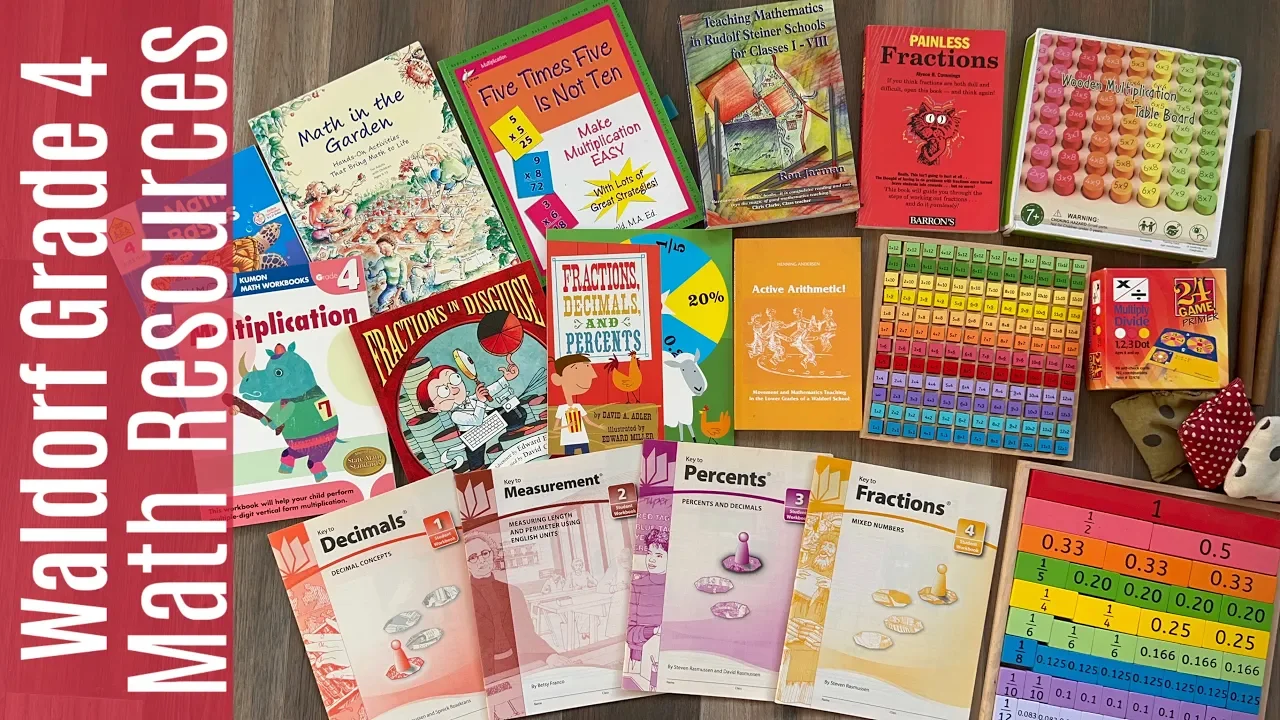
Waldorf Grade 4 | Math Resources
In every grade, a new mathematical concept will be introduced and all the concepts before will be worked on for proficiency and eventually mastery. In grade 4, fractions are introduced. I find fractions to be a difficult concept for many children and adults to fully understand and master. While there are some children who take to it right away, I have an idea for you if your child doesn't or if you still struggle with the concept of fractions, decimals and percents.
-
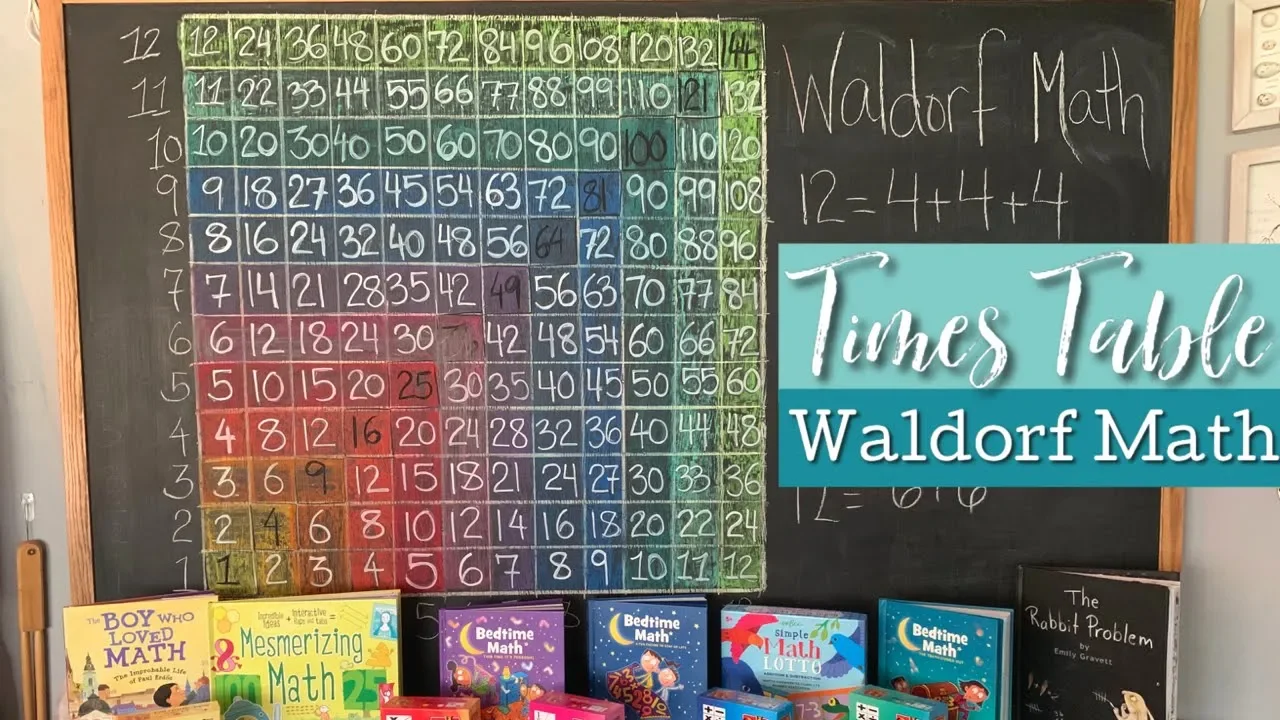
Waldorf Math | Times Table | Chalk Drawing
In our Waldorf inspired homeschool, we start off our year with our main lesson blocks in Math or Grammar. This year we are working on the times table primarily and since we want to take the year to master it (though it will likely take longer realistically), we are starting those lessons right from the start.
-
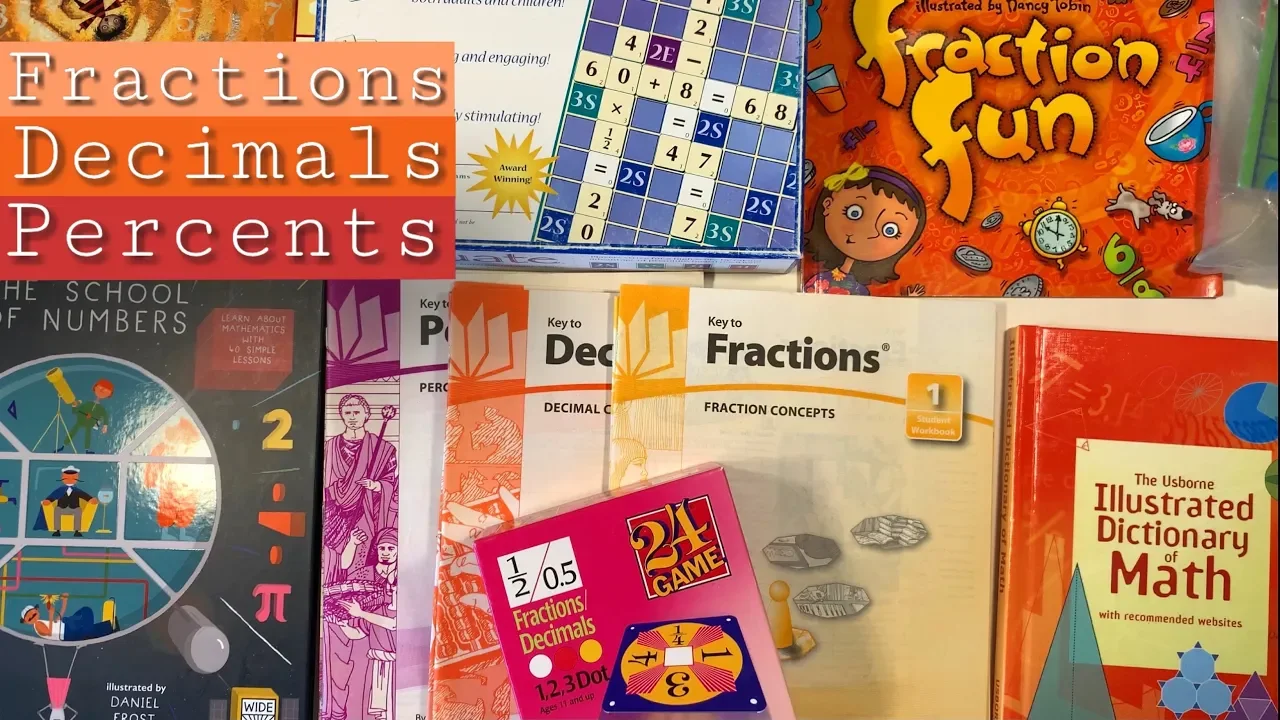
Fractions, Decimals and Percents
It's my opinion that fractions are the most challenging math concepts that elementary students have to master. And while in a relatively short space of time they can become fairly proficient in calculating fractions, decimals and percents on paper, I do think it takes years, even decades to fully master the concept and practice of fractions.
-

Fractions Resources
Hello fractions! I only half missed you. Here are a few of our math resources for fractions. We have a few games, workbooks, manipulatives, and books. Swipe to see them all.
-
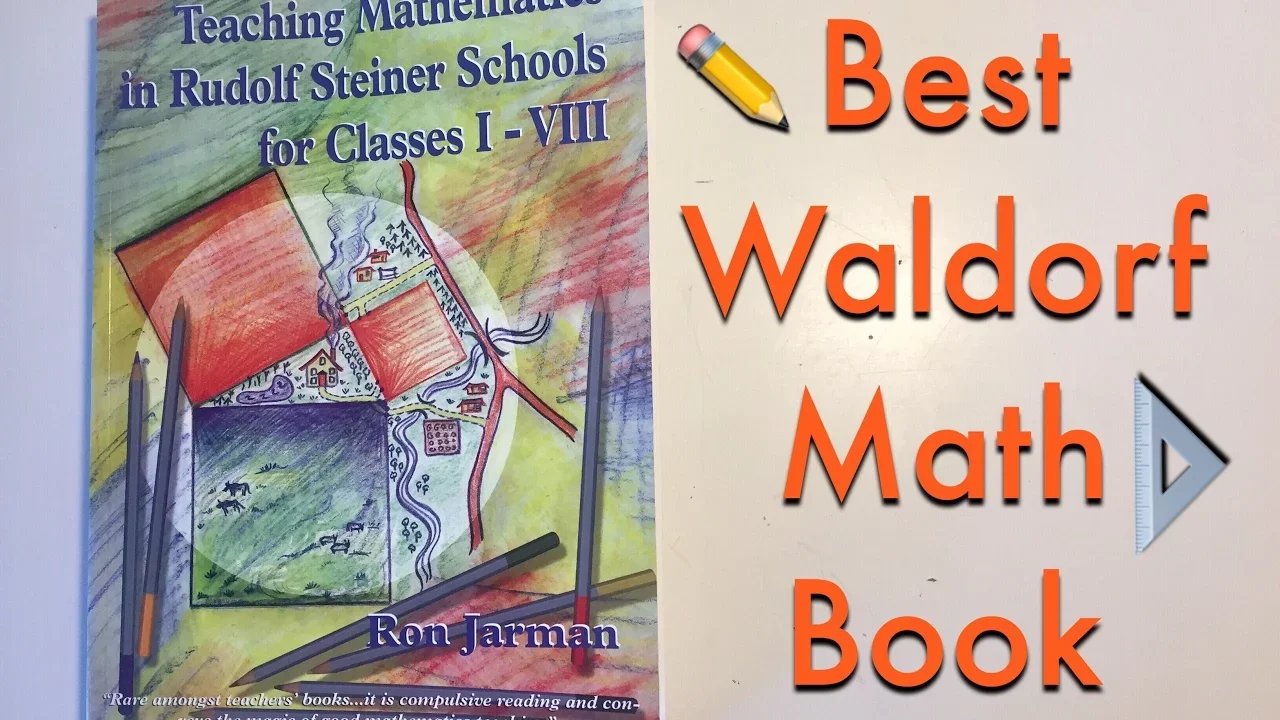
The Best Waldorf Math | Teaching Mathematics in Rudolf Steiner Schools for Classes I-VIII
If you've ever wanted to learn more about how math is taught in Steiner schools (Waldorf education), this book will take you from conception to application. Teaching Mathematics in Rudolf Steiner Schools for classes I-VIII by Ron Jarman is the most comprehensive books on mathematics I've ever seen.
-

For the Love of Math
Math scares some people yet delights others. Are we born loving or hating math or do we learn to love or fear it by our experiences? When we do well, do we wish to do more? Does the praise inspire us? When we are challenged by it and are overwhelmed do we learn to avoid it?
-
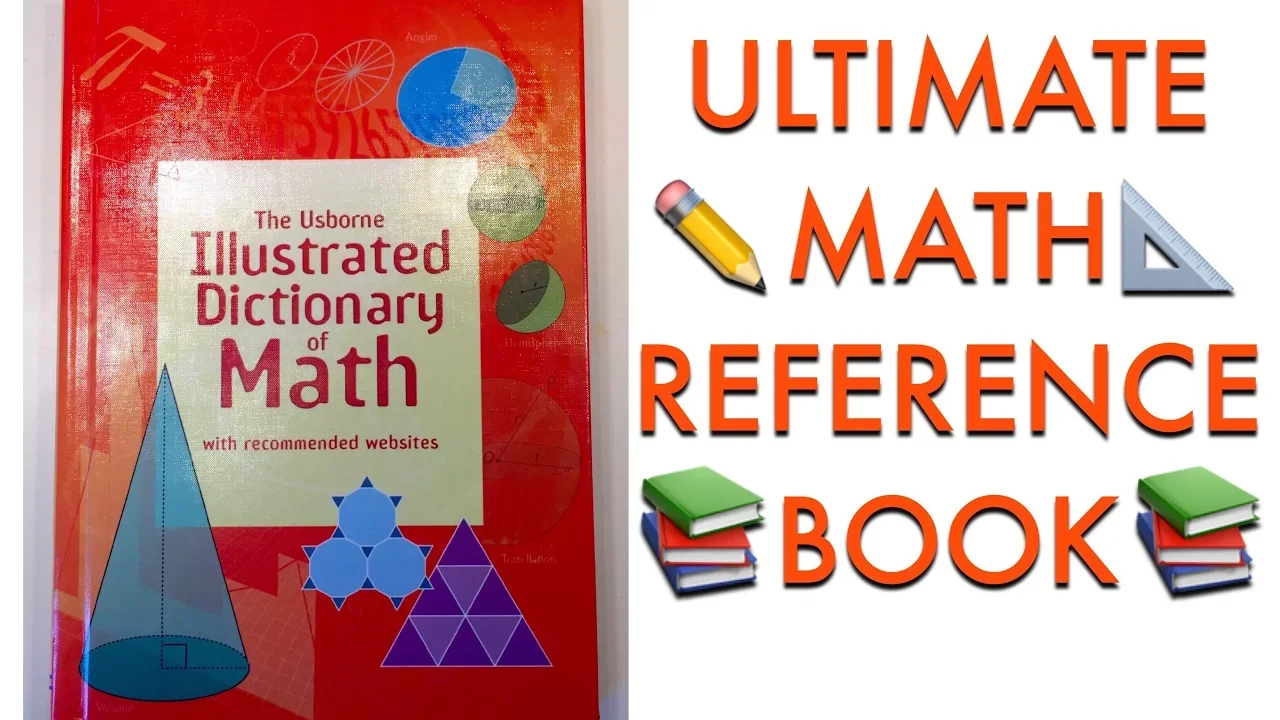
Usborne Illustrated Math Dictionary
The Usborne Illustrated Dictionary of Math is the perfect complement to any math curriculum. Use it as reference material or to double check a math concept. Chock full of examples and illustrations, this book will be the only math reference book you'll need. An extra perk is that this book has internet links included to help you find websites to further explain and clarify math concepts.
-

How to Multiple two-Digit Numbers with this Easy Trick
Do you like math? If the answer is no, let's see if we can change that with this math technique that's actually fun!! No kidding! We've been having so much fun doing math these days, my 10-year-olds asks for questions and makes up his own. Maybe you've seen this method before, but for me the box with diagonal lines was new to me. Have you seen it before?
-

Meaningful Math
Are you looking to make math meaningful, enjoyable and memorable? That’s a tall order, but I do believe it can be accomplished. I have several videos on YouTube on math in general and Waldorf math specifically if you are looking for practical ideas, innovative resources and creative tutorials.
-

Math Resources
More math resources! My three favorites from this list are Math in the Garden, Champions of Mathematics and Arithmetricks. Do you have math resources that your family has come to enjoy? I’d love to know! I love math resources, especially math picture books and mathematician biographies.
-
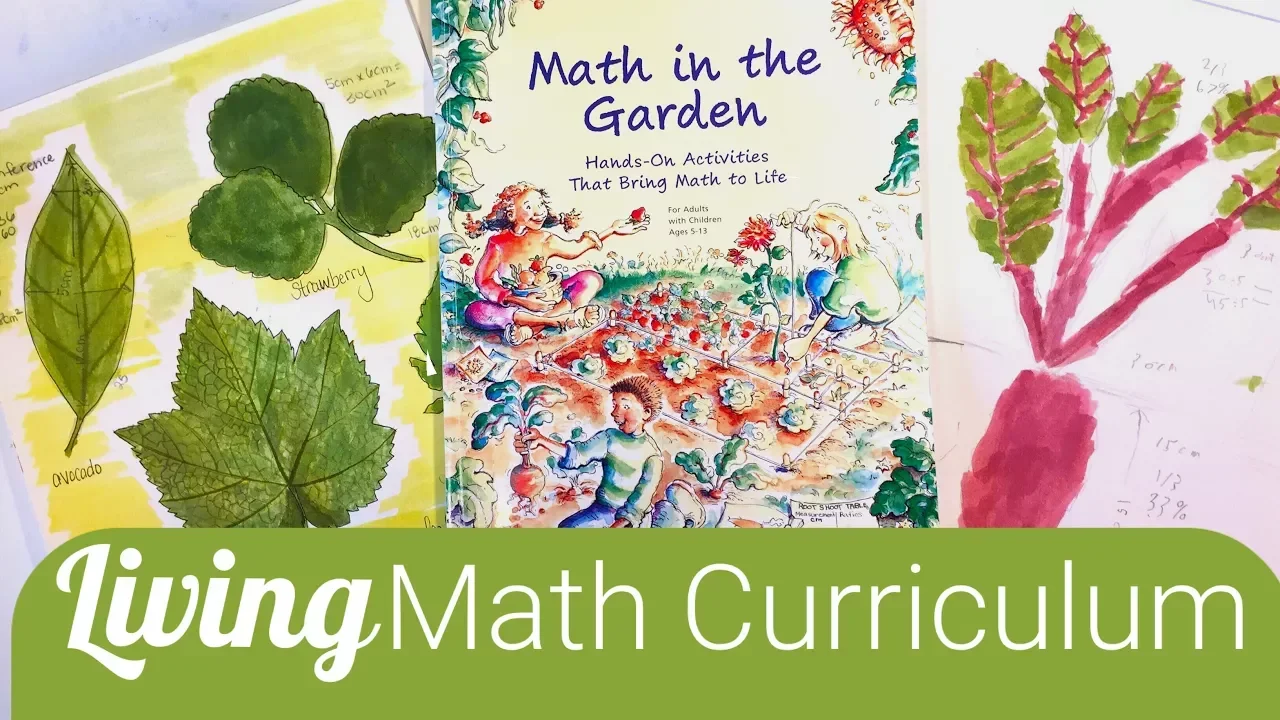
Math In the Garden | Math Book Review
Math In The Garden is an innovative math book that integrates math with practical real-life skills using the hands-on approach of garden work! I personally would like to see more books like this, so I'm happy to be sharing this book and all the activities we do from it.
Math Workbooks
-
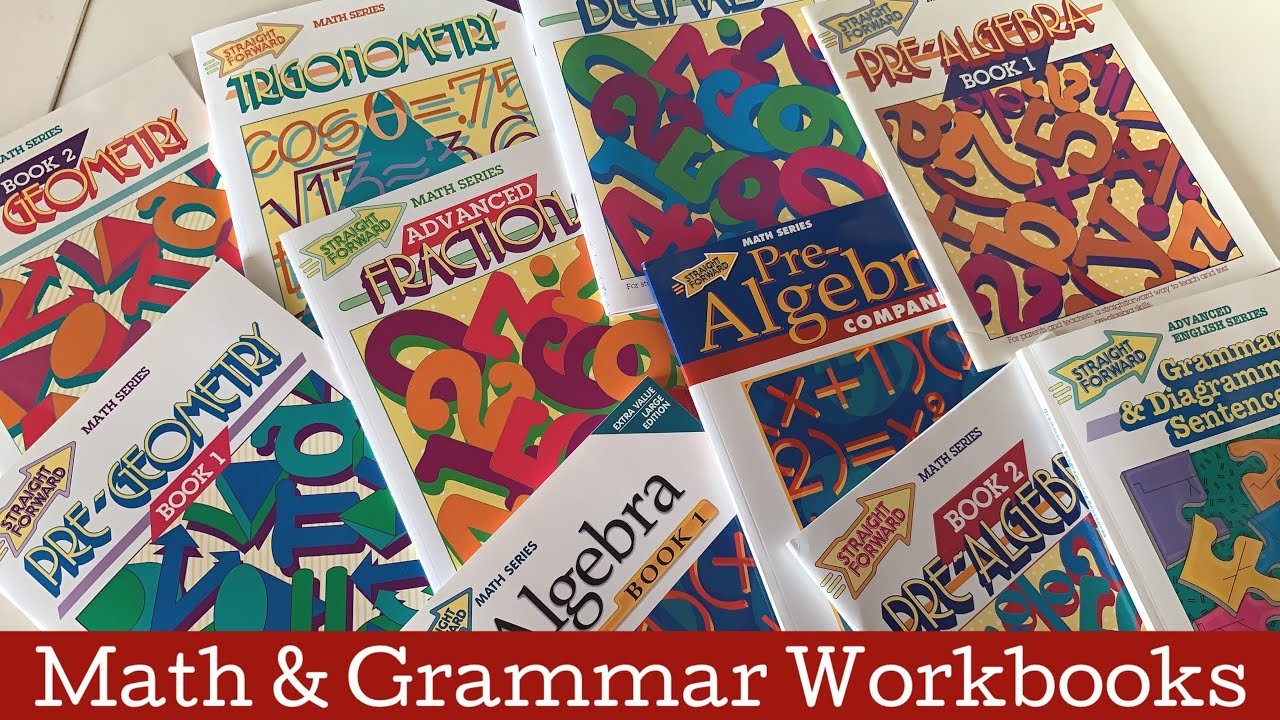
Math Workbooks | Algebra, Geometry, Fractions, Decimals and Trigonometry
Workbooks. They have a place in a school setting, but when they are overused or are the means of teaching, they lose their effectiveness and novelty. One place we do use workbooks almost daily is with math. While the workbooks we use are simple, they are effective. Occasionally they become tedious, and for that reason I like to mix things up in a few ways.
-

Key to Math Series | Math Curriculum for Fractions, Decimals, Percents, Algebra and Geometry
Key to math curriculum series is a workbook series that covers the topics of measurement, metric measurement, fractions, decimals, percents, geometry, and algebra. Work books are designed for easy self direction with little additional support. Each section provides simple examples and clear directions for understanding the math topic.
-
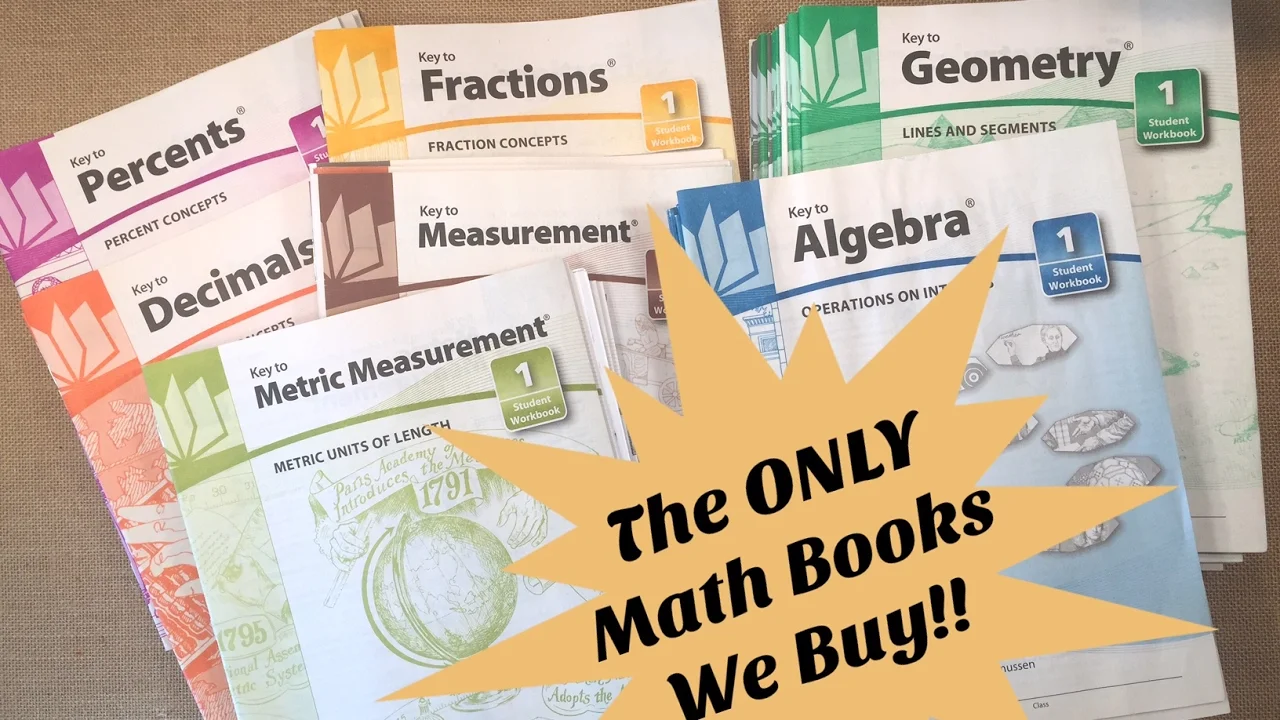
Math Curriculum Workbooks
Key To math series are the only math books we ever buy. They are simple, student-led and environmental friendly! You read it right, they are environmental friendly. The workbooks contain about 45 pages and are printed on thin paper similar to newsprint paper. They are also simply laid out with easy to understand directions, so minimal instruction is needed.
-
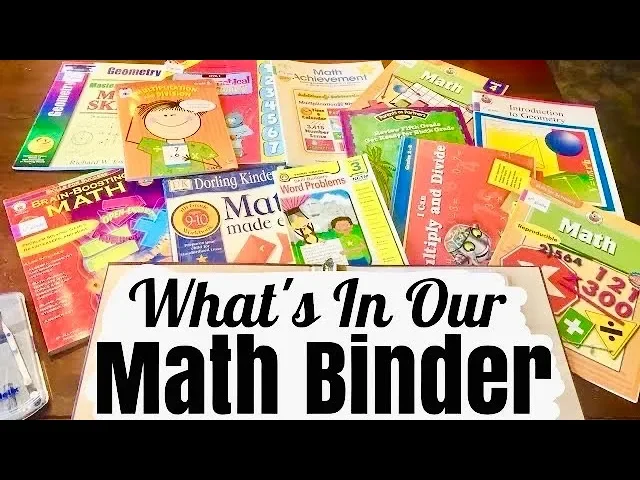
What's in Our Math Binder | Daily Math
Creating a math binder is an easy way to take the best worksheets from a variety of workbooks. I take worksheets that are about 1-3 grade levels below with the intention that this daily math shouldn't take more than 10 minutes, should be easy, and cover basic math.
Math Games
-
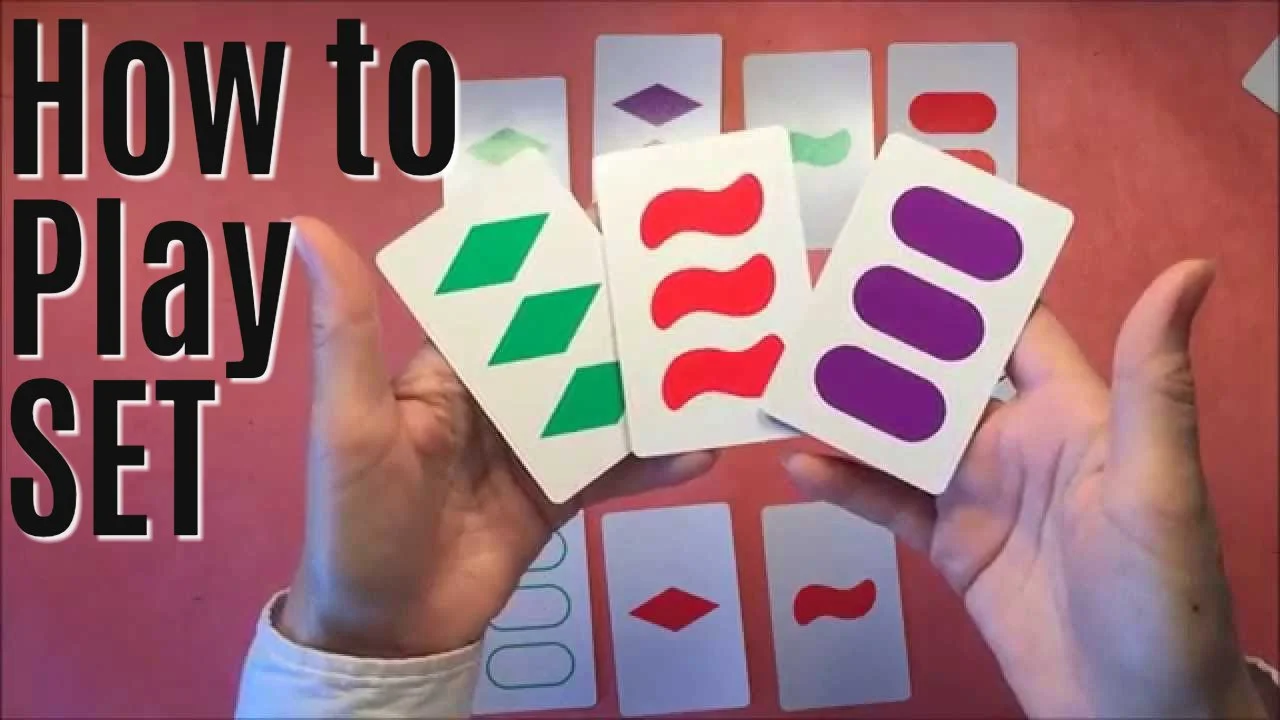
How to Play Set (Math Card Game)
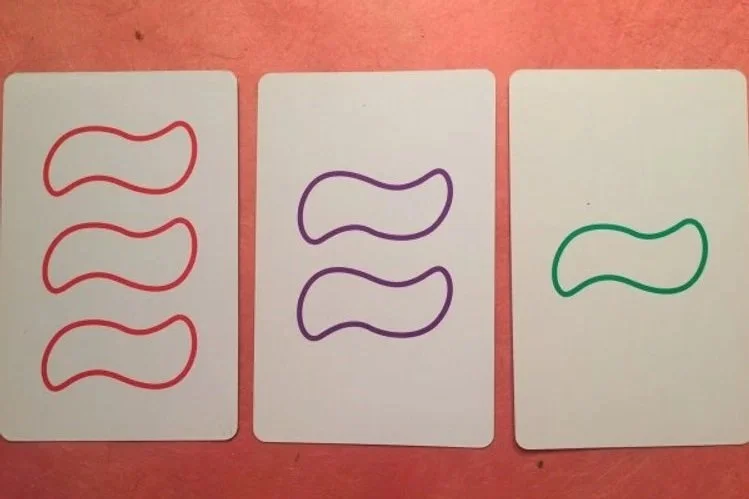
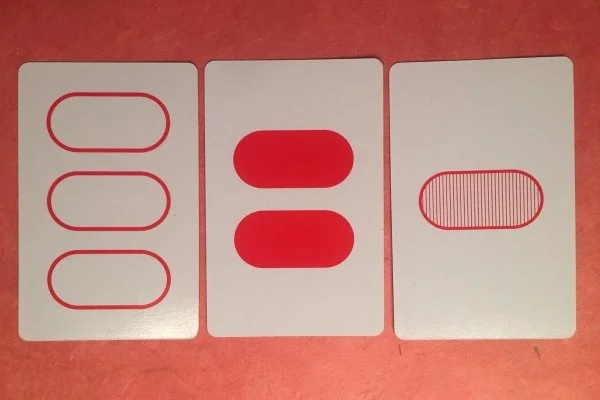
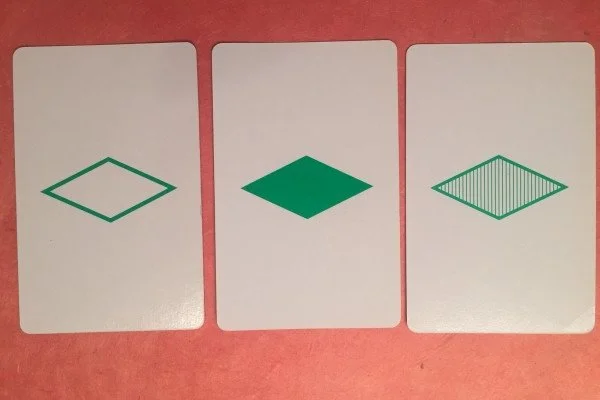
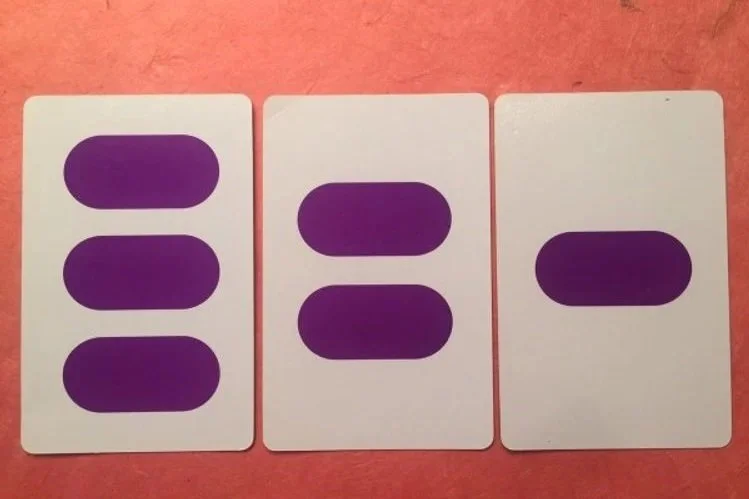
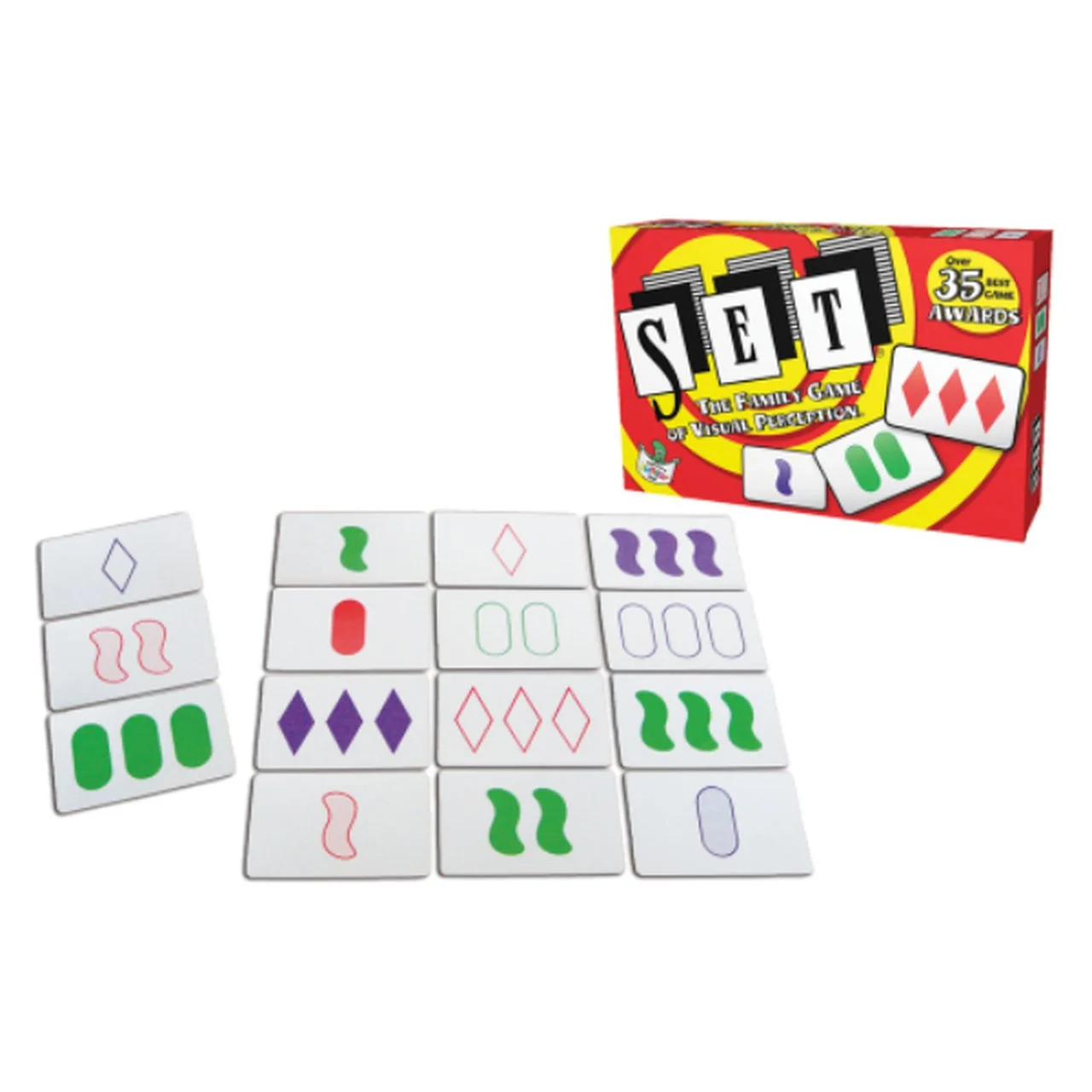
I love to add math games to our curriculum and today I want to show you how to play one of my favorite card games. SET was introduced to me years ago by a good friend and we have been hooked ever since. The concept is simple: find a set. A set is three cards in which no two cards are the same. So, all three cards have to have elements that are ALL the same or ALL different.
-
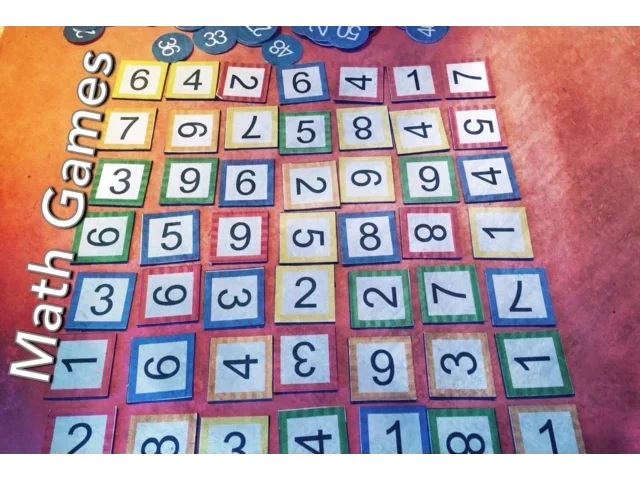
How to Make & Play Math Games
Tribulation is a math game from the 1980's and though you may not be able to find it anymore, I can show you how to make one of your own. To make this game you'll need to make 49 tiles with the numbers 1-9 on them (the 6 & the 9 are interchangeable). They are about 1.5" square
-
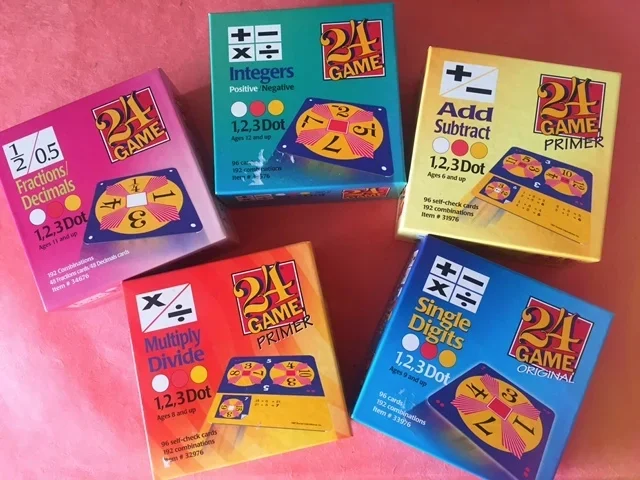
How to Play 24 Game
Ever wanted to add math games to your curriculum but didn't want to spend the time finding them or learning how to play them? Today, I'll show you how to play 24 primer, 24 Integer, 24 Fractions/Decimals, 24 Add/Subtract and 24 Multiply/Divide.
-
How to Play Equate (Math Board Game)
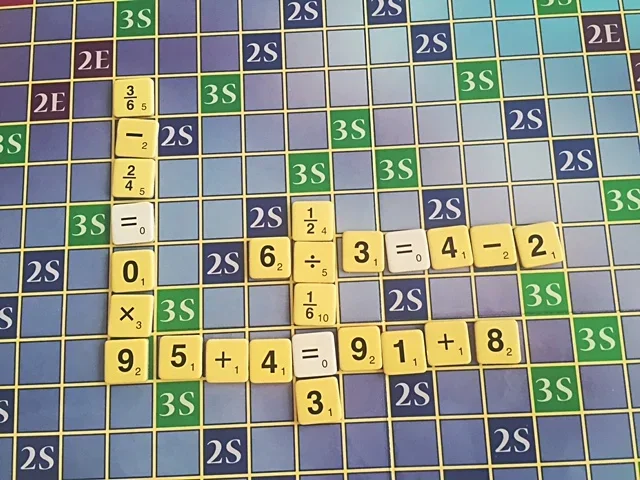
I think math games are a fun and educational way to learn, review or practice math. I have an assortment of math games in our homeschool room and Equate is fast becoming one of our favorites. I'll show you what comes in the Original Tile game and play a game for you so you can see how easy it is.
-
How To Make Counting Sticks | Waldorf
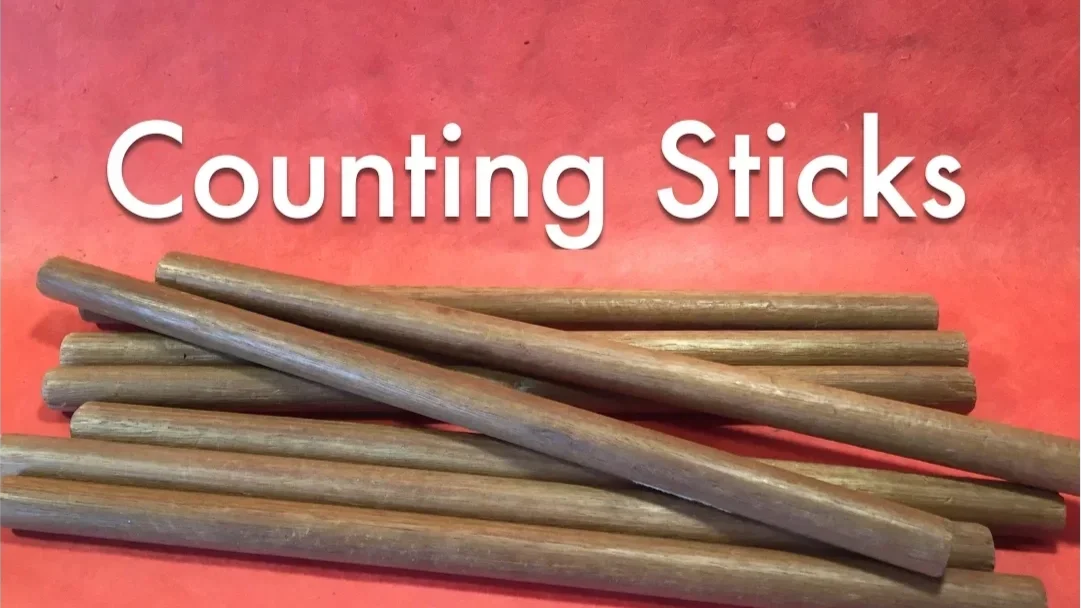
Counting sticks are typically used in Waldorf classroom to practice skip counting and the multiplication table. They are easy to make and have many other uses as well...boys anyone!! My kids especially liked using them. I made a set for my kids many years ago from a hardwood (maybe oak). I used dowels about 1/2" in diameter and had them cut to 12" giving me several sets from one 6' dowel.
-
Math Games
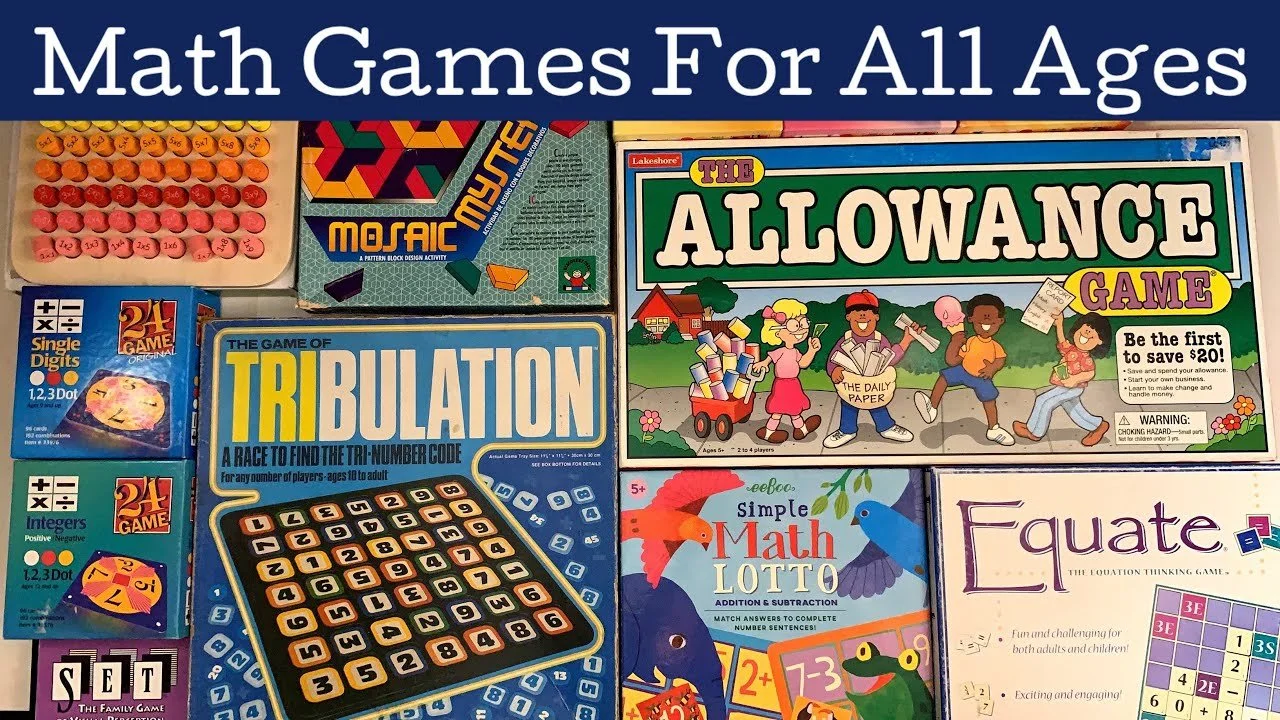
I love math games! And I want to share with your their educational value and how to incorporate them into your lessons. Ever wanted to add math games to your curriculum but didn’t want to spend the time finding them or learning how to play them? Today, I’ll show you how to play 24 primer, 24 Integer, 24 Fractions/Decimals, 24 Add/Subtract and 24 Multiply/Divide.
What is Mental Math
-
What Is Mental Math?
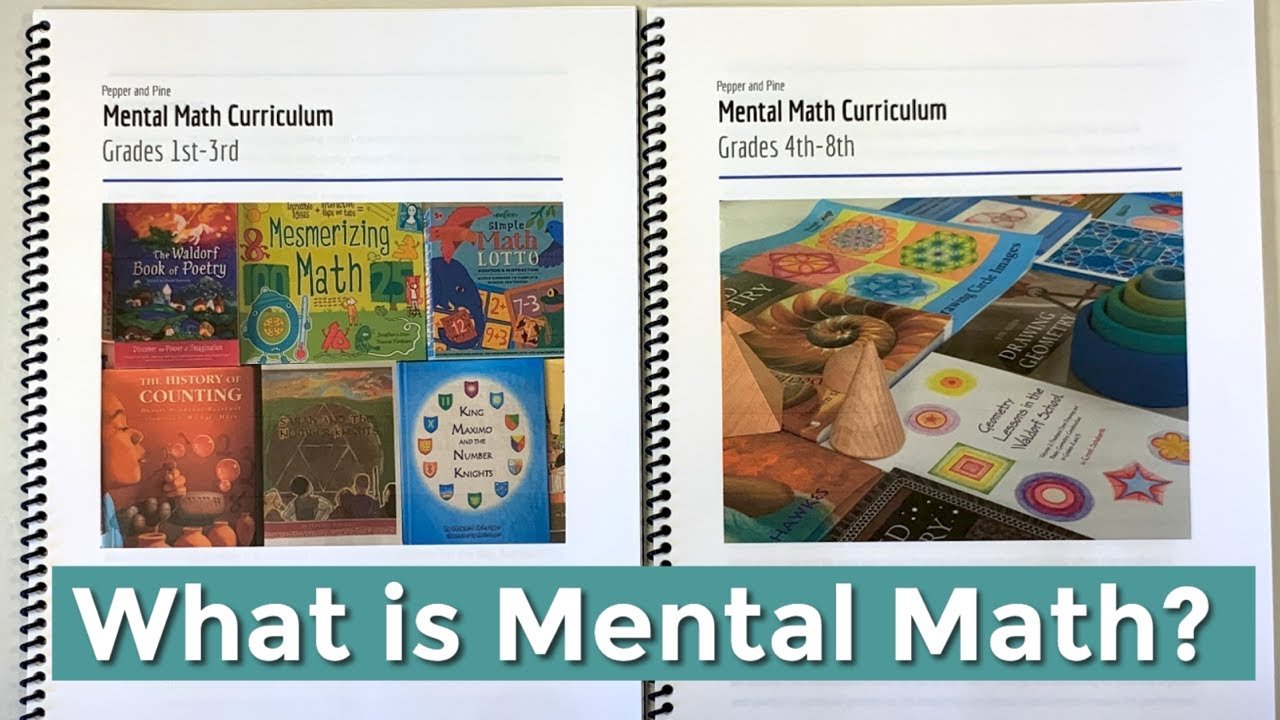
Mental Math are math questions that can be worked out in one's head. Often, they are two part questions which involve a multiplication or division question first, followed by an addition or subtraction question next. When you add in fractions, decimals and percents, you can easily see how complex the questions can become.
-

Mental Math Grades 1-3
This Mental Math curriculum is designed for grades 1-3. There are two 36-week years worth of math problems organized by weeks. Each day there are four questions totally 20 questions a week. That’s nearly 1500 math problems that can be reused over several years.
-

Mental Math Curriculum | Grades 3rd, 4th and 5th
These worksheets contain five questions each day of the school week (Monday through Friday, or in the case of the worksheets marked Day 1 to Day 5 to accommodate international school weeks). That’s a total of 35 questions a week. That’s over 1000 questions a year, most of which are two part questions so that’s like doing nearly 2000 questions a year!
Waldorf and Montessori Educational Haul
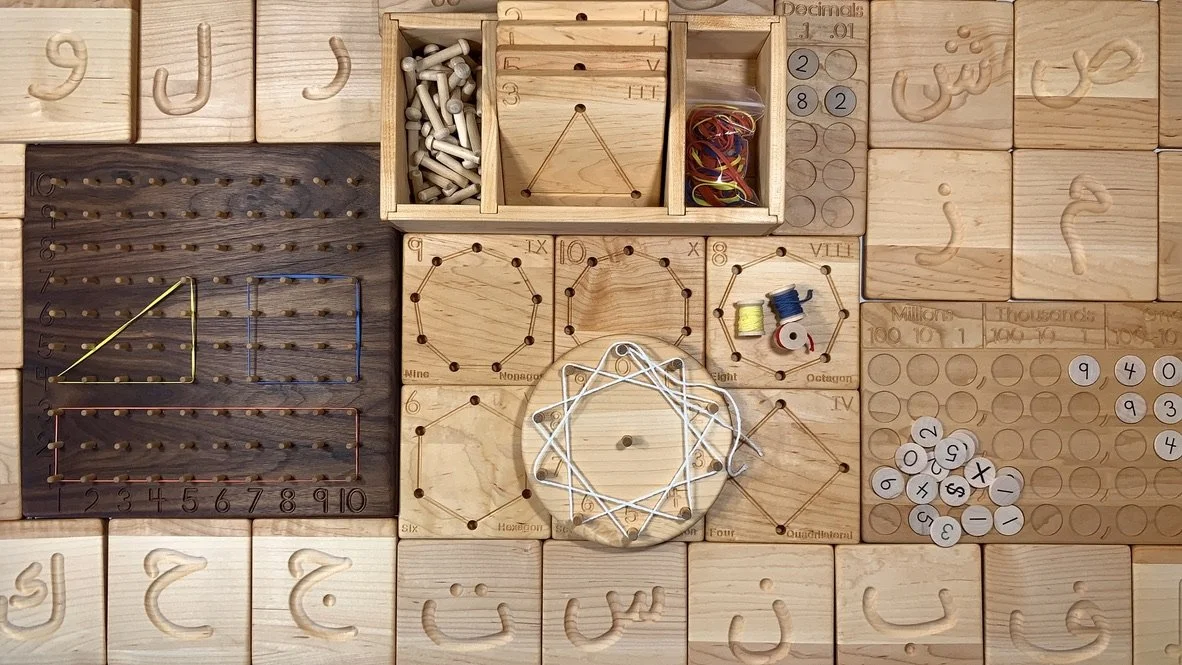
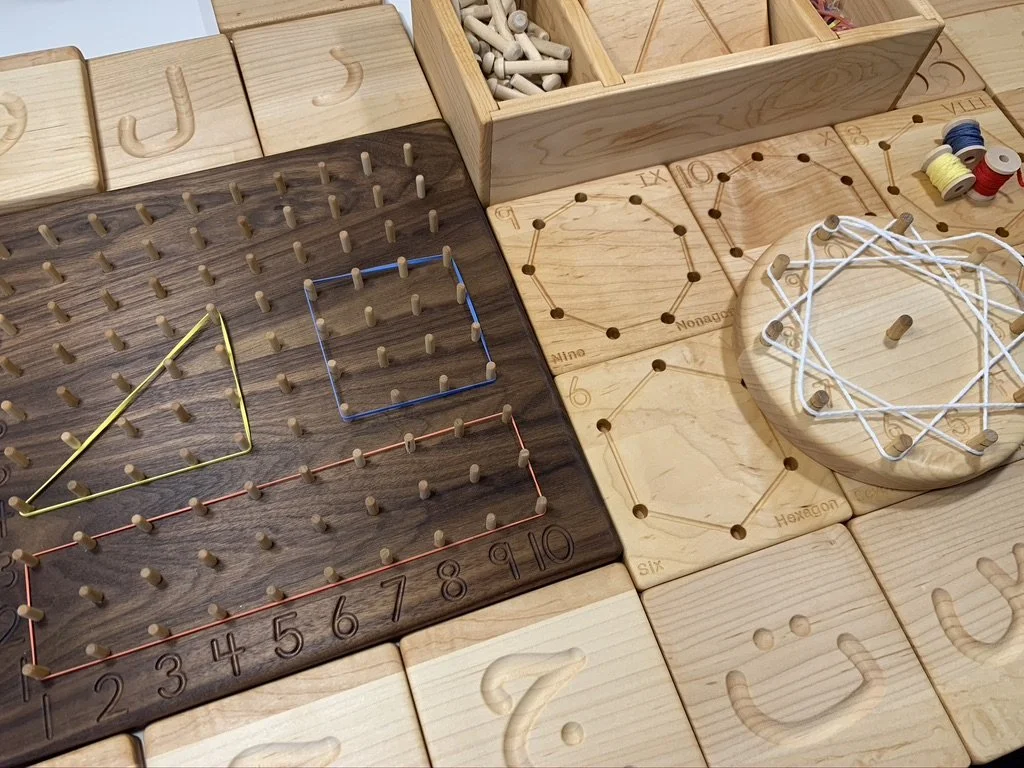
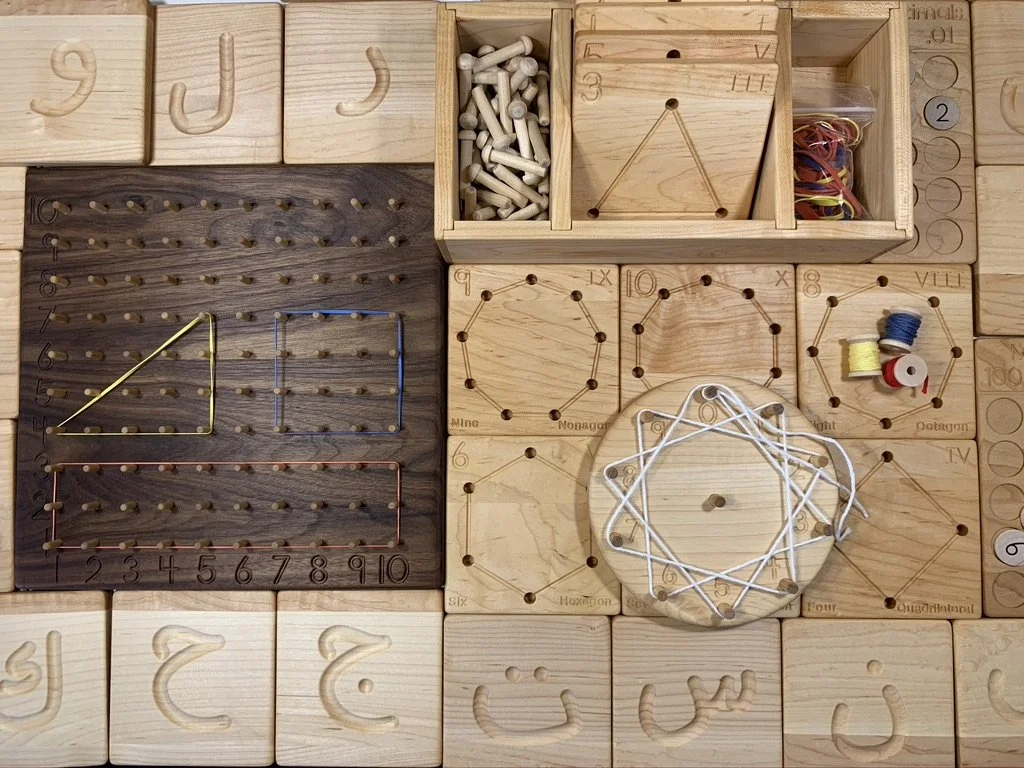
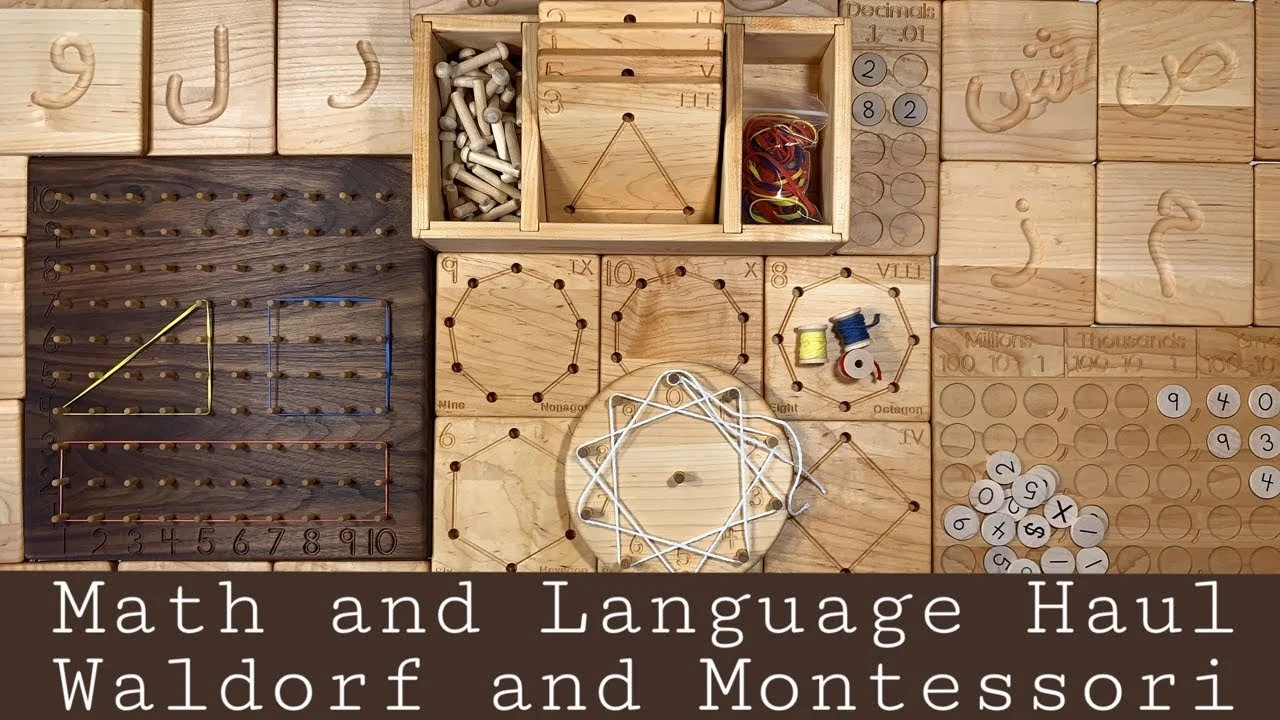
These wooden educational products by Treasures from Jennifer are some of the most beautiful pieces in our homeschool room. They are well made, durable and all natural. They are also expensive and take up lots of room. These items accompany our math main lesson blocks. We use them to practice the multiplication table, number facts, and more. These items are primarily for my 9-year-old daughter, but the geometry materials will be used by both my 13-year-old son and my daughter.
Waldorf Math | Living Books | Grade 1-3
Do you want to make math meaningful, educational and enjoyable? It may seem like an impossible task, but it can be achieved! I’ve collected a number of living books and games to enhance our math main lesson block. These materials are suitable for students grades 1-3 but can be enjoyed by older students as well.
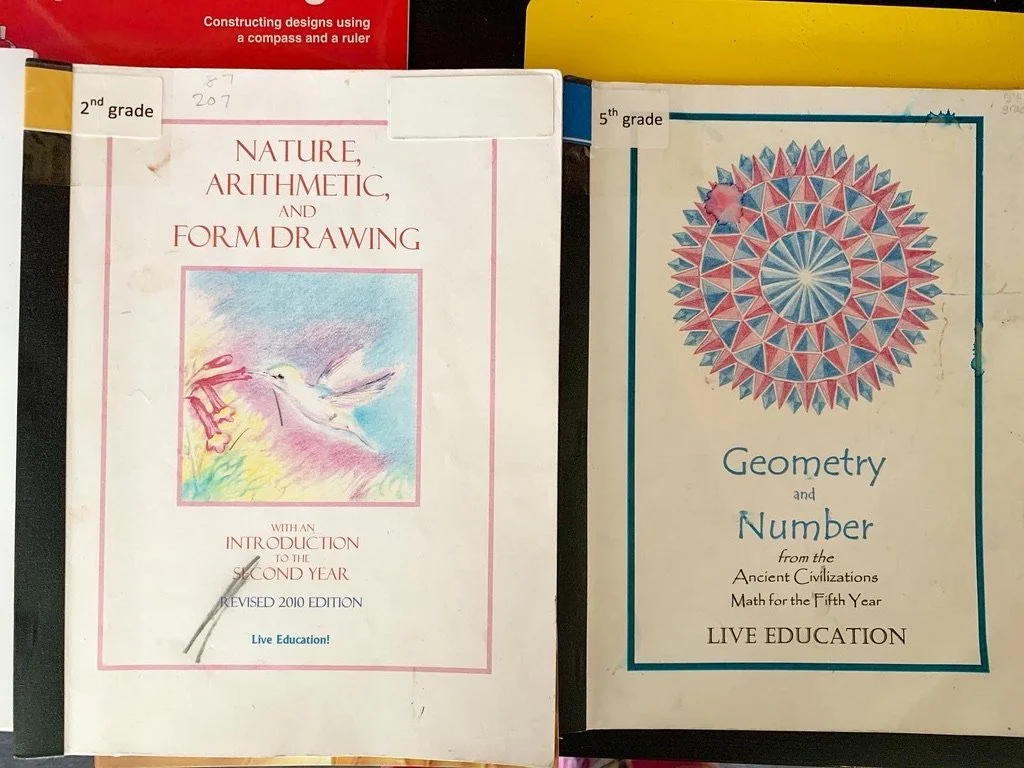
I’m putting together this unit to complement our main lesson block on math. We have been relying on our Live Education Waldorf curriculum and for this unit, I’m referring to Grade 2 and Grade 3 math main lesson books. I love adding Math Games into our math units and any time of year! I have accumulated a number of math games and each time we do a math unit, I pull these out and we play them during our opening activities. I love math books! And these days there are so many fantastic math picture books. I’ve written a blog post about them so you can see our nearly complete collection (we keep adding to it), as well as a video on them so you can browse the inside of these books.
New for this round of math units are geometry books from Siraj Books. I love the geometric designs that relate to the Muslim world as this perfectly transition and connects our math units with the history units for the year. While the geometry book are for our Geometry main lesson block for my 13-year-old, but if you wish to add them in, you may consider offering these designs to color in for younger students as they may need to be a bit older to utilize the geometry books if you are going to construct these designs.
I’ve been sharing math and geometry video tutorials for several years. Check out the complete playlist here. Love Math Games? Check out some of our favorites here.
Math Picture Books Worth Owning Part 1
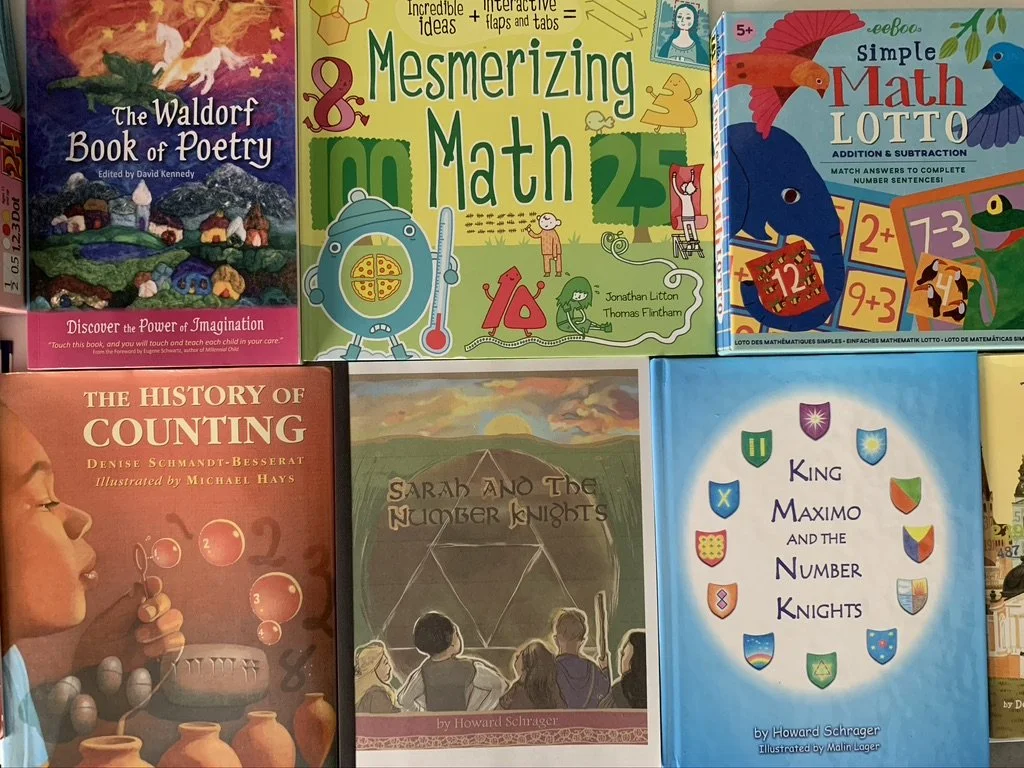
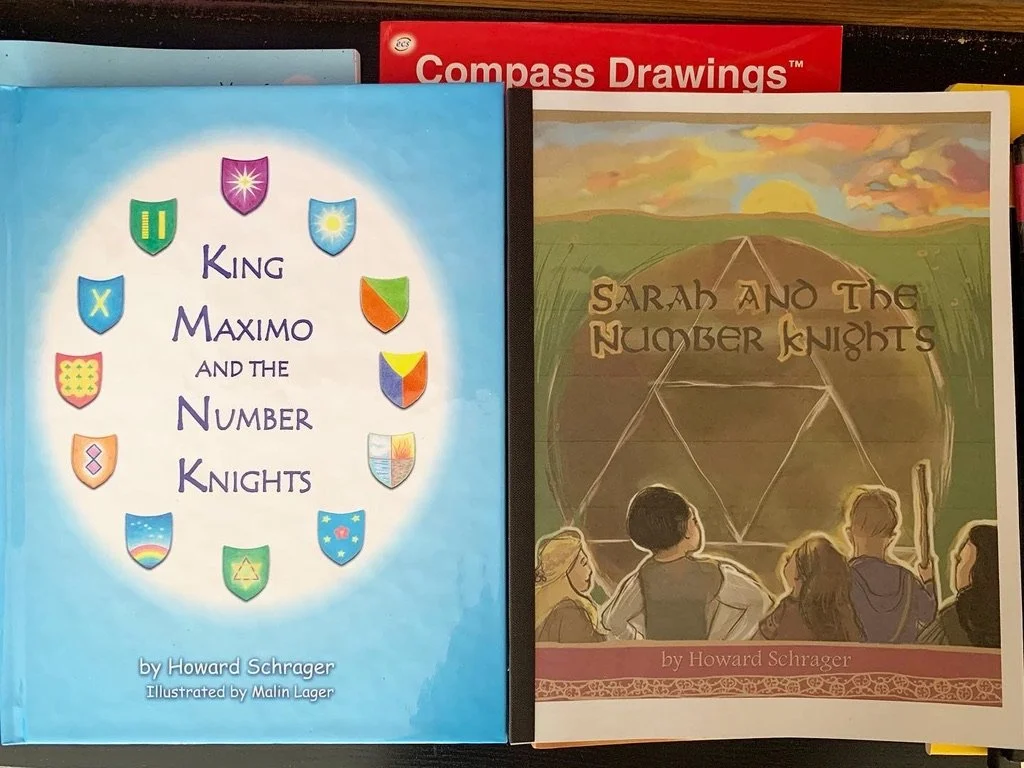
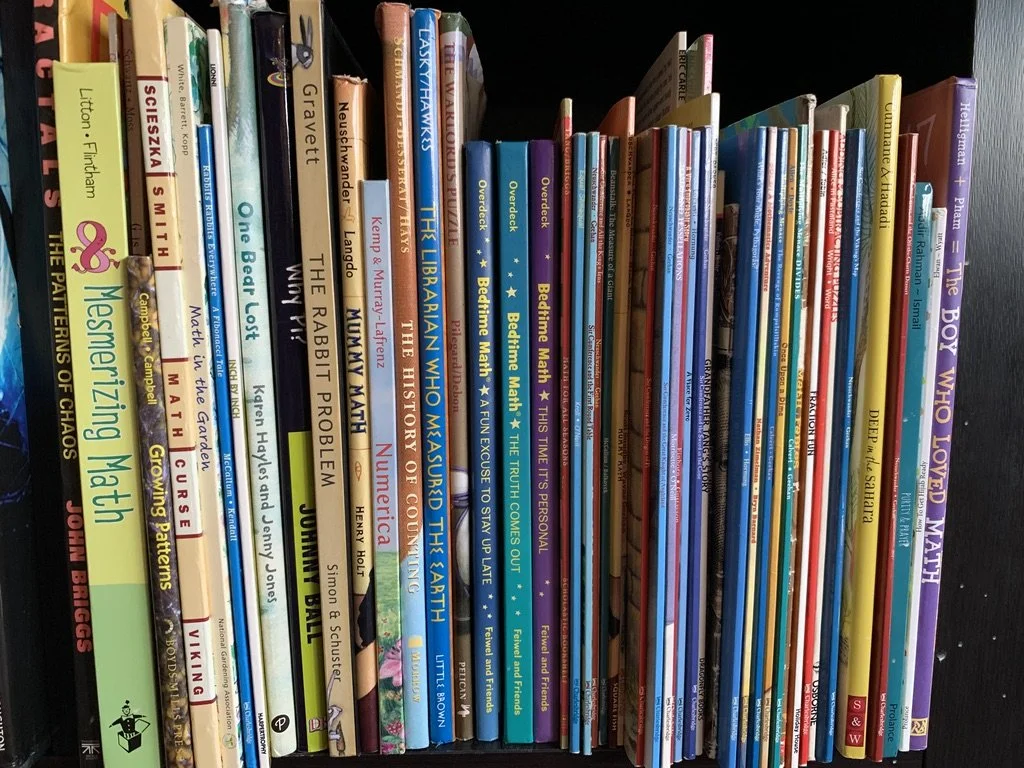
We just finished our math unit and we used nearly all the math books below during our six week unit. The exceptions were the reference books at the bottom of this list.
Here’s how this list can be helpful to you. I’ve included the name of the book with a picture along with a brief description, the grade level, math level and whether the book is worth owning or borrowing. I listed the math level at about one year above what is typically taught school to ensure the student is familiar with the math; however, I also list the grade level at which the student could either read the book on his own or listen to it read and understand the math even without it being formally taught.
Worth owning or borrowing? My method of choosing is the following: If the book is a story that’s well written and nicely illustrated and I expect to read it over and over again to my kids, then I think it’s worth owning. If it’s a book I’ll need for a math unit, it’s easier to own it than to borrow it. But here’s the bottom line: my kids liked different books than I did! So, while I thought borrowing the Sir Cumference series was fine, my nine-year reads them all the time, so those might be better owned than borrowed. Use your own method for owning or borrowing, and when in doubt, try it out. If you love it, buy it!
If you’d rather have a printable list, click here.
Math Picture Books Worth Owning Part 2
-

7X9= Trouble! Claudia Mills
Math chapter book
Story about a boy who has to learn the times table
Reading/math level 3rd grade
Worth checking out
-

Fractions= Trouble! Claudia Mills
Math chapter book
Story about a boy who is having a hard time learning his fractions and needs a tutor
Reading 3rd grade
Worth checking out
-

The Greedy Triangle By Marilyn Burns
Math picture/story book
Covers geometric shapes from triangles to polygons, inventive story about a triangle that chances shape (has deeper meanings and lessons), Computer animated, Math level 2nd and up, Grade level preschool and up
Worth checking out
-

Mummy Math By Cindy Neuschwander
Math picture/story book
Covers geometry, shapes, faces, & edges, fun ‘mystery’ story set in Egypt in a pyramid
Math level 4th and up
Grade level 2nd and up
Worth checking out
-

What’s your Angle Pythagoras? By Julie Ellis
Math picture/story book
Covers 3, 4, 5 triangle, the Pythagorean theory and area. Historical however, Pythagoras wasn’t a child when he discovered the 3, 4, 5 triangle or the Pythagorean method
Math level 7th and up
Grade level 3rd and up
Worth checking out
-

Sir Cumference and the Sword in the Cone By Cindy Neuschwander
Math picture/story book
Covers area of a circle
Math level 7th and up
Grade level 3rd and up
Worth checking out
-

Sir Cumference and the First Round Table By Cindy Neuschwander
Math picture/story book
Geometry: names the shapes and explains how many sides on each shape
Math level 3rd and up
Grade level 3rd and up
Worth checking out
-

Sir Cumerence and the Great Knight of Angleland By Cindy Neuschwander
Math picture/story book
Covers angles, obtuse, acute and right angles
Math level 5th and up
Grade level 3rd and up
Worth checking out
-

Sir Cumference and Isle of Immeter By Cindy Neuschwander
Math picture/story book
Covers shapes, edges and faces
Math level 7th and up
Grade level 3rd and up
Worth checking out
-

String, Straightedge, and Shadow By Julia E. Diggins
Chapter book for 7th grade reading level
History of geometry from the dawn of time through ancient Greece. Learn about Thales, Pythagoras and Eratosthenes. Nice story format with chapters. Great inspiration for geometry activities and geometry demonstrations
Math level 5th and up
Worth owning
-

Why Pi? By Johnny Ball
Math picture/reference books
Each page has information related to the math concept being explained. Filled with computer illustrations and photos. Covers math concepts related to geometry, measuring time, measurement, sound, pressure, light, electricity, temperature and more Introduces mathematicians where relevant
Math level 5th and up
Grade level 5th and up
Worth checking out or owning as a reference book
-

Grandfather Tang’s Story By Ann Tompert
Math picture/story book
Covers tangrams in a delightfully written story. Great potential for interactive activities if you have tangrams (you can follow along in the story and make the different shapes). Nicely illustrated
Math level 4th and up
Grade level 2nd and up
Worth checking out
-

The Warlord’s Puzzle By Virginia Pilegard
Math picture/story book
Covers tangrams in a plot driven story set in China hundreds of years ago. Well written compelling story, nicely illustrated
Math level 4th and up
Grade level 2nd and up
Worth checking out
-

Toads and Tessellations By Sharon Morrisette
Math picture/story book
Covers tessellations and how to arrange shapes so that the most shapes will fit on a particular size. Nicely illustrated, includes magic
Math level 4th and up
Grade level 2nd and up
Worth checking out
Math Picture Books that Complement a History Unit
-
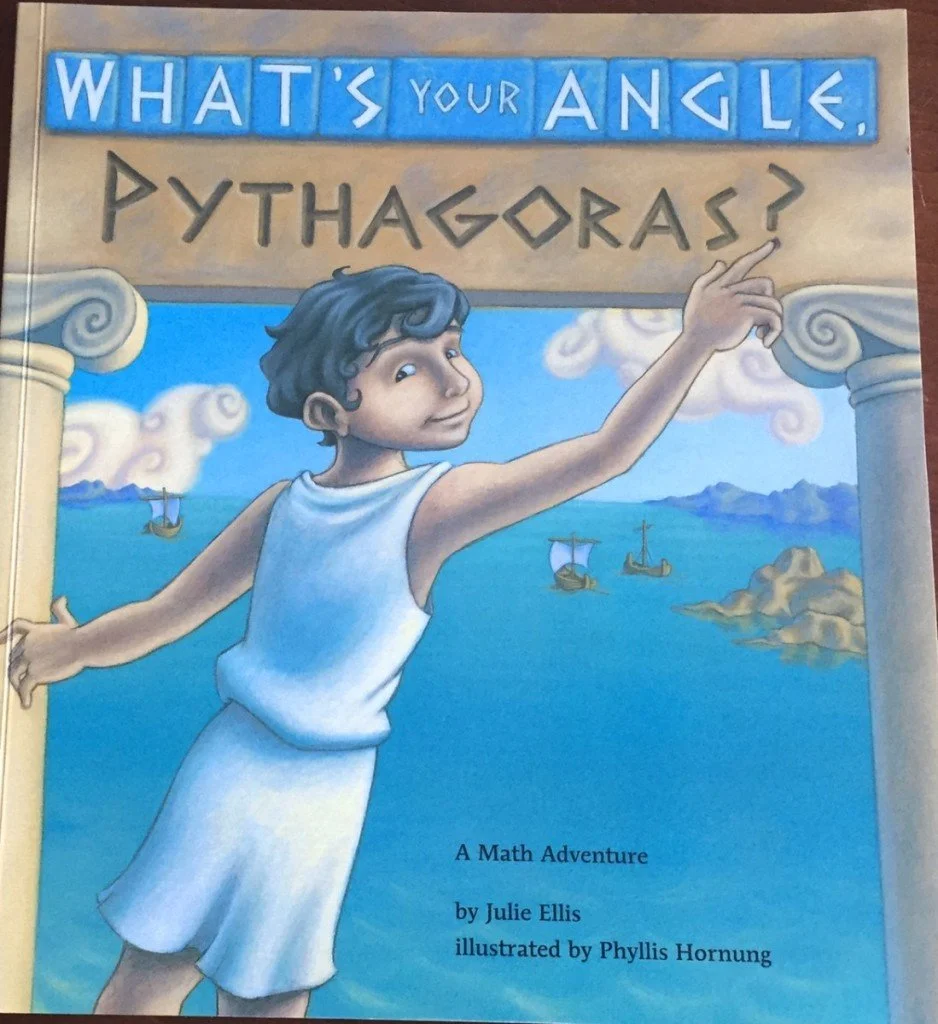
What’s your Angle Pythagoras? By Julie Ellis
Math picture/story book
Covers 3, 4, 5 triangle, the Pythagorean theory and area. Historical however, Pythagoras wasn’t a child when he discovered the 3, 4, 5 triangle or the Pythagorean method
Math level 7th and up
Grade level 3rd and up
Worth checking out
-

The History of Counting By Denise Schmandt-Besserat
Math story/picture book
Historically goes through the different methods of counting and the cultures that used them. Great addition to an ancient civilization unit. Very informative. Written in a story like way, but it’s not a story in that there are no characters
Math level 3rd and up
Grade level 3rd and up
Worth checking out
-
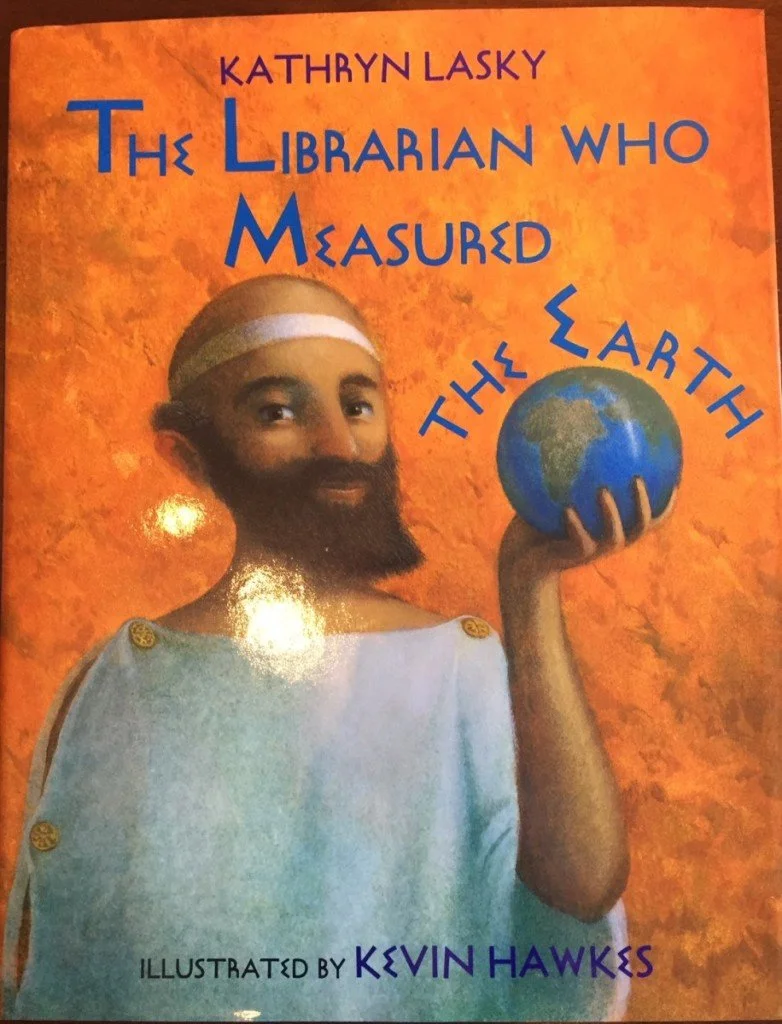
The Librarian Who Measure The Earth By Kathryn Lasky
Math picture biography book
Story of Eratosthenes and how he measured the circumference of the earth. Covers the geometry used in measuring the earth. Wonderfully written and beautifully illustrated. Great potential for activities (namely measuring the earth). Mix of simple and complex math
Math level 5th and up
Grade level 3rd and up
Worth owning
-

Pythagoras and the Ratios By Julie Ellis
Math picture/story book
Covers ratios and music. Historical however, Pythagoras wasn’t a child when he discovered the relationship between length and notes
Math level 5th and up
Grade level 3rd and up
Worth checking out
-

Roman Numerals I to MM By Arthur Geisert
Math picture book
Teaches the Roman numerals through pictures of farm animals. Unique and engaging approach. Nice addition to an ancient Roman unit. Opportunity for interaction on each page by counting the animals to see what Roman numeral it is. Inadvertently teaches addition and subtraction
Math level 4th and up
Grade level 3rd and up
Worth checking out
-
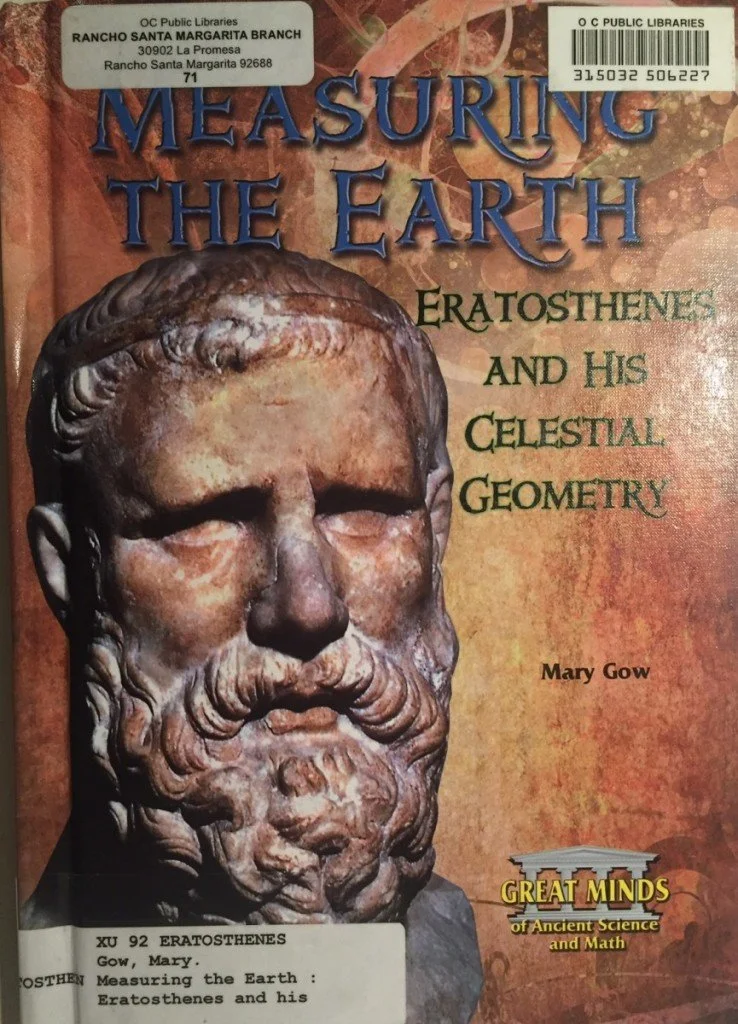
Measure the Earth Eratosthenes and his Celestial Geometry
Chapter book for 6th grade and up
Can be read aloud to younger students. Great complement to a history unit on ancient Greece. Covers history and geography of ancient Greece. Story of Eratosthenes and how he measured the earth
Grade/math level 6th and up
Worth checking out
-

Circumference Eratosthenes and the Ancient Quest to Measure the Globe
High school level book about the ancient mathematicians and the quest to measure the circumference of the earth
Math/grade level high school and up
Worth checking out
-

The Greatest Mathematicians Archimedes and his Eureka! Moment
Chapter book for 6th grade and up
Biography of Archimedes. Can accompany a unit on ancient Greece
Math/grade level 6th an up
Worth checking out
-

Archimedes and the Door of Science
Story of Archimedes and his discoveries written in an easy to read and understand format. Can accompany a unit on ancient Greece
Math/grade level 4th and up
Worth checking out
Scale & Proportion
-

Beanstalk By Ann McCallum
Math story/picture book
Story about scale, simple math that you can follow to scale up and scale down. Also uses shadow and proportion
Math level 4th and up
Grade level 2nd and up
Worth checking out
Measurement
-

Length By Henry Pluckrose
Math picture book
Explains the difference between length and height. Photos are dated, but information is simple and easy to understand
Math level 2nd and up
Grade level preschool
Worth checking out
-

Inch by Inch By Leo Lionni
Math story/picture book
Delightful story about measurement told by way of an inchworm. Beautifully illustrated, cute story
Math level preschool and up
Grade level preschool and up
Worth owning
-
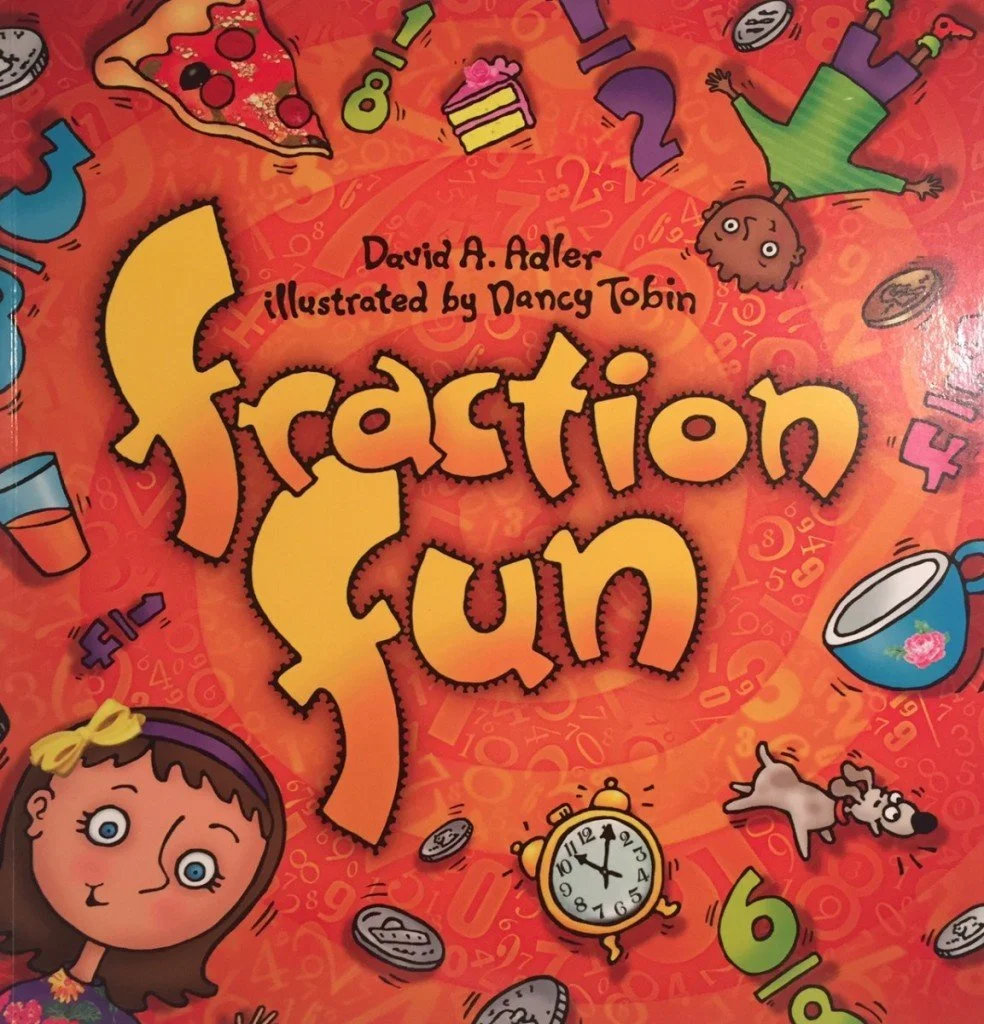
Fraction Fun By David Adler
Math picture book
Covers fractions, terminology, simple division of a whole into 2,3, or more parts.Great potential for activity. Includes interactive activities at the end of the book
Math level 4th and up
Grade level 1st and up
Worth checking out
-

Mesmerizing Math By Jonathan Litton
Interactive math book
Covers all areas of math in an illustrated format with tabs and flaps that are moveable. Fun to read cover to cover as an introduction or review of math concepts. Great potential for activities. Mix of simple and complex math written for the elementary student
Math level 3rd and up
Grade level 2nd and up
Worth checking out or owning
-

Ben Franklin and the Magic Squares By Frank Murphy
Math picture/story book
Historical and biographical. Covers ‘magic squares’ that add up to the same number
Math level 3rd and up
Grade level 3rd and up
Worth checking out
-

High Noon By Scott Sundby
Math picture/story book
Covers scale and how to scale up and scale down (uses graph paper in some illustrations). Inventive story, nicely illustrated, original
Math level 5th and up
Grade level 2nd and up
Worth checking out
-

Rooster’s Off to See the World By Eric Carle
Math picture/story book
Iconic illustrations and delightful stor. Math is all about simple counting up and down
Math level preschool and up
Grade level preschool and up
Worth owning
-

A Place for Zero By Angeline LoPresti
Math picture/story book
Simple addition and multiplication are the side story to the main story of what zero is for. Covers place value, function of zero, and simple addition and multiplication
Math level 3rd and up
Grade level 3rd and up
Worth checking out
-

Once Upon a Dime By Nancy Kelly Allen
Math picture/story book
Math with money. Delightful story, nicely illustrated, mentally interactive story (you guess what will happen next)
Math level 3rd and up
Grade level 1st and up
Worth checking out
-

Great Estimations By Bruce Goldstone
Math picture book
Multiplication of fractions and whole numbers
Math level 5th and up
Grade level 3rd and up
Worth checking out
-

Equal Shmequal By Virginia Kroll
Math picture/story book
Covers balance and equality by means of weight (and weight equals strength in this story). Delightful story that’s entertaining for all ages but especially the youngsters
Math level preschool and up
Grade level preschool and up
Worth checking out/having
-

Alice in Pastaland By Alexandra Wright
Math picture/story book
Story based on Alice in Wonderland, simple math and sequence sprinkled throughout the story.. Mentions shapes, magic squares, multiplication, fractions and more
Math level 4th and up
Grade level 2nd and up
Worth checking out
-

Bedtime Math The Truth Comes Out By Laura Overdeck
Math book with informative stories on each page.
Introduces math problems by giving information not related to math like geography, anatomy, etc.. Math questions for three levels, but I found that the difficulty level varied greatly from page to page within one level
Math level preschool to 4th grade
Grade level preschool and up
Worth checking out
-
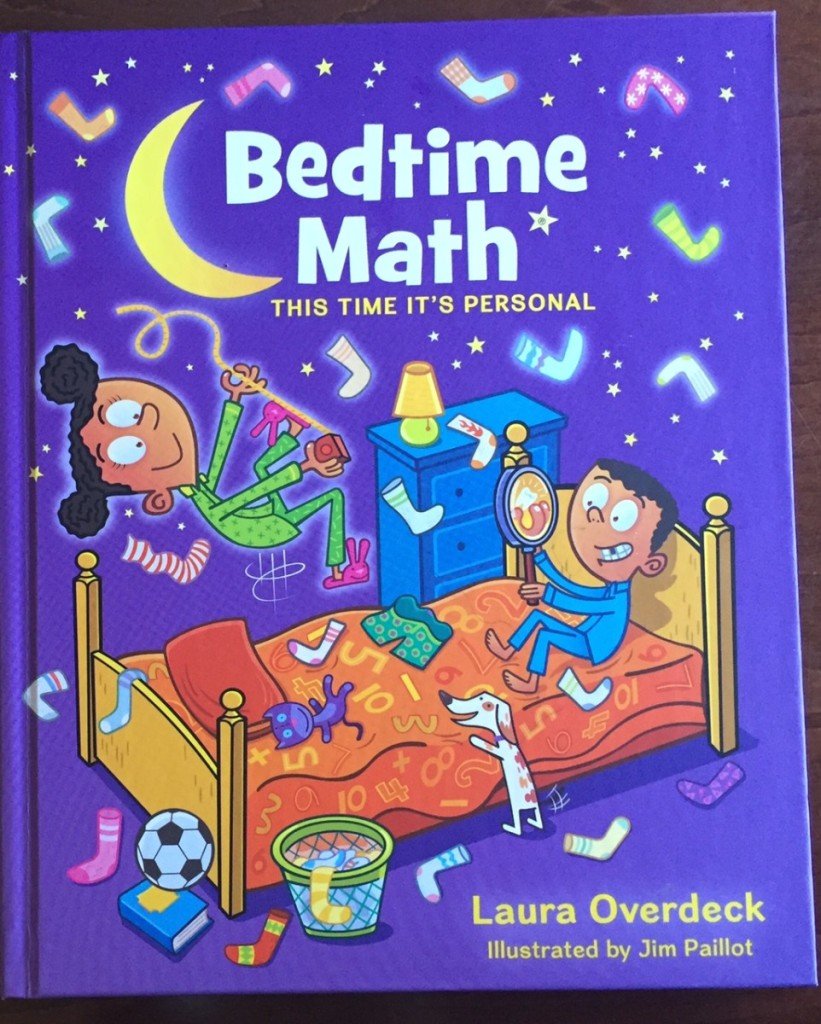
Bedtime Math A Fun Excuse to Stay up Late By Laura Overdeck
Math book with informative stories on each page
Introduces math problems by giving information not related to math like geography, anatomy, etc.. Math questions for three levels, but I found that the difficulty level varied greatly from page to page within one level
Math level preschool to 4th grade
Grade level preschool and up
Worth checking out
-

Bedtime Math This Time It’s Personal By Laura Overdeck
Math book with informative stories on each page
Introduces math problems by giving information not related to math like geography, anatomy, etc.. Math questions for three levels, but I found that the difficulty level varied greatly from page to page within one level
Math level preschool to 4th grade
Grade level preschool and up
Worth checking out
-

The Librarian Who Measure The Earth By Kathryn Lasky
Math picture biography book
Story of Eratosthenes and how he measured the circumference of the earth. Covers the geometry used in measuring the earth. Wonderfully written and beautifully illustrated. Great potential for activities (namely measuring the earth). Mix of simple and complex math
Math level 5th and up
Grade level 3rd and up
Worth owning
-

On a Beam of Light By Jennifer Berne
Picture biography book
Biography of Albert Einstein written for the youngster. Immensely enjoyable, beautifully written & illustrated, nice quality of paper. Less about math and more about Albert as a person
Math level preschool and up
Grade level preschool and up
Worth owning
-

The Boy Who Loved Math By Deborah Heiligman
Picture biography book
Wonderfully written and beautifully illustrated. Great biography about Paul Erdos. Enjoyable for all ages, includes math concepts as part of the story (prime numbers, negative numbers, etc.)
Math level 5th and up
Grade level 3rd and up
Worth owning
-

Ben Franklin and the Magic Squares By Frank Murphy
Math picture/story book
Historical and biographical. Covers ‘magic squares’ that add up to the same number
Math level 3rd and up
Grade level 3rd and up
Worth checking out
-

The Rabbit Problem By Emily Gravett
Interactive picture book
Fibonacci sequence
No story, just interactive pages oriented as a calendar so it can be hung as a calendar and read that way, too. Beautifully illustrated, delightful to look through. Mix of simple and complex math
Math level 3rd and up
Grade level preschool and up
Worth checking out
-

Rabbits Rabbits Everywhere By Ann McCallum
Math picture/story book
Math patterns, Fibonacci sequence. Fun tale for youngsters
Math level 3rd and up
Grade level 2nd and up
Worth checking out
Multiplication and Division
-

A Remainder of One By Elinore Pinczes
Math picture/story book
Covers division with remainders. Delightful story, uniquely illustrated. Very simple, yet instructional. Covers only one concept and it does it well
Math level 3rd and up
Grade level 1st and up
Worth checking out
-

The Multiplying Menace Divides By Pam Calvert
Math picture/story book
Division of fractions and whole numbers
Math level 5th and up
Worth checking out
-

Multiplying Menace The Revenge of Rumplestiltskin By Pam Calvert
Math picture/stroy book
Multiplication of fractions and whole numbers
Math level 5th and up
Grade level 3rd and up
Worth checking out
-

The Grapes of Math By Greg Tang
Math picture book
Multiplication of fractions and whole numbers
Math level 5th and up
Grade level 3rd and up
Worth checking out
-

Math for all Seasons By Greg Tang
Math poems with questions based on illustrations. Very interactive. Covers addition, multiplication and patterns
Math level 3rd and up
Grade level 1st and up
Worth checking out
Symmetry
-

Seeing Symmetry By Loreen Leedy
Math picture book
Covers all types of symmetry. Informative yet simple, includes questions. Computer animation. Great potential for activities stemming from this book
Math level 3rd and up
Grade level 1st and up
Worth checking out
-
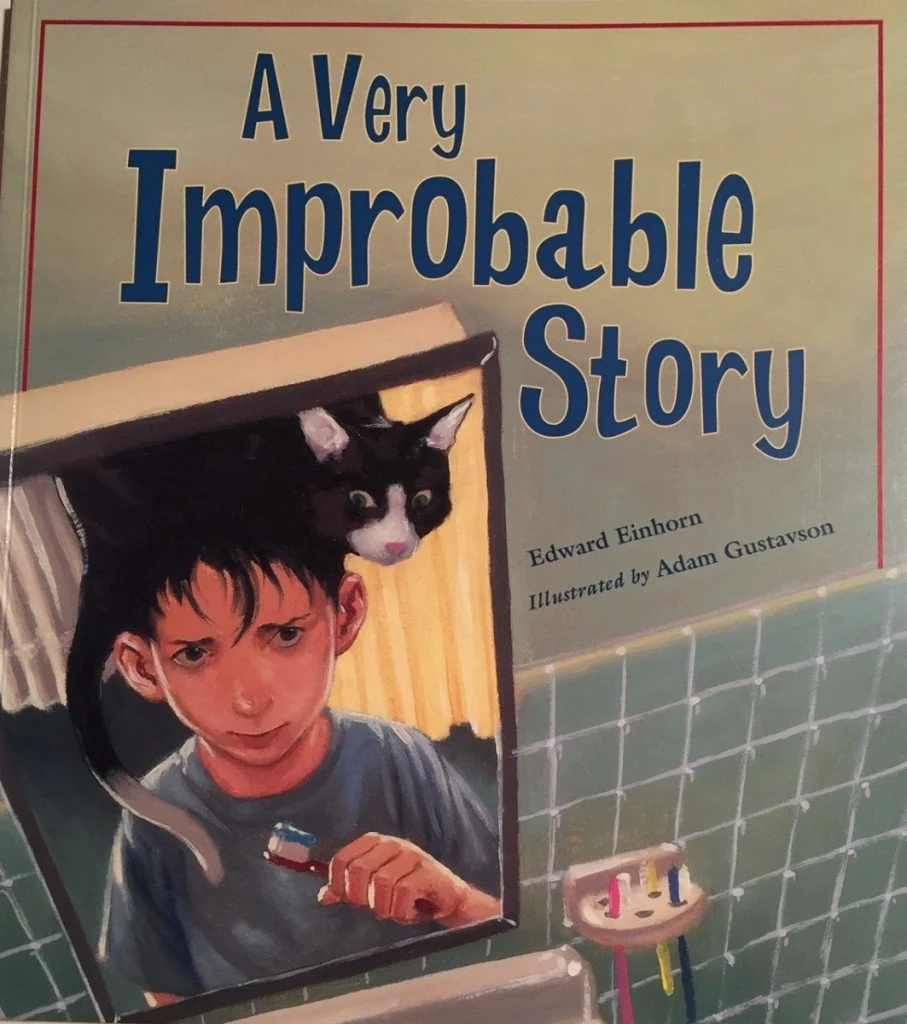
A Very Improbable Story By Edward Einhorn
Math picture/story book
Covers probability in the form of a delightful story. Nice illustrations. Great potential for activities
Math level 4th and up
Grade level 2nd and up
Worth checking out
-
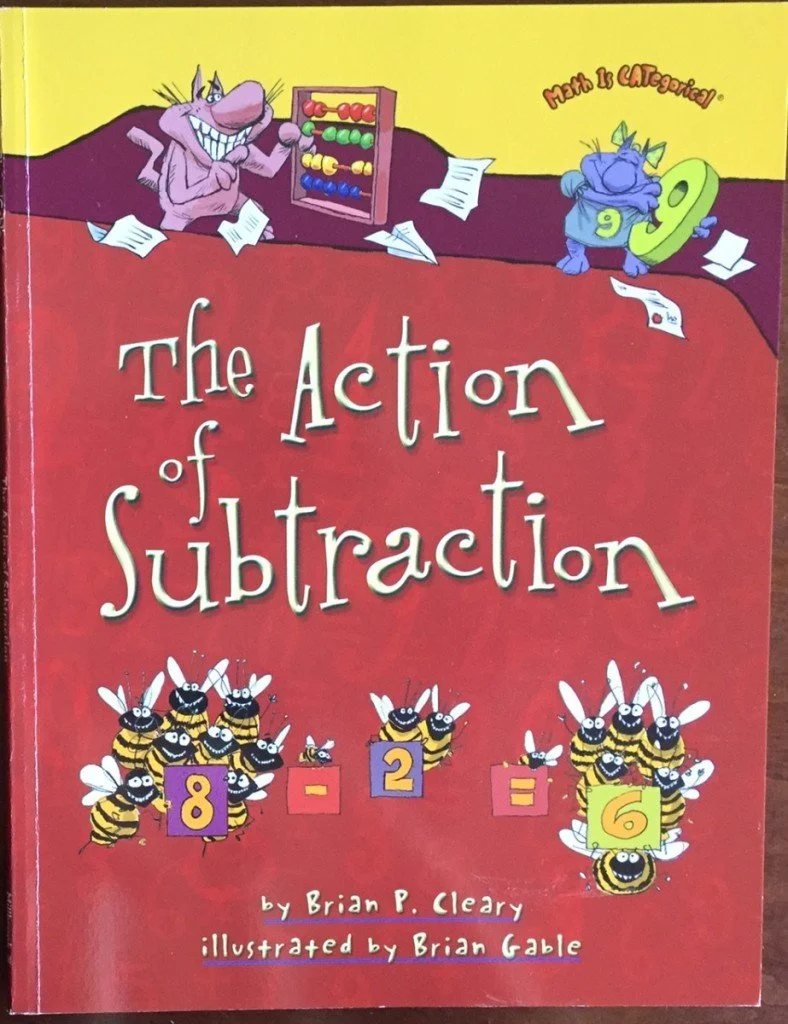
The Action of Subtraction By Brian Cleary
Math picture book
Simple subtraction in a fun and silly poetic form. Covers terminology in a whimsical way
Math level 1st and up
Grade level 1st and up
Worth checking out
-

Math Fables By Greg Tang
Math picture book
Math presented in poems. Delightful story, computer animations
Math level 1st and up
Grade level 1st and up
Worth checking out
-

Adding and Subtracting Puzzles By Karen Bryant-Mole
Reference picture book
Covers many areas of math in a delightful way: stories introduce the math, illustrations accompany each section and simple math problems are presented with each section
Helpful to cover each section on its own rather than reading this book as a picture book
Math level 4th and up
Grade level 3rd and up
Worth checking out
-

Spaghetti and Meatballs for All! By Marilyn Burns
Math picture/story book
Shapes and sides with addition/multiplication. A bit complicated or fast paced to fully appreciate the math, worth reading several times to understand/do the math
Math level 5th and up
Grade level 3rd and up
Worth checking out
-

Sold! A Mothematics Adventure By Nathan Zimelman
Math picture/story book
Nicely illustrated, not much math, simple addition and multiplication
Math level 2nd and up
Grade level 3rd and up
Worth checking out
-

Math for all Seasons By Greg Tang
Math poems with questions based on illustrations
Very interactive
Covers addition, multiplication and patterns
Math level 3rd and up
Grade level 1st and up
Worth checking out
Sir Cumference Series
-

Sir Cumference and the Sword in the Cone By Cindy Neuschwander
Math picture/story book
Covers area of a circle
Math level 7th and up
Grade level 3rd and up
Worth checking out
-

Sir Cumference and the First Round Table By Cindy Neuschwander
Math picture/story book
Geometry: names the shapes and explains how many sides on each shape
Math level 3rd and up
Grade level 3rd and up
Worth checking out
-

Sir Cumerence and the Great Knight of Angleland By Cindy Neuschwander
Math picture/story book
Covers angles, obtuse, acute and right angles
Math level 5th and up
Grade level 3rd and up
Worth checking out
-
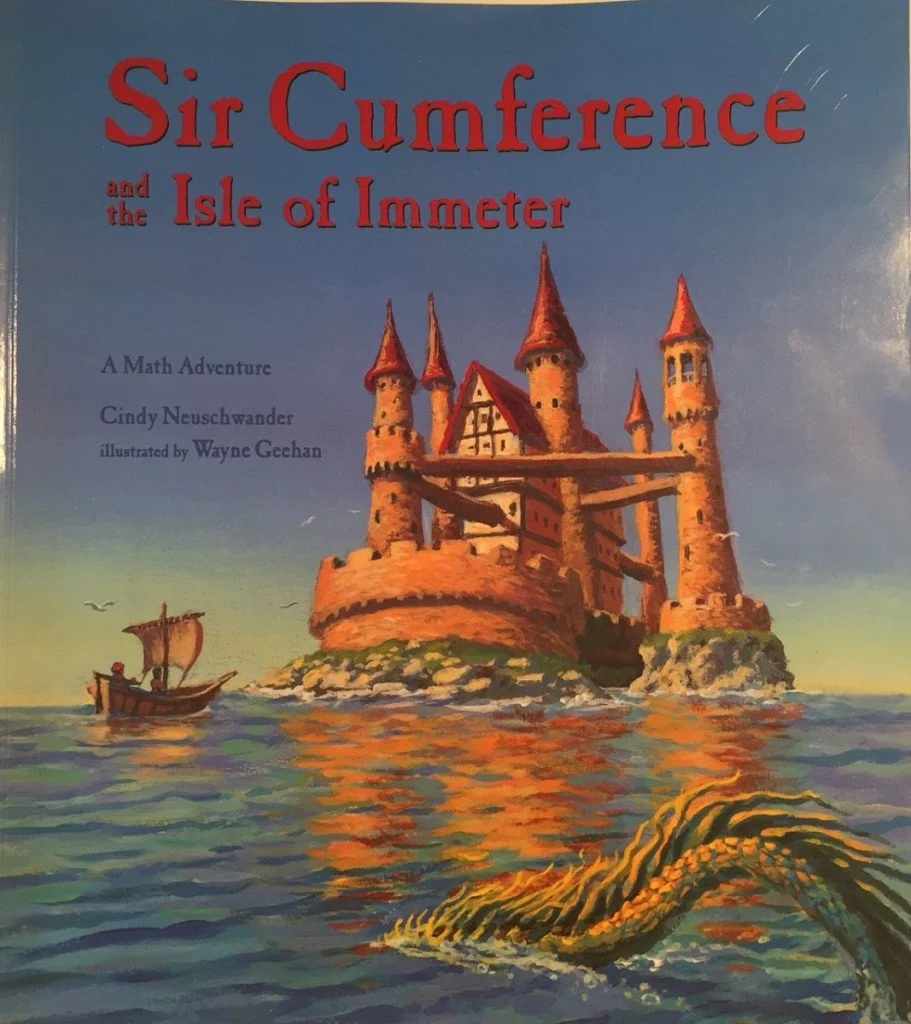
Sir Cumference and Isle of Immeter By Cindy Neuschwander
Math picture/story book
Covers shapes, edges and faces
Math level 7th and up
Grade level 3rd and up
Worth checking out
-

Sir Cumference and All the King’s Tens By Cindy Neuschwander
Math picture/story book
Covers grouping numbers into ones, tens, hundreds and thousands, explains place value
Math level 3rd and up
Grade level 3rd and up
Worth checking out
-
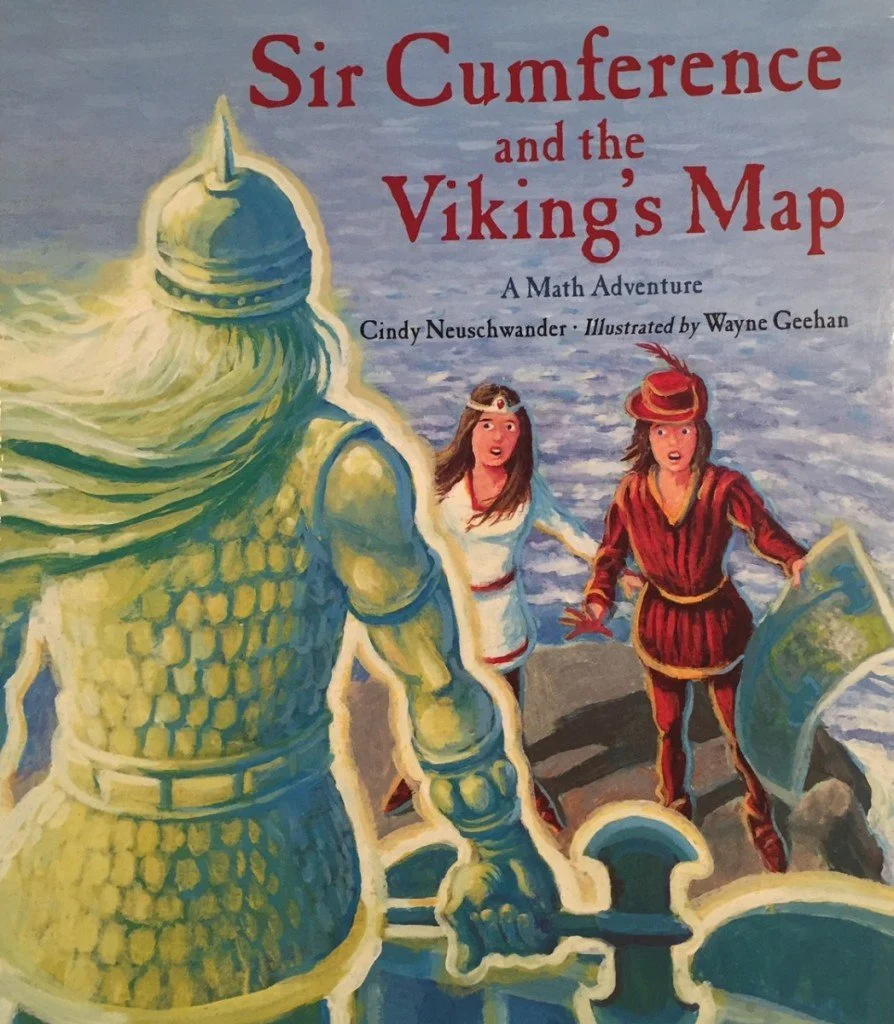
Sir Cumference and the Viking’s Map By Cindy Neuschwander
Math picture/story book
Covers graphing and plotting points on a graph
Math level 6th and up
Grade level 3rd and up
Worth checking out
-

Sir Cumference and Off-the-Charts Dessert By Cindy Neuschwander
Math picture/story book
Covers charts and graphs and the difference between them
Math level 5th and up
Grade level 3rd and up
Worth checking out
-

Sir Cumference and the Dragon of Pi By Cindy Neuschwander
Math picture/story book
Covers geometry concepts of radius, pi and circumference and relationship between the radius and circumference
Math level 7th and up
Grade level 3rd and up
Worth checking out
-

Round Table Geometry Sir Cumference Classroom Activities By Don Robb
Reproducible workbook
Great accompaniment to the Sir Cumference series
Math level 4th and up
Worth having if you are using the Sir Cumference books as part of your math curriculum
-
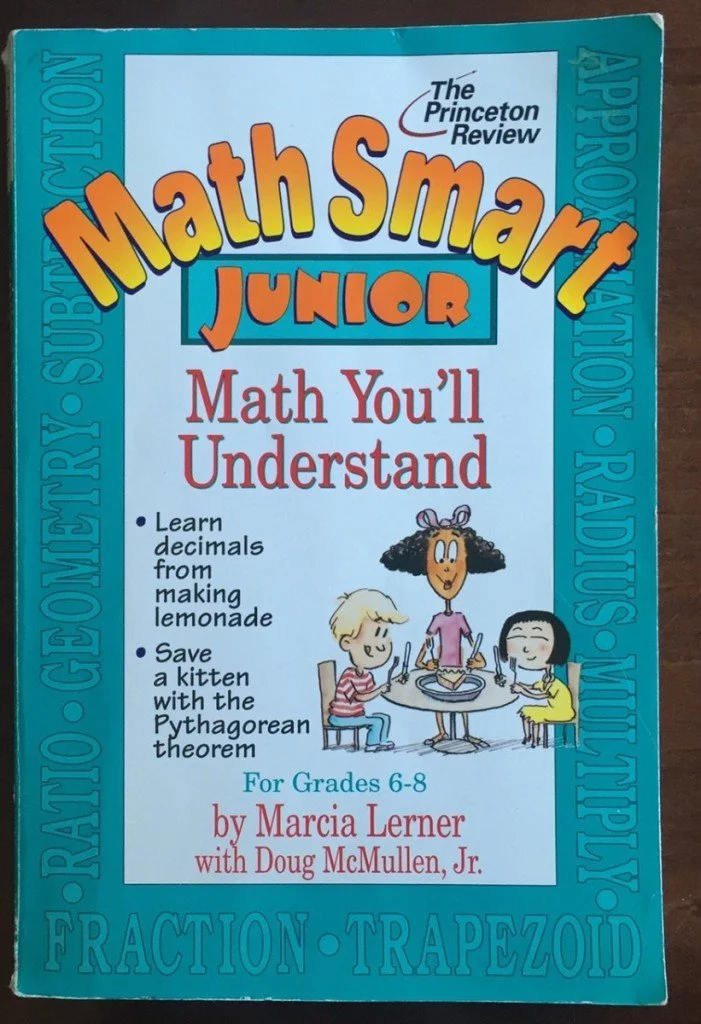
Math Smart Junior By Marcia Lerner
Math book in a story format that follows three kids on their math adventures
Math problems are presented naturally throughout the book as a natural result of life
Simple everyday math explored and explained through a delightful narrative
Creative and inventive
Additional questions at the end of each chapter
Math level 5th and up
Worth checking out
-

Arithmetricks By Edward H. Julius
Learn math tricks in a story like way.
Each chapter introduces a problem, shows the long way to solve the problem, shows the short cut or ‘arithmetrick’, has an example on how to use the trick and has several questions (answers in the back)
Tricks are easy to learn but also easy to forget. We added more questions and practiced each ‘trick’ for a week, but still after a year, we only remember a few. Worth reviewing often. Great tricks.
Math level 5th and up
Worth owning if you’ll use it as part of your curriculum, worth borrowing as a novelty
-

Math Wizardry for Kids By Margaret Kenda and Phyllis S. Williams
Resource/ Reference book
Each ‘chapter’ has an intro about a paragraph long that is enjoyable to read and informative that is followed by a math activity.
Very interactive book that covers a wide variety of math concepts
Covers basic math to geometry and algebra at a basic level
Great potential for activities
Math level 4th and up
Worth owning
-

Family Math By Jean Kerr Stenmark, Virginia Thompson, Ruth Cossey
Math book to be read and worked on with kids
Great potential for activities
Math problems and activities
Math level 2nd grade and up
Resource/Reference Books
-

Teaching Mathematics in Rudolf Steiner Schools for Classes I-VIII By Ron Jarman
Resource/reference book
Great resource for teachers/homeschoolers
Filled with many examples and explanations
Math level-all
Worth owning if using a Waldorf curriculum
-

Algebra the x and y of everyday math By Michael Willers
Resource/Reference book
Covers algebraic concepts with easy step by step instruction
Stories and biographies of great mathematicians throughout book
Learn about Euclid, Plato, Eratosthenes, Pythagoras, Descartes, Fibonacci and more.
Math level 7th and up (stories of mathematician 5th grade and up)
Worth owning
-
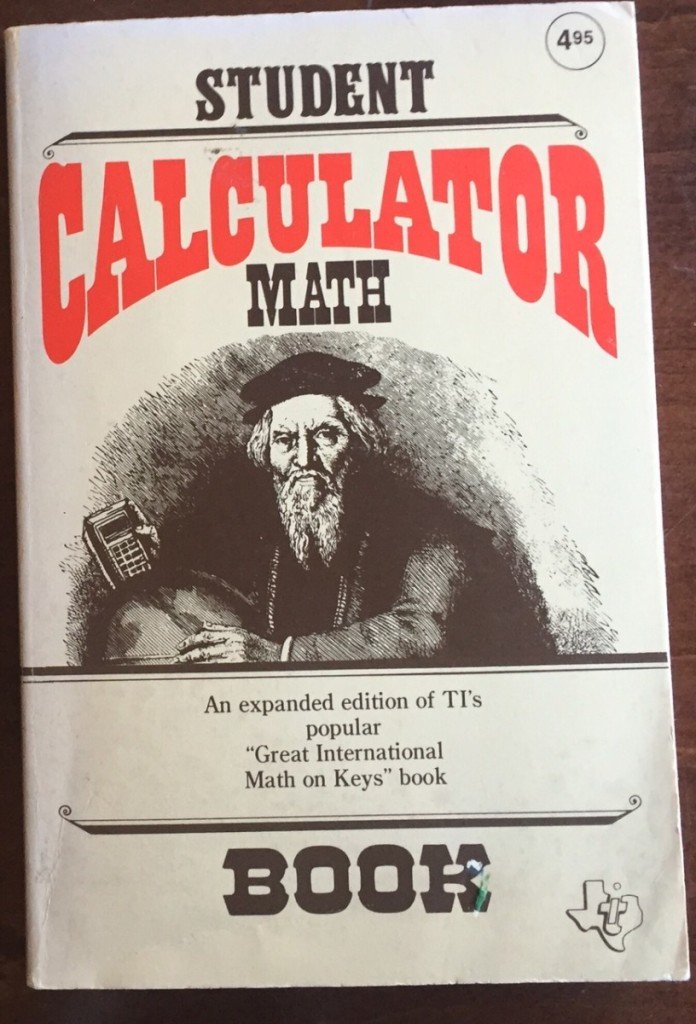
Student Calculator Math Books
Resource/Reference book
Teaches techniques on how to use a scientific calculator
Table of contents include: basic keys to your calculator, conversions, home management, algebra, finance, trigonometry, probability & statistics, chemistry and puzzles.
Math level 7th and up
Worth owning, if you need to learn how to use a scientific calculator, you won’t have enough time to learn the techniques in this book in 3 weeks.
-

The Usborne Illustrated Dictionary of Math
Resource/Reference book
Covers all areas of math from the basic operations to geometry and algebra
Math level 5th and up
Worth owning
-
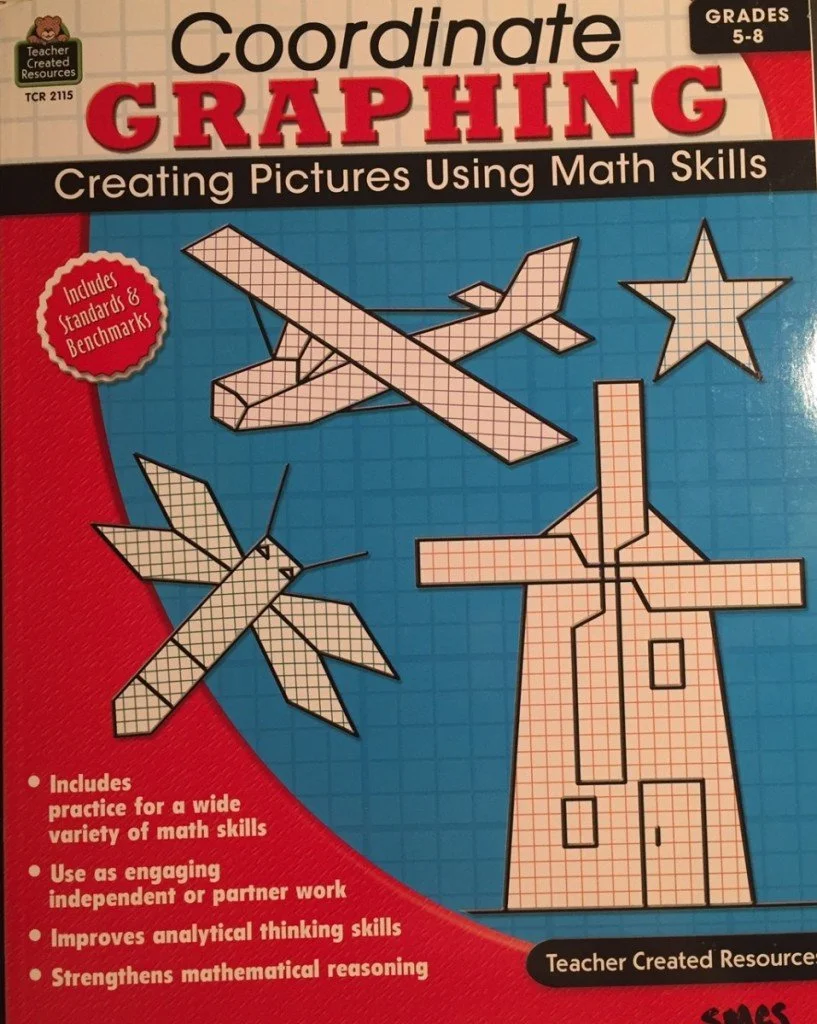
Coordinate Graphing by Teacher Created Resources
Reproducible workbook
Teaching graphing by using other math skills to get the coordinates
Covers integers, algebra, fractions, geometry, area & measurement, and more
Math level 6th and up
Worth owning
Waldorf Grade 4 | Math Resources
Grade 4 Math
In every grade, a new mathematical concept will be introduced and all the concepts before will be worked on for proficiency and eventually mastery. In grade 4, fractions are introduced. I find fractions to be a difficult concept for many children and adults to fully understand and master. While there are some children who take to it right away, I have an idea for you if your child doesn’t or if you still struggle with the concept of fractions, decimals and percents.
I prefer to begin our year (usually in September after several months off in the summer), with our blocks in math and grammar. I choose the fall when the children are freshest, most enthusiastic and hopefully ripe for learning. The exception is grade 4 math block if I anticipate my students will need more time in prep before diving into fractions. In that case, I spend the majority of the year in ‘Living Math’ and introduce the written form of fractions at the end of the school year, spending grade 5 in deep practice for fractions, decimals and percent. Also, I should remind you that in practice, I’ve never been as idealistic as I write and share and in my videos. Life is unpredictable at the best of times, and adjusting for children’s capabilities, your time, life’s challenges, etc. is necessary in every step of this educational journey.
For Living Math, I am meaningful about using fraction terms in practical life, measuring and comparing while cooking and gardening and using math while grocery shopping in a non quizzing way. If I ask ‘How much is 2 dozen eggs?” and each dozen is $2.99, I might expect an answer of $6 rather than $5.98 as my son gave me almost 2 decades ago when he was maybe 8 years old. I learned a lot from this interaction. But if my son was more interested in noticing the 10 varieties of eggs rather than doing math, I would not ask him the question again, nor press him for the answer if I noticed distress. I’ve seen parents in public choose meaningful opportunity to teach reading or math, only for it to result in stress, humiliation or distress. While I applaud the initiative and care these parents have, sometimes, the child has his or her own plans.
In addition to introducing fractions in grade 4, the four mathematical functions and the memorization of the multiplication table is going to be reviewed heavily this year. In my experience, mastery of these concepts took years.
One of our favorite ways to ‘live’ and experience math was with the book Math in the Garden: Hands-On Activities. You can see all the engaging projects we did by checking out the video playlist for Math in the Garden.
It seems like there are an abundance of innovative math resources available, and I am constantly impressed with the creative ways educators make learning math fun, interactive and memorable. A new item we have for our homeschool is the times table in this beautiful assortment of colors. It’s by Lino Natura and the Times Table in a rainbow of colors is just what I love.
Resources for Math
Fractions in Disguise: A Math Adventure (Charlesbridge Math Adventures)
Math in the Garden: Hands-On Activities That Bring Math to Life, Ages 5-13
Active Arithmetic!: Movement and Mathematics Teaching in the Lower Grades of a Waldorf School
Pack of 12 Wooden Dowel Rods – 1/2 x 12 Inch Round Unfinished Wood Dowel Rod 12 Inch Wood Dowels
Fractions and Mental Math
Grade 4 is synonymous with the introduction of fractions. And while it may take years to master fractions, students will progress to higher math the following year while reviewing the maths of previous years. Additionally, students will continue to work on their mental math abilities. Mental math is the process of doing math problems in your head without paper and pencil.
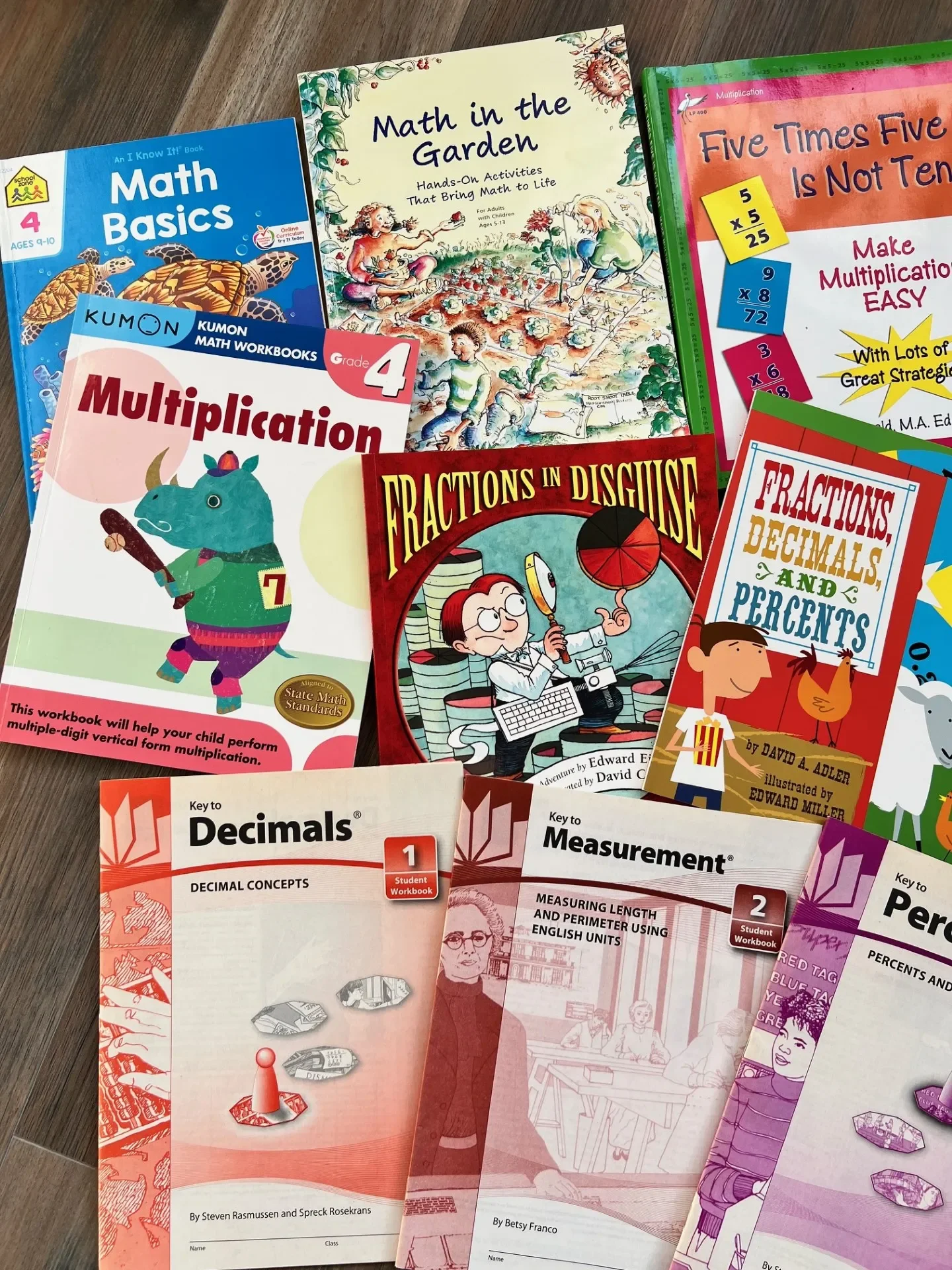
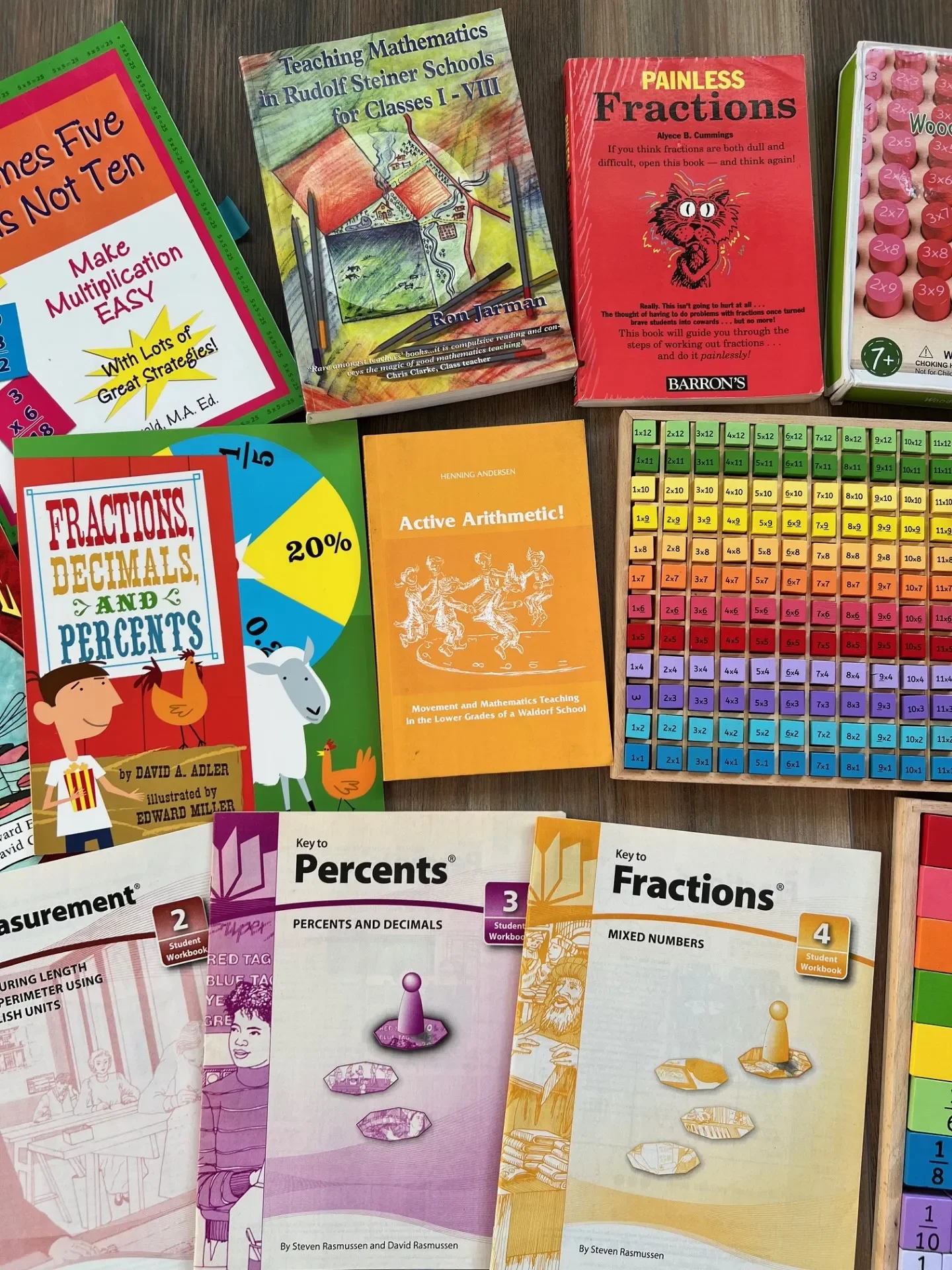
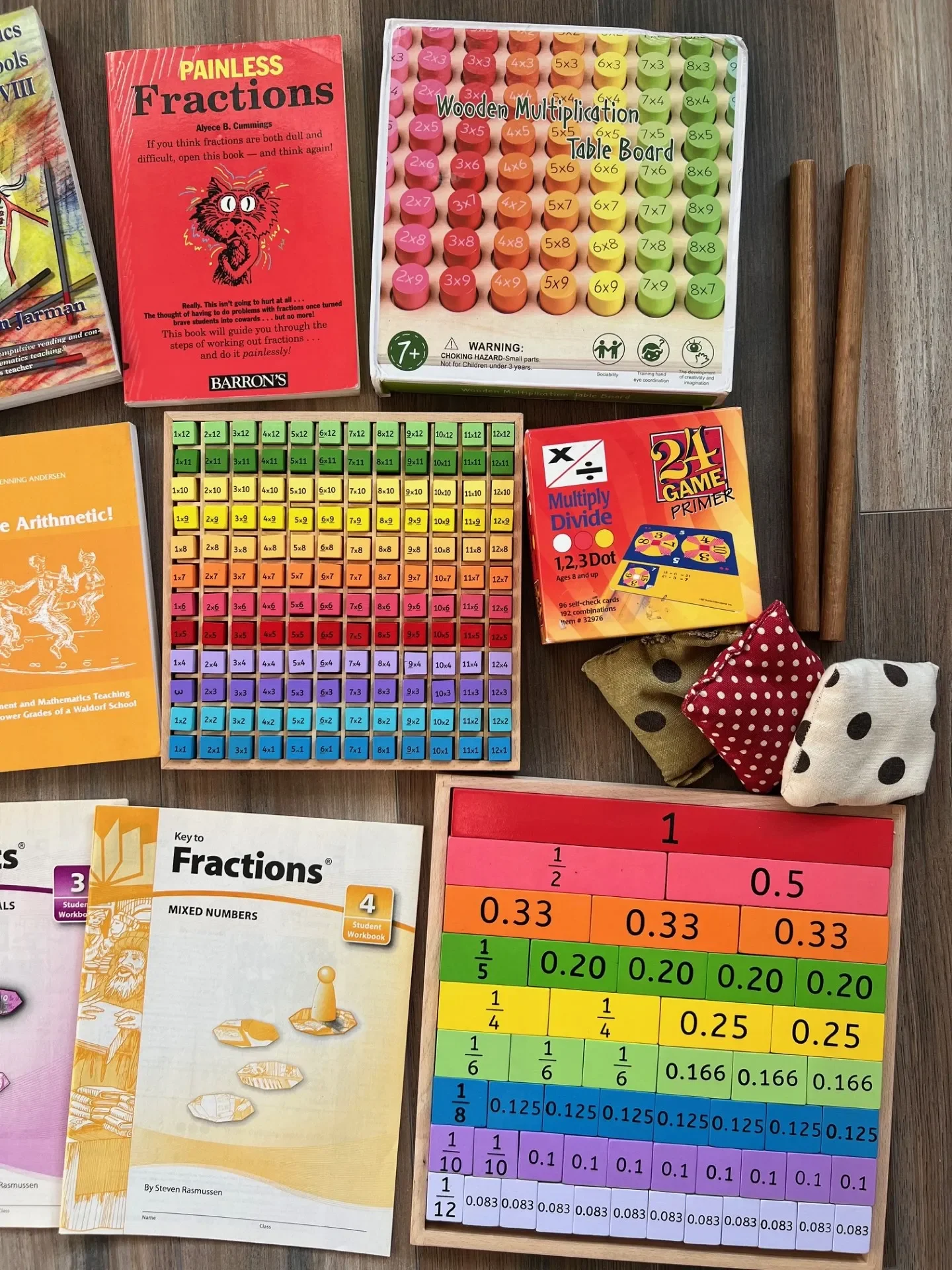
Waldorf Math | Times Table | Chalk Drawing
In our Waldorf inspired homeschool, we start off our year with our main lesson blocks in Math or Grammar. This year we are working on the times table primarily and since we want to take the year to master it (though it will likely take longer realistically), we are starting those lessons right from the start. For this unit, I’ve drawn a large multiplication table on the chalkboard and made it colorful for the sake of beauty and practicality. It’s my hope that my 9-year-old daughter will be able to use the table to help with math and quickly identify answers by following up or across the board with ease because of the colors. I also hope that the colors will help with skip counting and memory, but in my experience, the one thing that helps best with memorizing the times table is rhythmic clapping, skip counting and singing the times table. If each of the 12 times has a different chant or rhythm or song, that helps tremendously.
Today’s chalk drawing was inspired by two posts on Instagram. The first is Della at The Beauty of Play and the other is by Steiner Teacher. Both posts had either number charts or times tables drawn in beautiful colors. When you color math this way, you honor the beauty that is intrinsic in math and you invite the students to partake in that beauty as well. When the chalk drawing was complete, I added some of the games and books we will use throughout this unit. Putting them out and within easy grasp is also an invitation, and the fact that I color coded them too, was simply an addition on my part.
For this chalk drawing, I used Sargent Art Square Chalk pastels from Blick Art Materials. My chalkboard is by Ghent and it is 4’x6′. It used to be a mobile chalkboard on wheels and the chalkboard is double sided with the reverse as a dry erase board, but a few years ago, I decided to mount it on the wall and add more bookshelves below to house our growing collection of books.
The chalk drawing of the Times Table is a beautiful addition to your school space, but if you don't have the space or a chalkboard, you can download a printable version for free, by tapping here.
Math Workbooks | Algebra, Geometry, Fractions, Decimals and Trigonometry
While we mainly use Key to Curriculum series I have recently become interested in the Straight Forward math workbook series. These math workbooks focus on the basics of math and provide questions to become proficient in that subject area. While I really liked the pre-algebra, decimals and fractions workbooks, I’m not liking the algebra and sentence diagramming workbooks as much. You can find the Geometry Series Straightforward math at Remedia Publications.
Key to Math Series | Math Curriculum for Fractions, Decimals, Percents, Algebra and Geometry
Key to math curriculum series is a workbook series that covers the topics of measurement, metric measurement, fractions, decimals, percents, geometry, and algebra. Work books are designed for easy self direction with little additional support. Each section provides simple examples and clear directions for understanding the math topic. The aim is for proficiency and eventually mastery of topics. They are focused on each of the subject areas without adding additional word problems or review questions or math, topics and other areas.
The geometry and algebra series do not have the rigor to support high school level, algebra and geometry. I find them perfect for middle school, geometry, and algebra or to support an existing curriculum. The algebra workbooks move slowly through algebraic concepts, including pre-algebra. We typically begin with measurement and metric measurement in grade 3 or 4. We continue with fractions, decimals and percents in grade 4 or 5. We follow it with geometry and grade 5 or 6. And conclude with algebra in grade 7 or 8.
Math Curriculum Workbooks
Key To math series are the only math books we ever buy. They are simple, student-led and environmental friendly! You read it right, they are environmental friendly. The workbooks contain about 45 pages and are printed on thin paper similar to newsprint paper. They are also simply laid out with easy to understand directions, so minimal instruction is needed. If you do need to help your child, the examples provided in the books are the perfect teaching tool. Simply write the example on a chalkboard or piece of paper and walk your child through the example. The series also comes with an answer key, which I highly recommend. The curriculum is sold individually or as a set, and I think they are really well priced. You can find the complete series at Rainbow Resource.
What's in Our Math Binder | Daily Math
Creating a math binder is an easy way to take the best worksheets from a variety of workbooks. I take worksheets that are about 1-3 grade levels below with the intention that this daily math shouldn’t take more than 10 minutes, should be easy, and cover basic math.
Mental math is the process of orally asking math questions and having the student compute the math in his or her head and orally answer the question. These are not questions that are drilled or memorized. Often you’ll find two part questions that can still be done mentally but are more challenging because now the whole question needs to be remembered while each portion of the question is worked out.
Questions are often two parts with the first part including a multiplication or division question followed by an addition or subtraction question. When questions include whole numbers and fractions the possibilities for questions is tremendous. Here are some examples:
2 x 5 + 9 = (19) 12 x 1/2 - 1 1/2 = (4 1/2) 12 ÷ 4 + 6 = (9) 7 x 7 + 18 = (67)
Mental math is ideal when it is included in your opening activities, but you may choose to do mental math whenever it fits your daily schedule. While it’s best to do mental math everyday, you may double up on mental math lessons when necessary. Or, you can do mental math 2 or 3 days a week. I find that mental math is best before a lesson and that it is math the student is already familiar with; it should not be new learning. In general, mental math is best when the student is fresh and isn’t already academically fatigued. For most children this is in the morning, but you may find your child performs best at another time of day.
These worksheets contain five questions each day of the school week (Monday through Friday, or in the case of the worksheets marked Day 1 to Day 5 to accommodate international school weeks). That’s a total of 35 questions a week. That’s over 1000 questions a year, most of which are two part questions so that’s like doing nearly 2000 questions a year! That’s sufficient, but when I was doing these questions with my children, I often did 6-10 questions a day when my children were about grade 5 to grade 9, and about 2-5 questions when my children were grades 1-4. I would repeat the same questions year after year adding more challenging ones the first time my children went through these questions. By the time I had created all my mental math questions I had over 4000 questions spanning 3 years. I simply recycled the questions year to year.
Mental Math Curriculum | Grades 3rd, 4th and 5th and What is Mental Math?
Fractions, Decimals and Percents
It’s my opinion that fractions are the most challenging math concepts that elementary students have to master. And while in a relatively short space of time they can become fairly proficient in calculating fractions, decimals and percents on paper, I do think it takes years, even decades to fully master the concept and practice of fractions. The resources I’m sharing can easily complement an existing math curriculum or they can be the resources you use to create your own curriculum.
For review work, I use a math binder, and you can check out this video on how we put that together.
While we mainly use Key to Curriculum series.
I have recently become interested in the Straight Forward math workbook series.
Fractions Resources
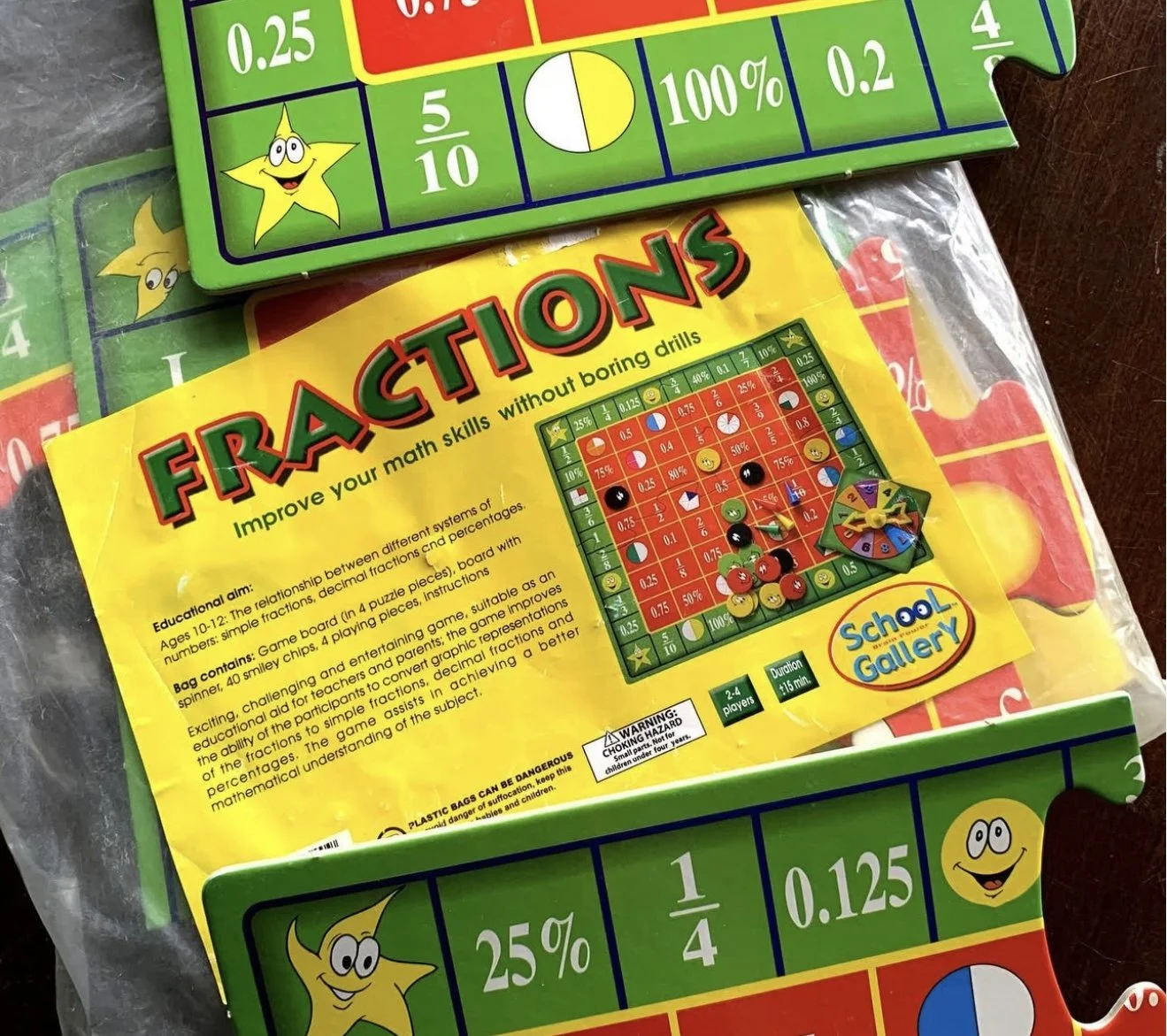
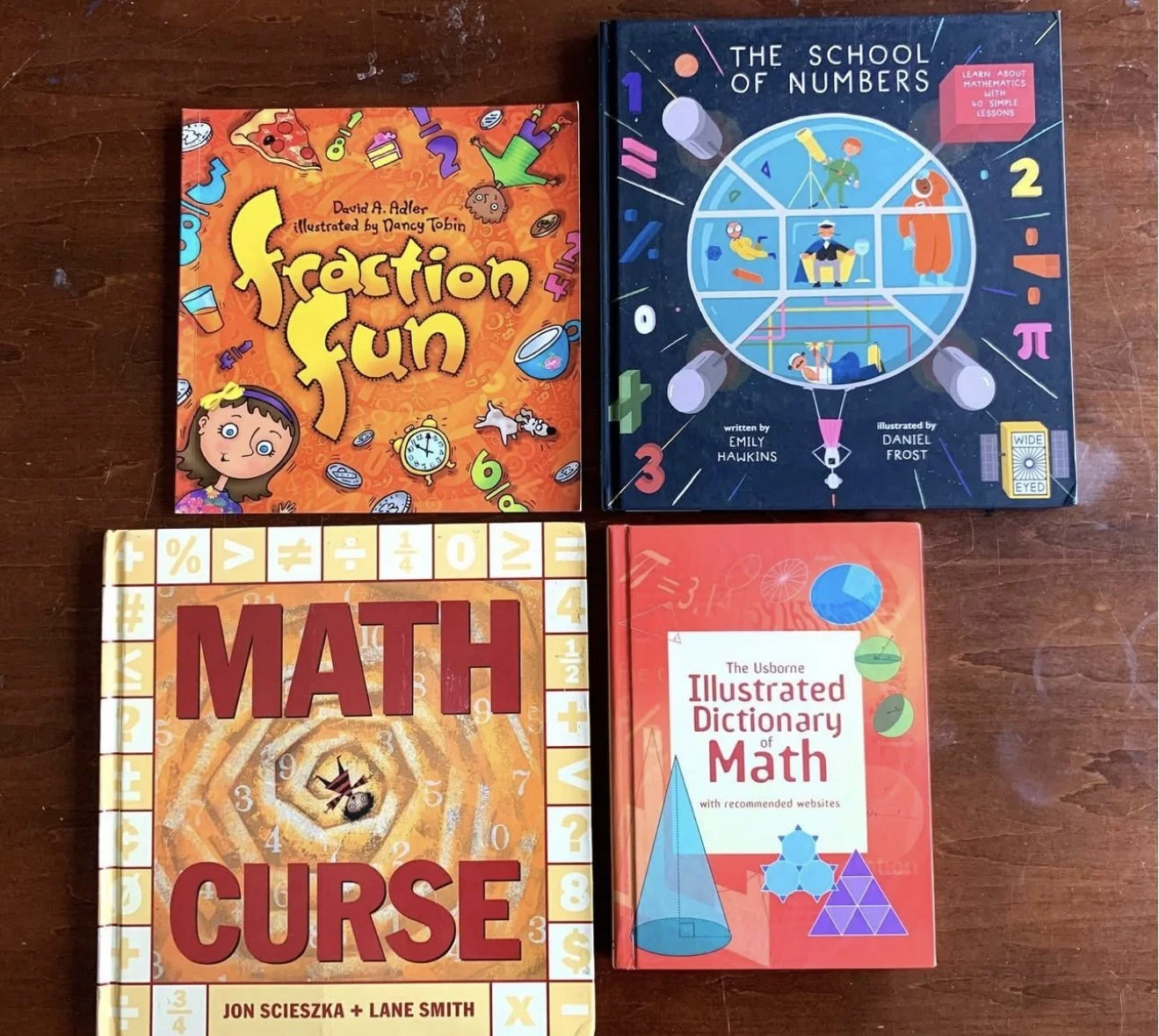
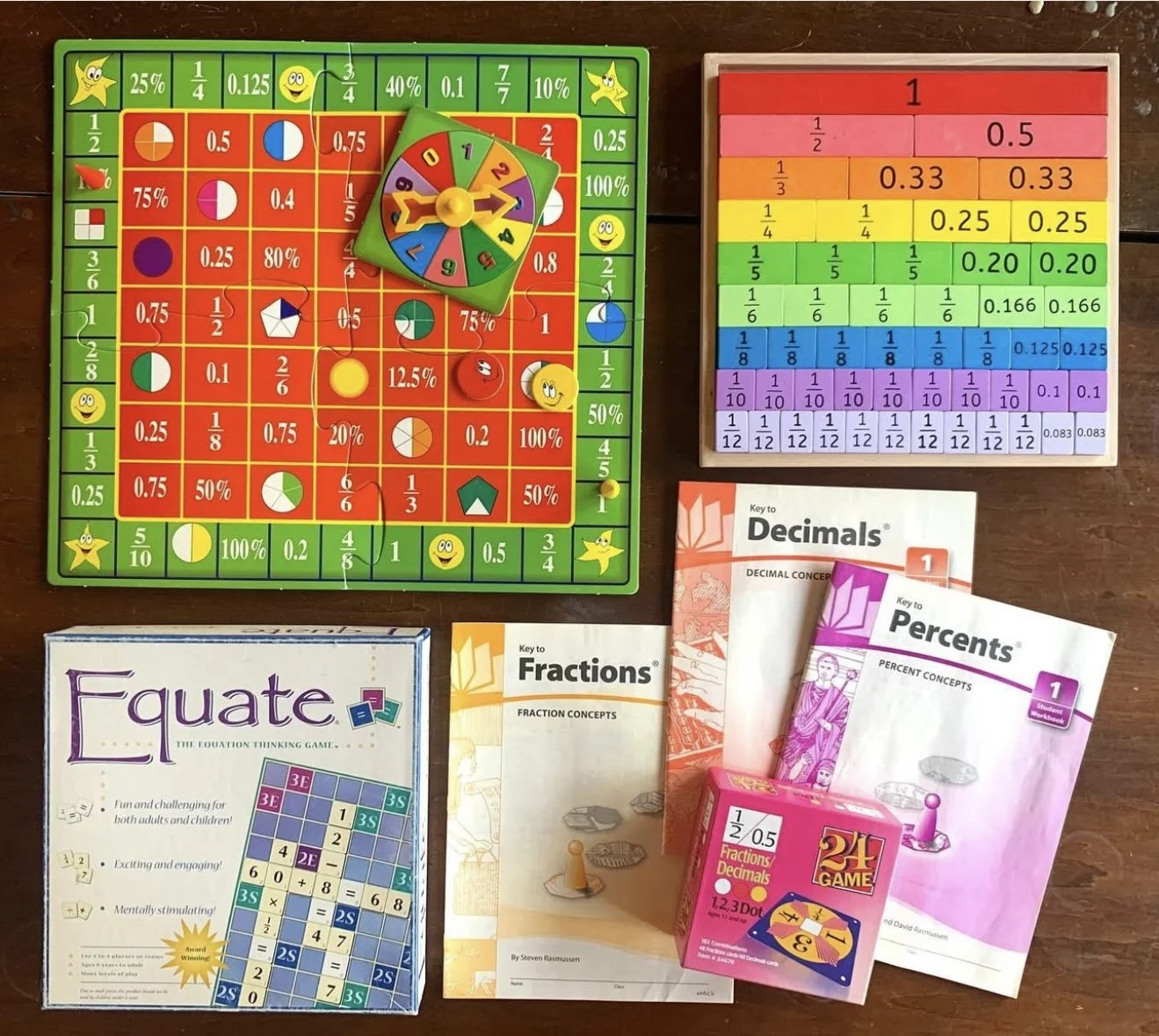
Hello fractions! I only half missed you. Here are a few of our math resources for fractions. We have a few games, workbooks, manipulatives, and books. Swipe to see them all.
Games: Fractions by School Gallery, Equate and 24 Games fractions and decimals.
Fraction board from BigJigs Toys
Workbooks are Key to Fractions books 1-4, Key to Decimals books 1-4 and Key to Percents books 1-3.
.
Books are Fraction Fun, Math Curse, Usborne illustrated Dictionary of Math, and The School of Numbers.
Last slide is my son explaining fractions to my daughter 😍
Living fractions are the best! Speak using fractions and math terms when appropriate.
Live your fractions years before you put pen to paper.
Follow recipes. Half them and double them.
Make pizza and divide it into slices.
Don’t artificially or inauthentically make up math questions. Children see right through that and don’t like being tricked into math. Ease off when you see your child frustrated but resume when you’re both ready...Even if you stop and start a few times in the day.
Remember that fractions are hard, and they take years to master and understand deeply even if you and your child get all the questions correct on a worksheet.
Shop with your children to calculate discounts. Math will save you money!
And remember to foster a love for math in whatever capacity you are capable.
See the Post on Instagram.

The Best Waldorf Math | Teaching Mathematics in Rudolf Steiner Schools for Classes I-VIII
If you've ever wanted to learn more about how math is taught in Steiner schools (Waldorf education), this book will take you from conception to application. Teaching Mathematics in Rudolf Steiner Schools for classes I-VIII by Ron Jarman is the most comprehensive books on mathematics I've ever seen. It's beautifully written with many mathematically illustrations and examples. In addition to general math information, Steiner philosophy and Waldorf education philosophy, the book includes chapters dedicated to each grade 1st through 8th grade with detailed information on the methodology of teaching math, specific examples to complement the text as well suggestions on how and when to teach particular math concepts. This book is rich with insight and information. The author conveys a deep understanding of math in general and specifically for its application in Steiner schools.
If you have no other book on math, this one would be adequate for writing your own math curriculum. It works perfectly to accompany a Waldorf curriculum and would be a wonderful addition to any home library for those who have a passion or interest in mathematics.
This is not light reading. Be prepared to pause and contemplate as you read it through. Though I use it as a reference book, I think it's definitely worth reading cover to cover.
If you've never been exposed to a different method of teaching and understanding math, this book will open your eyes and heart to the wonderful, mysterious and complex world of mathematics as seen through the eyes of Waldorf education.
If you wish to teach math using the Waldorf methodology, you can do so successfully using a number of Waldorf curricula. Our choice is Live Education.
This book may be hard to find at a decent price, but the following is the Amazon link.
How to Play Set (Math Card Game)
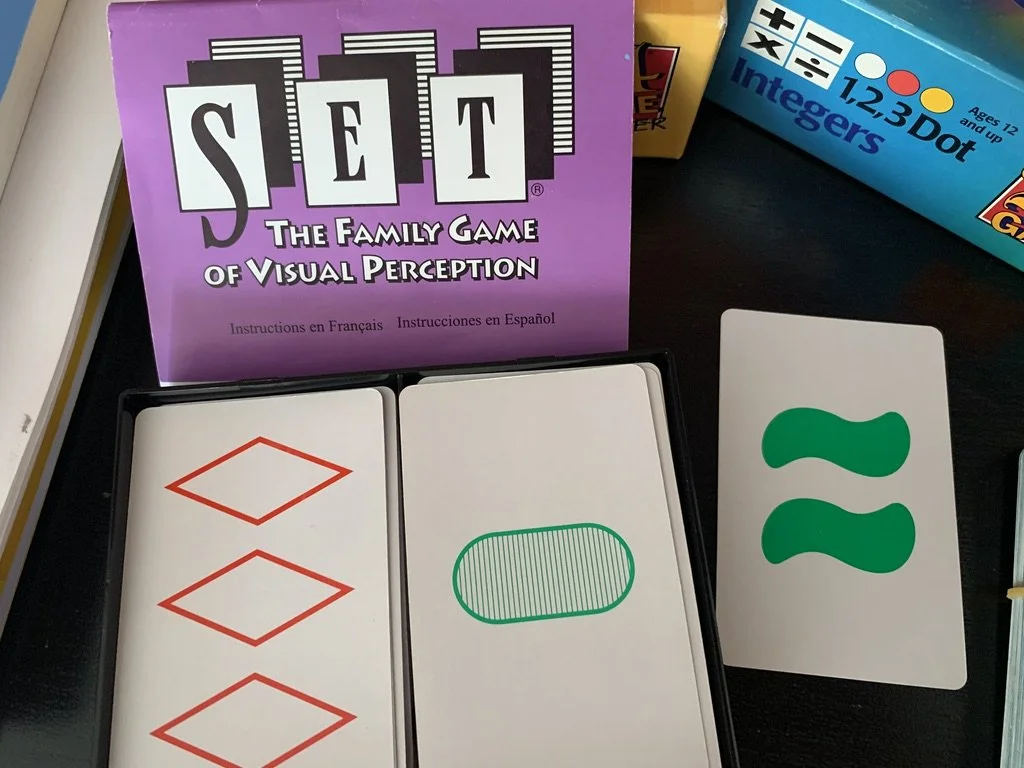
I love to add math games to our curriculum and today I want to show you how to play one of my favorite card games. SET was introduced to me years ago by a good friend and we have been hooked ever since. The concept is simple: find a set. A set is three cards in which no two cards are the same. So, all three cards have to have elements that are ALL the same or ALL different. The deck comes with 80 cards that are different configurations of shapes, colors, numbers and fills. You can find the game at Rainbow Resources.



How to Make & Play Math Games
I love math games! And I want to share with your their educational value and how to incorporate them into your lessons. Tribulation is a math game from the 1980's and though you may not be able to find it anymore, I can show you how to make one of your own.
To make this game you'll need to make 49 tiles with the numbers 1-9 on them (the 6 & the 9 are interchangeable). They are about 1.5" square. You'll need
Five 1's
Six 2's
Six 3's
Six 4's
Six 5's
Ten 6's/9's
Five 7's
Five 8's
You'll need 50 round tiles with the number 1-50 on them. They measure about 1" in diameter.
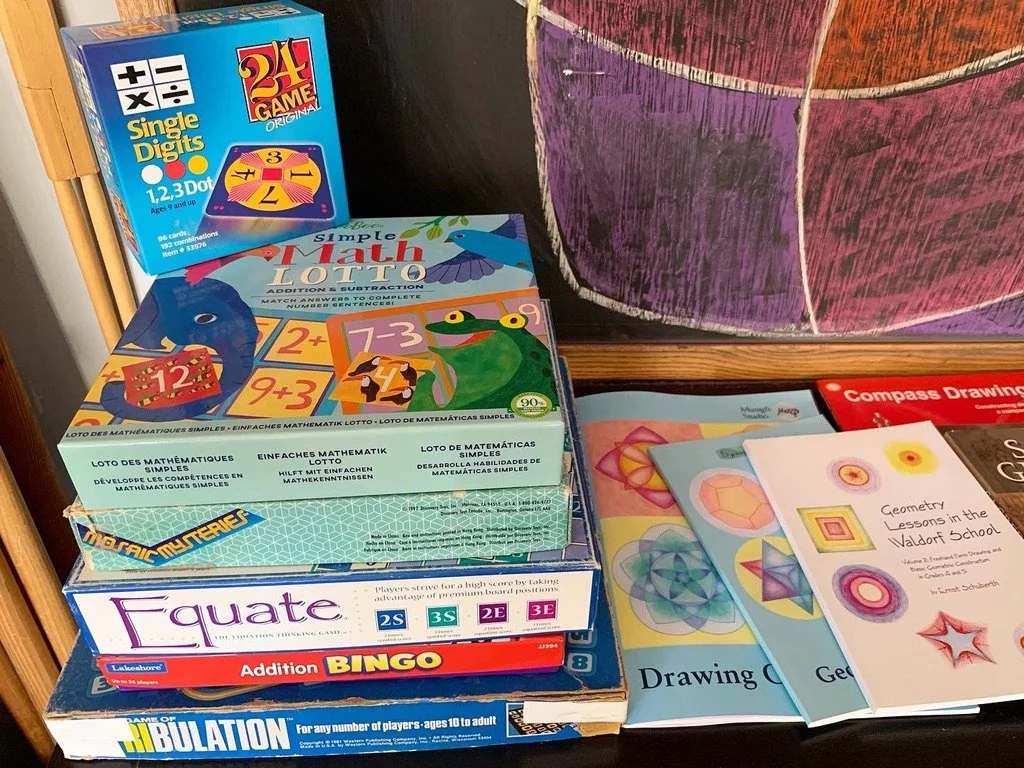
Other games that find their way into our Math and Geometry main lesson blocks are Math Lotto, Mosaic Mysteries, Tribulation and Set. While these games are general and don't necessarily support a specific unit, they are wonderful additions that help with mastery of math facts or additions for opening activities.
How to Play 24 Game
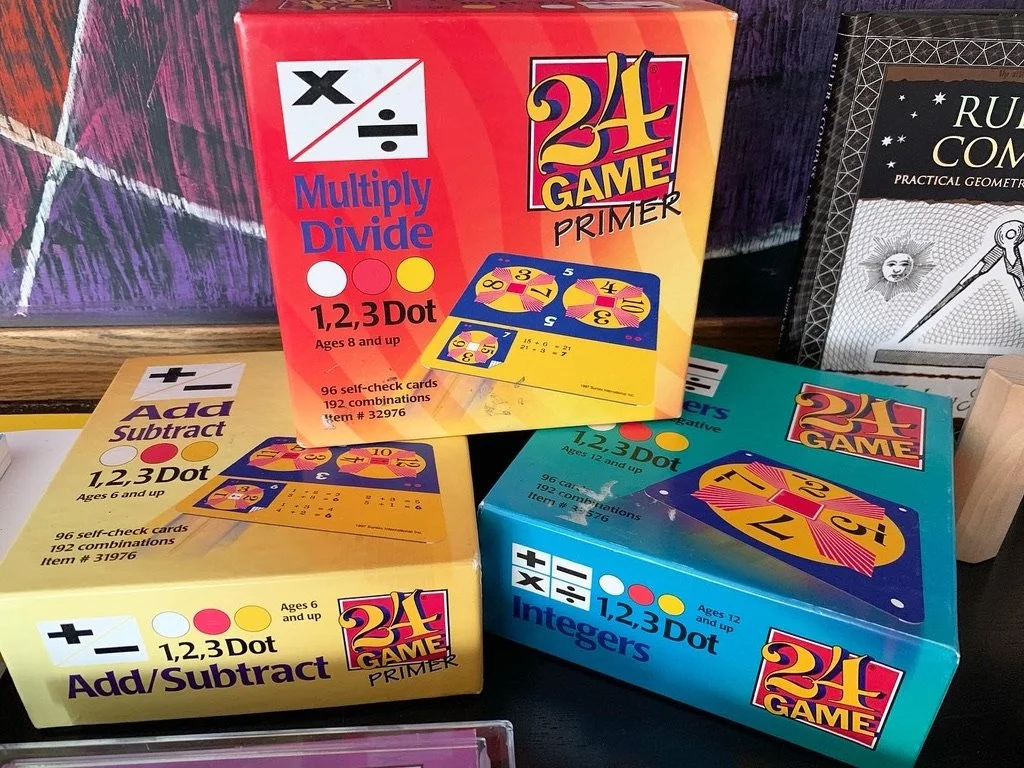
I love the 24 Games. Check out this video on these game. They have several categories ranging from easy for young elementary to challenging for high school students or adults. You have plenty to choose from, so evaluate each game to find the one that suits your needs best. One of the best things about these games is that each card has a dot on it indicating the difficulty of the card. There are easy, moderate and challenging problems. 24 Game 96-Card Deck: Factors/Multiples is for ages 8 and up. Each card shows two numbers, and the object is to find a common factor for those numbers. 24 Game 96-Card Deck: Fractions/Decimals is for ages 11 and up. This on is pretty challenging. The object is to use the numbers printed on the number wheel of each card only one time with the functions of add, subtract, multiply, or divide to equal the total number of 24. 24 Game 96-Card Deck: Single Digits is for ages 9 and up. 24 Game 96-Card Deck: Add/Subtract is the easiest of the series and designed for ages 6 and up. Five numbers are printed on each card, one is the answer plus two sets of numbers that you work through to get the answer. There is a subtraction or addition sign at the center of each wheel. 24 Game 96-Card Deck: Multiply/Divide is for ages 8 and up. Five numbers are printed on each card, one is the answer plus two sets of numbers that you work through to get the answer. 24 Game 96-Card Deck: Integers is the most challenging of the series and is designed for ages 12 and up. Ever wanted to add math games to your curriculum but didn’t want to spend the time finding them or learning how to play them? Today, I’ll show you how to play 24 primer, 24 Integer, 24 Fractions/Decimals, 24 Add/Subtract and 24 Multiply/Divide.


How to Play Equate (Math Board Game)
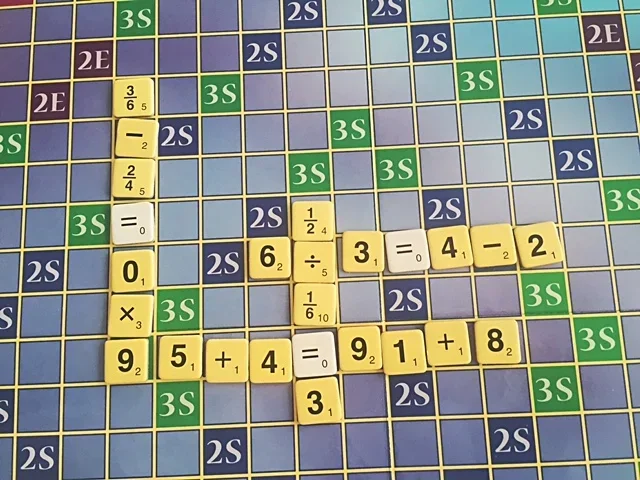
Equate… It’s Like Scrabble for Math Equations
Another game we love is Equate. It’s like Scrabble for math! This game can be as simple or as challenging as you want depending on which tiles you use and which math operations you perform. When I’m playing with my children, I allow the youngest to choose tiles that work with her math level so she can still play with the family. She looks at each tile before taking it so she can avoid fractions. My 13-year-old son plays like an adult! I can’t win anymore. Now I have to concentrate because he’s a formidable player. I do let him exchange single tiles if he’s got a fabulous equation and just needs a single tile.


Usborne Illustrated Math Dictionary
The Usborne Illustrated Dictionary of Math is the perfect complement to any math curriculum. Use it as reference material or to double check a math concept. Chock full of examples and illustrations, this book will be the only math reference book you'll need. An extra perk is that this book has internet links included to help you find websites to further explain and clarify math concepts.
Our geometry playlist.
This book is readily available and easy to find online or through an Usborne representative.
How to Multiply two-Digit Numbers with this Easy Trick
Do you like math? If the answer is no, let's see if we can change that with this math technique that's actually fun!! No kidding! We've been having so much fun doing math these days, my 10-year-olds asks for questions and makes up his own.
Maybe you've seen this method before, but for me the box with diagonal lines was new to me. Have you seen it before? Do you know what it's called? Have I done it right? Let me know in the comment section!!
Check out the complete playlist for our Math and Geometry units.
Meaningful Math

Are you looking to make math meaningful, enjoyable and memorable? That’s a tall order, but I do believe it can be accomplished.
I have several videos on YouTube on math in general and Waldorf math specifically if you are looking for practical ideas, innovative resources and creative tutorials.
One thing we do often in our homeschool is play math games. Some of our favorites are Tribulation (a 1980s math board game), Equate and 24 @24game_official
Something else we love are math picture books. I have a blog post devoted to the dozens we’ve added to homeschool library.
More recently, I added math picture books about mathematicians and scientists.
We also love our movement math. That’s when we get up out of our chairs and practice math while moving our bodies.
If you’re interested in that, check out Active Arithmetic. I’m hosting a book club for that book and I’ll be live in November to talk about it. Plus @beauty_of_play is joining me to share her thoughts and ideas on that book.
And finally, we love adding our mental math to our opening activities. Just a few minutes of daily mental math goes a long way to sharpening those math skills. Check out the Instagram Post here.
For The Love of Math
Math scares some people yet delights others. Are we born loving or hating math or do we learn to love or fear it by our experiences? When we do well, do we wish to do more? Does the praise inspire us? When we are challenged by it and are overwhelmed do we learn to avoid it?
All I know is that when math is presented as beautifully and as whole bodied as the Waldorf approach, if we depart still disliking math, it’s not learned, it’s innate.
Math is beautiful, spectacular and awe-inspiring. It answers questions & creates them. It intrigues us & confused us, and it all starts at a very young age.
Want to learn more about the Waldorf approach to math? I already have videos on YouTube you can check out, and a few recent blog posts I have will give you a good place to start your Waldorf math journey.
The posts will grow. As I make new videos, they will be added to the blog post, so it can become a complete resource for those interested.
After @the_glowgypsy posted a pic of Active Arithmetic in her story, I spontaneously thought a book club on that topic would be a good idea.
I’m planning to do an IG live in November to discuss the book. If you want to participate, you can either read the book along with us (let’s aim for half the book) or you can just join the live and listen to our thoughts and practical applications.
While the blog post has details on where you can find these resources, you can tap on the pic to see who is tagged.
I’ve included picture books because it’s important to see where math can take you. It’s inspiring to see the women and men who made groundbreaking discovering in the world of math and science.
Thank you to WESPROUT for making the knitted hats for my math peg dolls. See the Instagram Post here.
Math Resources
More math resources! My three favorites from this list are Math in the Garden, Champions of Mathematics and Arithmetricks.
.
Check out my previous posts for early elementary math resources and geometry resources. Coming up are math picture books, math games and algebra resources.
.
Do you have math resources that your family has come to enjoy? I’d love to know! I love math resources, especially math picture books and mathematician biographies.
Check out the Instagram post here.
Math Games
I love math games! And I want to share with your their educational value and how to incorporate them into your lessons.
24 Games
I love the 24 Games. Check out this video on these game. They have several categories ranging from easy for young elementary to challenging for high school students or adults. You have plenty to choose from, so evaluate each game to find the one that suits your needs best. One of the best things about these games is that each card has a dot on it indicating the difficulty of the card. There are easy, moderate and challenging problems. 24 Game 96-Card Deck: Factors/Multiples is for ages 8 and up. Each card shows two numbers, and the object is to find a common factor for those numbers. 24 Game 96-Card Deck: Fractions/Decimals is for ages 11 and up. This on is pretty challenging. The object is to use the numbers printed on the number wheel of each card only one time with the functions of add, subtract, multiply, or divide to equal the total number of 24. 24 Game 96-Card Deck: Single Digits is for ages 9 and up. 24 Game 96-Card Deck: Add/Subtract is the easiest of the series and designed for ages 6 and up. Five numbers are printed on each card, one is the answer plus two sets of numbers that you work through to get the answer. There is a subtraction or addition sign at the center of each wheel. 24 Game 96-Card Deck: Multiply/Divide is for ages 8 and up. Five numbers are printed on each card, one is the answer plus two sets of numbers that you work through to get the answer. 24 Game 96-Card Deck: Integers is the most challenging of the series and is designed for ages 12 and up.
Ever wanted to add math games to your curriculum but didn’t want to spend the time finding them or learning how to play them? Today, I’ll show you how to play 24 primer, 24 Integer, 24 Fractions/Decimals, 24 Add/Subtract and 24 Multiply/Divide.
Another game we love is Equate. It’s like Scrabble for math! This game can be as simple or as challenging as you want depending on which tiles you use and which math operations you perform. When I’m playing with my children, I allow the youngest to choose tiles that work with her math level so she can still play with the family. She looks at each tile before taking it so she can avoid fractions. My 13-year-old son plays like an adult! I can’t win anymore. Now I have to concentrate because he’s a formidable player. I do let him exchange single tiles if he’s got a fabulous equation and just needs a single tile.
Other games that find their way into our Math and Geometry main lesson blocks are Math Lotto, Mosaic Mysteries, Tribulation and Set. While these games are general and don’t necessarily support a specific unit, they are wonderful additions that help with mastery of math facts or additions for opening activities.
I love to add math games to our curriculum and today I want to show you how to play one of my favorite card games. SET was introduced to me years ago by a good friend and we have been hooked ever since. The concept is simple: find a set. A set is three cards in which no two cards are the same. So, all three cards have to have elements that are ALL the same or ALL different. The deck comes with 80 cards that are different configurations of shapes, colors, numbers and fills.