Botany Resources & Reviews
-

How to Put Together a Botany Unit & Botany Main Lesson Block
As we have done our Botany main lesson block and unit study several times for the years, we have amassed many resources for various grades and lessons. Here is where I plan and put together our unit and block.
-

Botany Resources Review
Once our Unit or Main Lesson Block is complete, I share the resources we used, the projects and lessons we did and how we liked the materials I planned to use. These videos and posts are more helpful than “How we Put Together a Unit” because it’s based on our experience rather than our expectaion.
-
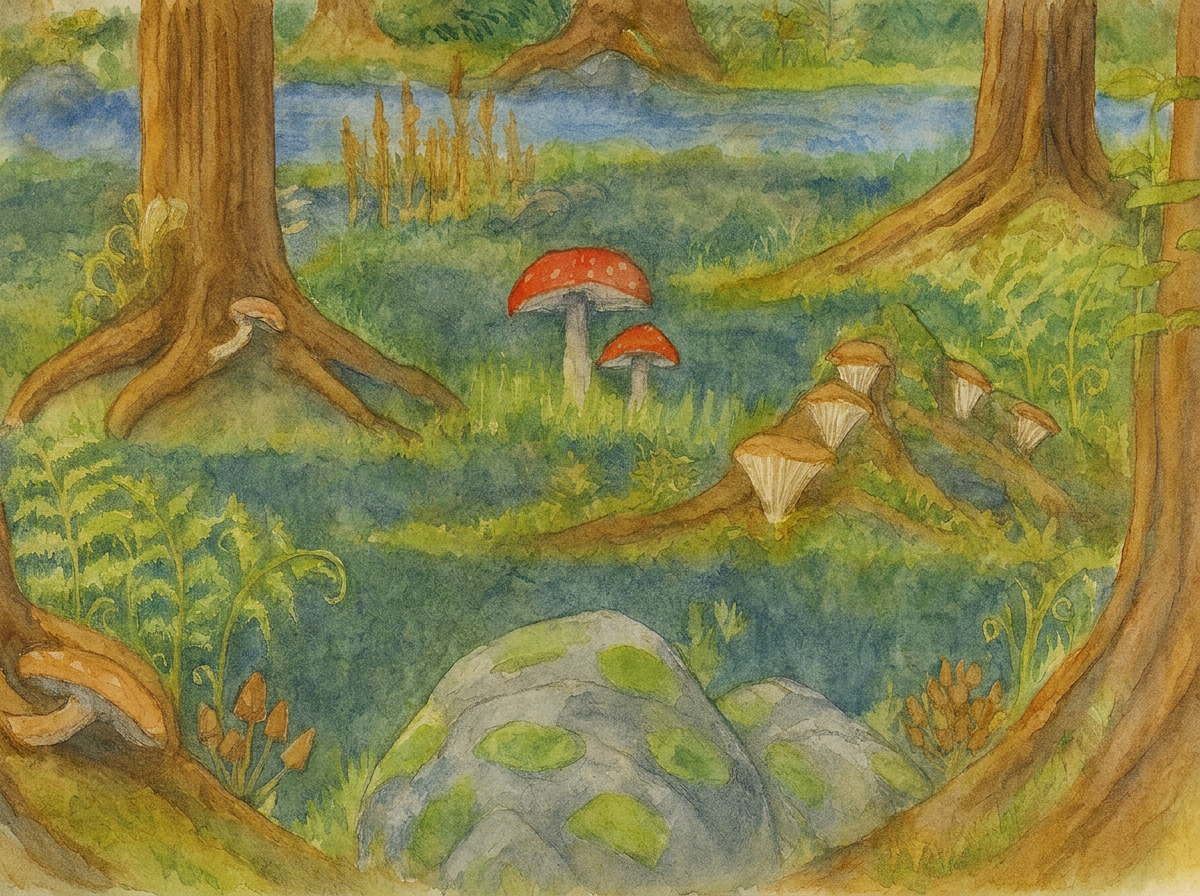
Chalk Drawings
Chalk drawings are central to a main lesson block. While I spent many years making beautiful chalk drawings, eventually I relied more on pencil drawings and chalk pastels in a main lesson book.
Botany Resources
-
![]()
Waldorf Botany Main Lesson | UNIT STUDY PLANTS & TREES
For this unit study on trees and plants, we are going to stick pretty close to the Live-Education Waldorf curriculum for the Botany Main Lesson. The Waldorf curriculum is fairly complete with just a few suggested supplement books. You will need your main lesson book, some color pencils or another art medium and a pencil.
-
![]()
How to Use Living Books for a Waldorf Main Lesson Block
How does our Main Lesson block differ from a unit study? With a unit study, I'll use a variety of books and projects and design my own curriculum. I'll figure out which books to read when and assign literature to my student if possible
-
![]()
Nature Study | Botany & Zoology
This spring unit is similar to ones we did in the past. We collect an assortment of nature science books in botany and zoology, coordinate projects and hands-on activities, and round it out with some picture books and games. Sounds easy, but it's not always so simple. This time around, I have several new books and a couple new kits I'm looking forward to trying
-
![]()
Botany Unit Study | Rainforest | Books, Resources, and Activities
Instead of tackling the big nature unit I had intended for the spring, I'm breaking it up into smaller units. This one was going to be a unit on the Rainforest, but I decided to add a few lessons from our Botany Main Lesson block from last year that we didn't get to. So this unit will have two focuses.
-
![]()
How To Do A Unit Study | Nature Science
Springtime is the perfect time to depart the classroom and school in the field. What better place than outdoors in nature? I schedule our units so that our science units are in the spring when my kids and I just can't sit or focus and we all need to get out and get our bodies moving so our minds can move.
-
![]()
Homeschooling Lesson Planning Vlog
If you want the real time, full-of-distractions, lesson planning process, check this out. Over the course of one week, I lesson planned a unit that's only scheduled for two weeks! At this rate, I'll be done with the unit before we finish lesson planning! In this lesson planning vlog, I walk you through the sometimes slow process of lesson planning for a unit study.
-
![]()
Lesson Planning for Busy Homeschoolers
Over the course of one week, I lesson planned a unit that's only scheduled for two weeks! At this rate, I'll be done with the unit before we finish lesson planning! In this lesson planning vlog, I walk you through the sometimes slow process of lesson planning for a unit study. This process is different than using a curriculum
-
![]()
Books For Botany
Since we split our last Botany Main Lesson into two blocks: one in the spring and one in the fall, we completed the lessons up to horsetails before breaking and resuming. Here are a list of the books we used for the first half of our Botany block.


Botany Review
-
![]()
Botany Curriculum Review
It's time to share my 'Buy This, Not That' list for our Botany main lesson block and Plants unit study. There were many resources that I expected to use, but we didn't get to all of them, and sometimes we went off on educational tangents!
-
![]()
Botany Unit Study Curriculum Review
This unit was mainly hands on, but we did refer to a number of books for content to build our unit, or for artistic inspiration or for project ideas. Some activities we got to, and others we just didn't find the time or inspiration to do.
-
![]()
Waldorf Botany | Resources & Review
We've completed about half our Botany unit and these are the resources we've used thus far. Showing you the main lesson book I worked on alongside my daughter instead of working on the chalkboard.


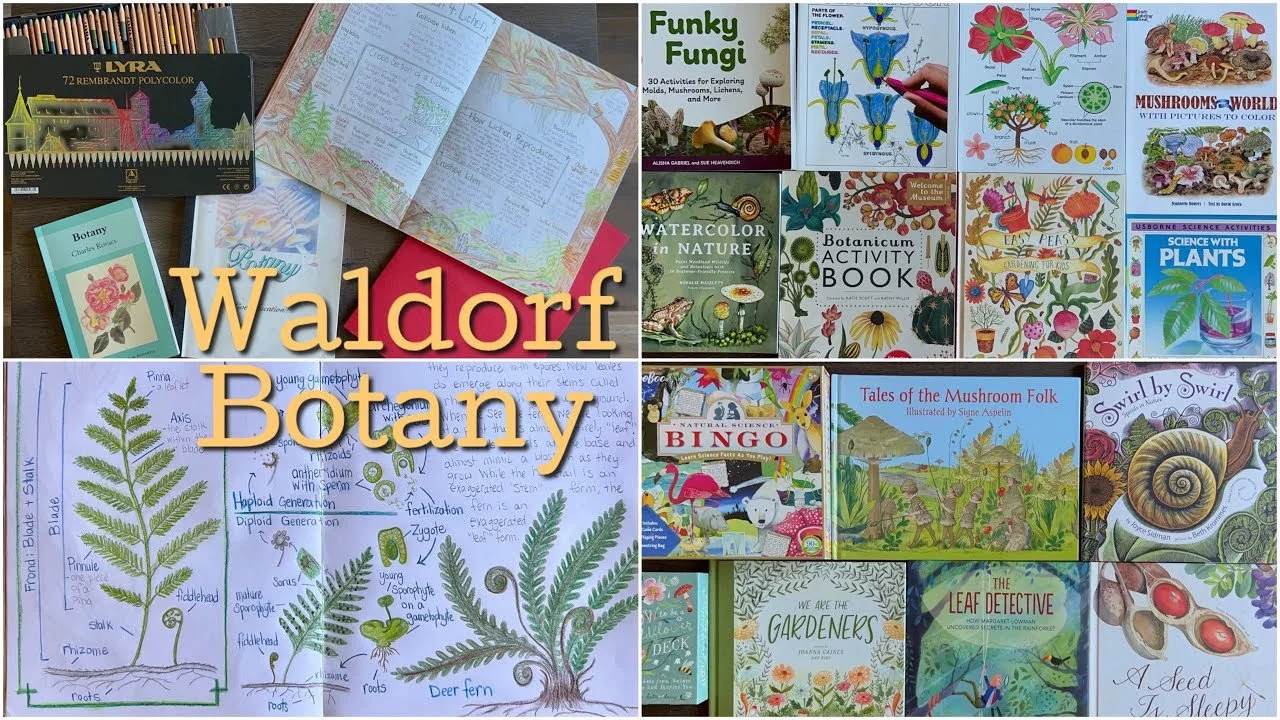
Botany Resources
Waldorf Botany Main Lesson
UNIT STUDY PLANTS & TREES
For this unit study on trees and plants, we are going to stick pretty close to the Live-Education Waldorf curriculum for the Botany Main Lesson Block. The Waldorf curriculum is fairly complete with just a few suggested supplement books. You will need your main lesson book, some color pencils or another art medium and a pencil. We are going to extend this main lesson block into a unit study, adding more resources and games for various ages groups to meet the need to all my children. We will turn part of this time into a unit study on plants and trees filling our unit with picture books, board games, kits, gardening adventures and a lot of time outdoors enjoying the fair whether. We have begun to fill our nature journals (ones we made last year) with illustrations inspired by the game Into The Forest. We will also make use of a Charlotte Mason book Sharing Nature With Children to find innovative ways to enjoy nature with kids or adults.
We also added some books by Arabella Buckley. These books were written about 100 years ago and they are lively engaging story driven science books that are so different than the science texts you see today.
No unit would be complete without some kits, and we are finding the ones from Nature-Watch very educational and fun to use. We are using Forever Forest, Pine Tree Growing kit and Forest in a Box for this unit.
April 2017
How to Use Living Books for a Waldorf Main Lesson Block
How does our Main Lesson block differ from a unit study? With a unit study, I'll use a variety of books and projects and design my own curriculum. I'll figure out which books to read when and assign literature to my student if possible. The main lesson book we create for a unit study doesn't contain every lesson we do. For the Main Lesson block, we follow the Live-Education Waldorf curriculum fairly closely. We create lesson entries for the main lesson book with almost every lesson including a written narration or dictation. The lessons are delivered orally by the teacher, rather than read aloud. Supplement material is used for the teacher's reference rather than as assigned reading for the student.
For our Botany Main Lesson block, I used a number of resources to supplement our lessons including: DK Tree, DK Plant, One Small Square: Backyard, The Practical Naturalist and my new favorite: The ABC's of Nature by Reader's Digest. So which ones are living books and why? See if you can tell from the video which one(s) I would consider Charlotte Mason inspired.
June 2017
Nature Study | Botany & Zoology
This spring unit is similar to ones we did in the past. We collect an assortment of nature science books in botany and zoology, coordinate projects and hands-on activities, and round it out with some picture books and games. Sounds easy, but it's not always so simple. This time around, I have several new books and a couple new kits I'm looking forward to trying. And as always, I don't know how to squeeze it all in. It's like being in a buffet. You have to make choices, and well, sometimes, I just want to have it all. Because this unit will overlap our history units (which should have been finishing up by now), we'll have to take the first several weeks kind of easy on this unit. In a separate video, I'll share my lesson planning process. I want material and projects for my 7 year old as well as my 11 year old. Sometimes it's hard to find projects and books that fit that age gap.
This time around, I want to focus our lessons on the new books we got this year.
We also have some projects lined up that we did previously, so I won't have new videos on the Pine Tree kit and Root Observation kit from Nature-Watch, but we will have on on the Herb Greenhouse kit. You can see all of the kits we've done from Nature-Watch here.
Since we've completed our Botany Main Lesson block last year, we won't have duplicate videos of activities we did with that block, but you can see those lessons and activities from the previous year, and of course we'll have new activities this year.
Since we have a couple pages left in our Math in the Garden garden journal, we'll schedule two more projects. Plus we like that book. It's packed with garden activities that incorporate math. It's genius!
We've been doing nature units for several years and you can see the one we did when this channel was still brand new.
Last year we also did a mini unit on Honey + Bees.
I shared the game Wildcraft. I give a detailed review of the game. Now that it's been two years since we've had it, I have more thoughts on the game. I realize I'm not a fan of cooperative games, but I find they are ideal for young children under 9 years.
Botany Unit Study | Rainforest
Books, Resources, and Activities
Instead of tackling the big nature unit I had intended for the spring, I'm breaking it up into smaller units. This one was going to be a unit on the Rainforest, but I decided to add a few lessons from our Botany Main Lesson block from last year that we didn't get to. So this unit will have two focuses. We'll cover the remaining lessons from our previous Botany unit on bulbs, grasses, grains and flower plants. We also have a few projects planned for this unit, but most of them were started months ago to take advantage of the fair winter and spring weather. Now that summer is upon us, our garden is thriving. We'll continue work in the garden but also work on some science gardening projects inspired from the Usborne's Science with Plants. We plan to make homemade paper again this year, but with a twist...of course ;)
Instead of just making paper, I thought we could embed the paper with herb seeds. Then we can make leaf imprints with those herbs using our Distress Inks and a brayer. Once again, we are dipping into our yummy new nature books that we picked up at the beginning of the year. Top of the list for this unit are Botanicum (and the activity book), Natural World, Nature Anatomy and ABC's of Nature. We'll round the unit with some picture books and a couple resources on the Rainforest. Instead of working in a new main lesson book, we'll add to the one we started last year.
June 2018
How To Do A Unit Study
Nature Science
Springtime is the perfect time to depart the classroom and school in the field. What better place than outdoors in nature? I schedule our units so that our science units are in the spring when my kids and I just can't sit or focus and we all need to get out and get our bodies moving so our minds can move.
What science units are in store for us this spring? Well, we had three science units scheduled, but I know one of them will have to be pushed back until the fall (geology and mineralogy).
Homeschooling Lesson Planning Vlog
The five minute version of this lesson planning video is also available if you want a quick overview of how I lesson plan for a unit study or main lesson block. If you want the real time, full-of-distractions, lesson planning process, keep reading and check out the video tutorial below. Over the course of one week, I lesson planned this mini Botany Unit on Trees and Plants that’s only scheduled for two weeks! At this rate, I’ll be done with the unit before we finish lesson planning! In this lesson planning vlog, I walk you through the sometimes slow process of lesson planning for a unit study. This process is different than using a curriculum. When using a curriculum with everything lesson scheduled, you can plug in a lesson each day, collect your material and hopefully call it done. When doing a unit study, you need time to think about the lessons you’ll do and how long you plan to spend on the unit. You’ll want to collect your resources and projects and make sure you have the materials you need for your lessons. In this case, I am planning a lot of hands on projects and artistic lessons. We won’t have much writing nor a main lesson book. Instead, we’ll have lots of hands on projects, reading aloud and discussing the content we’ve read or the projects we’ve done. For that reason, I needed some time to figure it out. While some of the process is slow, the thinking things through part, once that’s decided, the rest falls into place rather quickly. Initially, I wasn’t sure what I wanted to cover during this unit. It could have gone in a number of different directions from studying various types of trees, forests, plants or biomes. I settled on a couple lessons on the rainforest with the remainder of the time focusing on the remaining lessons from our Botany Main Lesson block from the previous year.
I’m happy with this approach because I really wished we could have finished the lessons we started last year. We completed nearly all of the main lesson block, but stopped short of some really good lessons. Now that we are dedicating a couple weeks to this unit (which includes more than those few remaining lessons), I feel we can give this unit justice. There are some lessons that may take a little thinking through like the form drawing or geometry lesson, but I think we can make it work, even if we take three weeks to do it.
The Lesson Plans for this mini unit on Trees and Plants is available for you. I’ve approached the lesson plans for this unit differently from other lesson plans in that there are no days or dates assigned to the lessons and reading passages. There isn’t even a real order to the lesson either. This isn’t always possible as most of the time one lesson precedes another naturally and provides information that’s necessary before moving on. But in this case, there’s a lot of flexibility. I’ve included a lot of hands on projects and activities for this unit. Since we’ll observe the progress over a long period of time, we got started on those first before I was even done lesson planning. We spent a whole day out in the garden doing the majority of the garden work. We’ll spend the rest of the unit and most of the summer following up on those projects.
You can see what we’re up to on a daily basis by finding me on Instagram where you can see the day to day lessons for this unit and other lessons we’re doing in our homeschool.
Lesson Planning for Busy Homeschoolers
Over the course of one week, I lesson planned a unit that's only scheduled for two weeks! At this rate, I'll be done with the unit before we finish lesson planning! In this lesson planning vlog, I walk you through the sometimes slow process of lesson planning for a unit study. This process is different than using a curriculum. When using a curriculum with everything lesson scheduled, you can plug in a lesson each day, collect your material and hopefully call it done. When doing a unit study, you need time to think about the lessons you'll do and how long you plan to spend on the unit. You'll want to collect your resources and projects and make sure you have the materials you need for your lessons. In this case, I am planning a lot of hands on projects and artistic lessons. We won't have much writing nor a main lesson book. Instead, we'll have lots of hands on projects, reading aloud and discussing the content we've read or the projects we've done. For that reason, I needed some time to figure it out. While some of the process is slow, the thinking things through part, once that's decided, the rest falls into place rather quickly. Initially, I wasn't sure what I wanted to cover during this unit. It could have gone in a number of different directions from studying various types of trees, forests, plants or biomes. I settled on a couple lessons on the rainforest with the remainder of the time focusing on the remaining lessons from our Botany Main Lesson block from the previous year. I'm happy with this approach because I really wished we could have finished the lessons we started last year. We completed nearly all of the main lesson block, but stopped short of some really good lessons. Now that we are dedicating a couple weeks to this unit (which includes more than those few remaining lessons), I feel we can give this unit justice. There are some lessons that may take a little thinking through like the form drawing or geometry lesson, but I think we can make it work, even if we take three weeks to do it.
The Lesson Plans for this mini unit on Trees and Plants is available for you. I’ve approached the lesson plans for this unit differently from other lesson plans in that there are no days or dates assigned to the lessons and reading passages. There isn’t even a real order to the lesson either. This isn’t always possible as most of the time one lesson precedes another naturally and provides information that’s necessary before moving on. But in this case, there’s a lot of flexibility. I’ve included a lot of hands on projects and activities for this unit. Since we’ll observe the progress over a long period of time, we got started on those first before I was even done lesson planning. We spent a whole day out in the garden doing the majority of the garden work. We’ll spend the rest of the unit and most of the summer following up on those projects.
You can see what we’re up to on a daily basis by finding me on Instagram where you can see the day to day lessons for this unit and other lessons we’re doing in our homeschool.


Botany Review
Botany Curriculum Review
It’s time to share my ‘Buy This, Not That’ list for our Botany main lesson block and Plants unit study. There were many resources that I expected to use, but we didn’t get to all of them, and sometimes we went off on educational tangents! Fun!!
Here are some of the videos I mentioned in the review: Botany main lesson block playlist, starting with how we put this unit together: You Are Your Child’s First Teacher by Rahima Baldwin Understanding Waldorf by Jack Petrash and Common Sense Schooling by Roy Wilkinson is going to break it down pretty well.
We also got really into the book Math in the Garden. It became its own mini unit study. Here’s the playlist.
April 2017
Botany Unit Study Curriculum Review
This unit was mainly hands on, but we did refer to a number of books for content to build our unit, or for artistic inspiration or for project ideas. Some activities we got to, and others we just didn’t find the time or inspiration to do. But hey, by the end of the year (and really summer), it’s hard to push through academics when the weather is begging you to come outside and the pool is cool and refreshing and the beach is just beckoning you. So, while I wished we’d completed just a few more lessons, we did pretty good with this unit, especially with all the outside work that we did in the garden.
At this point, I’m going to punch holes in the lesson we did do and add them to the main lesson book we started last year. And when we get around to those last remaining lessons, well then, we can add those to this ‘family’ main lesson book at that point.
July 2018
Waldorf Botany
Resources & Review
We've completed about half our Botany unit and these are the resources we've used thus far. Showing you the main lesson book I worked on alongside my daughter instead of working on the chalkboard. I did do one big chalk drawing with several lessons within it (showing a forest scene with images that work from fungus to conifers), but preferred to work on paper with my daughter. Curriculum used: Live education Waldorf curriculum year 5 Main Lesson books and Lyra color pencils from A Child's Dream List of books (via pics and videos) on website and Instagram
July 2018