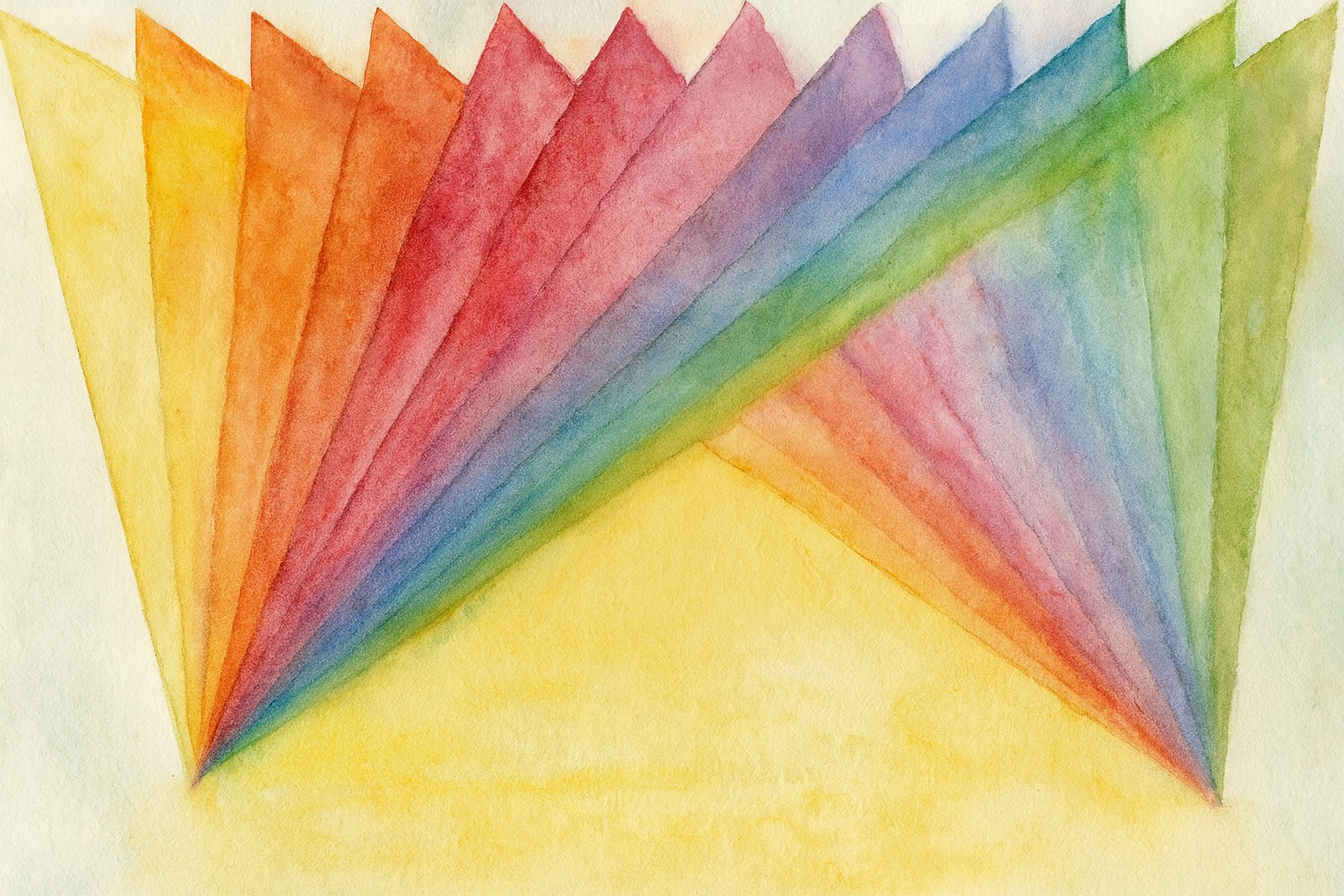
Geometry Lessons

Lessons
Grades 5-7
The following Geometry Lessons span several years with multiple Geometry main lesson blocks. They are divided below into units so you may see the progression of lessons within one unit. Each time we approached these lessons, we focused on something unique even though I was doing these lessons with different students. Sometimes approaching the lessons with current inspiration is more invigorating to the unit than going through the same lessons in the exact same way. So while the overarching value of the block remains the same for each unit, the way we accomplished our lessons was representative of what was happening in the moment. This means that sometimes we used the Live Education curriculum extensively and followed the lessons closely, other times, we used other resources to inspire lessons.
-
Geometry Grade 5 Lessons
When I first started sharing our homeschooling journey online, I had already been homeschooling for over 10 years. In that time, I had already done our Geometry block once with my oldest son. Now I was introducing the subject area to my second child but it’s my third child who was only 8 at the time who really loved these geometry lessons as well. I found that because of the artistic nature of these lessons and the slow build of concepts that this presentation of Geometry worked well as a family lesson rather than just for my Grade 5 student. In this way, everyone participated in the Geometry lessons. And everyone enjoyed them!
-

Division of a Circle Lessons
Circle symmetry is one of the most beautiful geometric projects you can easily do with your students. While some symmetries are more complicated, 3-, 4-, 6-, 8- and 12-fold are fairly straightforward and can be achieved with moderate effort and skill, in my opinion and experience. Today's project is a tutorial for threefold symmetry. While you can explore this design and come up with creative ways to paint or color in the shapes, it's not my favorite. I like the symmetry starting at 6-fold symmetry. But, I'd love to see what you come up with. Maybe your creative way of painting this design will change my mind. Honestly, the possibilities are endless and that's exciting.
-

Geometry Grade 6 Lessons
In Grade 5 students are introduced to the beauty and function of geometry with the exploration of shape and how shapes come about in the world around us. Shapes are dynamic even though we see a still shot of quadrilaterals and triangles. In Grade 6 we explore the circle in depth looking at not just 6-division of a circle and its representations in nature and mineralogy, but now we explore 5-division of a circle and the pentagon and the golden ratio. A connection to astronomy and music as well as botany previously illuminates the deep sacredness that geometry of the heavens is astronomy, the geometry of sound is music, the geometry of the mineral kingdom are crystals and the geometry of the plant kingdom is botany.
-

Geometry Grade 7 Lessons
As we advance in Geometry, we explore the book A Beginner's Guide to Constructing the Universe: Mathematical Archetypes of Nature, Art, and Science by Michael S. Schneider. This book details the quality of numbers 1-10. Instead of making the Platonic solids with templates, we learn to make them through the construction of the regular shapes through their the division of the circle. We also do the same with the Golden Rectangle.
Geometry Grade 5 Lessons
-
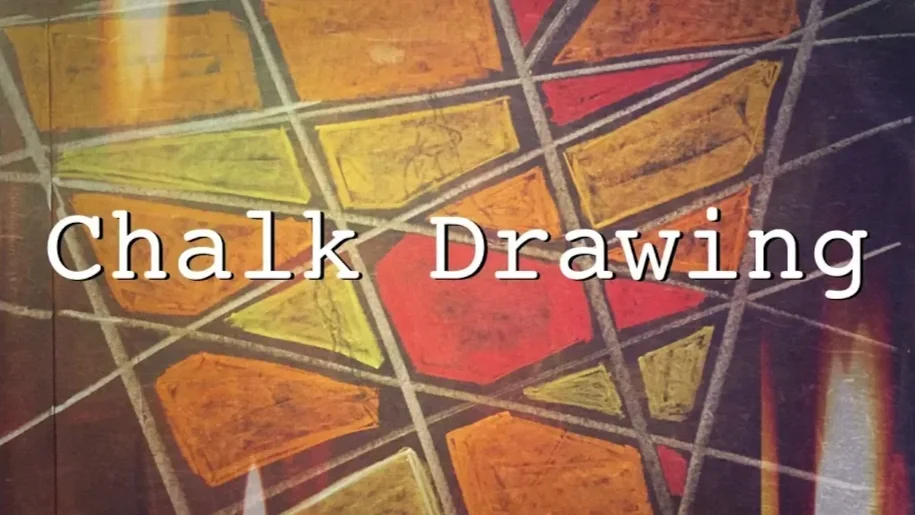
Chalk Drawing: Geometric Shapes
As part of our Waldorf geometry unit, we are learning how to create shapes by shading them from the periphery, from the center and from intersecting lines. Join me as I make three chalk drawing to accompany this unit.
-
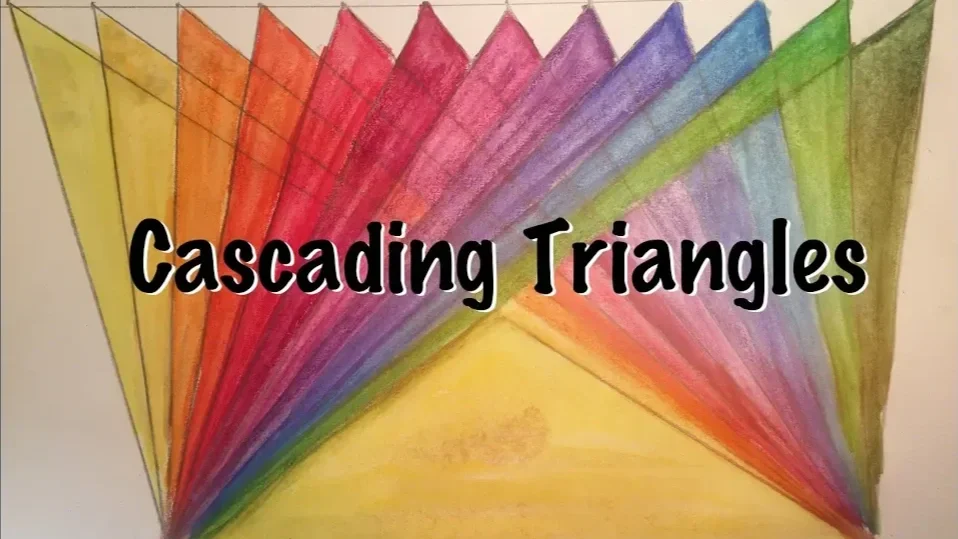
Geometry: Cascading Triangles
Cascading triangles are a beautiful representation of triangles in motion. You can simplify this project and just draw it with pencil for a stunning image that appears to be moving or you can add color in with watercolor pencils or color pencils.
-
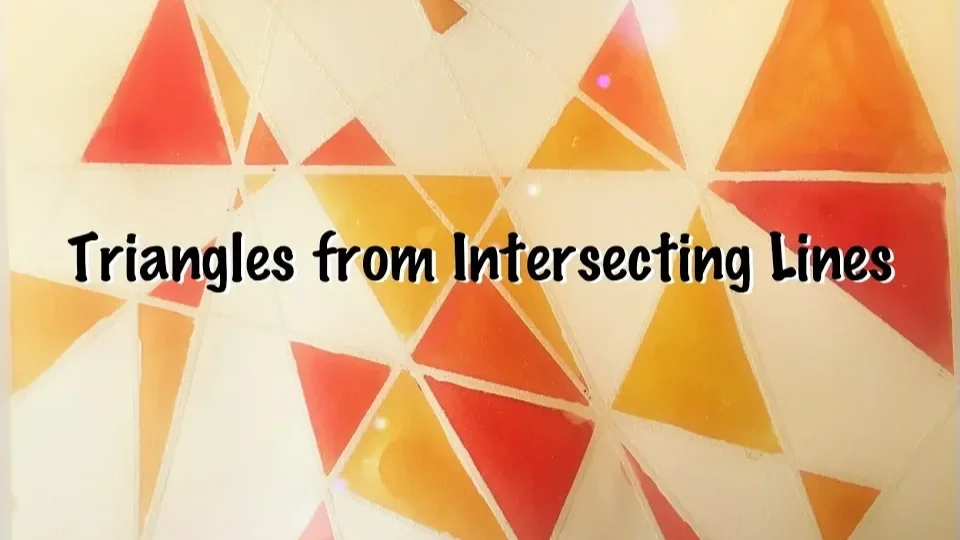
Triangles | Geometry & Art
Today we are making triangles from intersecting lines. We'll only color in the triangles formed and leave the other shapes blank.This is a beautiful representation of triangles created by intersecting lines. You have to make sure not to color in other shapes, so it encourages you to pay attention to the angles and sides of each shape.
-
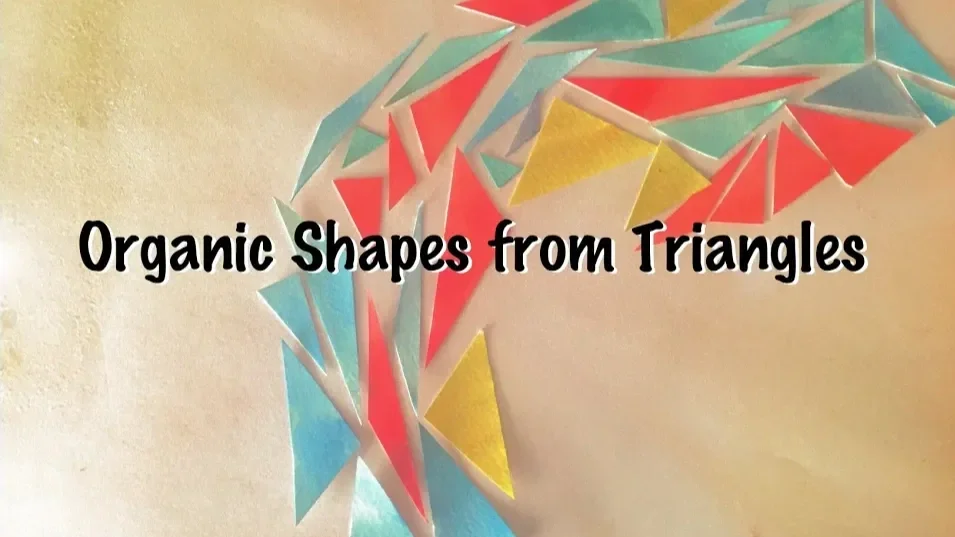
Geometry: Organic Shapes from Triangles
How can you shape a curved image from triangles? Watch this video to find out. We cut small triangles out of watercolored paper and turned it into a beautiful organic image that resembles a fern or droopy leaf.
-
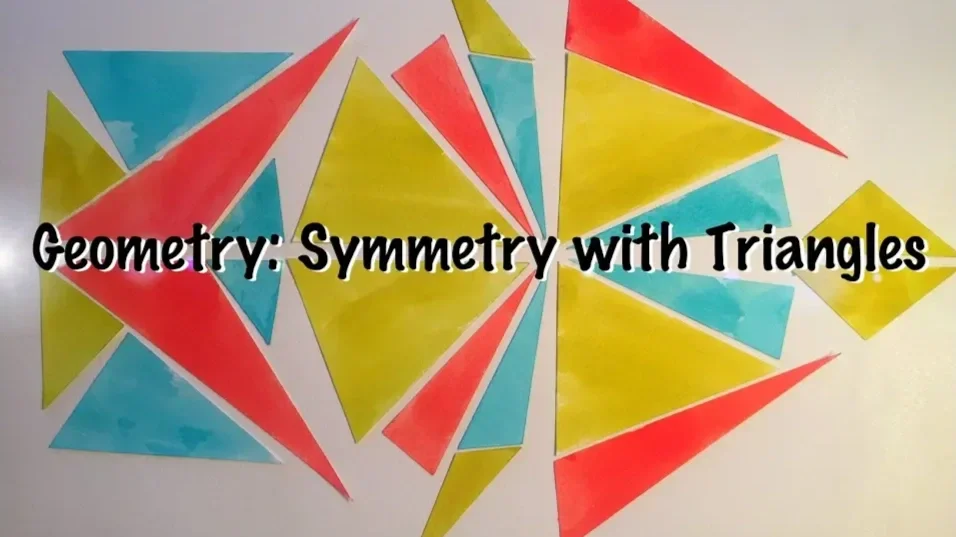
Geometry: Symmetry with Triangles
Today we are making symmetrical images using triangles. We are using a Waldorf curriculum from Live Education. Other materials used for this project: watercolor paper, spray adhesive, watercolors (we used distress inks), and scissors or the Silhouette Cameo.
-

How To Make A Mandala
As part of our geometry unit we decided to piece together a mandala using watercolor paper we painted in beautiful autumn colors and cut into diamonds and triangles using our Silhouette Cameo. You can find the watercolor paper, watercolors (we used Distress Inks by Tim Holtz) and spray adhesive from Blick Art Supplies.
-
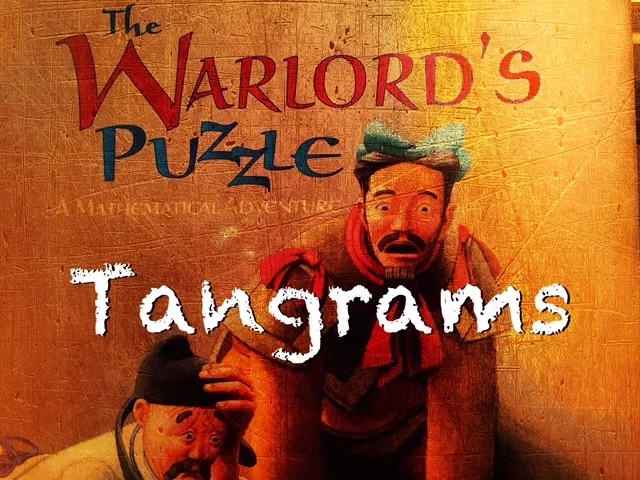
Tangrams
After reading the book The Warlord’s Puzzle, we decided to make our own set of tangrams. I took a picture of the tangrams from the book and imported it into my Silhouette Cameo‘s program. I traced the image and reconfigured them and then used the Cameo to cut the shapes.
-
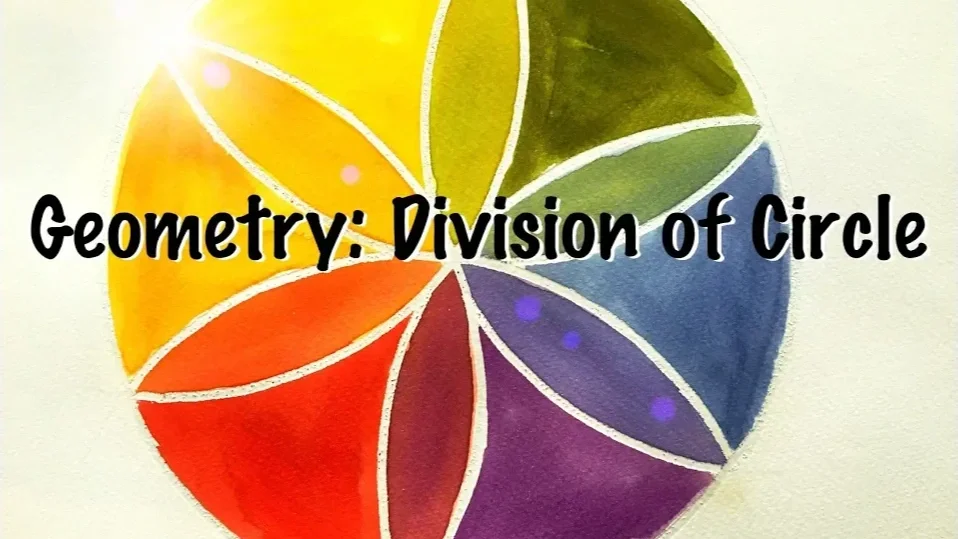
Division of a Circle: Geometry
While reading the book “String, Straightedge, and Shadow” by Julia E. Diggins, we came across the chapter that explains the six-part division of a circle and we decided to recreate the project. For this project you’ll need a compass, watercolor paper, watercolors, embossing pen, embossing powder and an embossing tool.
-
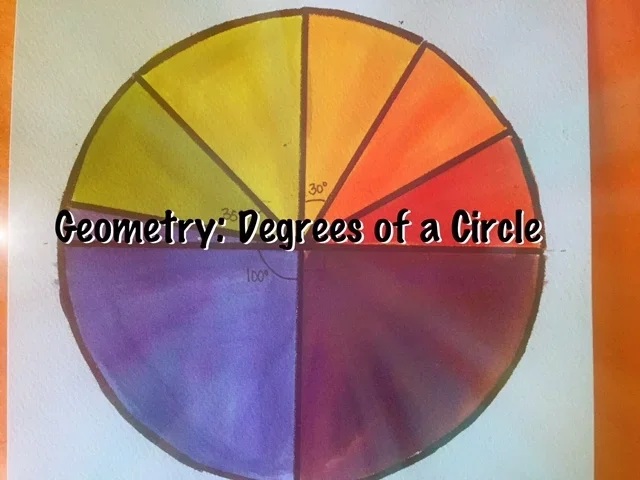
Geometry: Degrees of a Circle
While working with our Live Education Waldorf curriculum from we decided to do the project on “Angles and Degrees” three different ways. We’ll do this project with watercolors, watercolor pencils and color pencils. We will divide the circle into acute angles, a right angle and an obtuse angle.
-
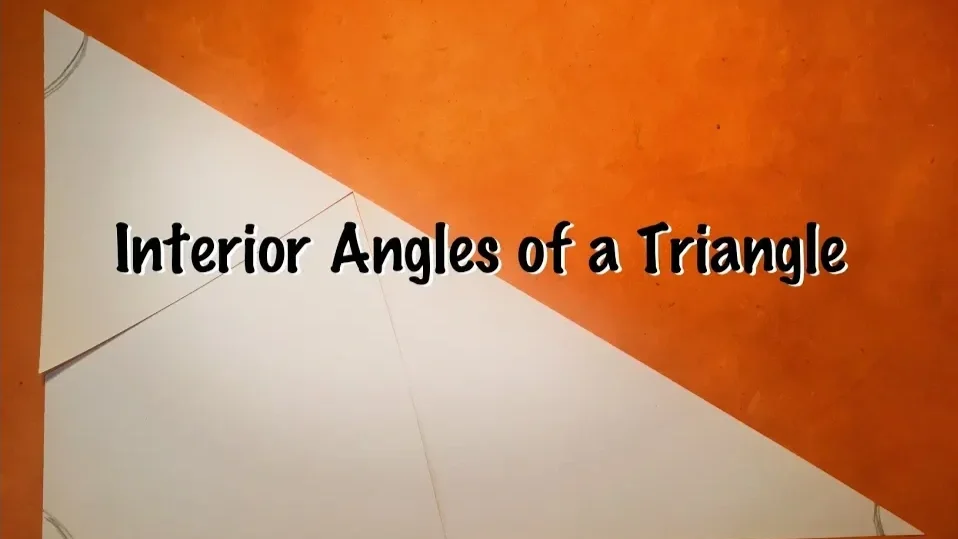
Interior Angles of a Triangle
This quick and easy projects demonstrates how the interior angles of a triangle equal 180 degrees. All you need is a piece of paper and a pair of scissors.
-

Pythagorean Theorem
How did Pythagoras show that the square of two sides of a right triangle equal the square of the hypotenuse? Watch as we recreate the proof from the 6th century.
-
How to Make a Perfect Square: A Geometry Demonstration
While reading "String, Straightedge and Shadow" by Julia Diggins, we came across a chapter on constructing a square using 'string' and 'straightedge'. Watch as I show you two methods for creating a perfect square, just as Pythagoras himself would have done...only we use a compass instead of string :)
-
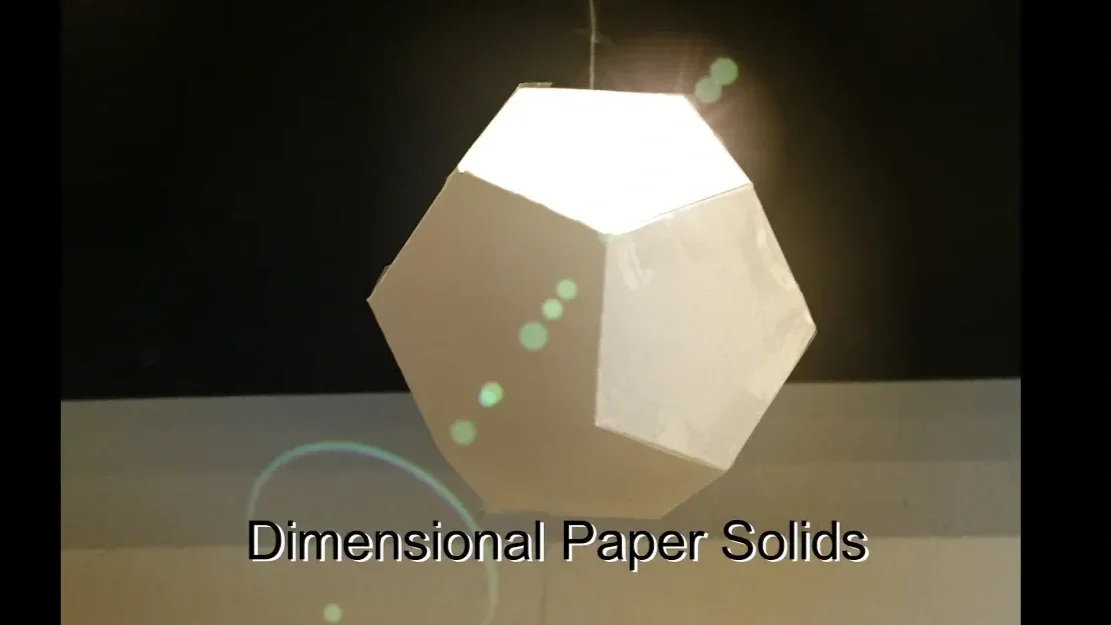
How to Make the Five Regular Solids from Paper
Watch as we make three dimensional ‘solids’ from paper. We used 90lb. watercolor paper and our Silhouette Cameo to make the five regular solids as discovered by Pythagoras in the 6th century BC. We were inspired by the book “String, Straightedge and Shadow” by Julia Diggins which we are reading for our geometry unit for homeschool.
-
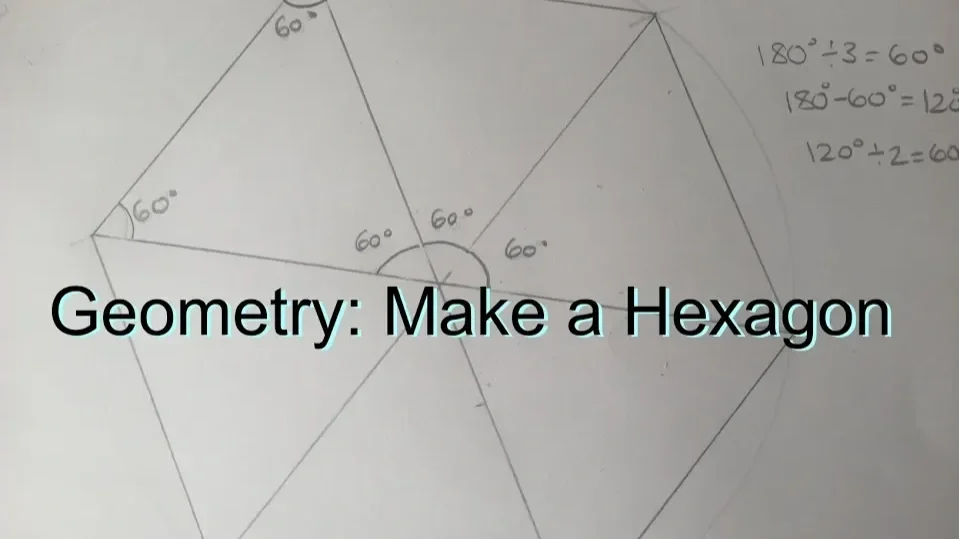
How to Make a Hexagon and an Equilateral Triangle
This short demonstration show how to construct a hexagon and an equilateral triangle using just string and straightedge, or in today's terms a compass and a ruler. We are reading the book "String, Straightedge and Shadow" by Julia Diggins for our geometry unit for homeschool. We learned how to make six equal divisions in a circle to construct a hexagon.
-
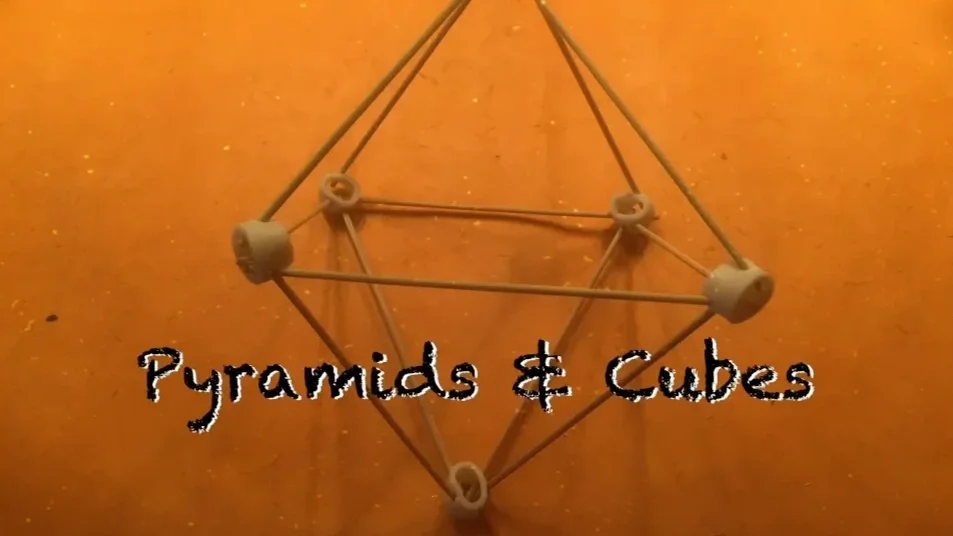
How To Make The Five Regular Solids: Plato Glo Mobile Kit
We used the kit “Plato Glo Mobile” from Rainbow Resource to make sturdy three dimensional shapes. The five regular solids were discovered by Pythagoras and his Secret Brotherhood in the 6th Century BC. We recreate them using bamboo sticks and the rubber connectors. If you don’t have this kit, don’t worry!
-
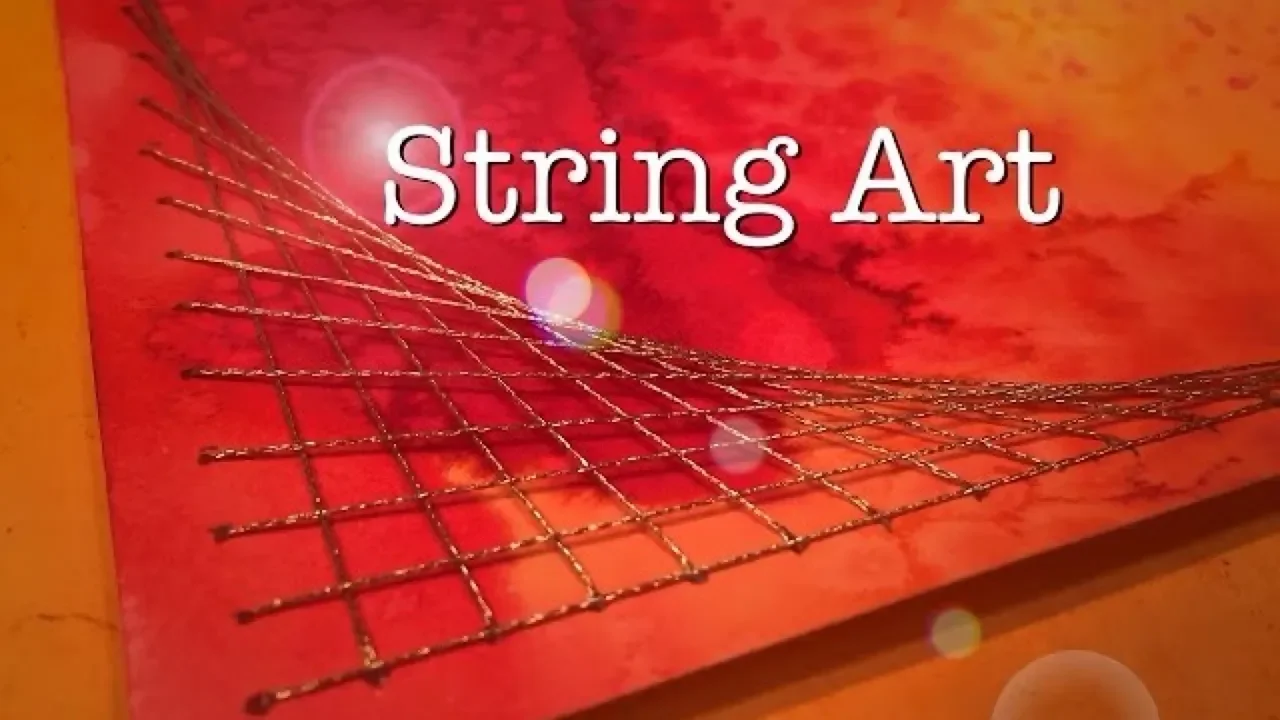
How to Make String Art
You can make this string art as part of a geometry unit or Ancient Rome/Greece unit. We are using the book called "Classical Kids An Activity Guide to Life in Ancient Greece and Rome" by Laurie Carlson as inspiration for this project.
Division of a Circle
-
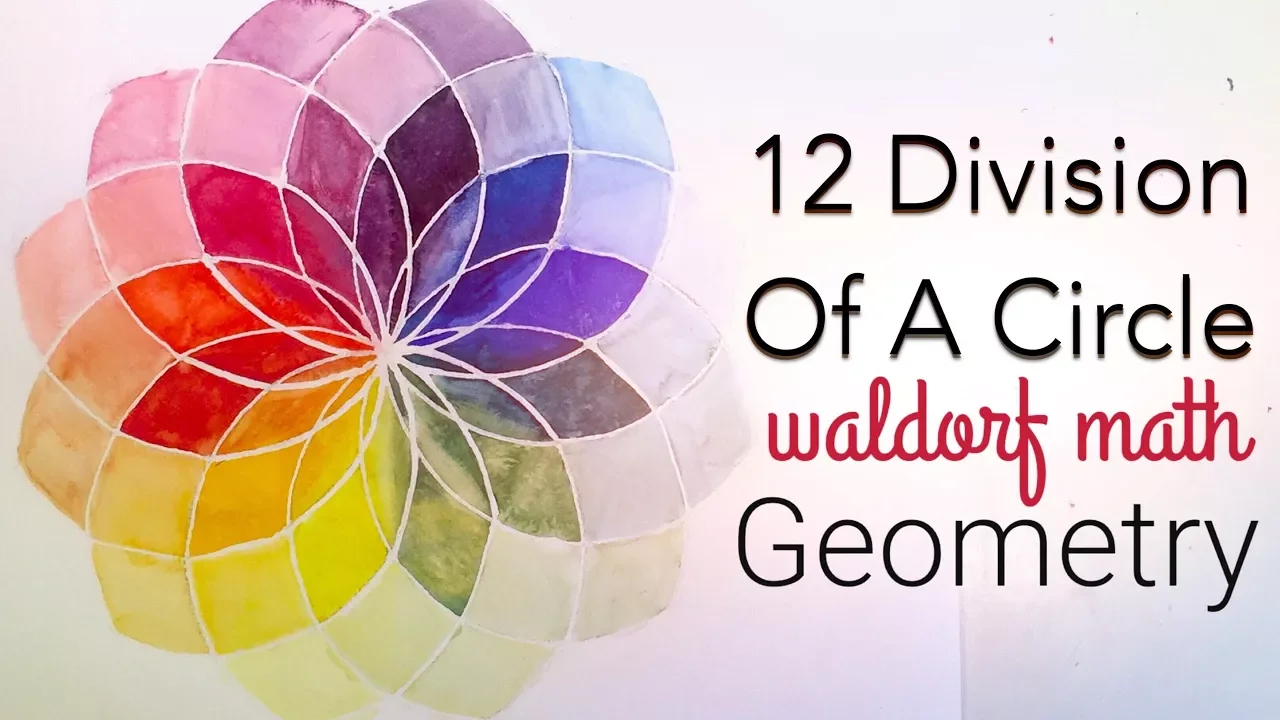
12 Division of a Circle | Waldorf Geometry
Math is beautiful and arguably the most beautiful math is geometry. Geometric designs are all around us, and when we pause and recognize them, their mysteries are revealed. This lesson, the 12 division of a circle, is one such project. When a circle is divided into 12 sections with circles of the same diameter, the results are nothing short of stunning.
-
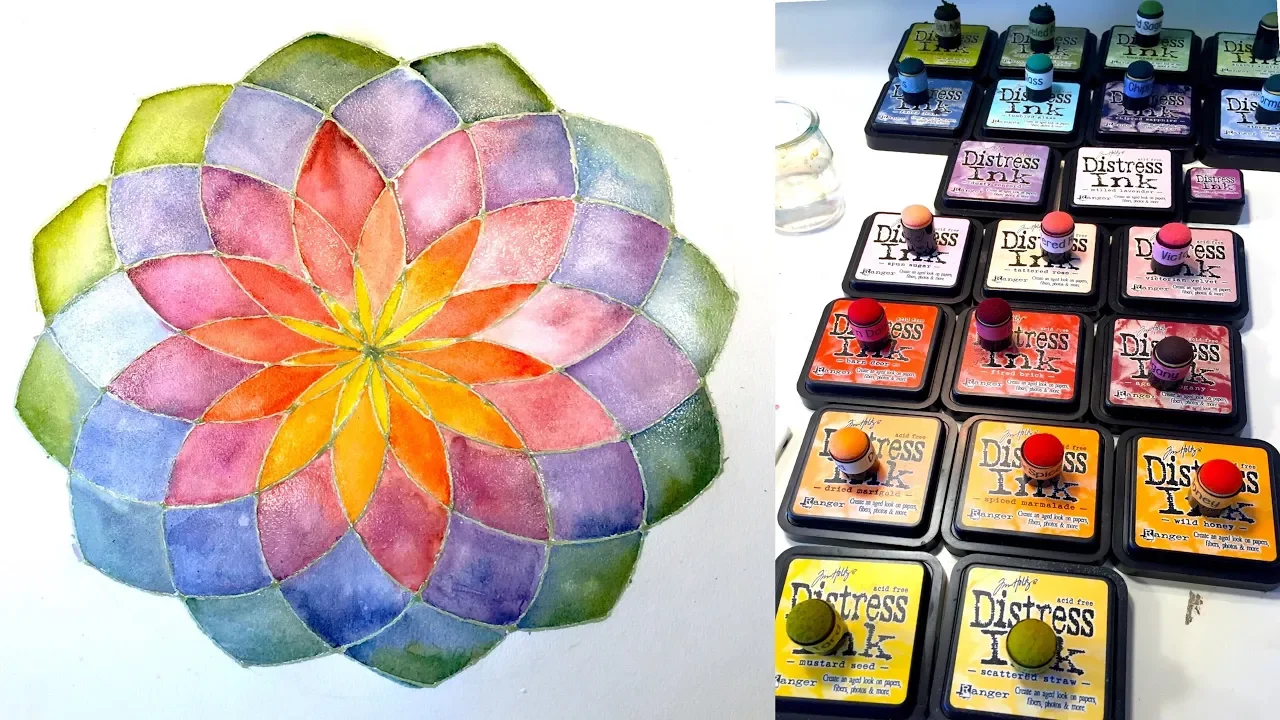
The Beauty of Math | Geometry + Pi Day
It's Pi Day again. On March 14th (3.14) mathematicians around the world celebrate the beauty and mystery of the circle. Today, I'm sharing three projects that we did for a geometry lesson as part of our Ancient Greece main lesson block.
-
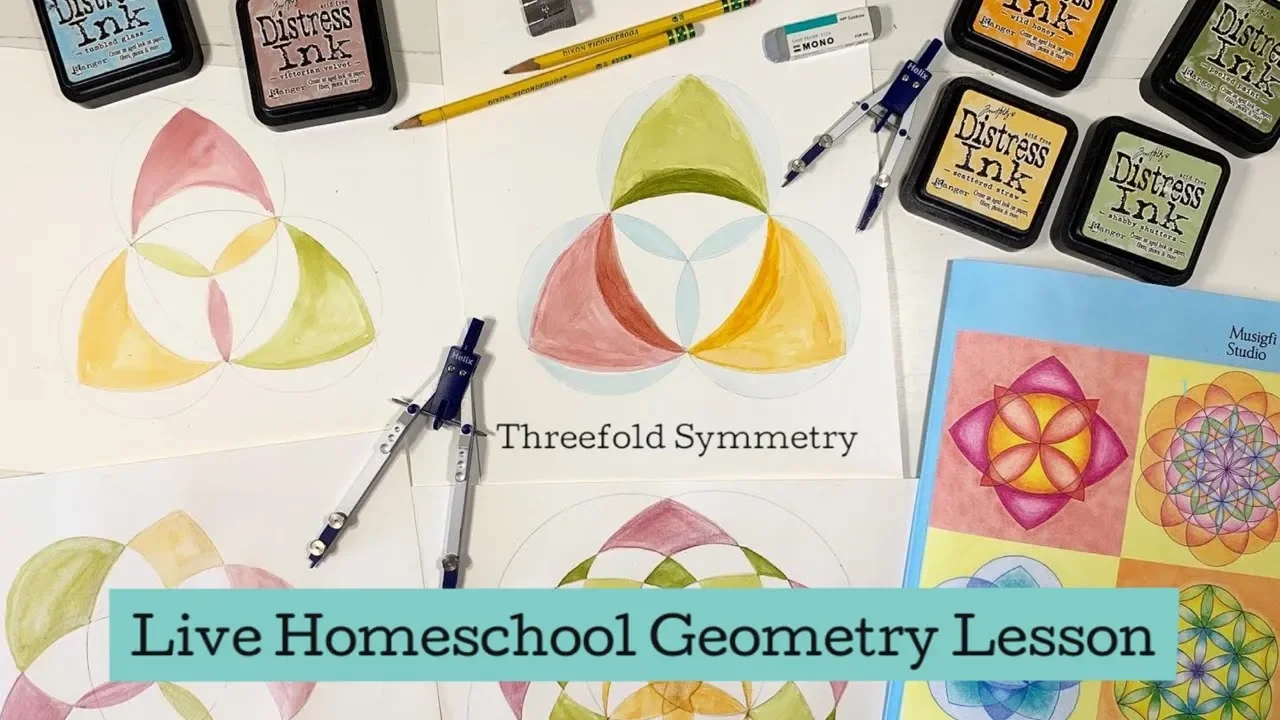
LIVE Homeschool Lesson | Threefold Symmetry
Today's lesson is a LIVE geometry lesson I did with my 13-year-old son. He and I work through 3-fold symmetry of a circle using the book Drawing Circle Images. We (or I should say I) encountered a problem. I did the design different than the book, and it took me a few minutes to recognize my error.
-

How To Draw 3-Fold Symmetry
Circle symmetry is one of the most beautiful geometric projects you can easily do with your students. While some symmetries are more complicated, 3-, 4-, 6-, 8- and 12-fold are fairly straightforward and can be achieved with moderate effort and skill, in my opinion and experience.
-
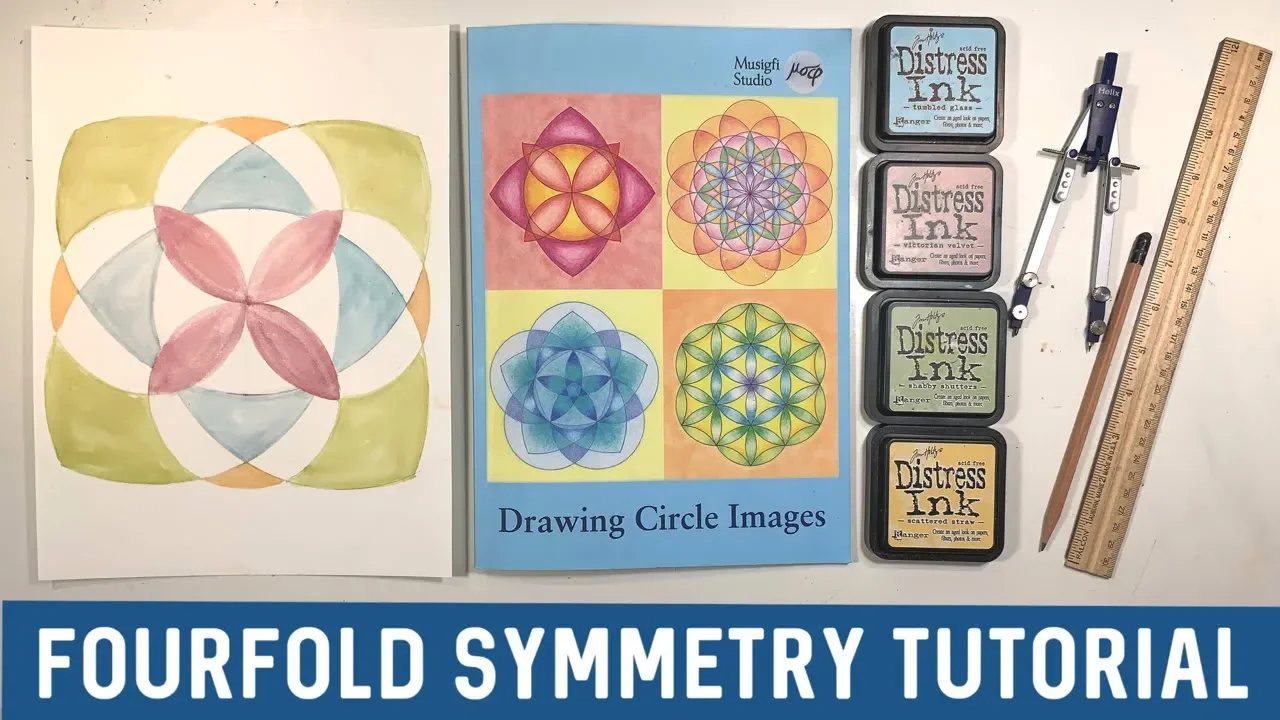
How To Draw 4-Fold Symmetry
Today's project is a tutorial for fourfold symmetry. You can explore this design and come up with creative ways to paint or color in the shapes. In this video I show you two ways to make 4-fold symmetry using the book Drawing Circle Images. You can find links to the materials I used in the blog post that accompanies this video.
-
How To Draw 5-Fold Symmetry
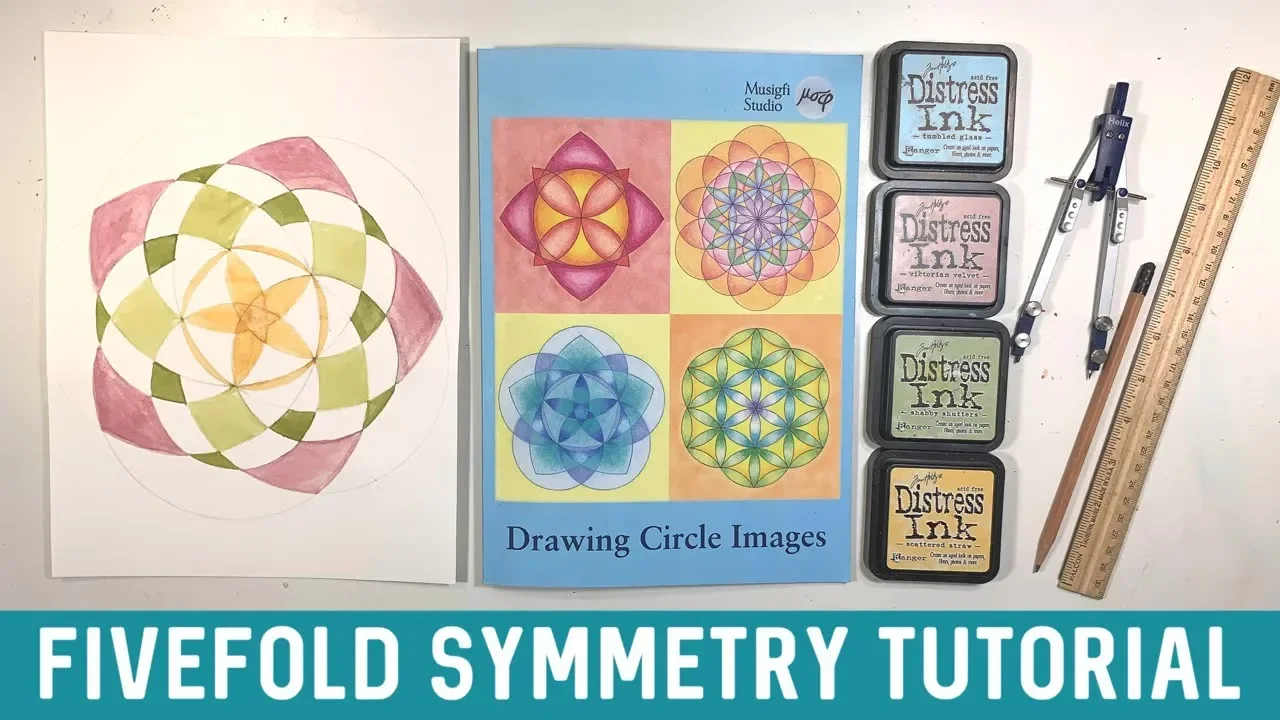
Fivefold symmetry is the first challenging shape to explore in my opinion. You begin with fourfold symmetry, then re-adjust your radius to to be the distance between the two arcs on the circle and place your compass on one point and draw a new arch. Connect the arcs with a ruler and now you have the two points which create the distance between each of the five arcs to get five-fold symmetry.
-
How To Draw 6-Fold Symmetry
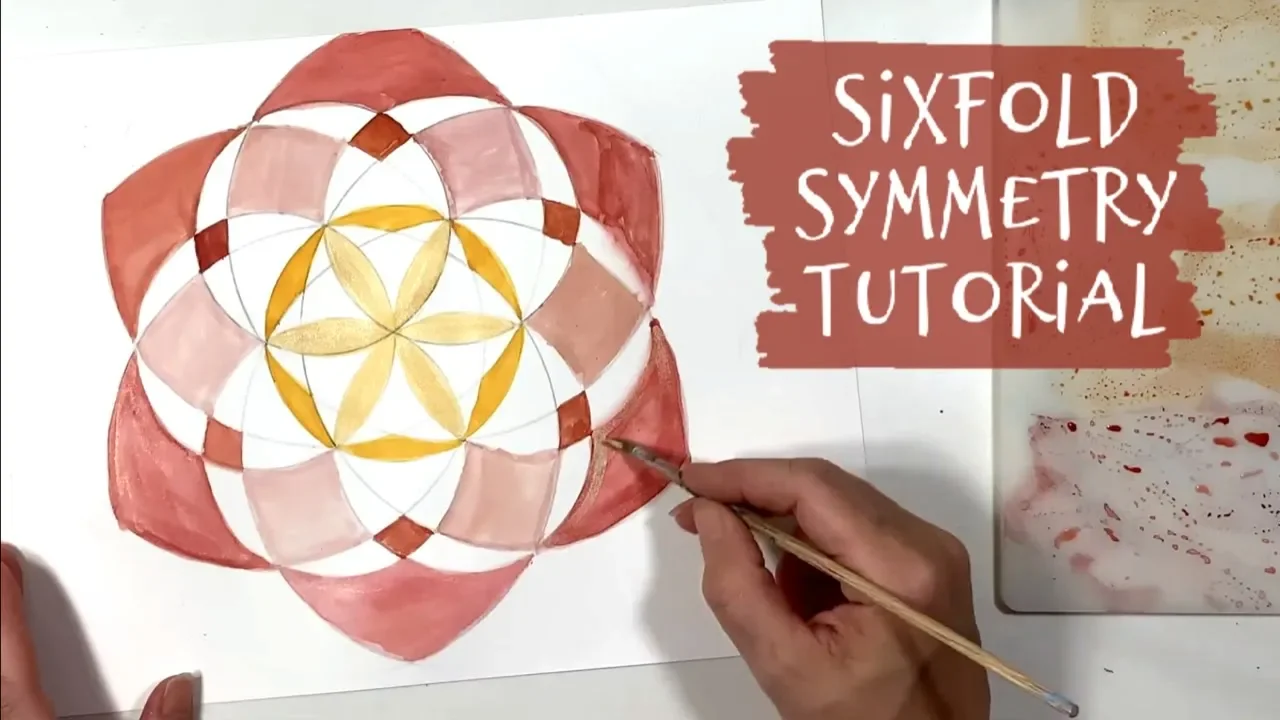
Sixfold symmetry is one of the easiest of the complicated designs, in my opinion :) I find this one to be one of the most beautiful designs because from sixfold symmetry comes the hexagon and that shape is seen in tile work across the world. The design opportunities are endless. I love the way this one turned out and can't wait to explore this design again.
-
How To Draw 7-Fold Symmetry
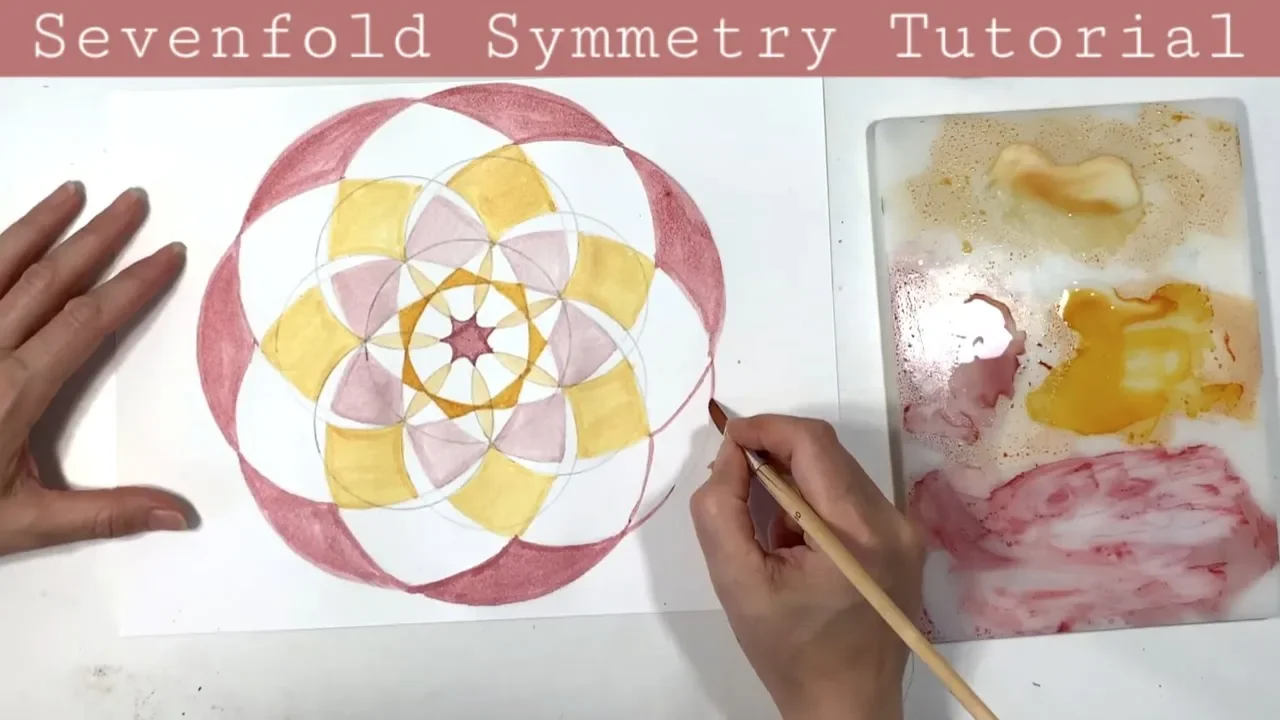
I LOVE 7-Fold symmetry. It's my favorite of all the fold symmetries we did during this series. I love the way the center overlaps. Depending on how you paint it, you can get some spectacular results. For this tutorial we needed to follow the example in the book which included a table with measurements on what to set your compass to achieve the symmetry.
-
How To Draw 8-Fold Symmetry
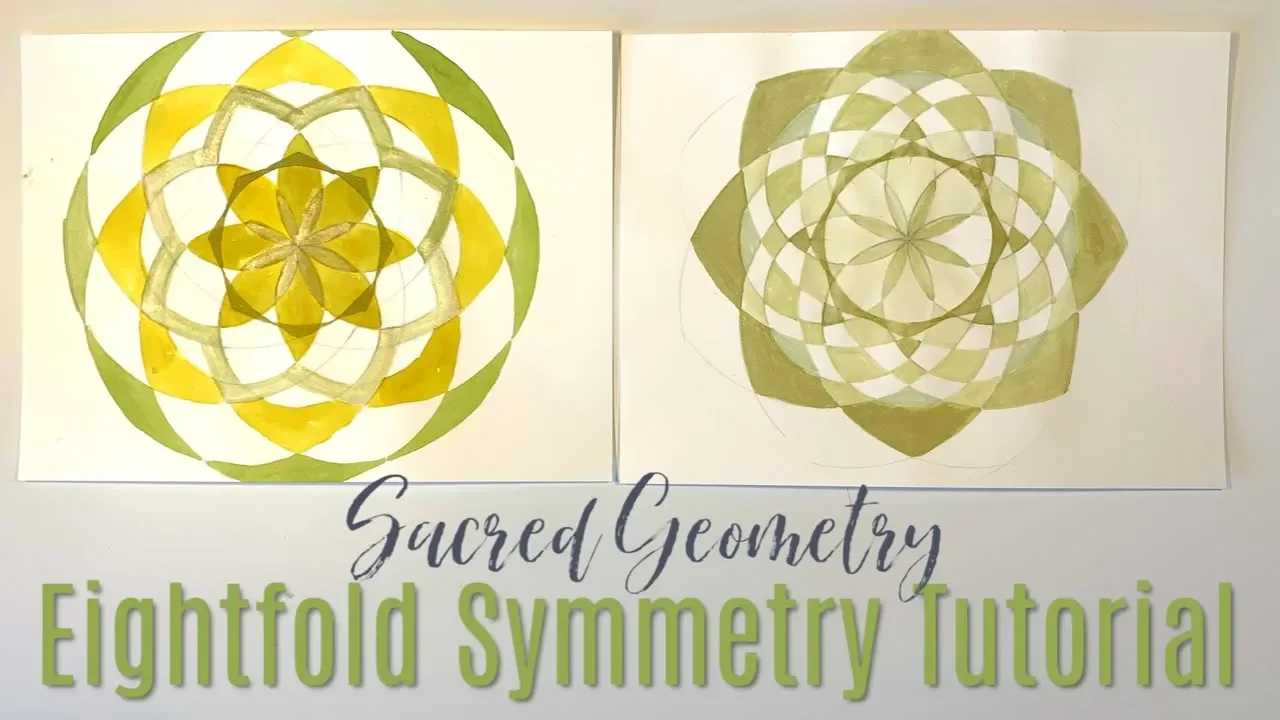
To construct eightfold symmetry, you need to start with fourfold symmetry which we did in an earlier tutorial. Once you draw arcs on the outside of the circle and and connect them to make a square, you can draw arcs between each of the four corners to achieve 8-fold symmetry. You can see two different designs emerge depending on how you color in each shape. I love the way this one looks in the end in part because of my color choices.
-
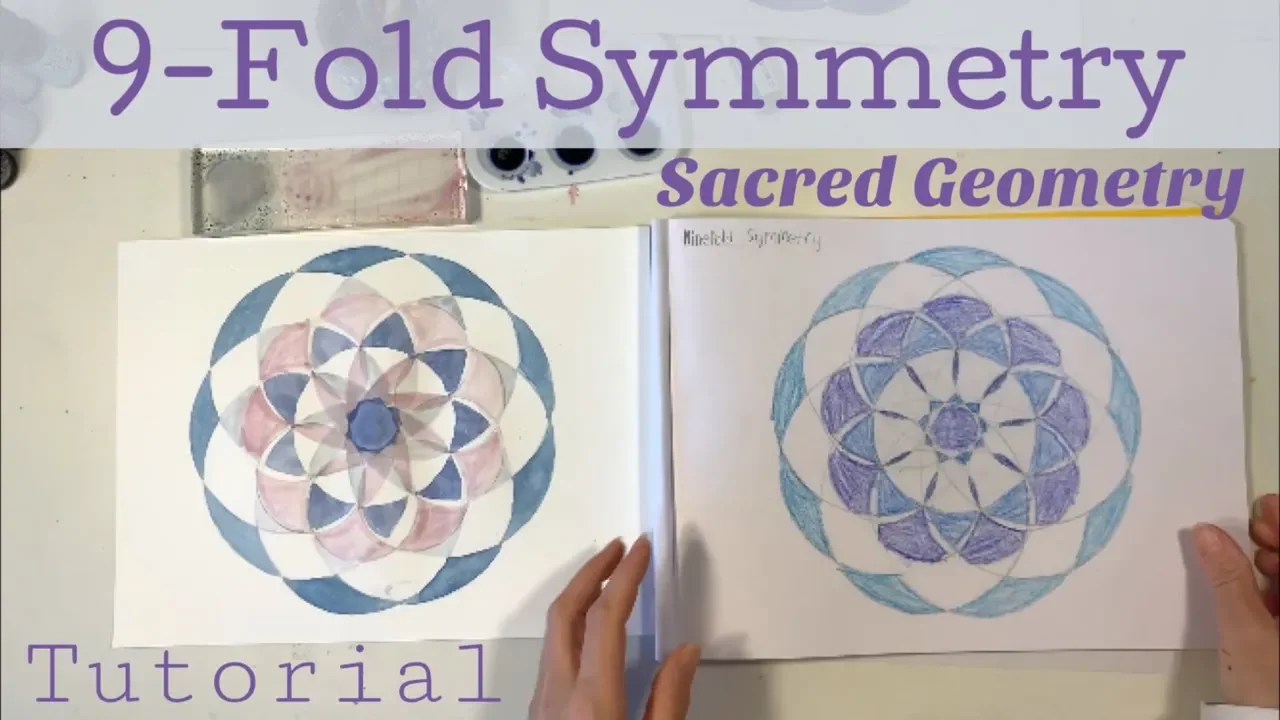
How to Draw 9-Fold Symmetry
Initially I thought ninefold symmetry would be simple because achieving 3- and 6-fold symmetry is fairly simply, but I was wrong. I attempted this several times and I show the challenges in the video, so you know this one isn't as easy as it seems. For this shape, we need to follow the chart provided in the book
-
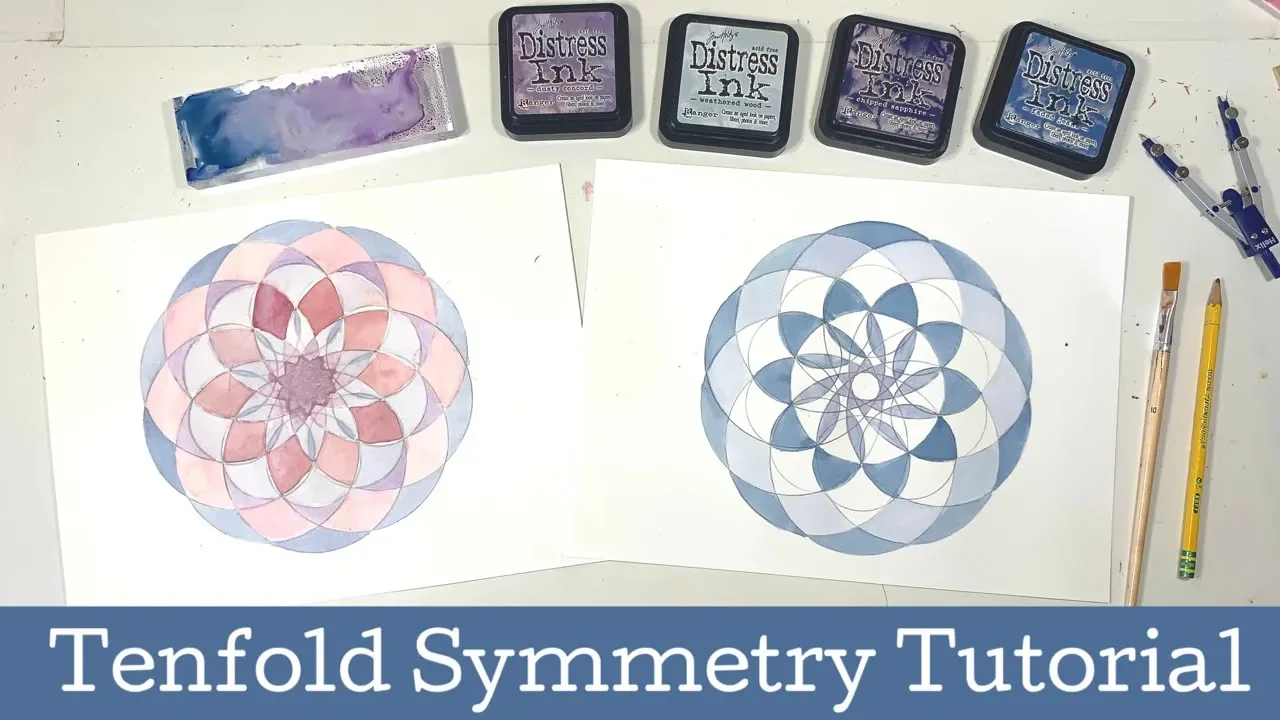
How To Draw 10-Fold Symmetry
Tenfold symmetry is stunning! I love the designs in which the arcs don't cross the center of the circle by spiral just around it instead. For 10-fold symmetry, you construct your circle as you would fivefold symmetry. Then at each of those arcs, you draw a line from the arc through the center of the circle to get a point on the opposite side of the circle. In this way, your original five arcs become 10 and now you can begin drawing small and large circles around each point.
-
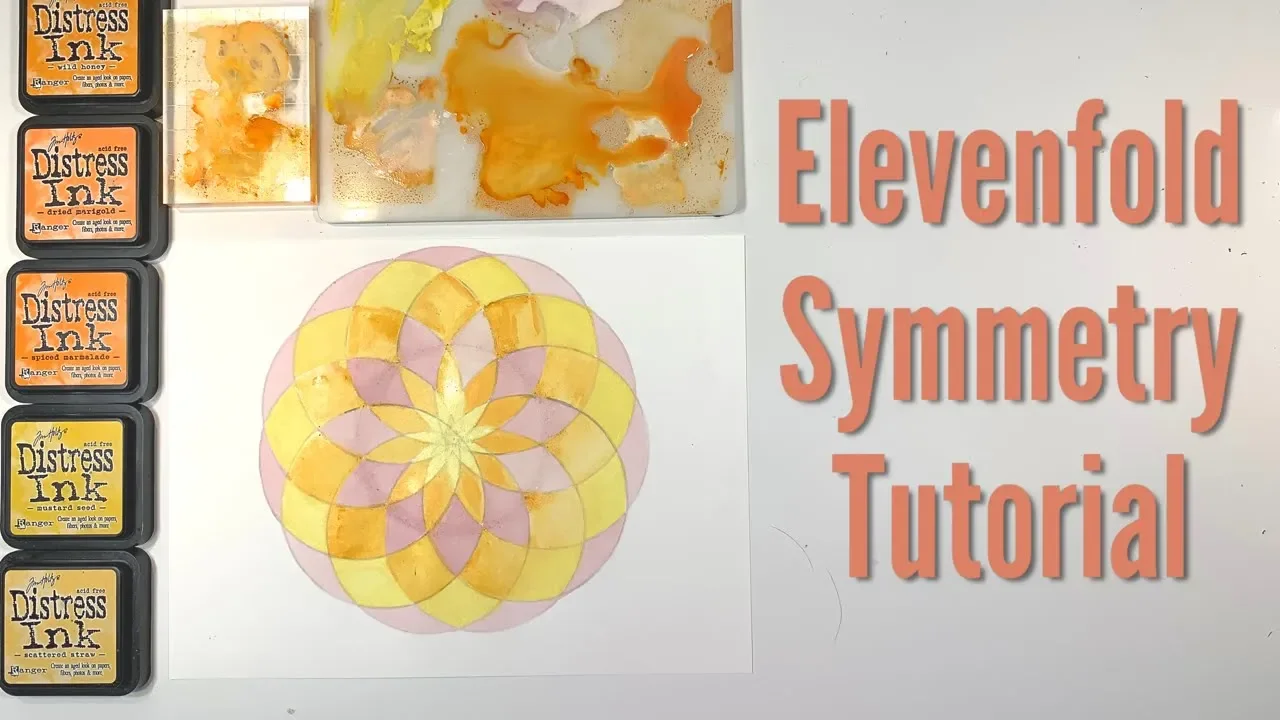
How To Draw 11-Fold Symmetry
Elevenfold symmetry is the last in the series where we needed to use the book's chart to construct the divisions of a circle. In truth, I prefer the symmetries that can be achieved through geometry rather than through a chart that gives the measurements for the each circle. In the end, this design is beautiful and reminiscent to 12-fold symmetry which we have done before.
-

How to Draw 12-Fold Symmetry
Twelvefold symmetry is very satisfying to make. You can construct 12 divisions of a circle using basic geometry. Once the 12 divisions are complete, you can choose which areas to paint or color in to give your final design a unique feel. I definitely like this symmetry, and what's fun about it, is that you can continue to extend it beyond the page for additional spectacular designs. The book does suggest a design we opted not to use and if you buy the book, I highly suggest you try some of the designs we didn't do.
Geometry Grade 6 Lessons
-
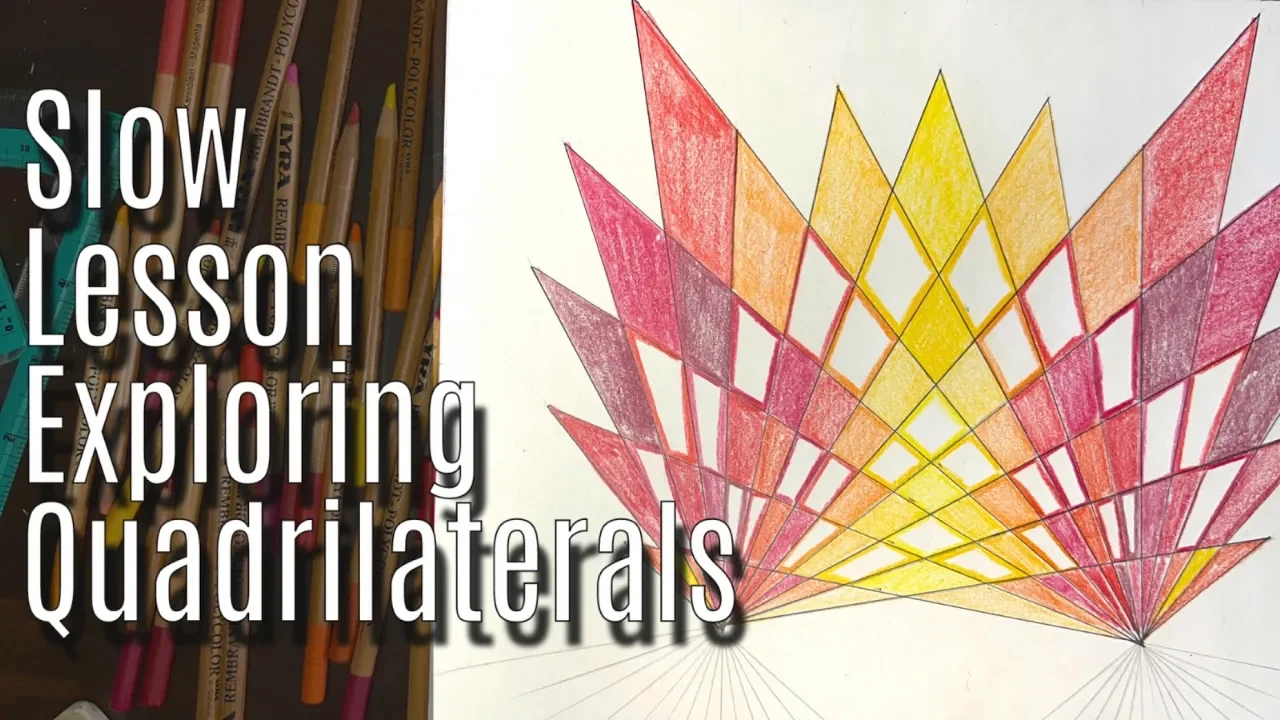
Exploring Quadrilaterals | Step by Step Lesson
Exploring Quadrilaterals is a lesson from the Live Education Waldorf curriculum for year 5. For this lesson I'm using Lyra Color pencils from A Child's Dream
-
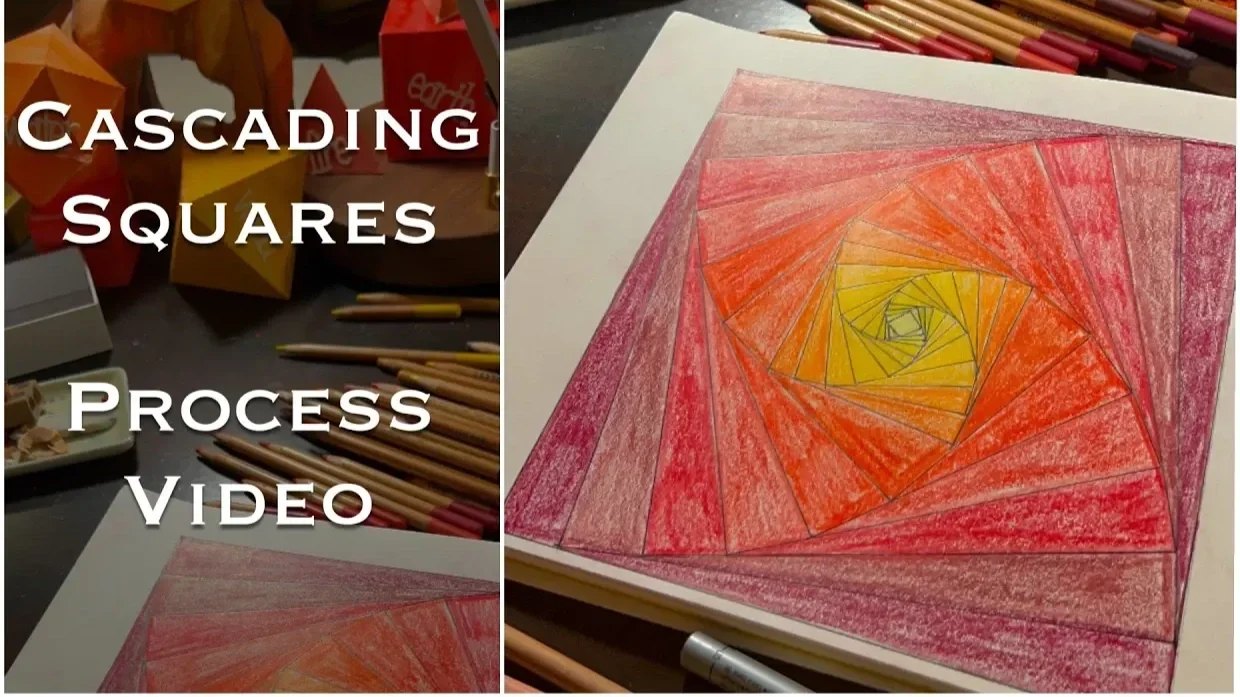
Cascading Squares | Nesting Squares
Nesting Squares is a lesson inspired by the Live Education Waldorf curriculum for year 5. For this lesson I'm using Lyra Color pencils from A Child's Dream
-
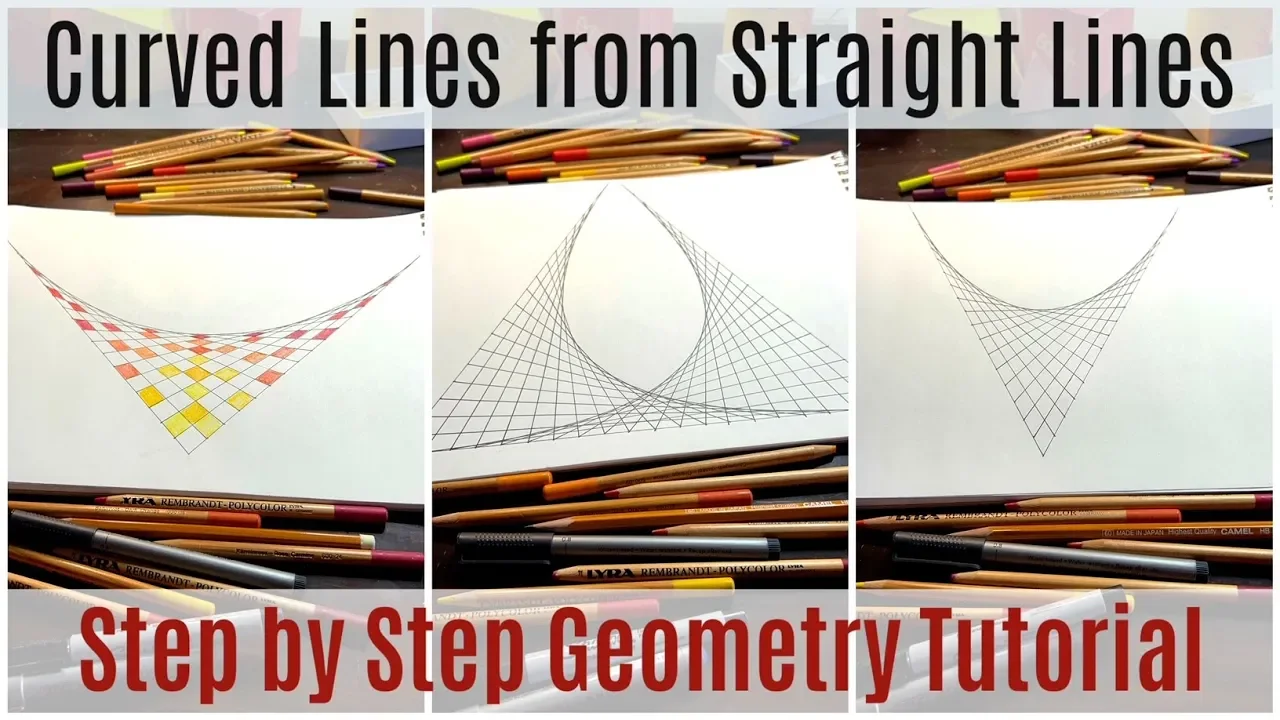
Curved Lines from Straight Lines | Live Geometry Lesson
Curved lines from Straight lines is a lesson inspired by the Live Education Waldorf curriculum for year 5. For this lesson I'm using Lyra Color pencils from A Child's Dream
-
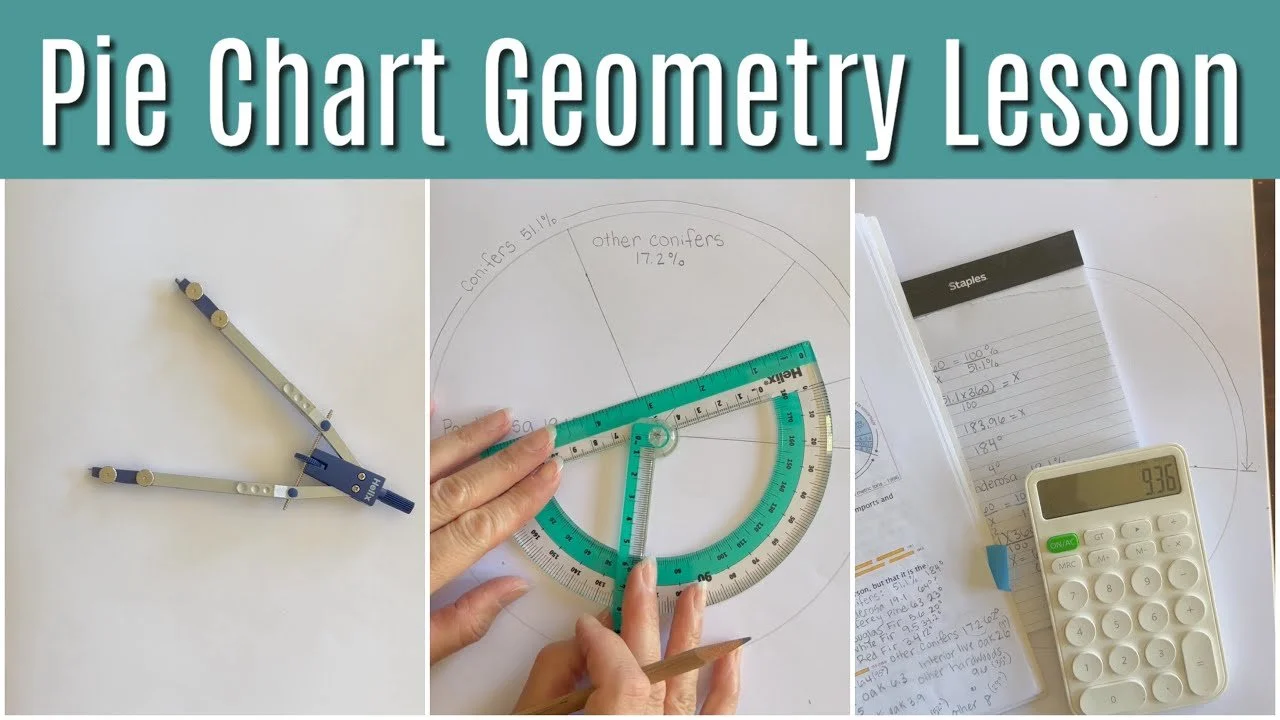
Pie Chart Geometry Lesson
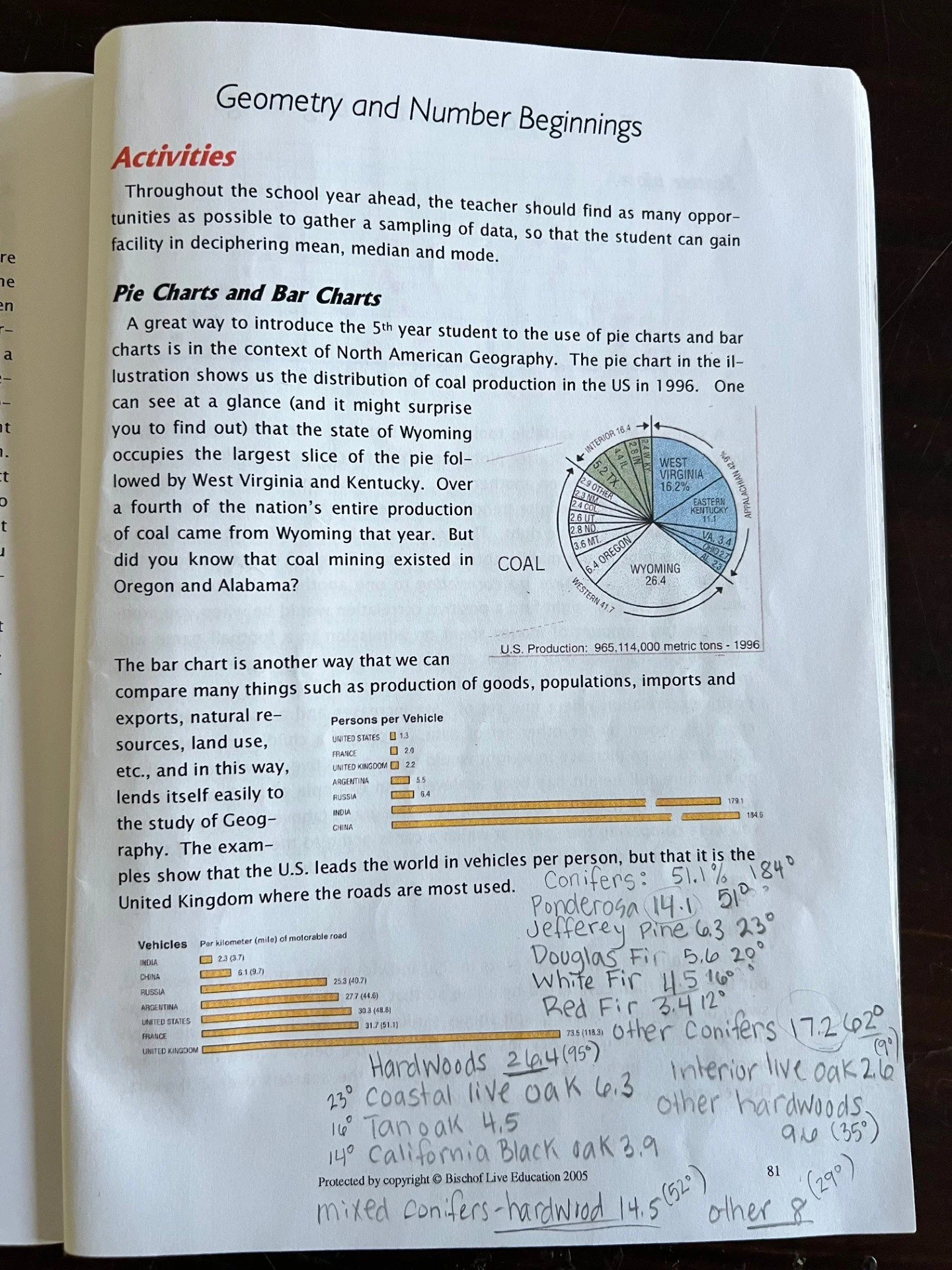
We continue with our Waldorf Geometry main lesson block with this lesson on bar graphs and pie charts. We used data on the tree population of California as it was relevant to our Botany lessons rather than using the data that was provided in the main lesson book by Live Education Waldorf curriculum. We constructed a bar graph with this data as well.
-
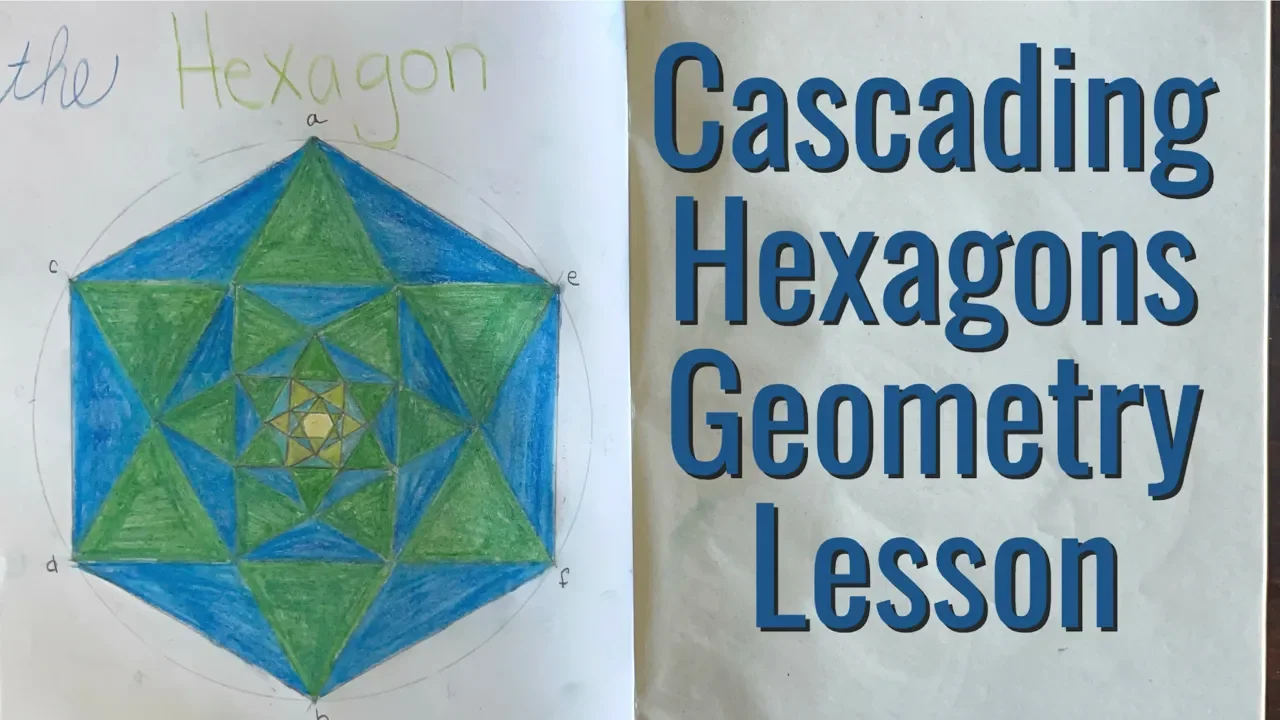
The Perfect Hexagon
We continue our Waldorf Geometry lessons with constructing the ‘perfect’ hexagon using six division of a circle, then connecting the points to construct a hexagon. From that we connect every other point to construct two equilateral triangles. You will see a new hexagon emerge in the center again! Connect every other point to construct two equilateral triangles and once again another hexagon will emerge.
-

Geometry Lesson 6-Fold Symmetry with Bulbs & Lilies
For this lesson on six division of a circle, we look at flowers that exhibit six fold symmetry. This lesson fit perfectly with our botany Main lesson block as we are studying bulbs and lilies. For this lesson we constructed a circle with a radius of 4 inches (2.5 inches would have been better) and divided our circle into 6 equal parts by placing our compass on the circumference and swinging the compass around to intersect the circumference with two arcs.
-
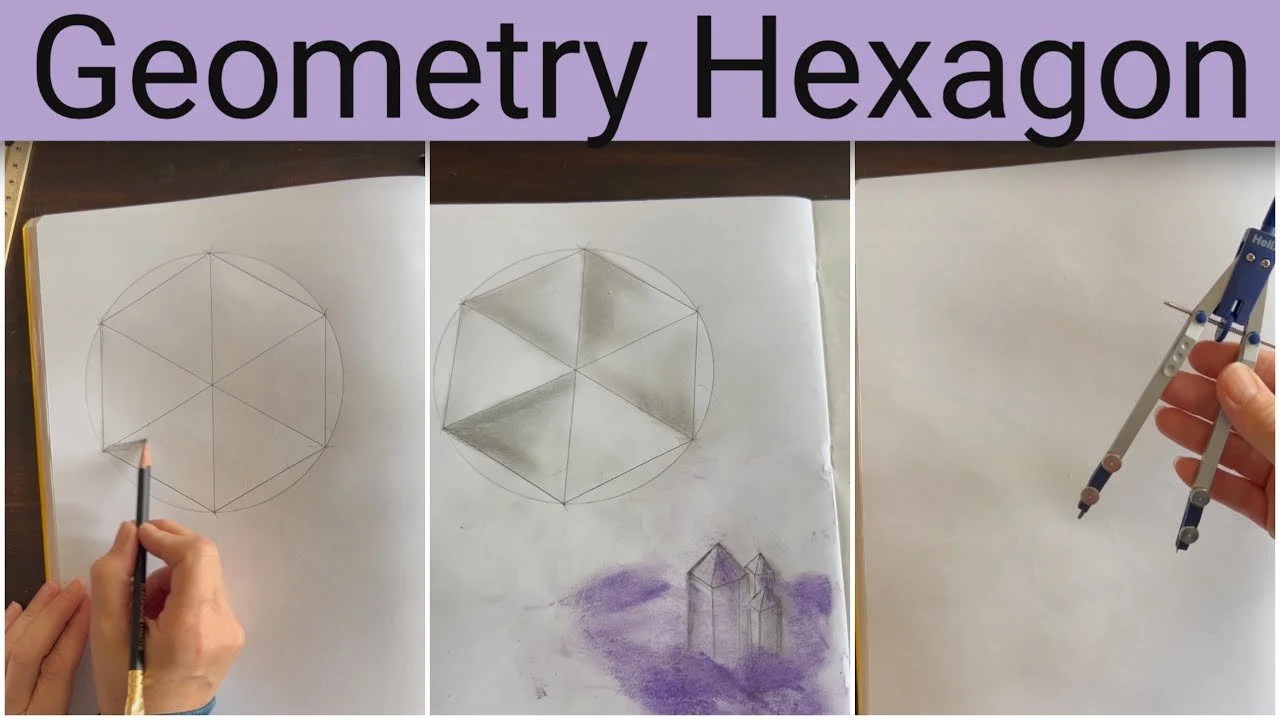
The Hexagon | Waldorf Geometry Lesson
The first several lessons in this geometry main lesson block focuses on 6 division of a circle. By this point the student should be proficient at constructing a circle, placing the point of the compass on the periphery of the circle and swing the arcs to intersect with the circle.
-
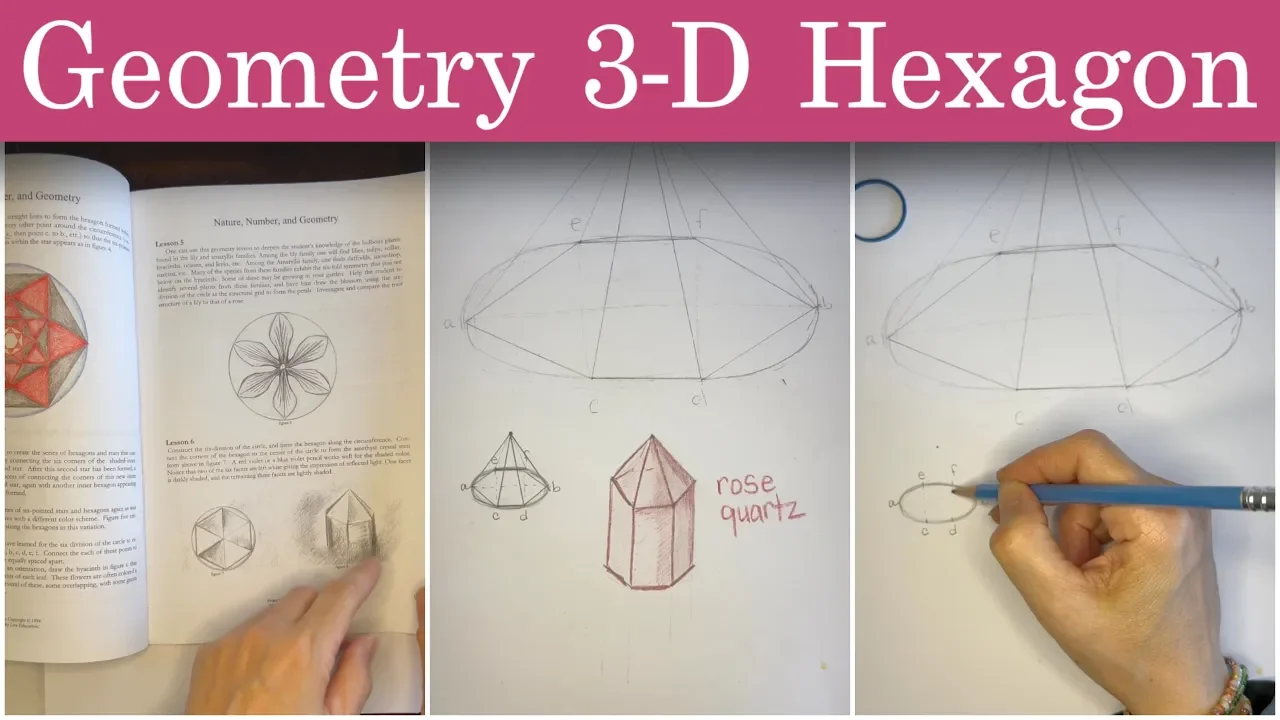
Geometry Lesson | Hexagon and Rose Quartz
This lesson was phenomenal! How exciting to learn how to make a three dimensional looking hexagon and then experiment with variations of making quartz crystal drawings from different angles.
-
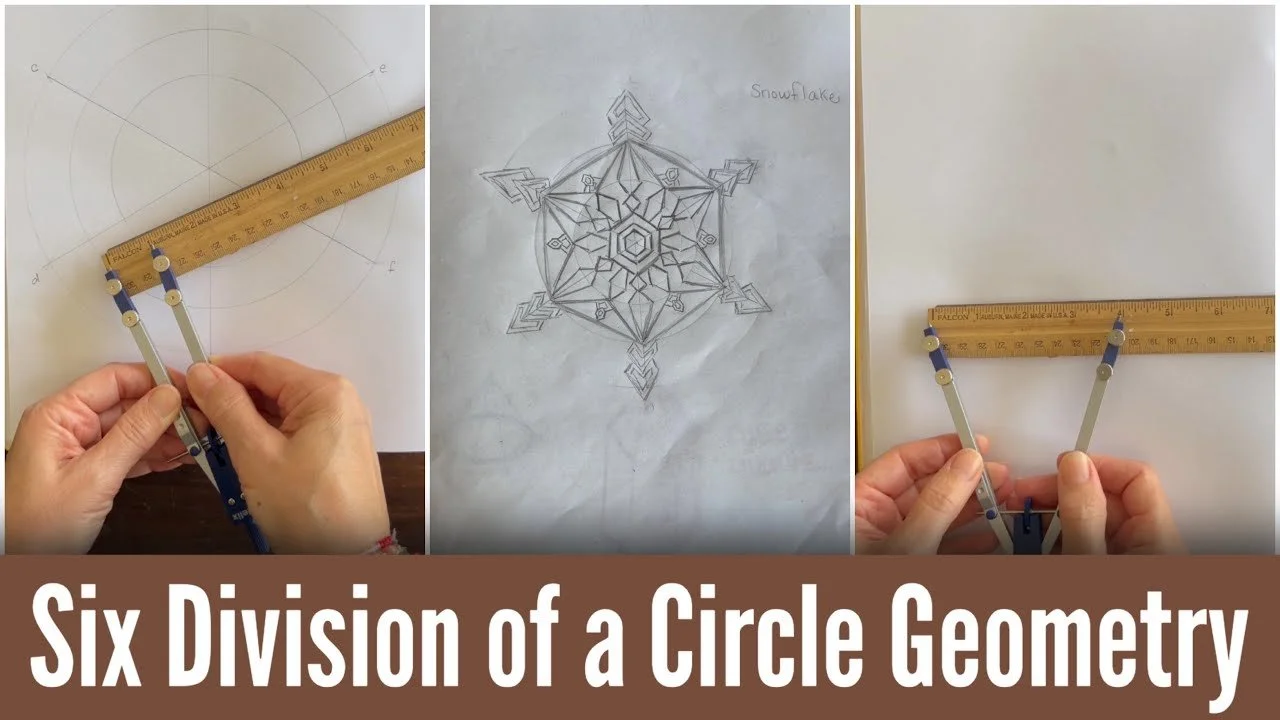
Six Division of the Circle | Snowflake Geometry
I underestimated the difficulty of this lesson. I thought it would be easy, fun and quick. And at first it wasn't and then later, it was only slightly more fun, but still challenging and slow. Firstly, make your radius about 2.5 inches or less, as a big radius makes for too big of a snowflake and much harder to get lines and shapes straight.
-
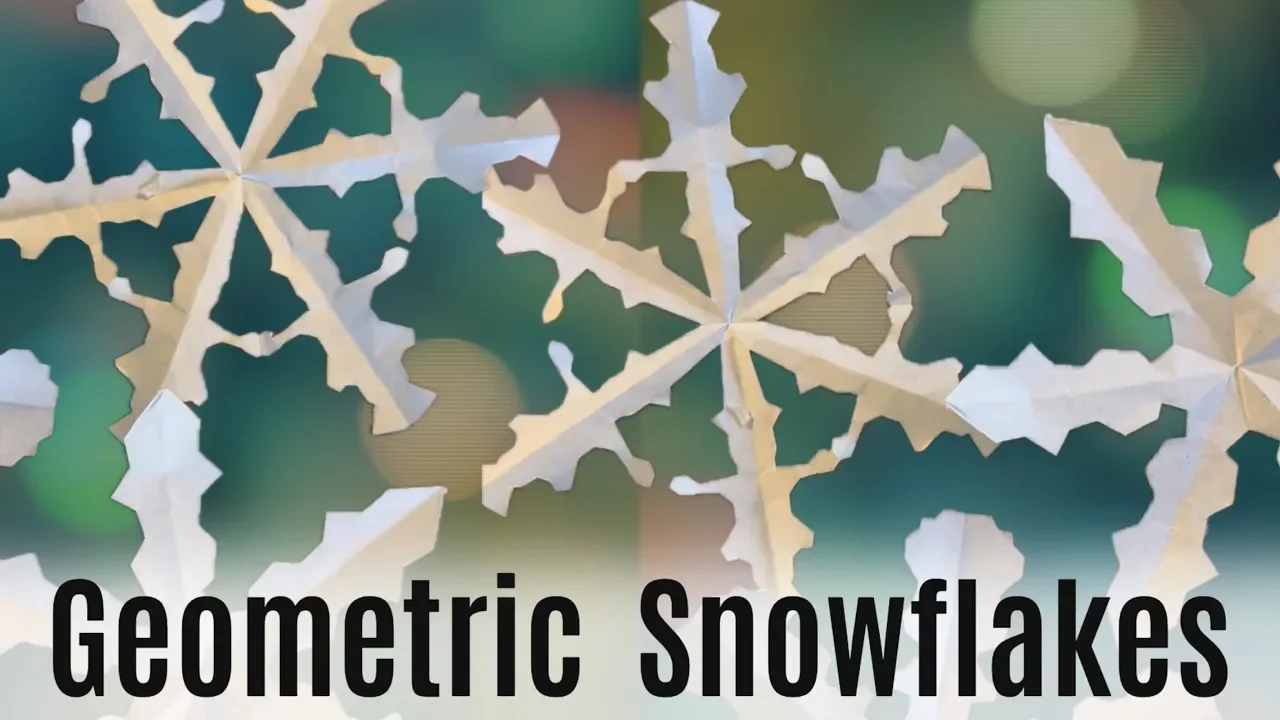
Waldorf Geometry Lesson | Structure of a Snowflake
Making snowflakes is a great family project that works well for almost all ages. While working with 6-fold symmetry with your middle schooler, you elementary ages students can enjoy cutting and designing snowflakes. You may start with any size circle, but we worked with a radius of about 2.5 inches.
-

Geometry Lesson | 6-Division of a Circle | Calla Lily
I love when botany and geometry come together in a lesson. For this geometry lesson, we continue with 6-division of a circle, but as opposed to using the 6-fold symmetry, we will concentrate on the triangle.
-
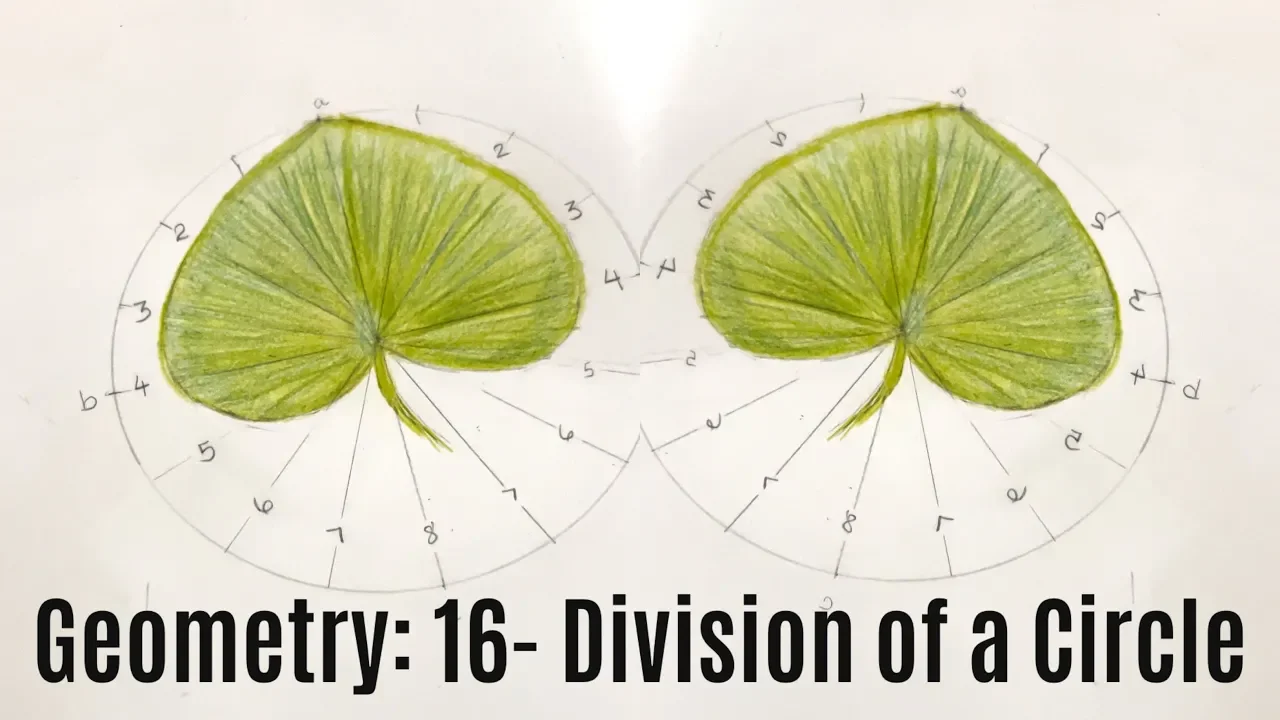
Geometry Lesson | 16-Division of a Circle and Water Lily
For this lesson, you want to start with a 9 cm circle. Draw a line through the center. Extend the compass and place your point on the diameter at the circumference and swing the arc to the right and left.
-
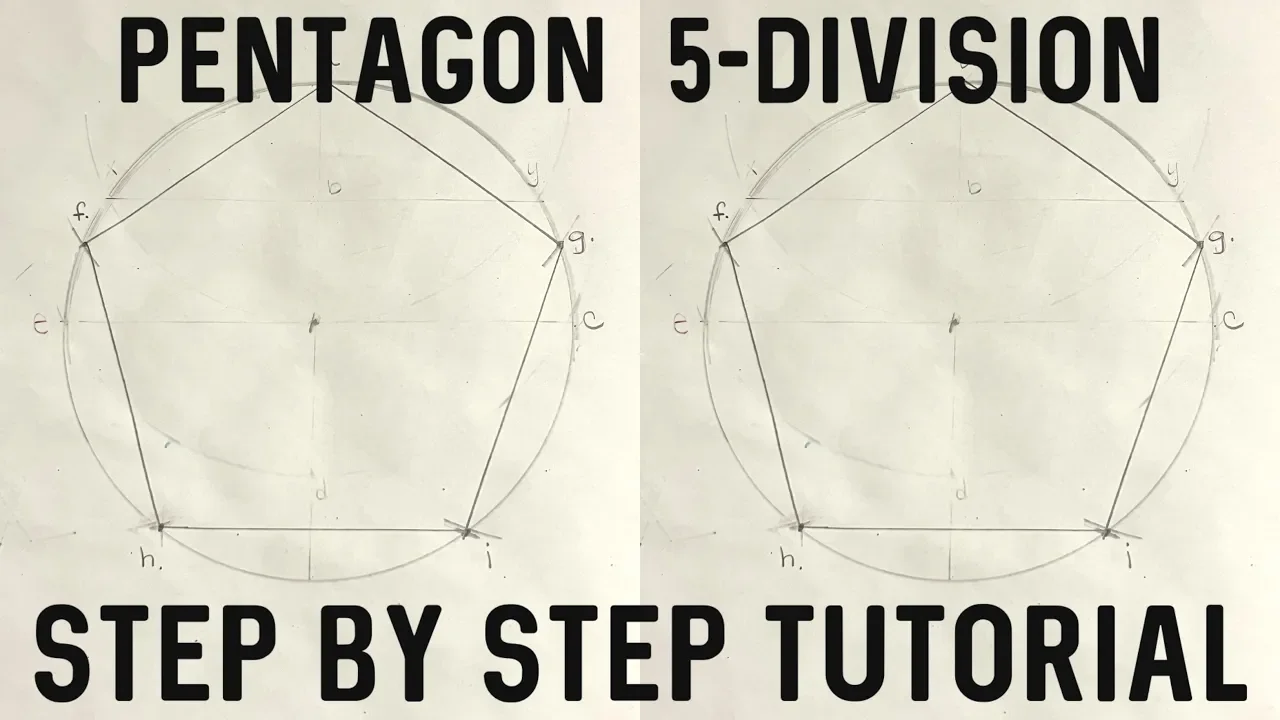
How to Construct a Pentagon | 5-Division of a Circle
This is the first in a series of lessons devoted to five-division of.a circle. This is a low step by step tutorial on how to construct 5-fold symmetry. Once you've mastered this lesson, the remaining lessons for five-fold symmetry will be easier to complete. For this lesson, you'll need a compass, ruler and pencil.
-
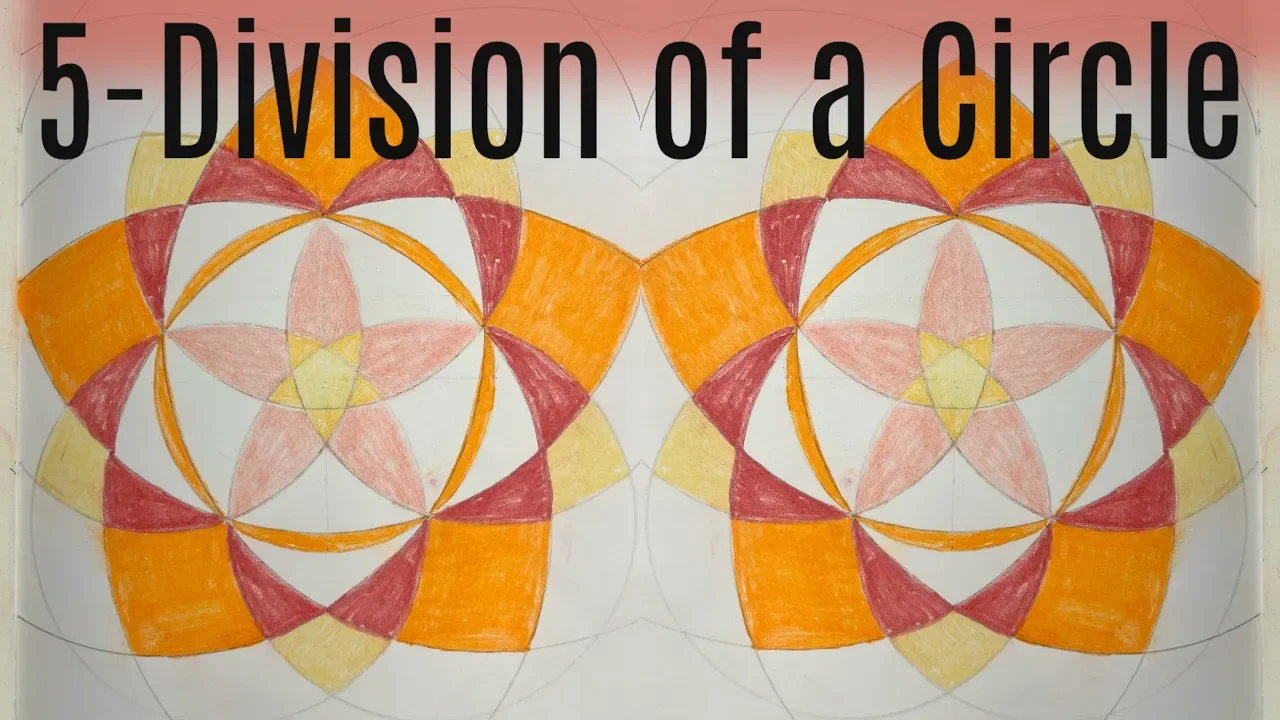
Geometry Lesson | 5 Division of a Circle
This is the second a series of geometry videos on 5-division of a circle. This one is a beautiful geometry expression of five fold symmetry. We used the book Drawing Circle Images for this lesson. We used our General's Chalk Pastel pencils and Matte Finish to seal our work.
-
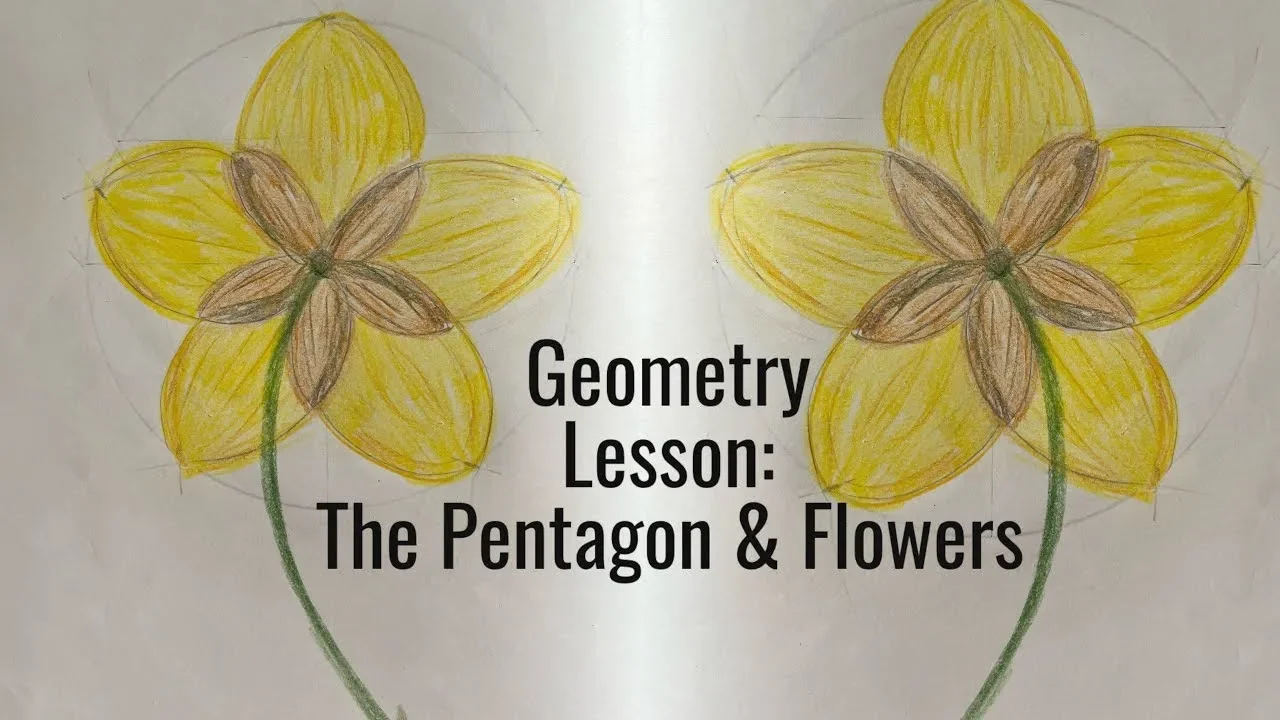
Geometry Lesson | 5-Fold Symmetry | Buttercup
We continue with our five-fold symmetry and five-division of a circle with this easy, quick and beautiful lesson exploring five-fold symmetry in the world of botany. I love how the Waldorf curriculum by Live Education naturally overlaps with previous lessons or previews upcoming lessons so the whole year works holistically together.
-
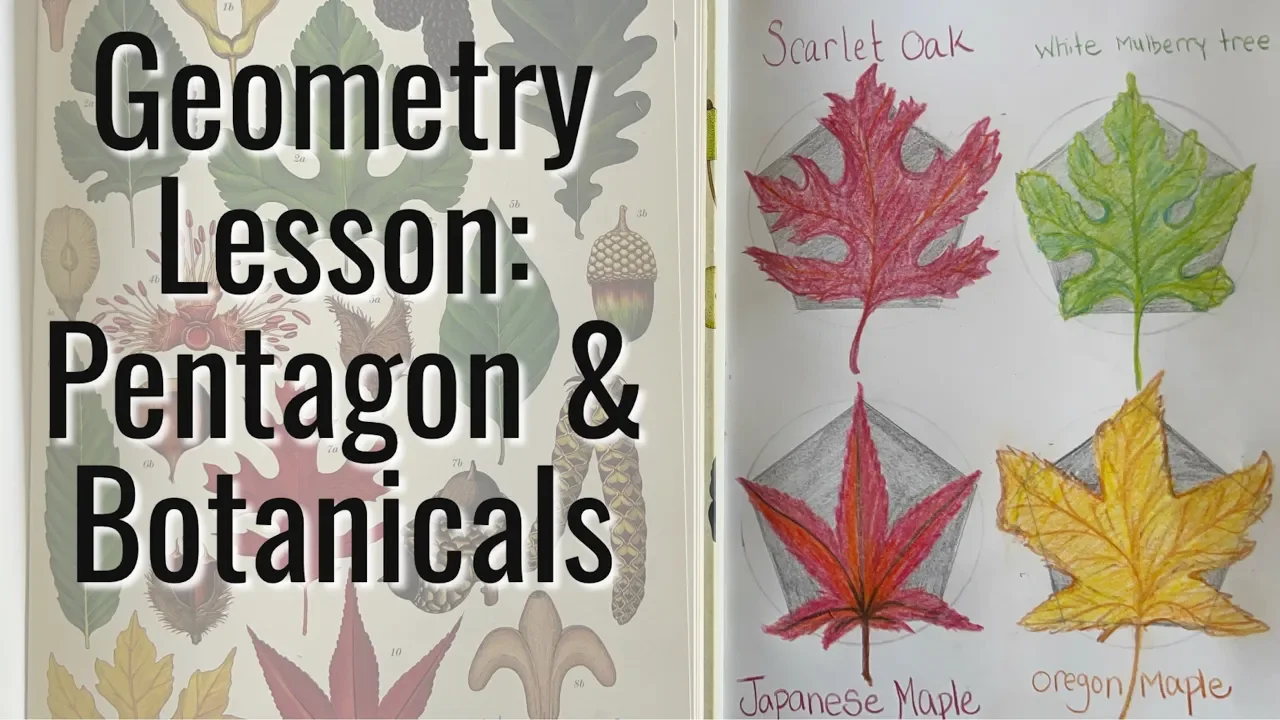
Geometry | 5-Division of a Circle | Botanical | Pentagons and Leaves
We conclude or botanical geometry lesson with this project on pentagons and leaves. We use the book Botanicum and illustration inspiration and copy the leaves of the trees: White Mulberry tree, Oregon Maple, Japanese Maple, and Scarlet Oak.
-
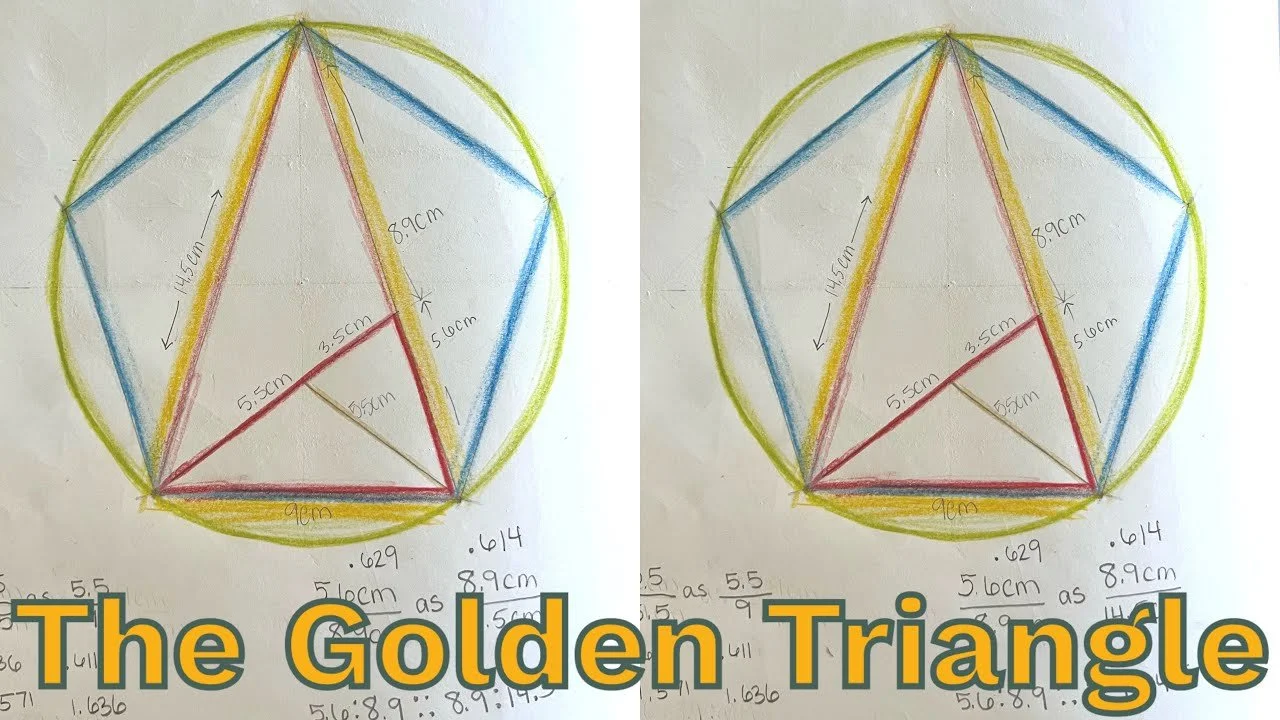
The Golden Triangle | Waldorf Geometry
The Golden Triangle Lesson is our experiential introduction to the Golden Section. Known by many names like the Golden Mean, The Golden Ratio and more recently as Phi, the Golden Ratio is a relationship in which a lesser portion is to the larger portion as the larger portion is to the whole.
Geometry Grade 7 Lessons
-
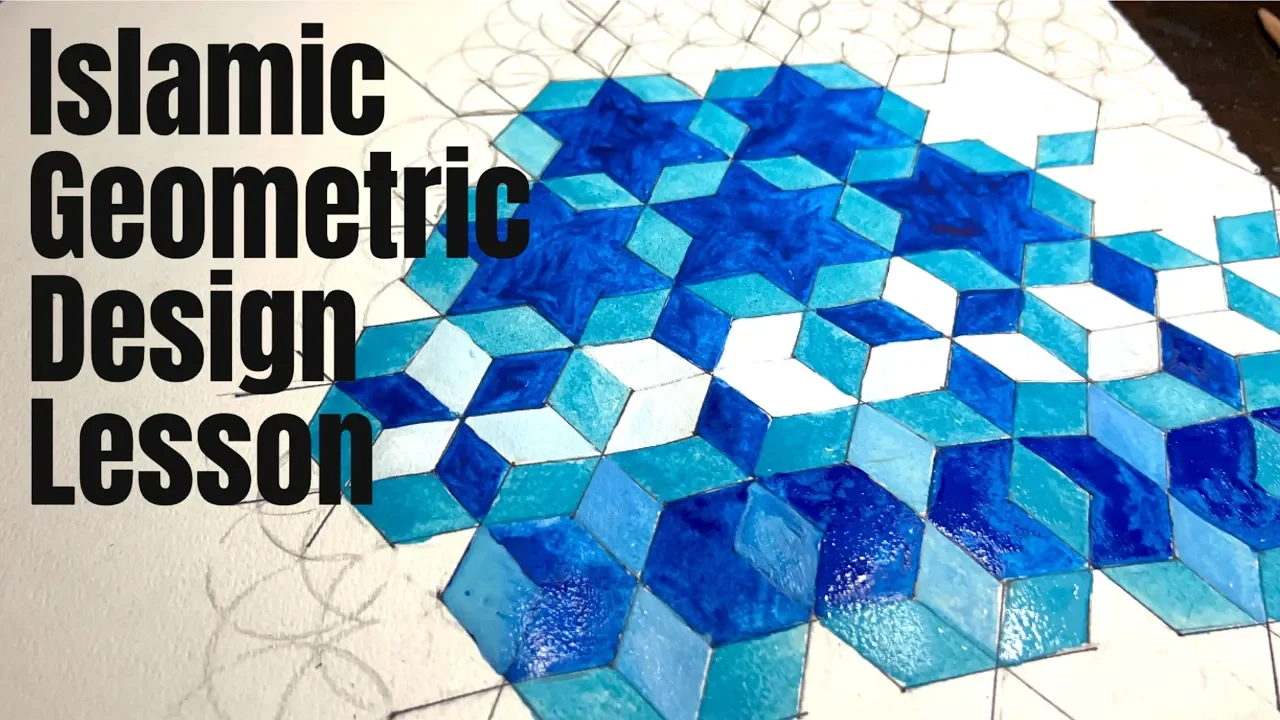
Designing Historical Geometric Tile Patterns
For this lesson, we used some additional books and resources to help us complete this design. We used the books: Islamic Geometric Patterns by Eric Broug, Islamic Geometric Patterns by Eric Broug, Islamic Design Workbook by Eric Broug and Islamic Design: A Genius For Geometry by Daud Sutton.
-
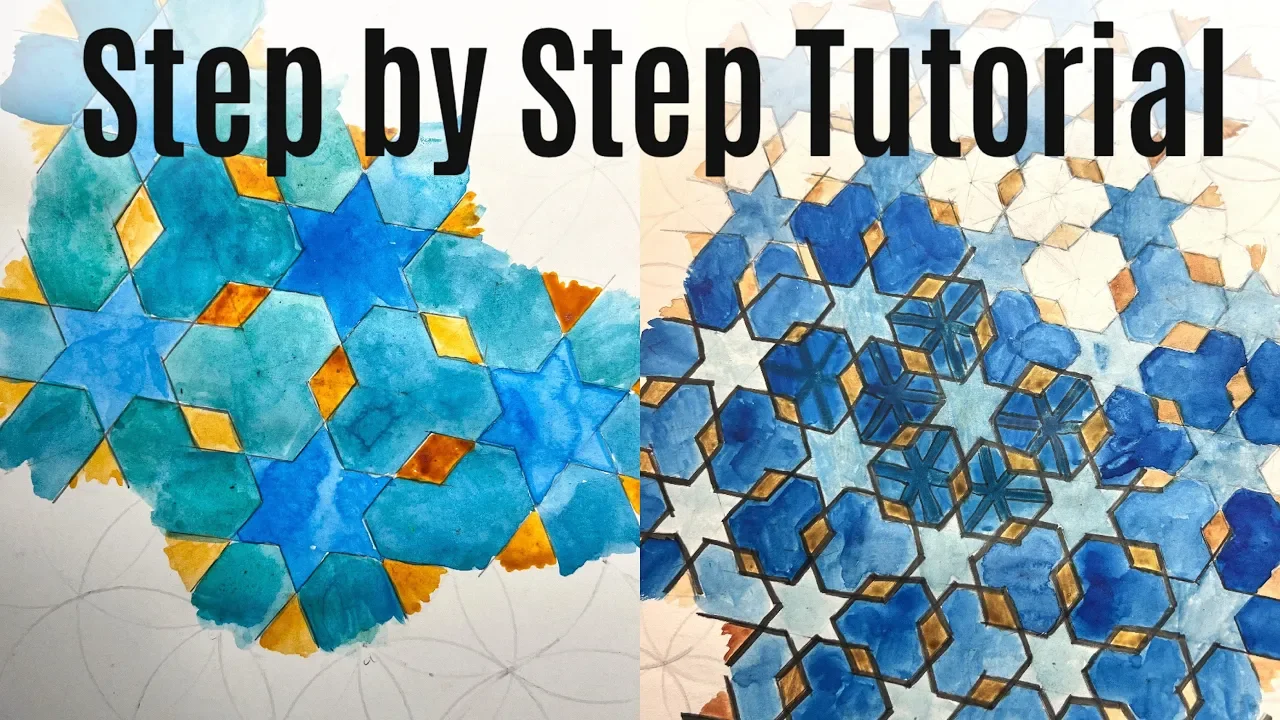
Six Division of a Circle | Islamic Geometric Patterns 
While we continue our work for our Waldorf Main Lesson Block for Geometry, we departed from the lessons to include some projects that are culturally significant for us and historically relevant for our upcoming history blocks.
-
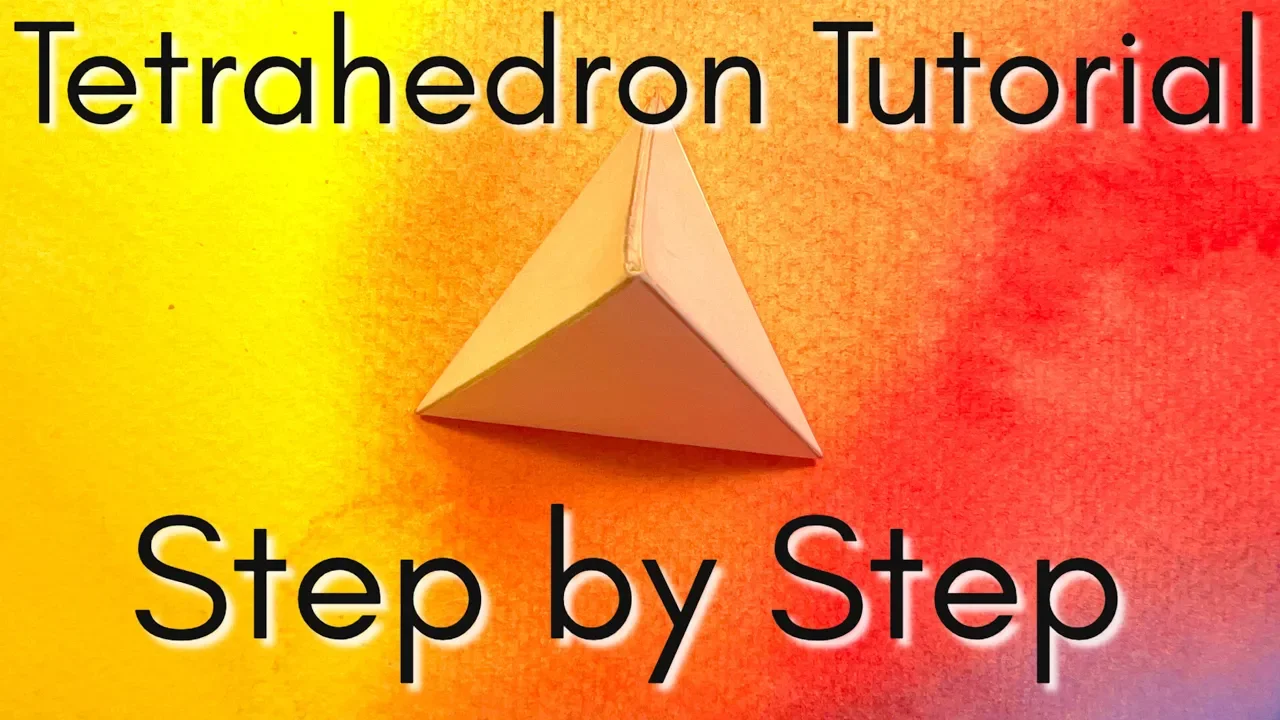
How to Make a Tetrahedron
For this math lesson we are exploring the quality of numbers 1-10 using the book A Beginner's Guide to Constructing the Universe: Mathematical Archetypes of Nature, Art, and Science by Michael S. Schneider.
-
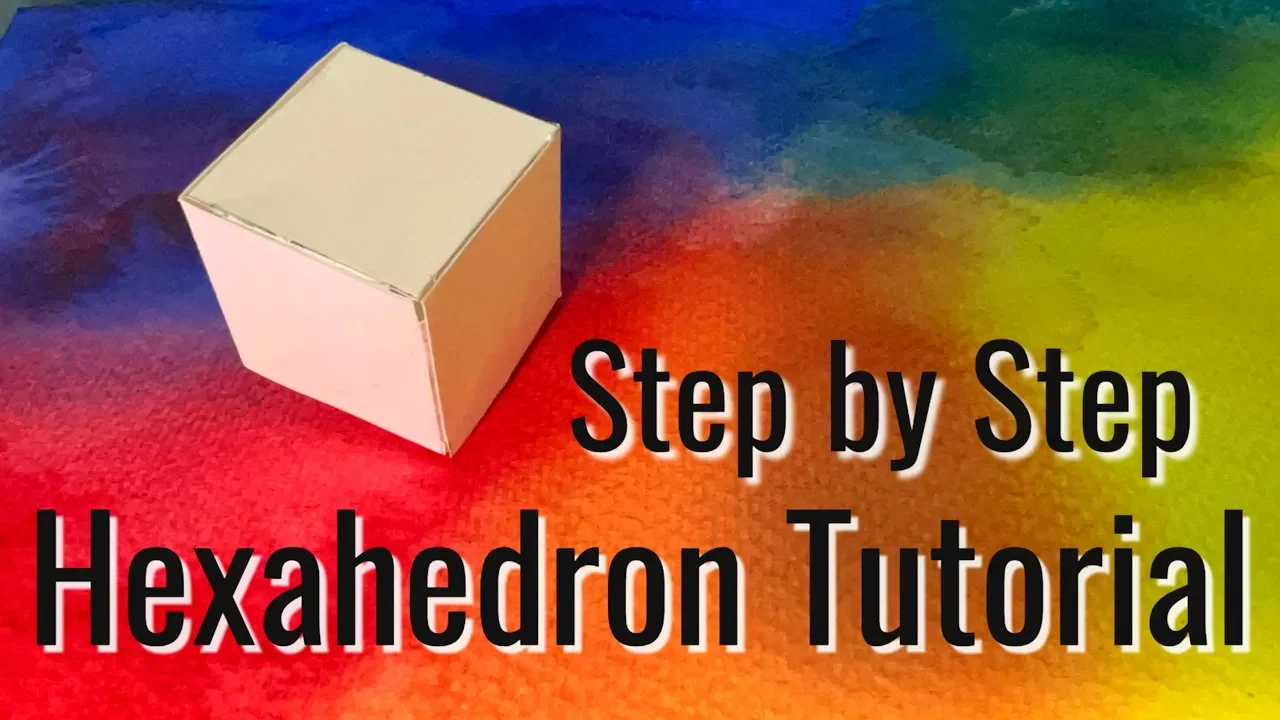
How to Make a Hexahedron Cube
For the tetrad (the number 4), we explore the 3-Dimension with volume and the construction of the 5 regular solids: The Tetrahedron, the hexahedron, the Octahedron, the icosahedron and dodecahedron. Though we've made the solids several times before in our homeschool lessons, this is the first time we are making them from 'scratch' with the construction of the circle. the triangle, square or pentagon.
-

How to Make an Icosahedron
For these projects I used Fabriano hot press 90lb. watercolor paper measuring 9"x12", but you may use a smaller piece of heavy weight construction paper as I only set my compass to 1.5"-2" for the radius of the circle. While we've made these shapes larger in the past, I actually prefer the smaller shapes that fit snuggly in the palm of your hand.
-
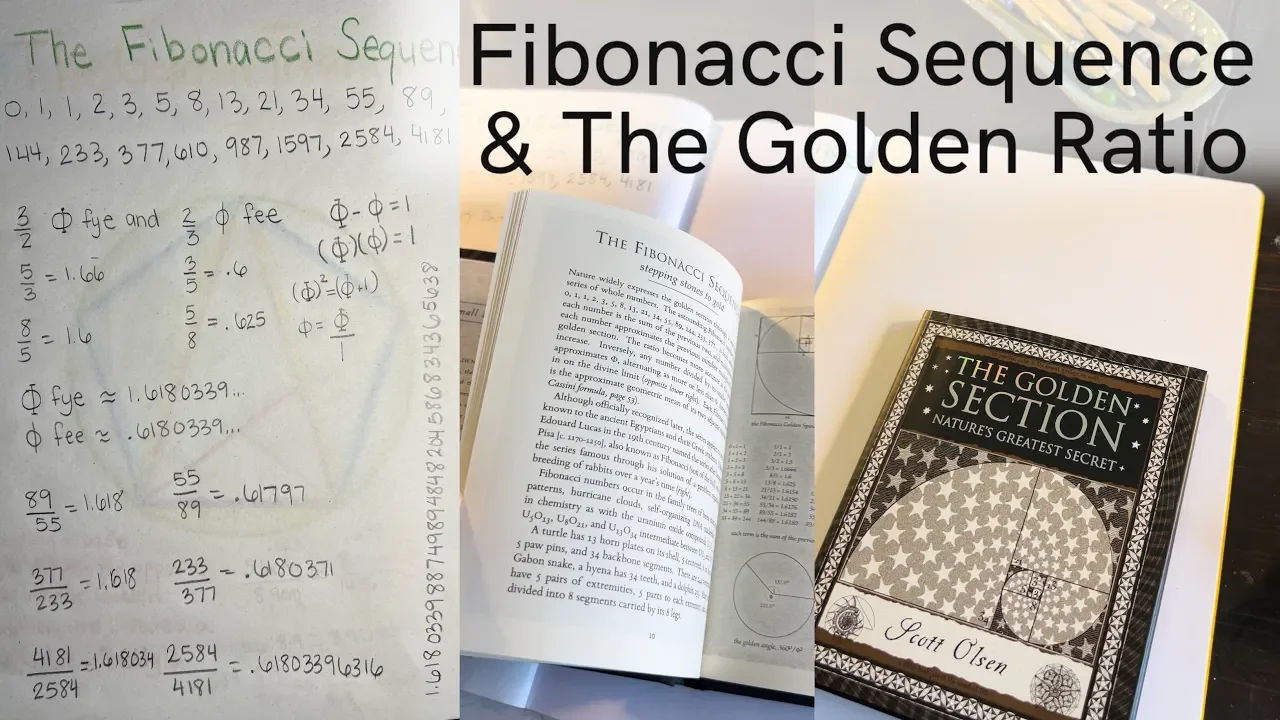
Fibonacci Sequence and the Golden Ratio
On this lesson for the Fibonacci sequence, we depart from learning about Fye and Fee (the Golden Ratio) to see how the numbers in the Fibonacci sequence (the ratio of two numbers in the sequence) approach Fye or Fee. This lesson is very simple and rather quick, but it is part of a more extensive series of lessons and isn't intended as a stand alone lesson.
-
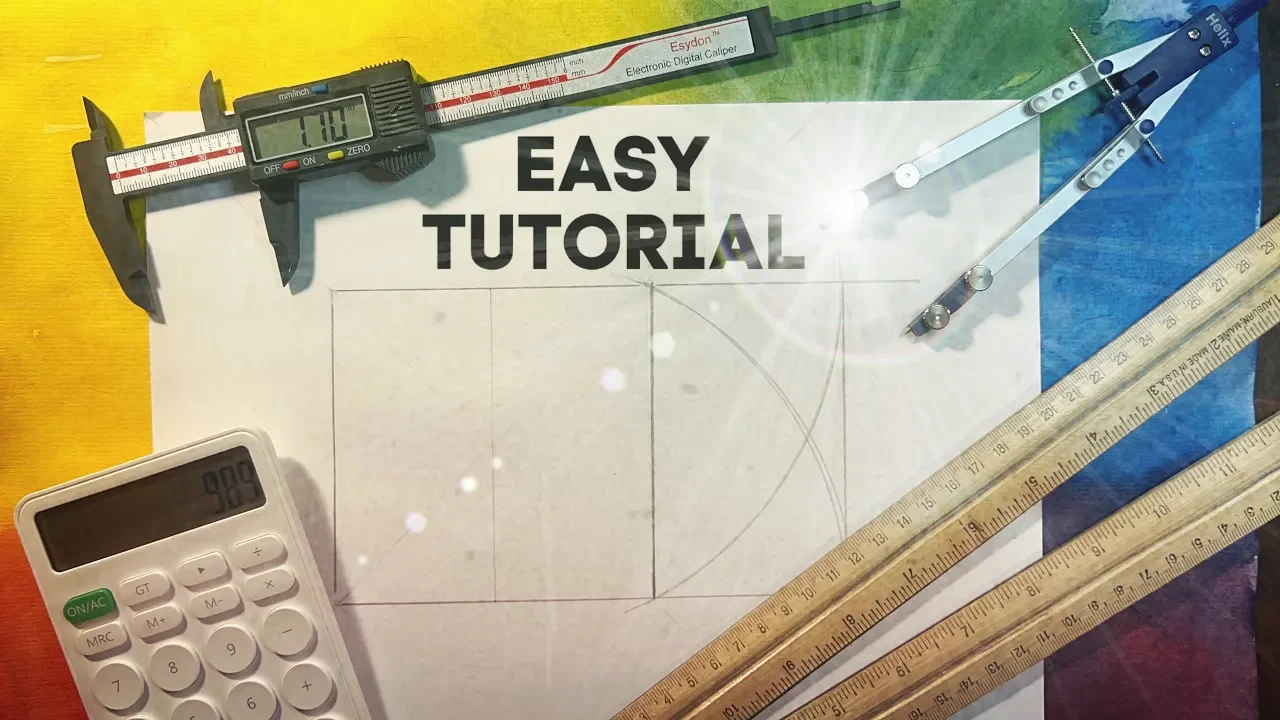
How to Make a Golden Rectangle
We have been getting a tremendous amount of inspiration from the book A Beginner's Guide to Constructing the Universe: Mathematical Archetypes of Nature, Art, and Science by Michael S. Schneider as we work through the quality of numbers 1-10. We have rested on the pentad for several lessons spanning weeks as this lengthy chapter is rich with information and examples.
-
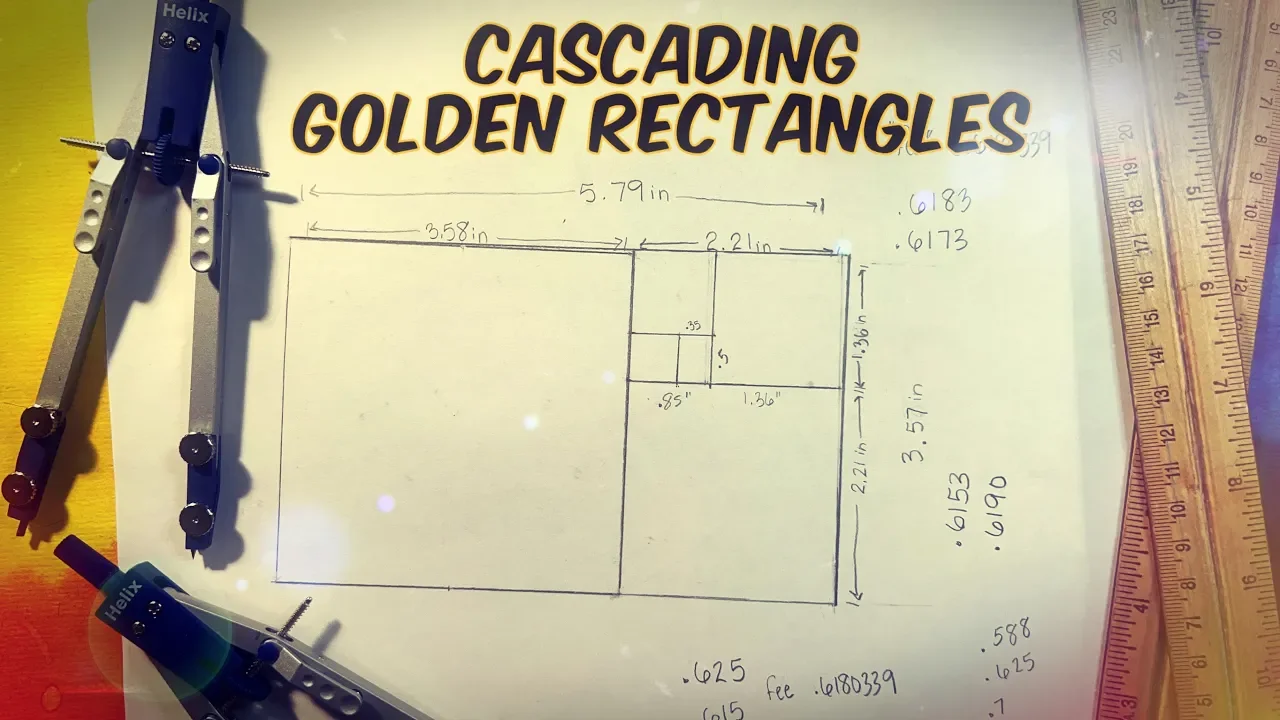
How to Make Nesting Golden Rectangles
It may be simple to construct a Golden Rectangle, but the types of tools you use to construct it will play a large role in the accuracy of your final result. After many trials and errors, I found that using a pencil and ruler was not as precise as using a mechanical pencil, calipers and a straightedge. While you may be able to get one Golden Triangle with fair accuracy with a ruler and pencil, your accuracy will increase with a mechanical pencil (or very sharp pencil) and calipers.
-
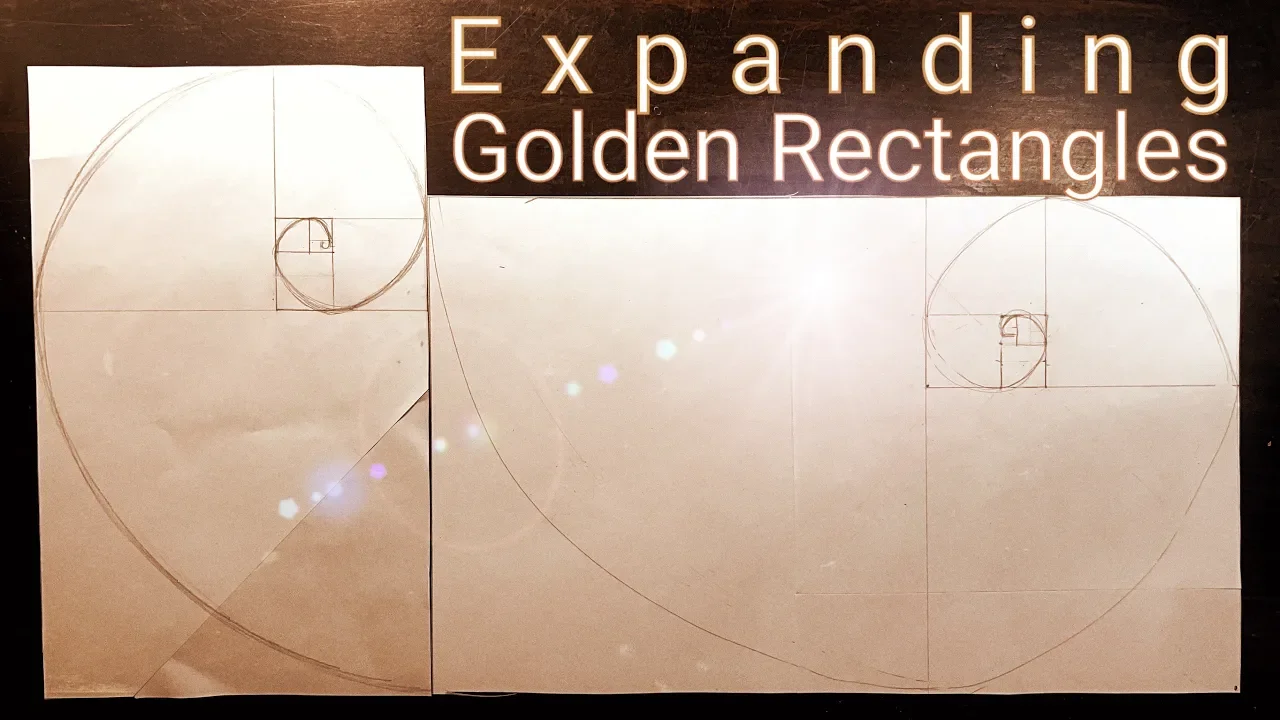
How to Make Expanding Golden Rectangles
To make expanding Golden Rectangles, draw straight lines from the long side of your rectangle using a straightedge. Then mark them with the measurement of your long side to create a square attached to your original Golden Rectangle. Connect the points and erase the extra line and now you can keep going to make even more Golden Rectangles! You make need to add more paper as the expanding Rectangles get big fast.
-
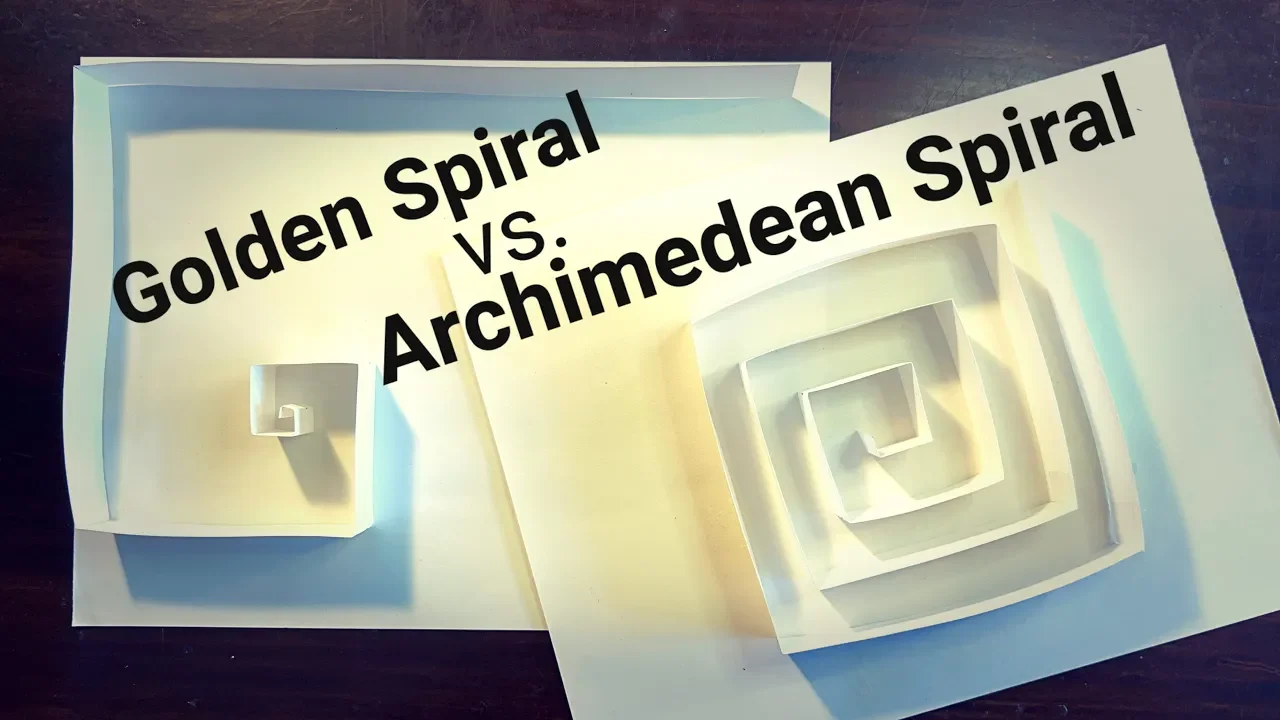
DIY 3 D Archimedean Spiral and Golden Spiral
If making a 3-Dimensional model isn't your preference, you may use the same increments and draw out the spiral on grid paper or with a ruler making a 90 degree turn for each increment. This is the easiest yet still profound demonstration to illustrate how quickly a Golden Spiral grows compared to an Archimedean Spiral.
-
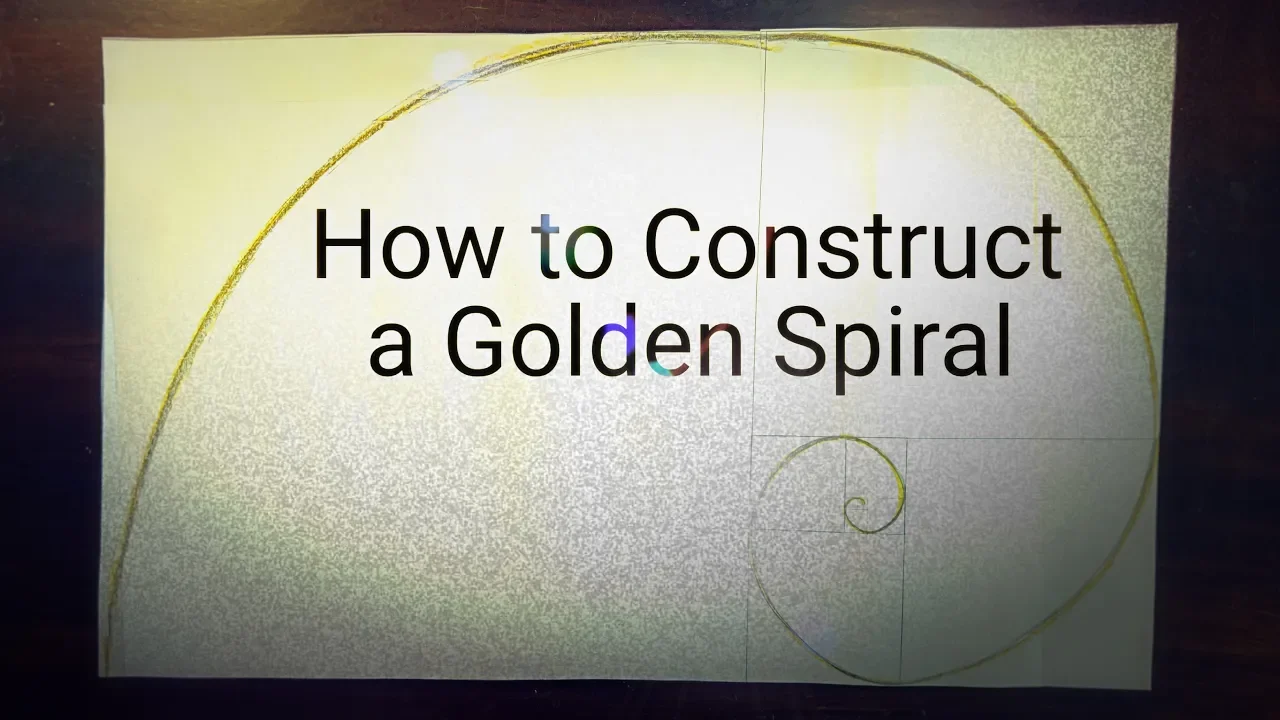
How to Make a Golden Spiral | Fibonacci Sequence
While we have become proficient in constructing a pentagon, pentagram, Golden Triangle, and Golden Rectangle, we hadn't yet made a Golden Spiral or compared it to the Archimedean Spiral. Making a Golden spiral by way of constructing a Golden Rectangle is the most involved of the three versions we did.
-
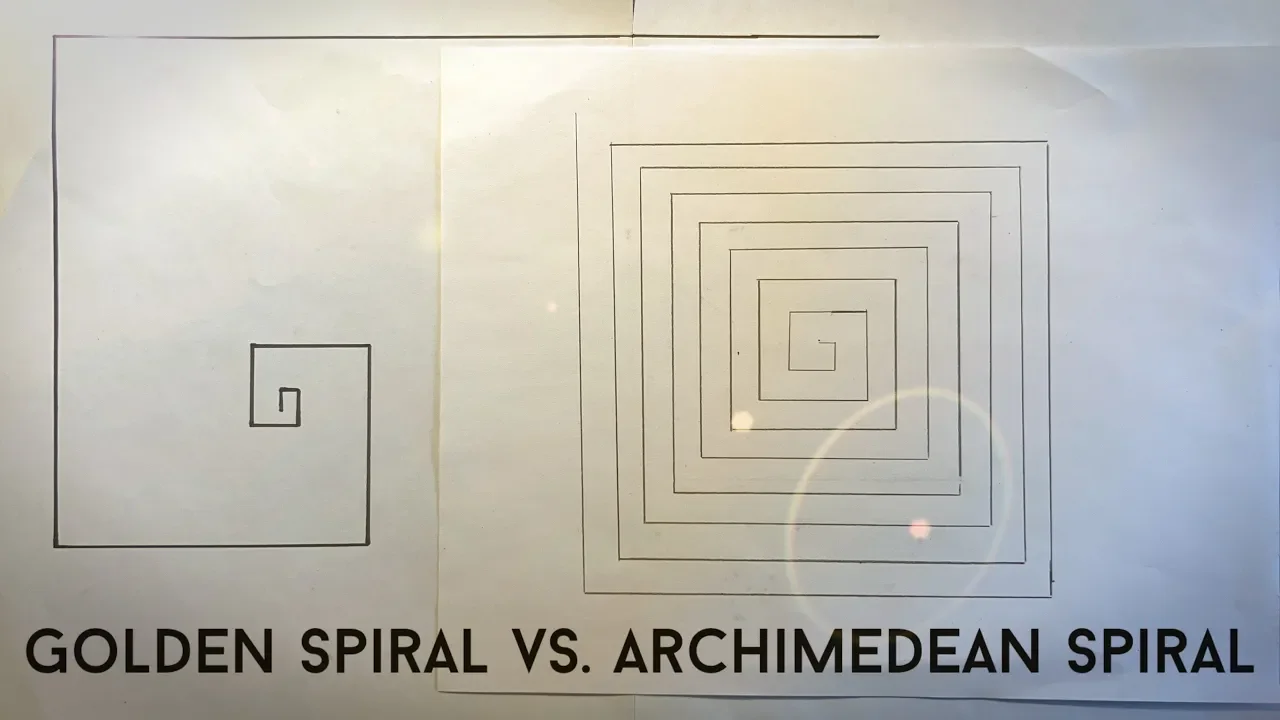
The Difference Between the Archimedean Spiral and the Golden Spiral
The Golden Spiral is unlike any other spiral. While it is often shown in relation to the nautilus or ammonite shell, those shells are not in fact the Golden Ratio. Those shells exhibit a logarithmic spiral, though you can see some similarities. While reading and putting together lessons from the book A Beginner's Guide to Constructing the Universe: Mathematical Archetypes of Nature, Art, and Science by Michael S. Schneider.
-
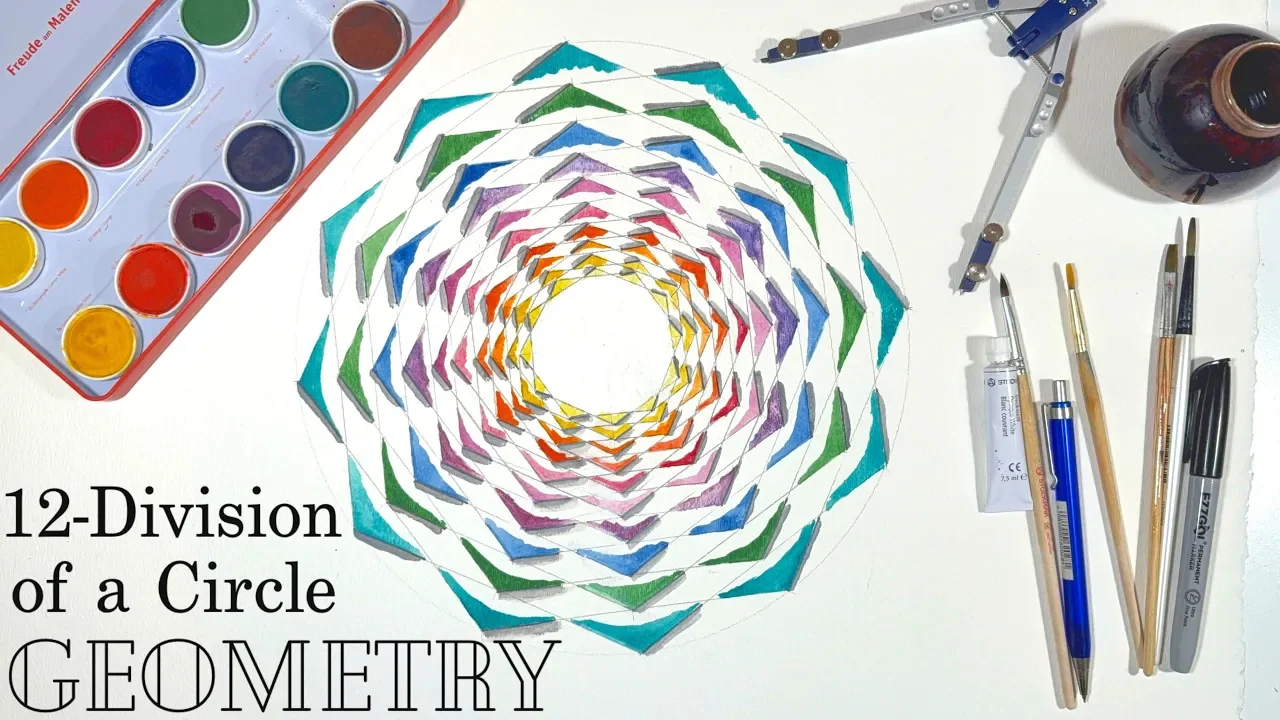
12 Division of a Circle | Geometry
For our Waldorf Main Lesson Block in Geometry, we have explored 3-division all the way to 12-division of a circle. For this lesson, we are doing a variation on 12-division of a circle to create double hexagons rather than a floral motif. I used 140lb, Strathmore watercolor paper measuring approximately 22"x 16". I used Stockmar pan watercolors for this project, but have also done it on drawing paper with color pencils and I think that might have turned out even better.
-

12 Division of a Circle with Inscribed Squares
We continue our geometry lessons with 12-division of a circle with inscribed squares. This time we are skipping every 2 all the way around the circle giving us three perfectly formed squares. You can stop there or continue making squares into the center. If you continue, I suggest numbering your points 1-12 on the outside of your circle as well as every level you making moving towards the center.
-
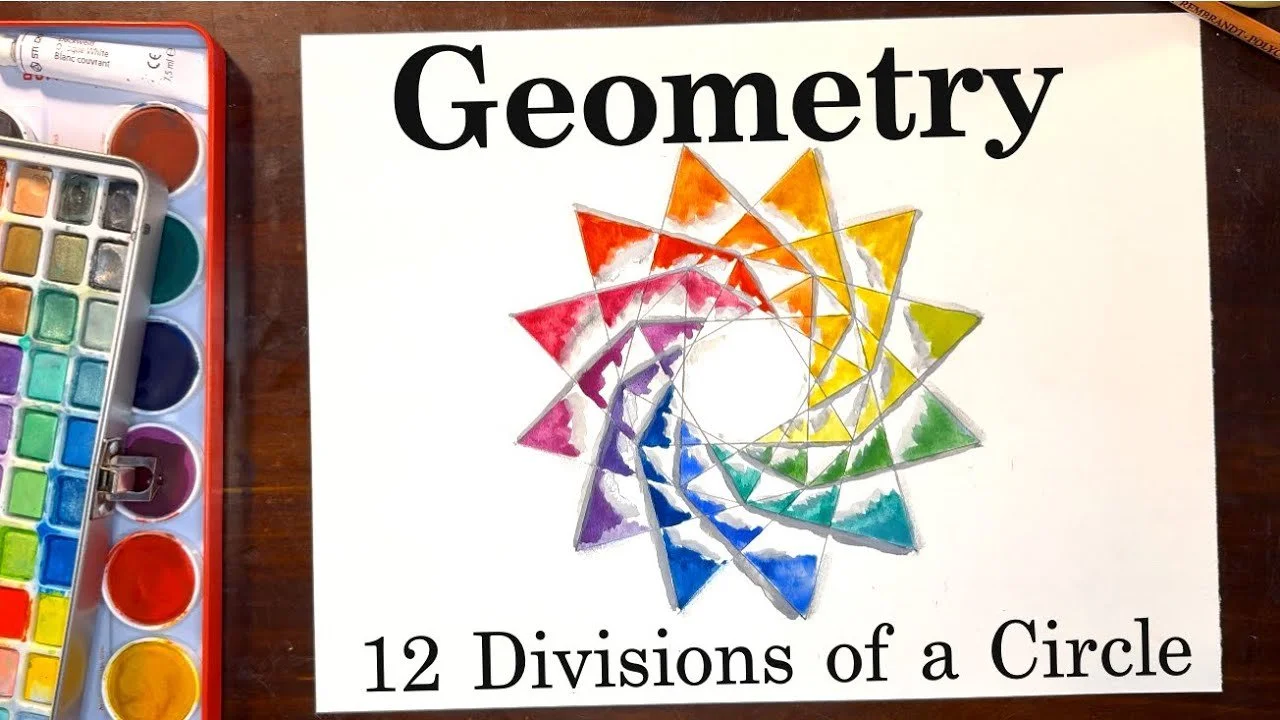
12 Division of a Circle with 4 Inscribed Triangles
In this lesson, we explore skipping 3 points on a 12-pointed dodecagon. We've previously made 2 inscribed hexagons, then 3 inscribed squares and now we are skipping three points to make 4 inscribed triangles. I love the way this one turned out and can't wait to make a larger one with more concentric triangles.
Grade 5 Lessons
Chalk Drawing: Geometric Shapes
As part of our Waldorf geometry unit, we are learning how to create shapes by shading them from the periphery, from the center and from intersecting lines. Join me as I make three chalk drawing to accompany this unit. These drawings are for the first couple lessons in geometry and serve as an introduction to shapes. We depart shortly from the lesson plan to spend more time and the terminology of quadrilaterals and explain the various types (rectangle, square, parallelogram, etc.) and some attributes of each before moving on to the next lessons.
Geometry: Cascading Triangles
Cascading triangles are a beautiful representation of triangles in motion. We are using a Waldorf curriculum from Live Education. You can simplify this project and just draw it with pencil for a stunning image that appears to be moving or you can add color in with watercolor pencils or color pencils. Materials for this project include paper, ruler, pencil and color pencils. Duration: 10-20 minutes Level of difficulty: easy
To see the video on how we put together our unit study for math click here.
To see a video on chalk drawings for this geometry unit click here.
Triangles | Geometry & Art
Today we are making triangles from intersecting lines. We’ll only color in the triangles formed and leave the other shapes blank. We are using a Waldorf curriculum from Live-Education. Watercolors and watercolor paper can be found at Blick Art Materials. Embossing pen, powder and heat tool can be found at local craft stores. This is a beautiful representation of triangles created by intersecting lines. You have to make sure not to color in other shapes, so it encourages you to pay attention to the angles and sides of each shape. This project was for my 8th grader, but my 4th grader joined in and did a great job too. Alternatively, you could do this project with penciled lines filled in with color pencil.
To see the video on how we put together our unit study for math click here.
To see a video on chalk drawings for this geometry unit click here.
Organic Shapes from Triangles
How can you shape a curved image from triangles? Watch this video to find out. We cut small triangles out of watercolored paper and turned it into a beautiful organic image that resembles a fern or droopy leaf. We are using a Waldorf curriculum from Live Education. Materials for this project: Colored paper, paper, scissors, spray adhesive or glue stick. Materials can be found at local crafts stores.
To see the video on how we put together our unit study for math click here.
To see a video on chalk drawings for this geometry unit click here.
Check out the complete Geometry playlist for all the tutorials and resources.
Symmetry with Triangles
Today we are making symmetrical images using triangles. We are using a Waldorf curriculum from Live Education. Other materials used for this project: watercolor paper, spray adhesive, watercolors (we used distress inks), and scissors or the Silhouette Cameo. After cutting and coloring multiple sets of triangles, we assembled mirror images on a paper sprayed with adhesive. The whole project can be laminated to keep the pieces in place. This an artistic representation of symmetry and geometry.
To see the video on how we put together our unit study for math click here.
To see a video on chalk drawings for this geometry unit click here.
Check out the complete Geometry playlist for all the tutorials and resources.
How To Make A Mandala
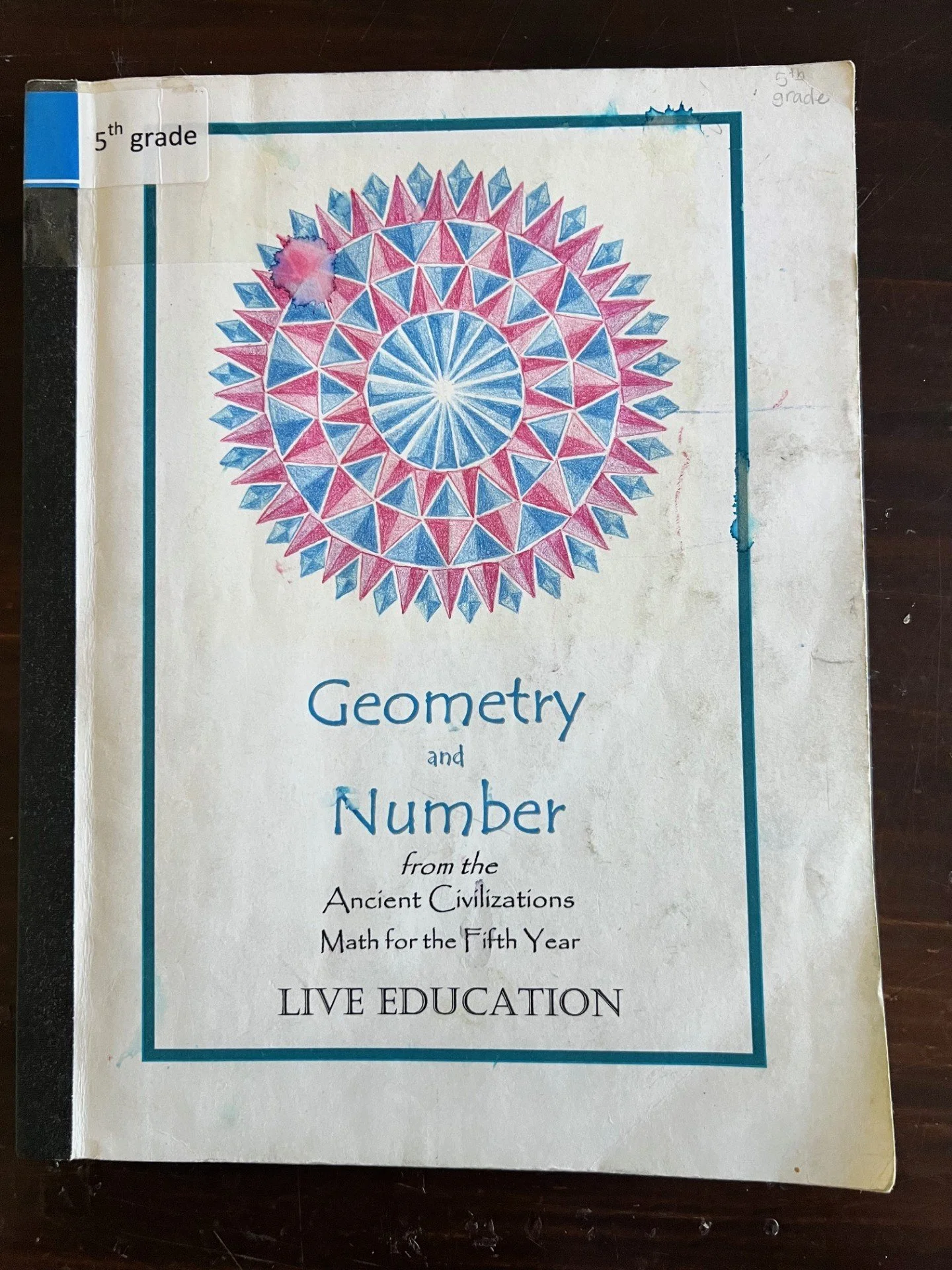
As part of our geometry unit we decided to piece together a mandala using watercolor paper we painted in beautiful autumn colors and cut into diamonds and triangles using our Silhouette Cameo. You can find the watercolor paper, watercolors (we used Distress Inks by Tim Holtz) and spray adhesive from Blick Art Materials. We found inspiration for this project from the image on the cover of our Live-Education Geometry curriculum. We sprayed our paper with spray adhesive and then assembled the mandala with triangles and diamonds. The pieces adhered well, but we sent the finished pieces through the laminator to ensure that none of the pieces would fall off. These make nice decorations for fall and can be easily hung in a window.
To see the video on how we put together our unit study for math click here.
To see a video on chalk drawings for this geometry unit click here.
Check out the complete Geometry playlist for all the tutorials and resources.
Tangrams
After reading the book The Warlord’s Puzzle, we decided to make our own set of tangrams. I took a picture of the tangrams from the book and imported it into my Silhouette Cameo‘s program. I traced the image and reconfigured them and then used the Cameo to cut the shapes.To see the video on how we put together our unit study for math click here.
To see a video on chalk drawings for this geometry unit click here.
Check out the complete Geometry playlist for all the tutorials and resources.
Division of a Circle: Geometry
While reading the book “String, Straightedge, and Shadow” by Julia E. Diggins, we came across the chapter that explains the six-part division of a circle and we decided to recreate the project. For this project you’ll need a compass, watercolor paper, watercolors, embossing pen, embossing powder and an embossing tool. You can skip watercoloring this image and simple do the six division of the circle using a compass. You can color in the image with color pencils or leave it blank.
To see the video on how we put together our unit study for math click here.
To see a video on chalk drawings for this geometry unit click here.
Check out the complete Geometry playlist for all the tutorials and resources.
Geometry: Degrees of a Circle
While working with our Live Education Waldorf curriculum from we decided to do the project on “Angles and Degrees” three different ways. We’ll do this project with watercolors, watercolor pencils and color pencils. We will divide the circle into acute angles, a right angle and an obtuse angle. We will color in each section with a different color, then mark the angle. he first project uses watercolors, embossing powder and an embossing pen. This method involves special tools and materials that can be found at local craft stores or from Blick Art Materials. Materials for this project: watercolor paper (or drawing paper), watercolors (we used Distress Inks), embossing pen, embossing powder, and heat tool. You can also do this project with watercolor pencils or color pencils. Tools needed: protractor, compass and a ruler.
To see the video on how we put together our unit study for math click here.
To see a video on chalk drawings for this geometry unit click here.
Check out the complete Geometry playlist for all the tutorials and resources.
Interior Angles of a Triangle
This quick and easy projects demonstrates how the interior angles of a triangle equal 180 degrees. All you need is a piece of paper and a pair of scissors.
To see the video on how we put together our unit study for math click here.
To see a video on chalk drawings for this geometry unit click here.
Check out the complete Geometry playlist for all the tutorials and resources.
Pythagorean Theorem
How did Pythagoras show that the square of two sides of a right triangle equal the square of the hypotenuse? Watch as we recreate the proof from the 6th century. First we will construct a square with only a compass and a straight edge, just as Pythagoras would have done (only he might have used string instead of a compass). Then we will construct a smaller square within that square. Further divisions of the square will reveal that squares of the smaller sides of the triangle will equal the square of the hypotenuse. This is an amazing demonstration that you will be fascinated by. This visual demonstration clearly shows the Pythagorean theory.
To see the video on how we put together our unit study for math click here.
To see a video on chalk drawings for this geometry unit click here.
Check out the complete Geometry playlist for all the tutorials and resources.
How to Make a Perfect Square
While reading “String, Straightedge and Shadow” by Julia Diggins, we came across a chapter on constructing a square using ‘string’ and ‘straightedge’. Watch as I show you two methods for creating a perfect square, just as Pythagoras himself would have done…only we use a compass instead of string 🙂
To see the video on how we put together our unit study for math click here.
To see a video on chalk drawings for this geometry unit click here.
Check out the complete Geometry playlist for all the tutorials and resources.
How to Make the Five Regular Solids from Paper
Watch as we make three dimensional ‘solids’ from paper. We used 90lb. watercolor paper and our Silhouette Cameo to make the five regular solids as discovered by Pythagoras in the 6th century BC. We were inspired by the book “String, Straightedge and Shadow” by Julia Diggins which we are reading for our geometry unit for homeschool. If you don’t have a Silhouette Cameo to cut out these shapes, don’t worry! Just go to my website and download the template and make them on your own. All you need is a printer, scissors and tape!
To see the video on how we put together our unit study for math click here.
To see a video on chalk drawings for this geometry unit click here.
Check out the complete Geometry playlist for all the tutorials and resources.
How to Make a Hexagon and an Equilateral Triangle
This short demonstration show how to construct a hexagon and an equilateral triangle using just string and straightedge, or in today’s terms a compass and a ruler. We are reading the book “String, Straightedge and Shadow” by Julia Diggins for our geometry unit for homeschool. We learned how to make six equal divisions in a circle to construct a hexagon. I’ll also show you how to make a single equilateral triangle.
To see the video on how we put together our unit study for math click here.
To see a video on chalk drawings for this geometry unit click here.
Check out the complete Geometry playlist for all the tutorials and resources.
How to Make String Art
You can make this string art as part of a geometry unit or Ancient Rome/Greece unit. We are using the book called "Classical Kids An Activity Guide to Life in Ancient Greece and Rome" by Laurie Carlson as inspiration for this project.
Supplies needed: Paper, ruler, pen, scissors, pencil or pen, thread or floss and a needle. Optionally: Silhouette Cameo, and paper piercer or safety pin.
I used my Silhouette Cameo to cut the templates, but you can make them using a ruler and a pair of scissors.
Supplies can be found at a local craft store and book can be found at Rainbow Resource or Amazon.
Level: 5-6 years and up
Duration: less than 10 minutes
Prep time: less than 10 minutes
Cost: less than $1
To see the video on how we put together our unit study for math click here.
To see a video on chalk drawings for this geometry unit click here.
Check out the complete Geometry playlist for all the tutorials and resources.
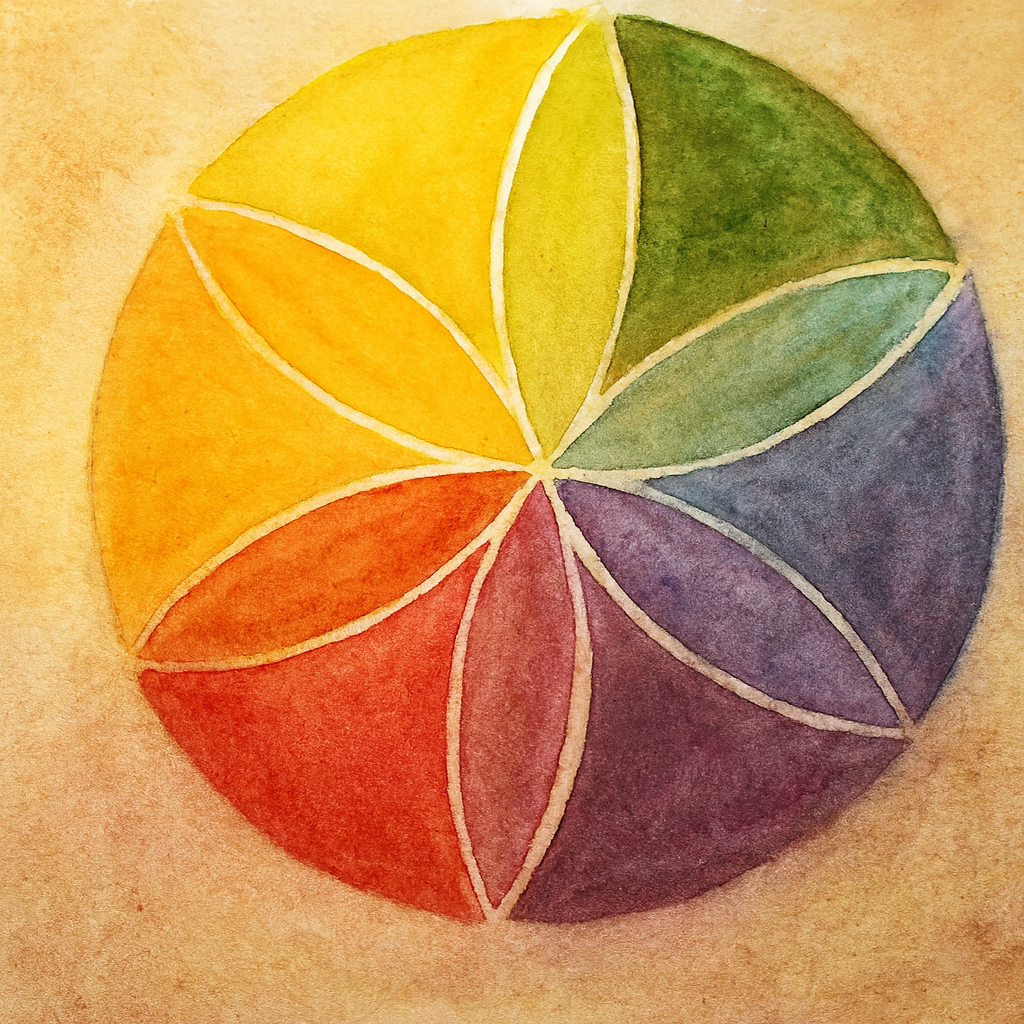
Division of a Circle
12 Division of a Circle | Waldorf Geometry
Math is beautiful and arguably the most beautiful math is geometry. Geometric designs are all around us, and when we pause and recognize them, their mysteries are revealed. This lesson, the 12 division of a circle, is one such project. When a circle is divided into 12 sections with circles of the same diameter, the results are nothing short of stunning. Once the math is complete, it’s time to color or paint in the sections, allowing magnificent designs to emerge.
I’m using the Live Education Waldorf Curriculum for grade 6 for lesson inspiration and Josie Lewis Art for color inspiration for this project. Art supplies are from A Child’s Dream Stockmar watercolor paints, Paint Jars, Paint brushes are a mix of cheap synthetic fiber brushes and high quality all natural fiber brushes. I used 90lb. 14″x11″ watercolor paper by Fabriano and Resist medium.
For review work, I use a math binder, and you can check out this video on how we put that together.
While we mainly use Key to Curriculum series.
I have recently become interested in the Straight Forward math workbook series.
The Beauty of Math | Geometry + Pi Day
It’s Pi Day again. On March 14th (3.14) mathematicians around the world celebrate the beauty and mystery of the circle. Today, I’m sharing three projects that we did for a geometry lesson as part of our Ancient Greece main lesson block.
The first project today is similar to one we did recently in which I walk you through constructing the 12 divisions of a circle. For this project I used Distress Inks by Tim Holtz in a range of colors from yellow to red to green. I used a resist medium to keep the watercolors from bleeding into other sections. I finished off the project with Mr. Huey’s Shimmer Spray in Shine. For the second project, I used my Silhouette Cameo to make an original design. I then cut out the pieces on kite paper and on adhesive backed cardstock to make templates. I placed the whole design on contact paper with I also cut on my Cameo. I did an alternative and arguably easier design by just layering twelve circles in rainbow color. Both look nice, but were really time consuming. If you didn’t have a Silhouette Cameo, you could use a cup to trace a circle. Cut a total of 13 and arrange 12 of them symmetrically around the first circle. Then remove the original circle and you’re left with a similar design. It looks great on kite paper or tissue paper so the light can shine through.
I’m using the Live Education Waldorf Curriculum for grade 6 for lesson inspiration and Josie Lewis Art for color inspiration for this project. Art supplies are from A Child’s Dream Stockmar watercolor paints, Paint Jars, Paint brushes are a mix of cheap synthetic fiber brushes and high quality all natural fiber brushes. I used 90lb. 14″x11″ watercolor paper by Fabriano and Resist medium.
For review work, I use a math binder, and you can check out this video on how we put that together.
While we mainly use Key to Curriculum series.
I have recently become interested in the Straight Forward math workbook series.
LIVE Homeschool Lesson | Waldorf Geometry | Threefold Symmetry
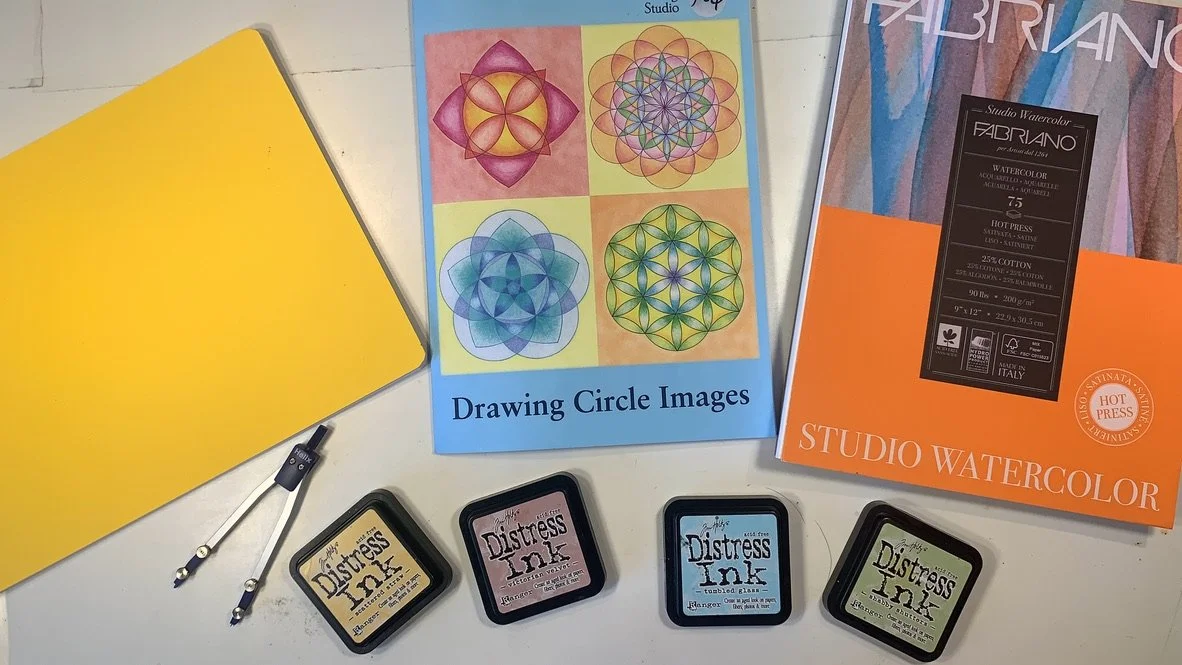
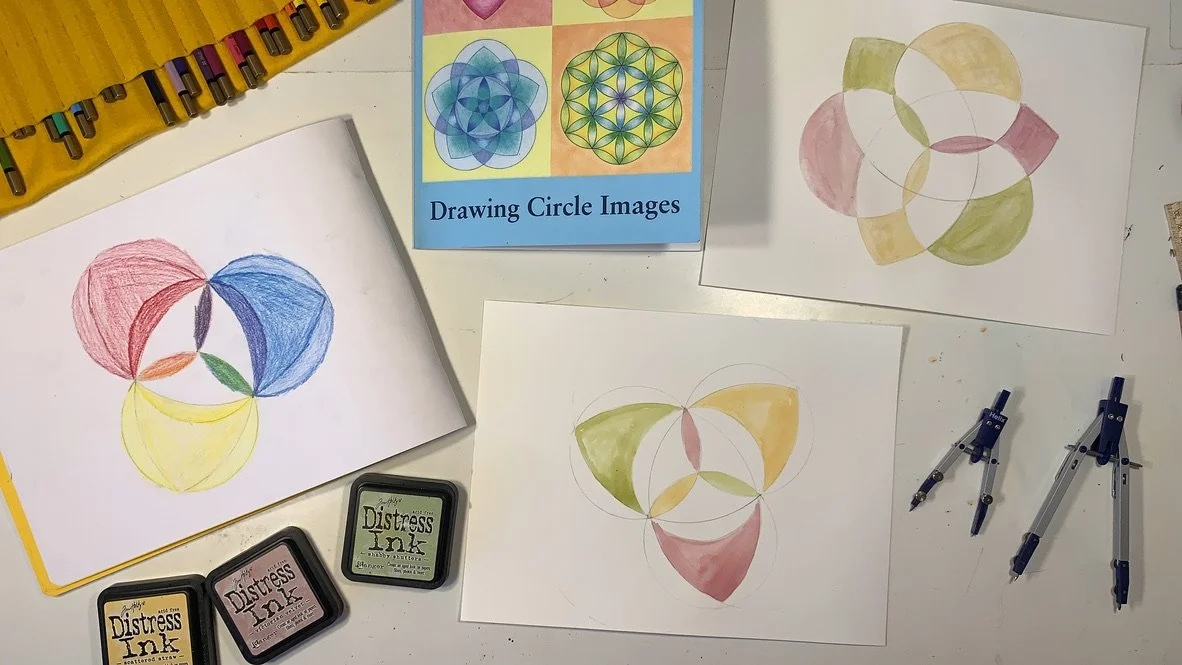
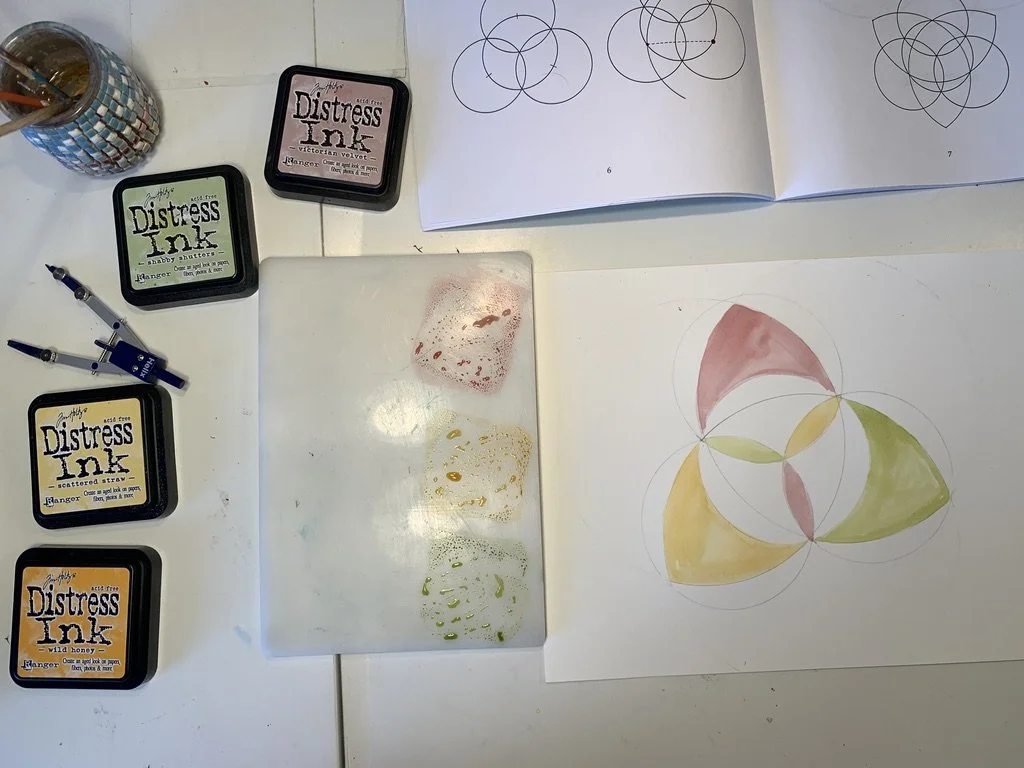
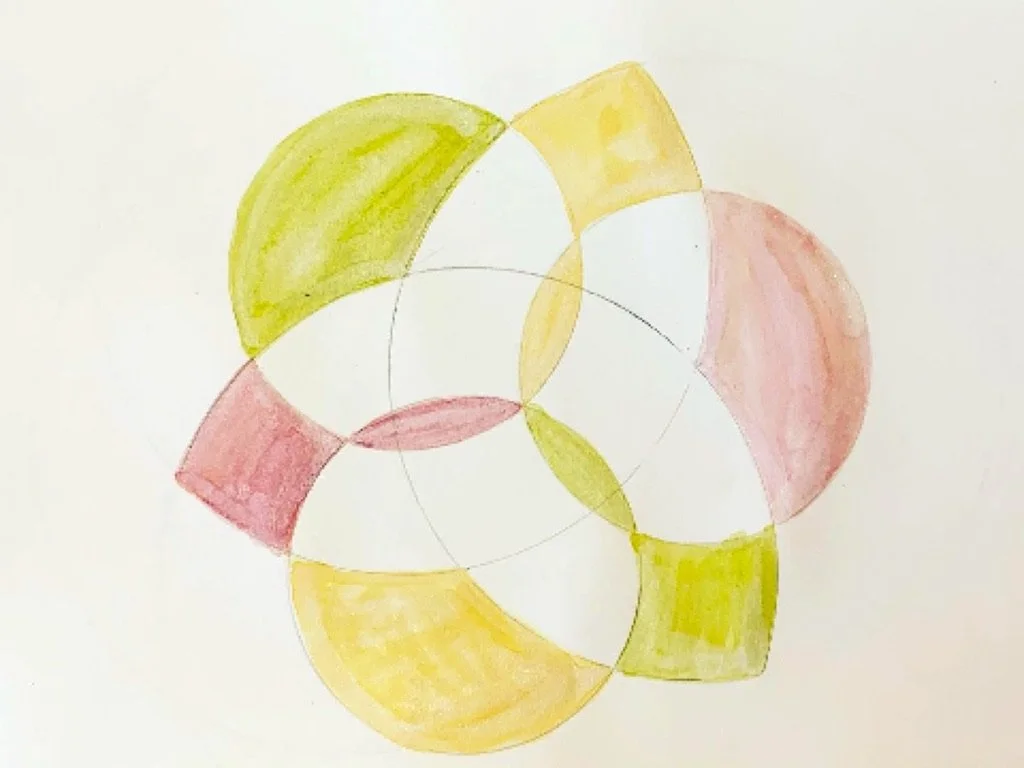
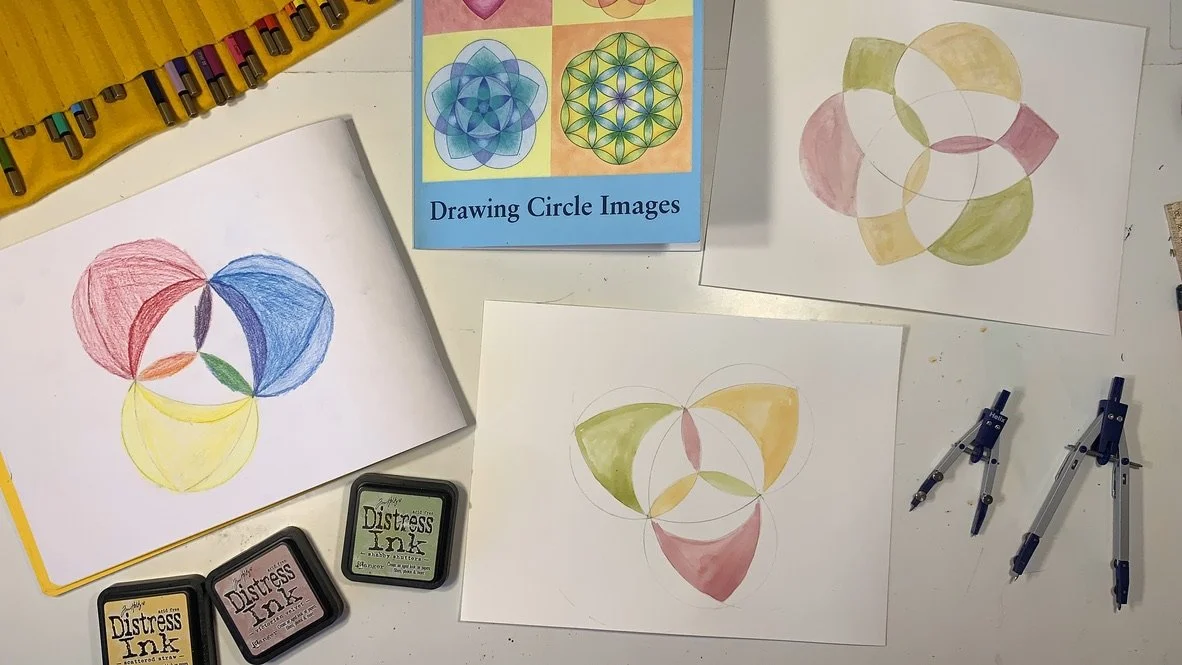
Today’s lesson is a LIVE geometry lesson I did with my 13-year-old son. He and I work through 3-fold symmetry of a circle using the book Drawing Circle Images. We (or I should say I) encountered a problem. I did the design different than the book, and it took me a few minutes to recognize my error. In so doing, we discovered a new design that looks just as beautiful. That’s the thing about these designs, once you see the pattern, you can experiment with arcs of differents radii to discover new final designs. Then of course, you can still choose one of many ways to color in your design for a magnificent end result.
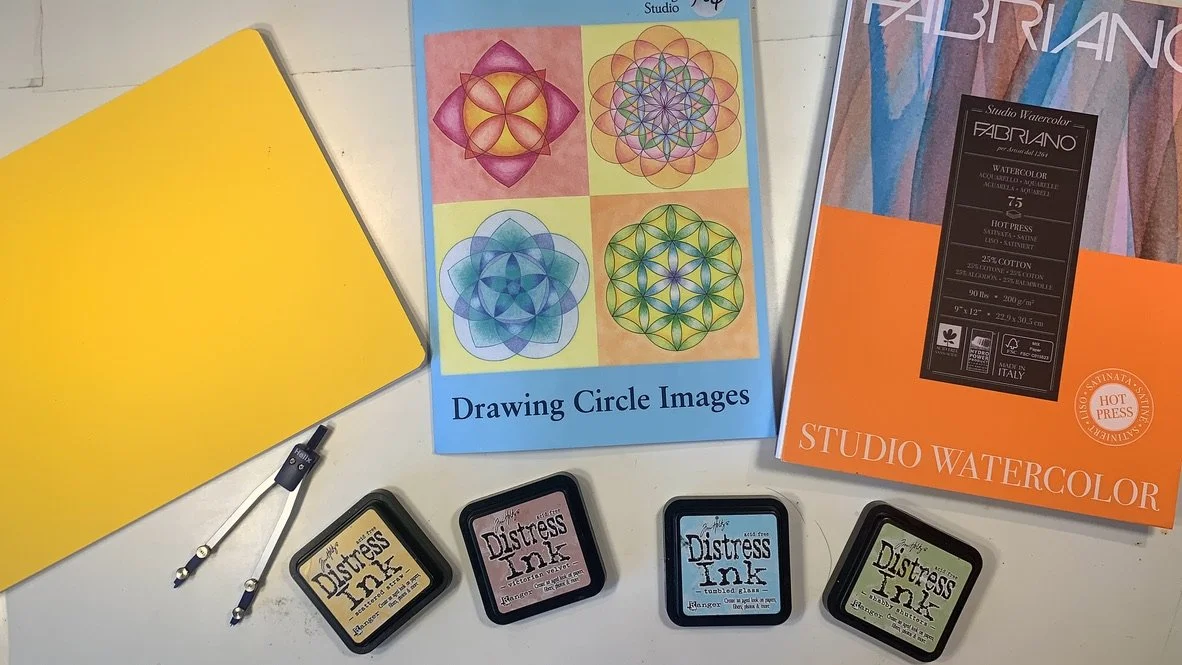
For this lesson, I used the book Drawing Circle Images as inspiration for this series of lessons. I use Distress Inks as my watercolor medium. I like the way these inks dry and the range of colors offered.

How To Draw 3-Fold Symmetry
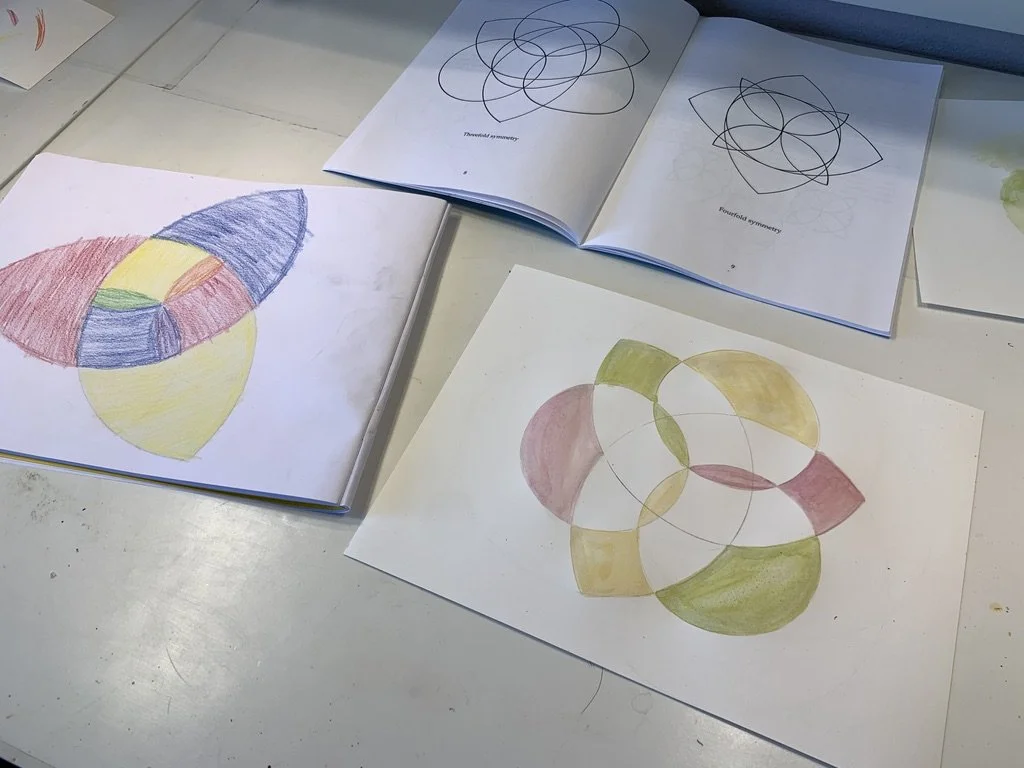
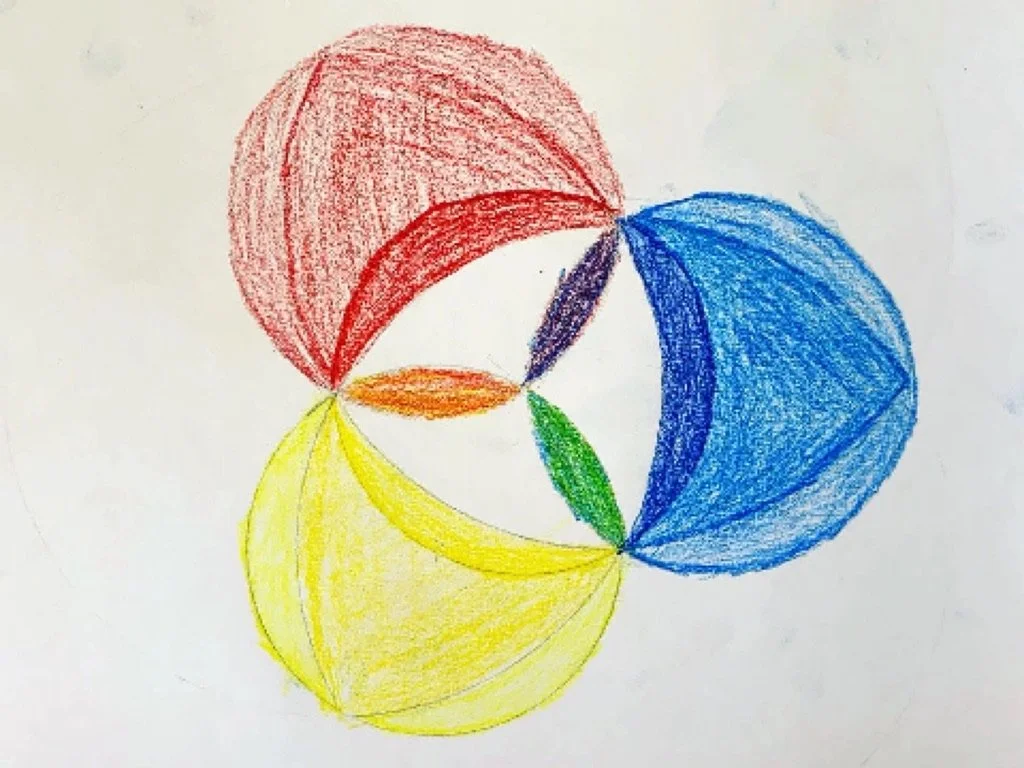
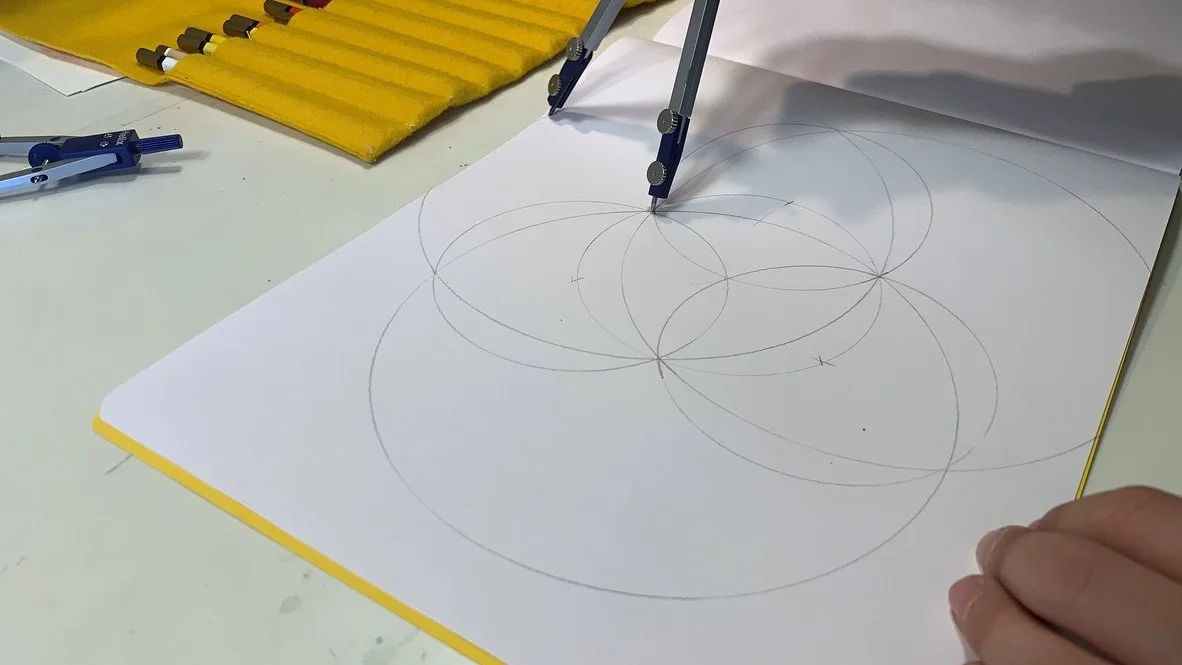
Circle symmetry is one of the most beautiful geometric projects you can easily do with your students. While some symmetries are more complicated, 3-, 4-, 6-, 8- and 12-fold are fairly straightforward and can be achieved with moderate effort and skill, in my opinion and experience. Today’s project is a tutorial for threefold symmetry. While you can explore this design and come up with creative ways to paint or color in the shapes, it’s not my favorite. I like the symmetry starting at 6-fold symmetry. But, I’d love to see what you come up with. Maybe your creative way of painting this design will change my mind. Honestly, the possibilities are endless and that’s exciting.
For this lesson, I used the book Drawing Circle Images as inspiration for this series of lessons. I use Distress Inks as my watercolor medium. I like the way these inks dry and the range of colors offered.
How To Draw 4-Fold Symmetry
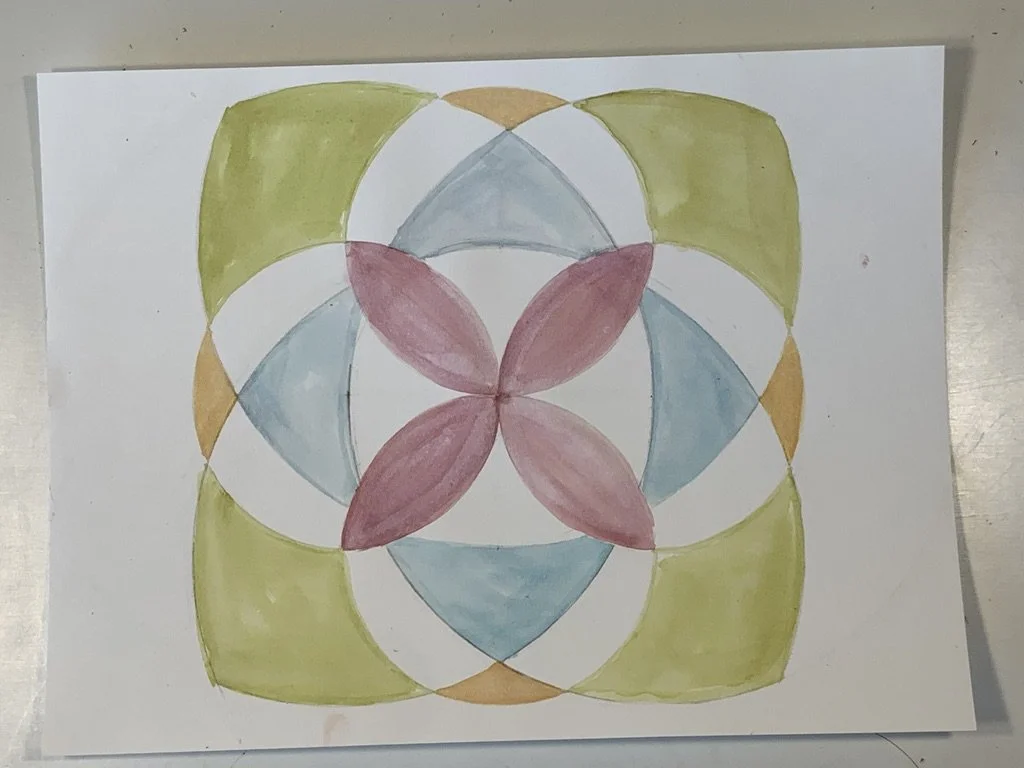
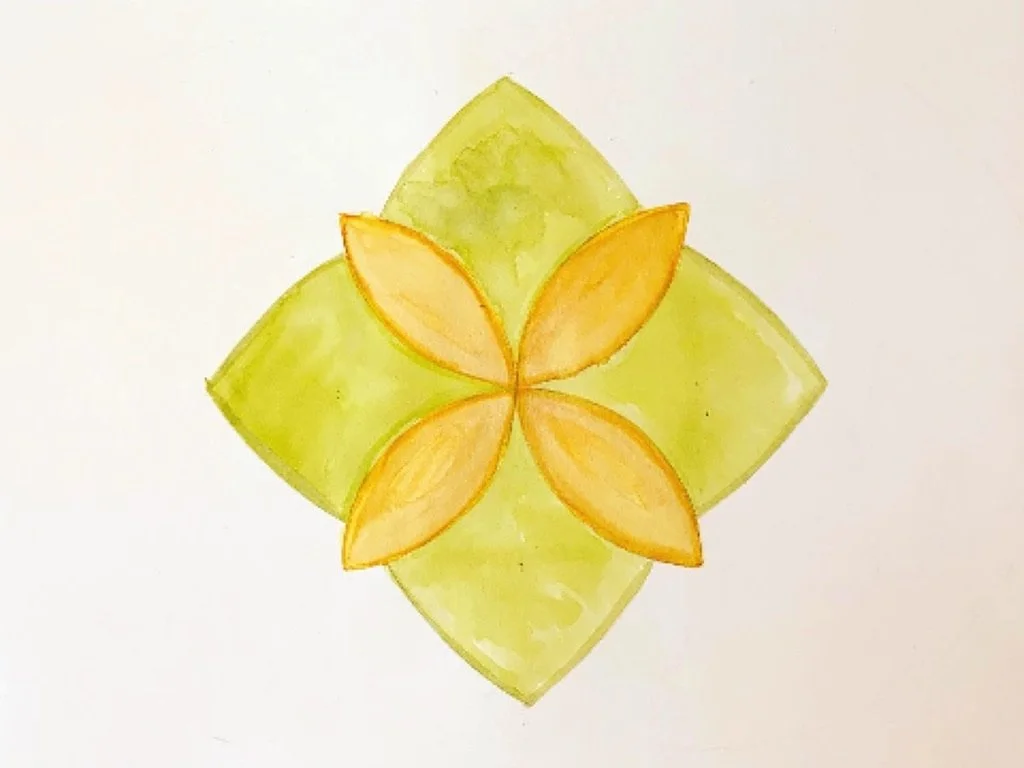
Today's project is a tutorial for fourfold symmetry. You can explore this design and come up with creative ways to paint or color in the shapes. In this video I show you two ways to make 4-fold symmetry using the book Drawing Circle Images. You can find links to the materials I used in the blog post that accompanies this video. I use Distress Inks as my watercolor medium. I like the way these inks dry and the range of colors offered.
Circle symmetry is one of the most beautiful geometric projects you can easily do with your students. While some symmetries are more complicated, 3-, 4-, 6-, 8- and 12-fold are fairly straightforward and can be achieved with moderate effort and skill, in my opinion and experience. Today's project is a tutorial for fourfold symmetry. While you can explore this design and come up with creative ways to paint or color in the shapes, it's not my favorite. I like the symmetry starting at 6-fold symmetry. But, I'd love to see what you come up with. Maybe your creative way of painting this design will change my mind. Honestly, the possibilities are endless and that's exciting.
For this lesson, I used the book Drawing Circle Images as inspiration for this series of lessons. I use Distress Inks as my watercolor medium. I like the way these inks dry and the range of colors offered.
How To Draw 5-Fold Symmetry
Fivefold symmetry is the first challenging shape to explore in my opinion. You begin with fourfold symmetry, then re-adjust your radius to to be the distance between the two arcs on the circle and place your compass on one point and draw a new arch. Connect the arcs with a ruler and now you have the two points which create the distance between each of the five arcs to get five-fold symmetry.
This one took a while for us to achieve and there was a fair amount of starting over and frustration which I have edited from the video. I highly recommend that you buy Drawing Circle Images so you can have a step by step set of instructions because it does take a bit of practice for some of these.
For this lesson, I used the book Drawing Circle Images as inspiration for this series of lessons. I use Distress Inks as my watercolor medium. I like the way these inks dry and the range of colors offered.
How To Draw 6-Fold Symmetry
Sixfold symmetry is one of the easiest of the complicated designs, in my opinion :)
I find this one to be one of the most beautiful designs because from sixfold symmetry comes the hexagon and that shape is seen in tile work across the world. The design opportunities are endless. I love the way this one turned out and can't wait to explore this design again.
This is the easiest of the symmetries because the arcs to divide the circle into 6 parts is the radius. So all you have to do it position your compass on the circumference and mark 6 arcs. How you do your secondary circles and which parts you decided to fill in is where the uniqueness of each design comes through.
For this lesson, I used the book Drawing Circle Images as inspiration for this series of lessons. I use Distress Inks as my watercolor medium. I like the way these inks dry and the range of colors offered.
How To Draw 7-Fold Symmetry
I LOVE 7-Fold symmetry. It's my favorite of all the fold symmetries we did during this series. I love the way the center overlaps. Depending on how you paint it, you can get some spectacular results. For this tutorial we needed to follow the example in the book which included a table with measurements on what to set your compass to achieve the symmetry.
For this lesson, I used the book Drawing Circle Images as inspiration for this series of lessons. I use Distress Inks as my watercolor medium. I like the way these inks dry and the range of colors offered.
How To Draw 8-Fold Symmetry
To construct eightfold symmetry, you need to start with fourfold symmetry which we did in an earlier tutorial. Once you draw arcs on the outside of the circle and and connect them to make a square, you can draw arcs between each of the four corners to achieve 8-fold symmetry. You can see two different designs emerge depending on how you color in each shape. I love the way this one looks in the end in part because of my color choices. What I like about this one is the intricacies of of the final result.
For this lesson, I used the book Drawing Circle Images as inspiration for this series of lessons. I use Distress Inks as my watercolor medium. I like the way these inks dry and the range of colors offered.
How To Draw 9-Fold Symmetry
Initially I thought ninefold symmetry would be simple because achieving 3- and 6-fold symmetry is fairly simply, but I was wrong. I attempted this several times and I show the challenges in the video, so you know this one isn't as easy as it seems. For this shape, we need to follow the chart provided in the book. I adjusted and readjusted my compass multiple times but the divisions were not equal. Finally, after several attempts I got it. I'm glad I persevered because this turns out to be a stunning design in the end. Of all the designs so far, 7- and 9-fold symmetry are my favorite!
For this lesson, I used the book Drawing Circle Images as inspiration for this series of lessons. I use Distress Inks as my watercolor medium. I like the way these inks dry and the range of colors offered.
How To Draw 10-Fold Symmetry
Tenfold symmetry is stunning! I love the designs in which the arcs don't cross the center of the circle by spiral just around it instead. For 10-fold symmetry, you construct your circle as you would fivefold symmetry. Then at each of those arcs, you draw a line from the arc through the center of the circle to get a point on the opposite side of the circle. In this way, your original five arcs become 10 and now you can begin drawing small and large circles around each point. This design creates a unique circle interior which supports many choices in how to color in the design. Tenfold symmetry is a fun one to play around with.
For this lesson, I used the book Drawing Circle Images as inspiration for this series of lessons. I use Distress Inks as my watercolor medium. I like the way these inks dry and the range of colors offered.
How To Draw 11-Fold Symmetry
Elevenfold symmetry is the last in the series where we needed to use the book's chart to construct the divisions of a circle. In truth, I prefer the symmetries that can be achieved through geometry rather than through a chart that gives the measurements for the each circle. In the end, this design is beautiful and reminiscent to 12-fold symmetry which we have done before.
For this lesson, I used the book Drawing Circle Images as inspiration for this series of lessons. I use Distress Inks as my watercolor medium. I like the way these inks dry and the range of colors offered.
How To Draw 12-Fold Symmetry
Twelvefold symmetry is very satisfying to make. You can construct 12 divisions of a circle using basic geometry. Once the 12 divisions are complete, you can choose which areas to paint or color in to give your final design a unique feel. I definitely like this symmetry, and what's fun about it, is that you can continue to extend it beyond the page for additional spectacular designs. The book does suggest a design we opted not to use and if you buy the book, I highly suggest you try some of the designs we didn't do.
For this lesson, I used the book Drawing Circle Images as inspiration for this series of lessons. I use Distress Inks as my watercolor medium. I like the way these inks dry and the range of colors offered.
Grade 6 Lessons
Exploring Quadrilaterals | Step by Step Lesson
Exploring Quadrilaterals is a lesson from the Live Education Waldorf curriculum for year 5.
For this lesson I'm using Lyra Color pencils from A Child's Dream.
And the Waldorf curriculum from Live Education.
I'm using a 9"x12" spiral bound Strathmore drawing paper pad. I'm also using a pencil, eraser, protractor, metal ruler and 05 fine felt tip liner by Zig.
Cascading Squares | Nesting Squares
Nesting Squares is a lesson inspired by the Live Education Waldorf curriculum for year 5.
For this lesson I'm using Lyra Color pencils from A Child's Dream.
And the Waldorf curriculum from Live Education.
I'm using a 9"x12" spiral bound Strathmore drawing paper pad. I'm also using a pencil, eraser, protractor, metal ruler and 05 fine felt tip liner by Zig.
Curved Lines from Straight Lines | Live Waldorf Geometry Lesson
Curved lines from Straight lines is a lesson inspired by the Live Education Waldorf curriculum for year 5.
For this lesson I'm using Lyra Color pencils from A Child's Dream.
And the Waldorf curriculum from Live Education.
I'm using a 9"x12" spiral bound Strathmore drawing paper pad. I'm also using a pencil, eraser, protractor, metal ruler and 05 fine felt tip liner by Zig.
Pie Chart Geometry Lesson 
We continue with our Waldorf Geometry main lesson block with this lesson on bar graphs and pie charts. We used data on the tree population of California as it was relevant to our Botany lessons rather than using the data that was provided in the main lesson book by Live Education Waldorf curriculum. This is the data we used for the pie chart and bar graph: Conifers make up 51.1% of the trees of California with a division within this category as follows: Other conifers 17.2%, Ponderosa 14.1%, Jeffrey Pine 6.3%, Douglas Fir 5.6%, White Fir 4.5%, Red Fir 3.4% Hardwoods make up 26.4% of trees with a division within this category as follows: Other hardwoods 9.6%, Coastal live oak 6.3%, Tanoak 4.5%, California black oak 3.9%, Interior live oak 2.6% Mixed conifers-hardwoods 14.5% and other 8.9% We constructed a bar graph with this data as well. For this lesson you will need a compass, protractor, ruler, calculator, Main lesson book and pencil. The math is proportion math with 360 degrees/X = 100%/ (insert % of tree)
We are using the Waldorf curriculum from Live Education.

The Perfect Hexagon
We continue our Waldorf Geometry lessons with constructing the 'perfect' hexagon using six division of a circle, then connecting the points to construct a hexagon. From that we connect every other point to construct two equilateral triangles. You will see a new hexagon emerge in the center again! Connect every other point to construct two equilateral triangles and once again another hexagon will emerge. We used our thick Lyra colored pencils and General's Chalk pastel pencils to color in the triangles in blue and green. The colors were too close on the color wheel, and it would have been better to use contrasting colors like blue and yellow. For this lesson you will need a compass, ruler, Main lesson book, colored pencils and pencil.We are using the Waldorf curriculum from Live Education.
Geometry Lesson 6-Fold Symmetry with Bulbs & Lilies 
For this lesson on six division of a circle, we look at flowers that exhibit six fold symmetry. This lesson fit perfectly with our botany Main lesson block as we are studying bulbs and lilies. For this lesson we constructed a circle with a radius of 4 inches (2.5 inches would have been better) and divided our circle into 6 equal parts by placing our compass on the circumference and swinging the compass around to intersect the circumference with two arcs. We then placed our compass on the arc and swung it again. In this way we get six equal divisions. Once complete, we used our ruler to connect the opposite points to make a 6 pointed star. On each of those lines we constructed our onion flower which is a bulb plant whose flowers exhibit six fold symmetry. For this lesson you will need a compass, ruler and colored pencils.
We are using the Waldorf curriculum from Live Education.
The Hexagon | Waldorf Geometry Lesson
The first several lessons in this geometry main lesson block focuses on 6 division of a circle. By this point the student should be proficient at constructing a circle, placing the point of the compass on the periphery of the circle and swing the arcs to intersect with the circle. Then place the point of the compass on one of the arcs and swing it again to intersect the circle. Repeat until you’ve divided the circle by six. For this lesson, we work in an angular way as opposed to our previous lesson in which the image was more free form and fluid while still retaining six-fold symmetry when doing the onion flower (or other bulb flower).
In this lesson, you will connect the points to make a hexagon which you may then gently shade with pencil or chalk to give a dimensional look. Then you may practice free-handing an amethyst crystal. This lesson is fairly short, though the free-hand crystal took several tries to get right. For this lesson you will need a compass, ruler and colored pencils.
We are using the Waldorf curriculum from Live Education.
Geometry Lesson | Hexagon and Rose Quartz
This lesson was phenomenal! How exciting to learn how to make a three dimensional looking hexagon and then experiment with variations of making quartz crystal drawings from different angles. This lesson was only challenging in constructing an oval. You can easily construct an ellipse by placing a tied string around two points (with pencils for instance), and using a third pencil to trace the ellipse by anchoring the pencils in place and swinging the string and pencil around the double center.
For this lesson we free-handed the oval and labeled the six points and traced parallel lines. We also free-handed a point vertically from the oval then connected the six points to the single vertical point. Seeing the image go from flat hexagon to 3-dimensional hexagon was thrilling.
Next we practiced again with a smaller hexagon and oval, and finally we free-handed a quartz crystals with the techniques we just learned with immediate success. For this lesson you will need a compass, ruler and colored pencils.
We are using the Waldorf curriculum from Live Education.
Six Division of the Circle | Snowflake Geometry 
I underestimated the difficulty of this lesson. I thought it would be easy, fun and quick. And at first it wasn’t and then later, it was only slightly more fun, but still challenging and slow. Firstly, make your radius about 2.5 inches or less, as a big radius makes for too big of a snowflake and much harder to get lines and shapes straight. Once you construct your circle and divide it by six (see previous lessons), you may add some concentric circles at equal increments to make constructing your snowflake easier.
Looking at inspiration pictures of snowflakes (or photographs of actual snowflakes) will be helpful. As snowflakes are each unique, you won’t find two exactly the same, but you will see similar elements like structures on the 6 radiating arms, or hexagon shaped snowflakes and you may even find triangle and 12-pointed snowflakes, though for this exercise, I recommend sticking to a traditional 6-sided snowflake.
Once your circles are constructed, it’s time to have creative fun in constructing your unique snowflake. Use pencil, make sure each arm is the same and be mindful of expected shapes, as everything is quite angular and not circular. You may even lightly erase your initial circles.
We are using the Waldorf curriculum from Live Education.
Waldorf Geometry Lesson | Structure of a Snowflake
Making snowflakes is a great family project that works well for almost all ages. While working with 6-fold symmetry with your middle schooler, you elementary ages students can enjoy cutting and designing snowflakes. You may start with any size circle, but we worked with a radius of about 2.5 inches. We used our onion skin sheets of paper that separate the pages of our Main lesson book. I used a double sheet I folded in half, so when I cut out my circle, I had four circles. We marked off six-division of a circle by placing our compass point on the circumference and swinging an arc on either side. We then placed our compass point on the arc and swung it again repeating until we completed the circle.
Now we can fold our circle by connecting opposite points to fold in half. Next we fold in thirds. And finally we fold in half. You can cut your design on the open flap (not folded side) and try cutting angular designs rather than curved shapes. Then comes the truly exciting part, unfolding your snowflake! We had a great time doing this part of the lesson and started keeping our onion skins to make more.
We are using the Waldorf curriculum from Live Education.
Geometry Lesson | 6-Division of a Circle | Calla Lily
I love when botany and geometry come together in a lesson. For this geometry lesson, we continue with 6-division of a circle, but as opposed to using the 6-fold symmetry, we will concentrate on the triangle. Measure your radius to 9 cm or 3.5 inches. Divide your circle into 6 equal parts by setting your compass to the circumference and swinging the compass to make an arc on either side crossing the circle. Then place your compass point onto the arc and swing again. In this way you can divide the circle into 6 parts. Label them 1-6 and then connect every other point.
The sides of your triangle should measure 16 cm. Make 2cm divisions along each side of the triangle. Now connect each point to the center of the circle. Already this is a beautiful geometric design. Next draw your calla lily within the triangle. We chose to color our calla lily using Lyra colored pencils, but this is optional. We did a little research online to find colors and patterns we liked and each chose one to copy.
We are using the Waldorf curriculum from Live Education.
Geometry Lesson | 16-Division of a Circle and Water Lily
For this lesson, you want to start with a 9 cm circle. Draw a line through the center. Extend the compass and place your point on the diameter at the circumference and swing the arc to the right and left. Place your compass on the top point and swing arc to right and left. Where the arch cross, you may draw a line through your center to make four divisions of the circle. Adjust your compass to the radius of the circle and pace compass on two adjacent points and swing arcs between and once again draw a line from the intersecting arcs and the center. Repeat for all angles in the hemisphere until you've completed 16 divisions.
Label the lines 0-8 on either side from the top. Now you may begin drawing your water lily. You could stop at the pencil drawing, but adding some color with Lyra Colored Pencils brought this lesson to life.
We are using the Waldorf curriculum from Live Education.
How to Construct a Pentagon | 5-Division of a Circle
This is the first in a series of lessons devoted to five-division of.a circle. This is a low step by step tutorial on how to construct 5-fold symmetry. Once you’ve mastered this lesson, the remaining lessons for five-fold symmetry will be easier to complete. For this lesson, you’ll need a compass, ruler and pencil. One note to be mindful of is that precision and accuracy are necessary for this lesson. Double check your compass once you’ve found 1/5 of the circle by lightly drawing arcs around the circle to be sure that they are evenly spaced. If not, re-adjust and try again. Even being a hair off will have significant outcomes.
We are using the Waldorf curriculum from Live Education.
Geometry Lesson | 5 Division of a Circle
This is the second a series of geometry videos on 5-division of a circle. This one is a beautiful geometry expression of five fold symmetry. We used the book Drawing Circle Images for this lesson. We used our General’s Chalk Pastel pencils and Matte Finish to seal our work. This is a simple step by step tutorial on how to construct a pentagon and five division of a circle.
We are using the Waldorf curriculum from Live Education.
Geometry Lesson | 5-Fold Symmetry | Buttercup
We continue with our five-fold symmetry and five-division of a circle with this easy, quick and beautiful lesson exploring five-fold symmetry in the world of botany. I love how the Waldorf curriculum by Live Education naturally overlaps with previous lessons or previews upcoming lessons so the whole year works holistically together. For this lesson we used our Lyra Colored Pencils, a compass, ruler and pencil. The duration of this lesson was less than 30 minutes, especially if you’ve already practiced 5-fold symmetry.
We are using the Waldorf curriculum from Live Education.
Geometry | 5-Division of a Circle | Botanical | Pentagons and Leaves
We conclude or botanical geometry lesson with this project on pentagons and leaves. We use the book Botanicum and illustration inspiration and copy the leaves of the trees: White Mulberry tree, Oregon Maple, Japanese Maple, and Scarlet Oak. We drew one circle on the page before this lesson, measuring the radius to 2 inches. When then drew four circles even spaces on the next page. Then we worked through our five division of a circle. Once our compass was set to 1/5 of the circle, we returned to our four circles and drew arc around the circle with the compass. We then connected each point to make our pentagon. We used Lyra Colored Pencils to draw our leaves and label each drawing.
We are using the Waldorf curriculum from Live Education.
The Golden Triangle | Waldorf Geometry
The Golden Triangle Lesson is our experiential introduction to the Golden Section. Known by many names like the Golden Mean, The Golden Ratio and more recently as Phi, the Golden Ratio is a relationship in which a lesser portion is to the larger portion as the larger portion is to the whole.
In this lesson on the Golden Triangle, we explore this golden ratio by constructing a triangle within a pentagon within a circle. Since we’ve been practicing constructing 5-division of a circle often in the previous several lessons, that part (and the triangle) were easy to complete. The exciting new discovery of this lesson is the Golden Section achieved through the triangle that would be part of an enclosed pentagram.
In doing our lesson, we used colored pencils at each step of the construction, but found that it would have been better to take our measurements first, then color in the sections. Once our base triangle was inscribed in the pentagon, we could use the points of the pentagon to draw our interior lines. Each new line cut the previous line at the Golden Section, and created another triangle with an embedded Golden Section.
For this lesson and the several that follow we are using a few additional resources for geometry: A Beginner’s Guide to Constructing the Universe: Mathematical Archetypes of Nature, Art, and Science by Michael S. Schneider, The Golden Section: Nature’s Greatest Secrets by Scott Olsen, The Golden Ratio by Mario Livio, Sacred Geometry: Deciphering the Code by Stephen Skinner and Drawing Geometry by Jon Allen.
We are using the Waldorf curriculum from Live Education.
Waldorf Geometry | The Star Ladder
The construction of the Star Ladder from the pentagon is a thrilling lesson, but truthfully, it was one of the more challenging lessons for me to master so I could teach it, and upon review of the lesson, I question whether I made a mistake in the execution of it. We got the lesson from our Main Lesson Block Waldorf curriculum by Live Education, but I have seen this same lesson in the Beginners Guide to Constructing the Universe. We did our lesson in a Main Lesson book which measures 9.5″x12.5″ that you can purchase from A Child’s Dream. We used Lyra Colored Pencils.
We began the lesson by construction our circle with five divisions (tutorial below), next we added a triangle with the base at the bottom of a segment of the pentagon. The first enclosed star can be drawn without using your compass to measure the height. You can connect the lines of the star by drawing them to the adjacent corners of the pentagon. To find the next segments, you have to use your compass to to measure the distance between two star segments (or the length of one segment of the pentagon) and swing our compass to the opposite side of the triangle. Once you recognize how the segments relate to one another, it’s easier to construct your nesting stars until it’s too small to fit another one.
We are using the Waldorf curriculum from Live Education.
Grade 7 Lessons
Designing Historical Geometric Tile Patterns 
For this lesson, we used some additional books and resources to help us complete this design. We used the books: Islamic Geometric Patterns by Eric Broug, Islamic Geometric Patterns by Eric Broug, Islamic Design Workbook by Eric Broug and Islamic Design: A Genius For Geometry by Daud Sutton. We also used large heavy weight watercolor paper by Strathmore, but Fabriano watercolor paper would have been sufficient for this project.
We ended up not completing the whole page with six-division of a circle as it got too tedious, and I noticed that some of my daughter’s circles had become smaller, making the design misaligned. Once we completed our six-divisions and filled most of the page, we began our design. There are several ways to create designs and we included 2-3 within one project. Once we erased extra lines and arcs, we used our watercolor paints to finish off the project.
We are using the Waldorf curriculum from Live Education.
Six Division of a Circle | Islamic Geometric Patterns 
While we continue our work for our Waldorf Main Lesson Block for Geometry, we departed from the lessons to include some projects that are culturally significant for us and historically relevant for our upcoming history blocks.
For this lesson, we used some additional books and resources to help us complete this design. We used the books: Islamic Geometric Patterns by Eric Broug, Islamic Geometric Patterns by Eric Broug, Islamic Design Workbook by Eric Broug and Islamic Design: A Genius For Geometry by Daud Sutton. We also used large heavy weight watercolor paper by Strathmore, but Fabriano watercolor paper would have been sufficient for this project.
We ended up not completing the whole page with six-division of a circle as it got too tedious, and I noticed that some of my daughter’s circles had become smaller, making the design misaligned. Once we completed our six-divisions and filled most of the page, we began our design. There are several ways to create designs and we included 2-3 within one project. Once we erased extra lines and arcs, we used our watercolor paints to finish off the project.
We are using the Waldorf curriculum from Live Education.
Fibonacci Sequence and the Golden Ratio
On this lesson for the Fibonacci sequence, we depart from learning about Fye and Fee (the Golden Ratio) to see how the numbers in the Fibonacci sequence (the ratio of two numbers in the sequence) approach Fye or Fee. This lesson is very simple and rather quick, but it is part of a more extensive series of lessons and isn’t intended as a stand alone lesson. We used the book the The Golden Section: Nature’s Greatest Secrets by Scott Olsen to put the lesson together. We wrote out the Fibonacci sequence after talking about the sequence and how it came to be. There are a few more books we have in our homeschool library that you can find earlier on in this post that accompanies this video that are youthful and engaging and illustrate the ‘rabbit’ problem.
We wrote out the Fibonacci sequence for several numbers, then began adding the previous numbers to find the next set of numbers in the sequence. Next we used our calculator to find the ratios between each set of numbers. We found that the sequence ratio approached Fye that further out in the sequence we chose numbers. Lastly, we wrote down some fascinating facts about fye and fee, such as their product equals 1, their difference also equals 1 and the square of the greater is equal to fye plus 1.
We are using the Waldorf curriculum from Live Education.
How to Make a Tetrahedron
For this math lesson we are exploring the quality of numbers 1-10 using the book A Beginner’s Guide to Constructing the Universe: Mathematical Archetypes of Nature, Art, and Science by Michael S. Schneider. This book is a great and easy read for students in middle school through adulthood. While we go through the Quality of Numbers in Grade 1 and 2, this approach is more in depth and the demonstrations and activities we are doing with these lessons are great for middle schoolers, high schoolers and anyone with a fascination with math.
We are using the Waldorf curriculum from Live Education.
How to Make a Hexahedron Cube
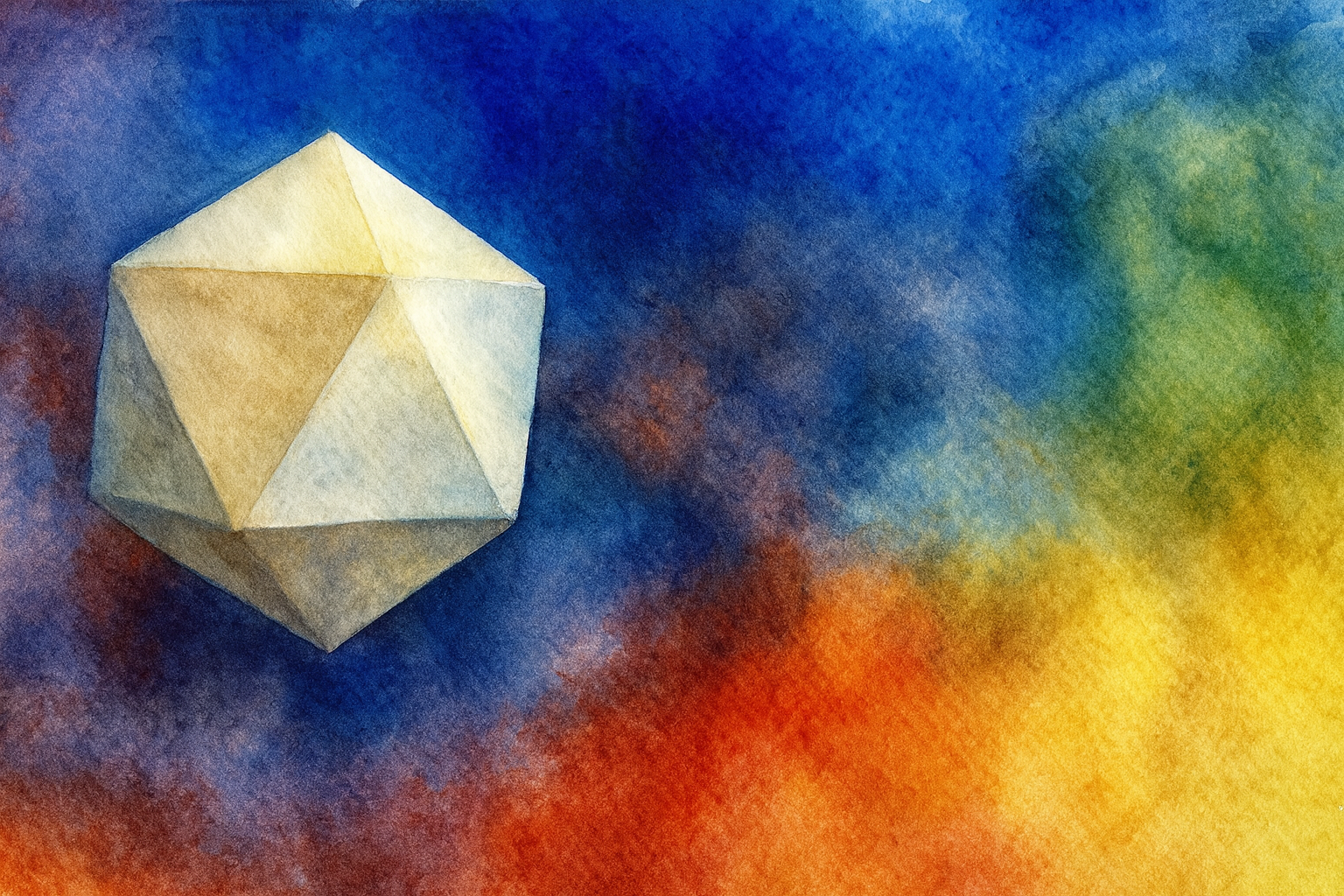
For the tetrad (the number 4), we explore the 3-Dimension with volume and the construction of the 5 regular solids: The Tetrahedron, the hexahedron, the Octahedron, the icosahedron and dodecahedron. Though we’ve made the solids several times before in our homeschool lessons, this is the first time we are making them from ‘scratch’ with the construction of the circle. the triangle, square or pentagon.
While these shapes are thrilling to make, they do take a bit of basic geometric knowledge and skill. This video series (you may click on the playlist link below), aims to simplify the process so you can easily construct your own regular solids.
For these projects I used Fabriano hot press 90lb. watercolor paper measuring 9″x12″, but you may use a smaller piece of heavy weight construction paper as I only set my compass to 1.5″-2″ for the radius of the circle. While we’ve made these shapes larger in the past, I actually prefer the smaller shapes that fit snuggly in the palm of your hand. I used my Helix compass and very tacky double sided fabric tape to keep the solids secure. You’ll also need a straightedge, a pencil, pair of scissors and optionally an eraser.
We are using the Waldorf curriculum from Live Education.
How to Make an Icosahedron
For the tetrad (the number 4), we explore the 3-Dimension with volume and the construction of the 5 regular solids: The Tetrahedron, the hexahedron, the Octahedron, the icosahedron and dodecahedron. Though we’ve made the solids several times before in our homeschool lessons, this is the first time we are making them from ‘scratch’ with the construction of the circle. the triangle, square or pentagon.
While these shapes are thrilling to make, they do take a bit of basic geometric knowledge and skill. This video series (you may click on the playlist link below), aims to simplify the process so you can easily construct your own regular solids.
For these projects I used Fabriano hot press 90lb. watercolor paper measuring 9″x12″, but you may use a smaller piece of heavy weight construction paper as I only set my compass to 1.5″-2″ for the radius of the circle. While we’ve made these shapes larger in the past, I actually prefer the smaller shapes that fit snuggly in the palm of your hand. I used my Helix compass and very tacky double sided fabric tape to keep the solids secure. You’ll also need a straightedge, a pencil, pair of scissors and optionally an eraser.
We are using the Waldorf curriculum from Live Education.
How to Make a Golden Rectangle
We have been getting a tremendous amount of inspiration from the book A Beginner's Guide to Constructing the Universe: Mathematical Archetypes of Nature, Art, and Science by Michael S. Schneider as we work through the quality of numbers 1-10. We have rested on the pentad for several lessons spanning weeks as this lengthy chapter is rich with information and examples. While we have previously done the Golden Triangle with the pentagon and pentagram specifically, we have moved to the Golden Rectangle and worked with nesting and expanding rectangles as once you make the first, it's a simple process to make them 'grow' or 'nest'. It may be simple to construct a Golden Rectangle, but the types of tools you use to construct it will play a large role in the accuracy of your final result. After many trials and errors, I found that using a pencil and ruler was not as precise as using a mechanical pencil, calipers and a straightedge. While you may be able to get one Golden Triangle with fair accuracy with a ruler and pencil, your accuracy will increase with a mechanical pencil (or very sharp pencil) and calipers. If you wish to make nesting Golden Rectangles, your tools will be crucial as I was only able to get a max of three nesting Golden Rectangles before the measurements were so distorted, it looked like either a square and skinny rectangle or two squares.
To construct a Golden Rectangle, you may begin in one of two ways (and there are many other ways). You can simply start with the corner of your paper as that it already a right angle. I recommend measuring both sides of your paper at your desired measurement (3-4 inches is sufficient), and drawing a line across your paper. Then measure 3 or 4 inches (you are making a square, so the measurements must be consistent), and draw a line you you've created a square. You will have an extra line across the page, but don't erase it just yet.
Next, you will need to bisect your square. I used calipers or a ruler (calipers are best), and found the midpoint. Mark it on parallel sides of your square. Next, take your compass needle and set it at the midpoint and extend the compass so it reaches the opposite corner of your square. Swing an arc up and repeat with the other side of the square. Now, connect the point where the line and the arc cross with the otherside of the arc (if you worked at the edge of your paper, it's where the arc crosses the edge of your paper). Now you've created your very own Golden Rectangle.
How to Make Nesting Golden Rectangles
We have been getting a tremendous amount of inspiration from the book A Beginner's Guide to Constructing the Universe: Mathematical Archetypes of Nature, Art, and Science by Michael S. Schneider as we work through the quality of numbers 1-10. We have rested on the pentad for several lessons spanning weeks as this lengthy chapter is rich with information and examples. While we have previously done the Golden Triangle with the pentagon and pentagram specifically, we have moved to the Golden Rectangle and worked with nesting and expanding rectangles as once you make the first, it's a simple process to make them 'grow' or 'nest'. It may be simple to construct a Golden Rectangle, but the types of tools you use to construct it will play a large role in the accuracy of your final result. After many trials and errors, I found that using a pencil and ruler was not as precise as using a mechanical pencil, calipers and a straightedge. While you may be able to get one Golden Triangle with fair accuracy with a ruler and pencil, your accuracy will increase with a mechanical pencil (or very sharp pencil) and calipers. If you wish to make nesting Golden Rectangles, your tools will be crucial as I was only able to get a max of three nesting Golden Rectangles before the measurements were so distorted, it looked like either a square and skinny rectangle or two squares.
To construct a Golden Rectangle, you may begin in one of two ways (and there are many other ways). You can simply start with the corner of your paper as that it already a right angle. I recommend measuring both sides of your paper at your desired measurement (3-4 inches is sufficient), and drawing a line across your paper. Then measure 3 or 4 inches (you are making a square, so the measurements must be consistent), and draw a line you you've created a square. You will have an extra line across the page, but don't erase it just yet.
Next, you will need to bisect your square. I used calipers or a ruler (calipers are best), and found the midpoint. Mark it on parallel sides of your square. Next, take your compass needle and set it at the midpoint and extend the compass so it reaches the opposite corner of your square. Swing an arc up and repeat with the other side of the square. Now, connect the point where the line and the arc cross with the otherside of the arc (if you worked at the edge of your paper, it's where the arc crosses the edge of your paper). Now you've created your very own Golden Rectangle.
To create nesting rectangles, you simply, but precisely need to make a square within the rectangle. You measure the short side of the rectangle and mark that measurement on other side of the rectangle and use your straightedge to connect them. Now you've created a square and another Golden Rectangle in your rectangle. You may keep going until the space is too tiny to measure. I recommend you measure along the way to ensure you are staying pretty close to the Golden Number Fye or Fee.
Fye or Phi (ϕ) is a fascinating number that exhibits a ratio between two lengths. The Golden Proportion is the smaller portion to the larger portion is equal to the larger portion to the whole. The Greater Golden number is 1.6180339 and the numbers go on to infinity. There are no whole number fractions that equal the Golden Number. The lesser Golden number is 0.6180339 and the number goes to infinity as well. To get the lesser Golden number, measure the short part of your rectangle and divide it by the long part and find your ratio!
How to Make Expanding Golden Rectangles
We have been getting a tremendous amount of inspiration from the book A Beginner's Guide to Constructing the Universe: Mathematical Archetypes of Nature, Art, and Science by Michael S. Schneider as we work through the quality of numbers 1-10. We have rested on the pentad for several lessons spanning weeks as this lengthy chapter is rich with information and examples. While we have previously done the Golden Triangle with the pentagon and pentagram specifically, we have moved to the Golden Rectangle and worked with nesting and expanding rectangles as once you make the first, it's a simple process to make them 'grow' or 'nest'. It may be simple to construct a Golden Rectangle, but the types of tools you use to construct it will play a large role in the accuracy of your final result. After many trials and errors, I found that using a pencil and ruler was not as precise as using a mechanical pencil, calipers and a straightedge. While you may be able to get one Golden Triangle with fair accuracy with a ruler and pencil, your accuracy will increase with a mechanical pencil (or very sharp pencil) and calipers. If you wish to make nesting Golden Rectangles, your tools will be crucial as I was only able to get a max of three nesting Golden Rectangles before the measurements were so distorted, it looked like either a square and skinny rectangle or two squares.
To construct a Golden Rectangle, you may begin in one of two ways (and there are many other ways). You can simply start with the corner of your paper as that it already a right angle. I recommend measuring both sides of your paper at your desired measurement (3-4 inches is sufficient), and drawing a line across your paper. Then measure 3 or 4 inches (you are making a square, so the measurements must be consistent), and draw a line you you've created a square. You will have an extra line across the page, but don't erase it just yet.
Next, you will need to bisect your square. I used calipers or a ruler (calipers are best), and found the midpoint. Mark it on parallel sides of your square. Next, take your compass needle and set it at the midpoint and extend the compass so it reaches the opposite corner of your square. Swing an arc up and repeat with the other side of the square. Now, connect the point where the line and the arc cross with the otherside of the arc (if you worked at the edge of your paper, it's where the arc crosses the edge of your paper). Now you've created your very own Golden Rectangle.
Slow step by step tutorial on how to construct a Golden Rectangle.
To create nesting rectangles, you simply, but precisely need to make a square within the rectangle. You measure the short side of the rectangle and mark that measurement on other side of the rectangle and use your straightedge to connect them. Now you've created a square and another Golden Rectangle in your rectangle. You may keep going until the space is too tiny to measure. I recommend you measure along the way to ensure you are staying pretty close to the Golden Number Fye or Fee.
Fye or Phi (ϕ) is a fascinating number that exhibits a ratio between two lengths. The Golden Proportion is the smaller portion to the larger portion is equal to the larger portion to the whole. The Greater Golden number is 1.6180339 and the numbers go on to infinity. There are no whole number fractions that equal the Golden Number. The lesser Golden number is 0.6180339 and the number goes to infinity as well. To get the lesser Golden number, measure the short part of your rectangle and divide it by the long part and find your ratio!
DIY 3 D Archimedean Spiral and Golden Spiral
The Golden Spiral is unlike any other spiral. While it is often shown in relation to the nautilus or ammonite shell, those shells are not in fact the Golden Ratio. Those shells exhibit a logarithmic spiral, though you can see some similarities. While reading and putting together lessons from the book A Beginner's Guide to Constructing the Universe: Mathematical Archetypes of Nature, Art, and Science by Michael S. Schneider, we rested on the Pentad (Chapter 5 and the quality of the number 5) for several lessons as we dove deep into the content. We spent much time recreating the demonstrations suggested in the book and explored others not mentioned. While other chapters took a couple days to cover, this chapter took a couple weeks to complete.
While we have become proficient in constructing a pentagon, pentagram, Golden Triangle, and Golden Rectangle, we hadn't yet made a Golden Spiral or compared it to the Archimedean Spiral. Making a Golden spiral by way of constructing a Golden Rectangle is the most involved of the three versions we did. Making nesting Golden Rectangles is challenging only when proper tools are not available. Using our calipers and a mechanical pencil helped increase our accuracy, however after several nesting rectangles, we could not achieve even a fair representation of a golden rectangle and our math proved it. The first several attempts at making nesting golden rectangles with a pencil and ruler resulted in skewed results very quickly.
Once you have achieved the number of nesting rectangles you wish to have, now you may make your spiral. There are three ways to connect your corners to create your spiral: corner to corner with the spiral inside each square, midpoint to midpoint of the square or corner to corner of the square with the spiral outside the square. However you wish to do this, the result will hold the same proportion: The Golden Spiral.
If making a 3-Dimensional model isn’t your preference, you may use the same increments and draw out the spiral on grid paper or with a ruler making a 90 degree turn for each increment. This is the easiest yet still profound demonstration to illustrate how quickly a Golden Spiral grows compared to an Archimedean Spiral.

How to Make a Golden Spiral | Fibonacci Sequence
The Golden Spiral is unlike any other spiral. While it is often shown in relation to the nautilus or ammonite shell, those shells are not in fact the Golden Ratio. Those shells exhibit a logarithmic spiral, though you can see some similarities. While reading and putting together lessons from the book A Beginner's Guide to Constructing the Universe: Mathematical Archetypes of Nature, Art, and Science by Michael S. Schneider, we rested on the Pentad (Chapter 5 and the quality of the number 5) for several lessons as we dove deep into the content. We spent much time recreating the demonstrations suggested in the book and explored others not mentioned. While other chapters took a couple days to cover, this chapter took a couple weeks to complete.
While we have become proficient in constructing a pentagon, pentagram, Golden Triangle, and Golden Rectangle, we hadn't yet made a Golden Spiral or compared it to the Archimedean Spiral. Making a Golden spiral by way of constructing a Golden Rectangle is the most involved of the three versions we did. Making nesting Golden Rectangles is challenging only when proper tools are not available. Using our calipers and a mechanical pencil helped increase our accuracy, however after several nesting rectangles, we could not achieve even a fair representation of a golden rectangle and our math proved it. The first several attempts at making nesting golden rectangles with a pencil and ruler resulted in skewed results very quickly.
Once you have achieved the number of nesting rectangles you wish to have, now you may make your spiral. There are three ways to connect your corners to create your spiral: corner to corner with the spiral inside each square, midpoint to midpoint of the square or corner to corner of the square with the spiral outside the square. However you wish to do this, the result will hold the same proportion: The Golden Spiral.
If you want a more simple, quick and equally demonstrative example, you may wish to make a 3-dimensional model of the Golden Spiral and compare it to the Archimedean Spiral. To do this, you’ll need printer paper or cardstock. Cut stripes about 1 inch or 2 cm wide. (you may choose any width, or play around with different widths). You will need to tape the strips together unless your increments are tiny. I used increments of 1/2 cm and 1 cm. Mark your increments in ascending order from 1/2 cm to 12 cm, increasing one increment each time. It will look like this: 1/2 cm, 1 cm, 1.5 cm, 2 cm and so on. Or if you choose 1 cm increments it will be 1 cm, 2 cm, 3 cm, etc. When constructing the Golden Spiral, your increments will be 1/2 cm, 1/2 cm, 1 cm, 1.5 cm, 2.5 cm, 4 cm, 6.5 cm, etc. The Fibonacci sequence is what we are using to construct the written and 3-dimensional “maze-like” spiral. The Fibonacci sequence begins at 0, then 1, then it progresses by adding the previous two numbers to get the next number in the sequence. We used the Fibonacci sequence to about 10 digits: 0, 1, 1, 2, 3, 5, 8, 13, 21, 34, 55, etc. Once we had taped our strips together and marked our increments, we creased and folded the paper. It didn’t stay in a coil, so I used spray adhesive and piece of cardstock so I could adhere the spiral to the paper. This worked well and now we have a 3-dimensional model to illustrate the difference.
The Difference Between the Archimedean Spiral and the Golden Spiral
The Golden Spiral is unlike any other spiral. While it is often shown in relation to the nautilus or ammonite shell, those shells are not in fact the Golden Ratio. Those shells exhibit a logarithmic spiral, though you can see some similarities. While reading and putting together lessons from the book A Beginner's Guide to Constructing the Universe: Mathematical Archetypes of Nature, Art, and Science by Michael S. Schneider, we rested on the Pentad (Chapter 5 and the quality of the number 5) for several lessons as we dove deep into the content. We spent much time recreating the demonstrations suggested in the book and explored others not mentioned. While other chapters took a couple days to cover, this chapter took a couple weeks to complete.
While we have become proficient in constructing a pentagon, pentagram, Golden Triangle, and Golden Rectangle, we hadn't yet made a Golden Spiral or compared it to the Archimedean Spiral. Making a Golden spiral by way of constructing a Golden Rectangle is the most involved of the three versions we did. Making nesting Golden Rectangles is challenging only when proper tools are not available. Using our calipers and a mechanical pencil helped increase our accuracy, however after several nesting rectangles, we could not achieve even a fair representation of a golden rectangle and our math proved it. The first several attempts at making nesting golden rectangles with a pencil and ruler resulted in skewed results very quickly.
Once you have achieved the number of nesting rectangles you wish to have, now you may make your spiral. There are three ways to connect your corners to create your spiral: corner to corner with the spiral inside each square, midpoint to midpoint of the square or corner to corner of the square with the spiral outside the square. However you wish to do this, the result will hold the same proportion: The Golden Spiral.
If you want a more simple, quick and equally demonstrative example, you may wish to make a 3-dimensional model of the Golden Spiral and compare it to the Archimedean Spiral. To do this, you’ll need printer paper or cardstock. Cut stripes about 1 inch or 2 cm wide. (you may choose any width, or play around with different widths). You will need to tape the strips together unless your increments are tiny. I used increments of 1/2 cm and 1 cm. Mark your increments in ascending order from 1/2 cm to 12 cm, increasing one increment each time. It will look like this: 1/2 cm, 1 cm, 1.5 cm, 2 cm and so on. Or if you choose 1 cm increments it will be 1 cm, 2 cm, 3 cm, etc. When constructing the Golden Spiral, your increments will be 1/2 cm, 1/2 cm, 1 cm, 1.5 cm, 2.5 cm, 4 cm, 6.5 cm, etc. The Fibonacci sequence is what we are using to construct the written and 3-dimensional “maze-like” spiral. The Fibonacci sequence begins at 0, then 1, then it progresses by adding the previous two numbers to get the next number in the sequence. We used the Fibonacci sequence to about 10 digits: 0, 1, 1, 2, 3, 5, 8, 13, 21, 34, 55, etc. Once we had taped our strips together and marked our increments, we creased and folded the paper. It didn’t stay in a coil, so I used spray adhesive and piece of cardstock so I could adhere the spiral to the paper. This worked well and now we have a 3-dimensional model to illustrate the difference.
12 Division of a Circle | Geometry
For our Waldorf Main Lesson Block in Geometry, we have explored 3-division all the way to 12-division of a circle. For this lesson, we are doing a variation on 12-division of a circle to create double hexagons rather than a floral motif. I used 140lb, Strathmore watercolor paper measuring approximately 22″x 16″. I used Stockmar pan watercolors for this project, but have also done it on drawing paper with color pencils and I think that might have turned out even better. I wanted to shade this illustration so I mixed opaque white with black to make a grey color and shaded one side of each triangle. I used a black Sharpie first, but didn’t like the way it looked, especially against the yellow. I also tried adding white highlights, but that was a mistake as it looked like I mispainted the triangles, so I removed the white with a wet paper towel. To make it easier for students, you may choose to number your arcs 1-12 and connect even numbers together and odd numbers together.
12 Division of a Circle with Inscribed Squares
We continue our geometry lessons with 12-division of a circle with inscribed squares. This time we are skipping every 2 all the way around the circle giving us three perfectly formed squares. You can stop there or continue making squares into the center. If you continue, I suggest numbering your points 1-12 on the outside of your circle as well as every level you making moving towards the center. It will keep the design neat and accurate as you will always be lining up your next set according to the original design ensuring you get squares rather than rectangles as even a little deviation in the beginning grows rapidly as you continue the design. For this project, I used Lyra colored pencils for the first design, Stockmar semi-opaque watercolors mixed with white opaque for the second design and Stockmar semi opaque watercolors for the last design which I liked best. You can choose any color combination as there are endless possibilities. I added shadowing for the watercolor designs as well as some black lowlights to help the image pop.
12 Division of a Circle with 4 Inscribed Triangles
In this lesson, we explore skipping 3 points on a 12-pointed dodecagon. We’ve previously made 2 inscribed hexagons, then 3 inscribed squares and now we are skipping three points to make 4 inscribed triangles. I love the way this one turned out and can’t wait to make a larger one with more concentric triangles.
To make this shape, we start with 12-division of a circle. I numbered the points to better keep track of the points to skip. This really helped and I advise you don’t skip this step when working with students. Also use a hard lead pencil and make your circle, arcs and numbers light as you will be erasing them. Now comes the beautiful exploration of geometry as the shape reveals itself as you connect every 4th point as you skip 3. So begin with the number 1 and skip 2, 3, and 4 and connect with 5. Then skip 6, 7, and 8 and draw a line to 9. Once again skip 10, 11 and 12 and finish the shape at 1. Continue with the number 2 and then 3 and finally 4 and you will see that you’ve make 4 inscribed triangles.
Now number the next set of points on the inner triangles to complete your next set of concentric triangles. Repeat the process as much as you like or until you run out of space.
You can leave the design in pencil or outline in pen or color it in with colored pencils or watercolors. I used semi-opaque Stockmar watercolor paints even though I used drawing paper and originally thought I might color it in. I’m pleased with the way it turned out with watercolors especially when the rainbow order descending into a spiral.
