Reels & Shorts
Enjoy a glimpse into our Waldorf-inspired homeschool kindergarten days through these short and sweet videos. In just a couple of minutes, you can experience the beauty of our daily rhythm, the joy of hands-on learning, and the wonder of childhood.
Reels & Shorts
-
![]()
Letting Go of Perfect in Kindergarten | Day 13
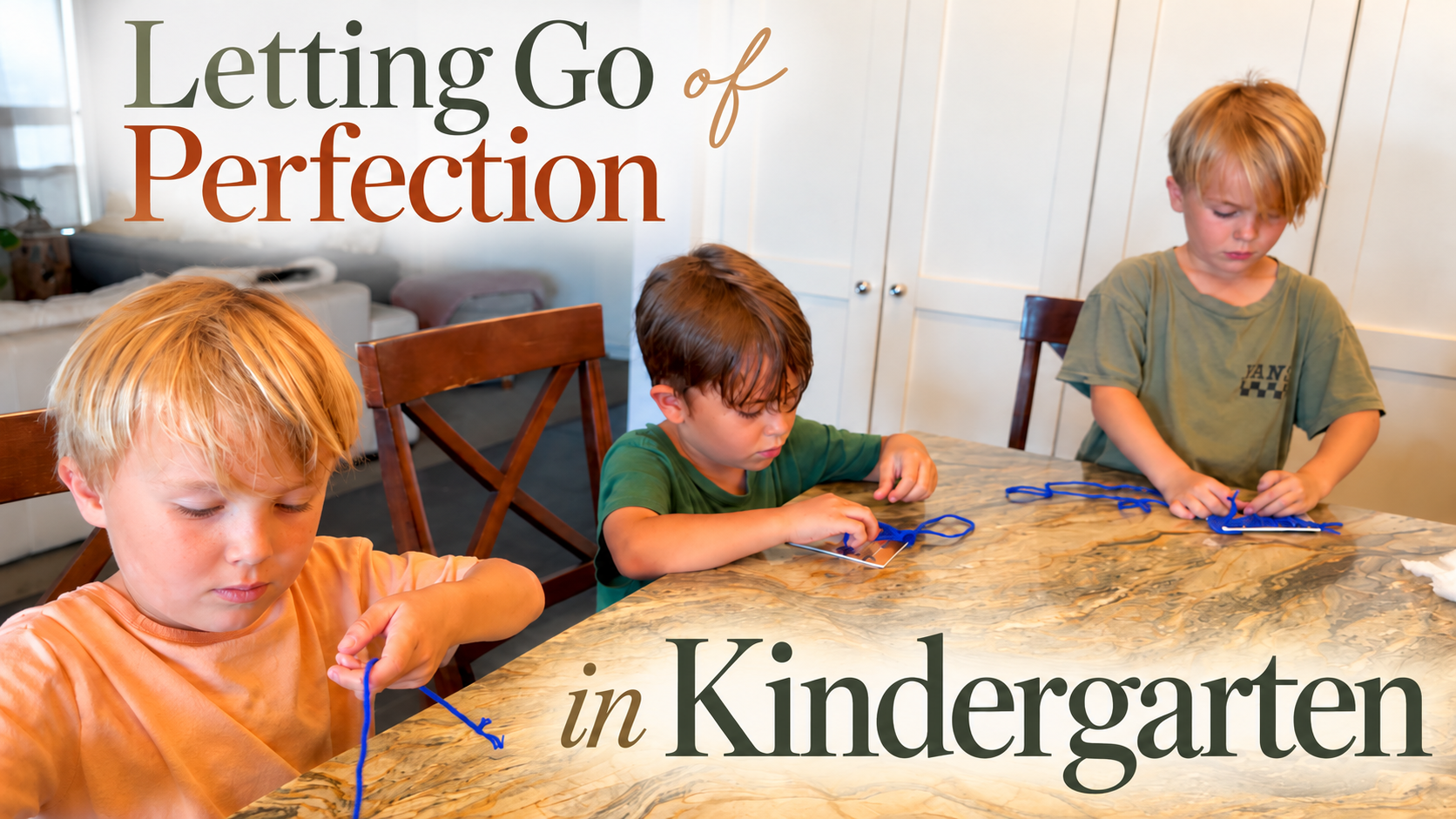
The last time we worked on weaving, it was quite challenging for them. I had originally brought the project for my 11-year-old nephew, who has been doing beautifully with it, and the four-year-olds wanted to try it as well. They struggled quite a bit the first time, so I was genuinely surprised when they asked to do it again.
-
![]()
Who is having more fun and learning? | Day 14
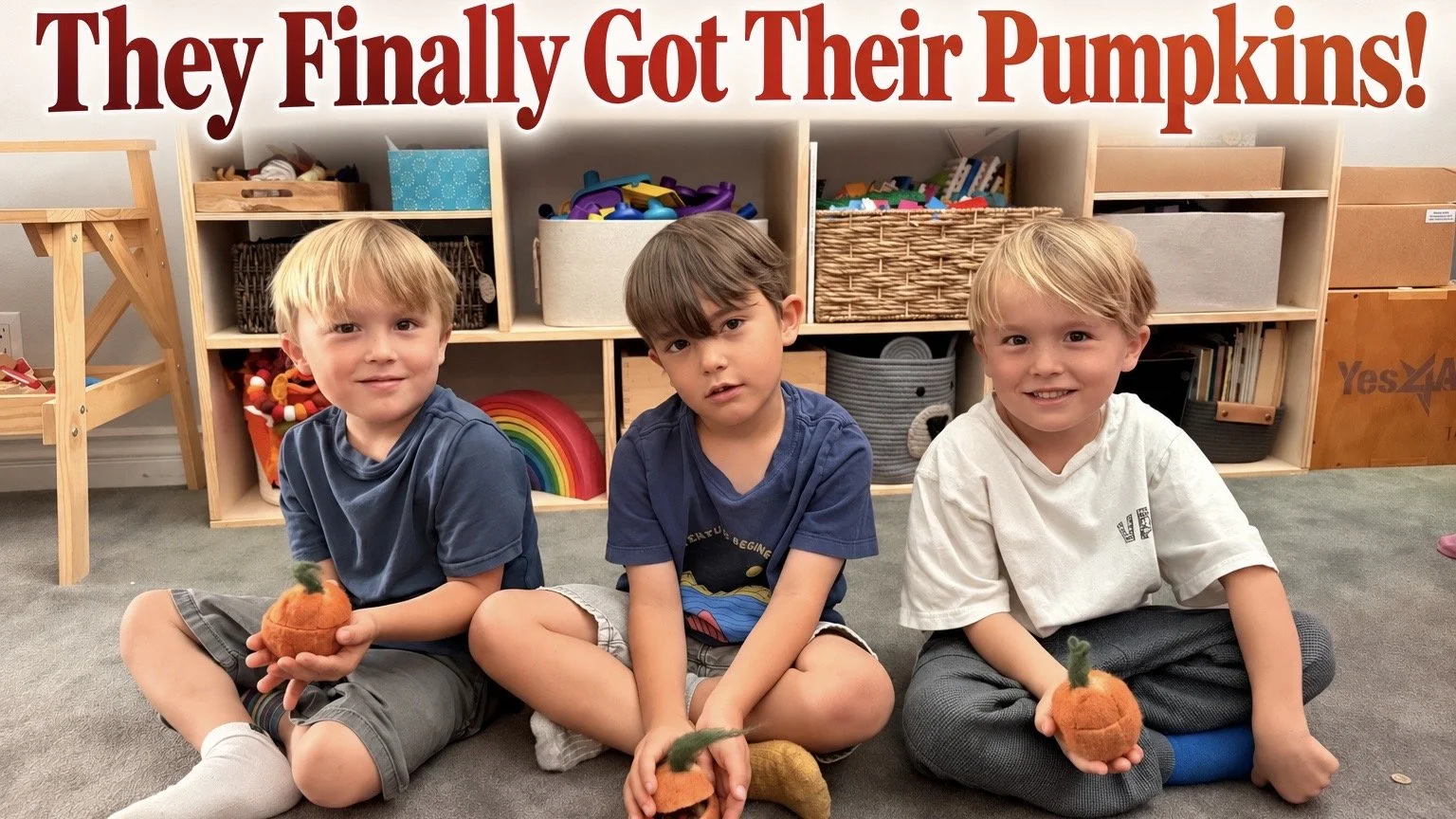
We're finishing our wet-felted pumpkins that we started in a previous lesson. After popping them in the dryer, they're ready to be opened. I cut around the top third of each pumpkin, and the children removed the racquetballs we used to create their shape. Now they have their own little pumpkin treasures, just the right size for storing nuts, peg dolls, or anything else they'd like.
-
![]()
3 Failures in Our Kindergarten Today | Day 15
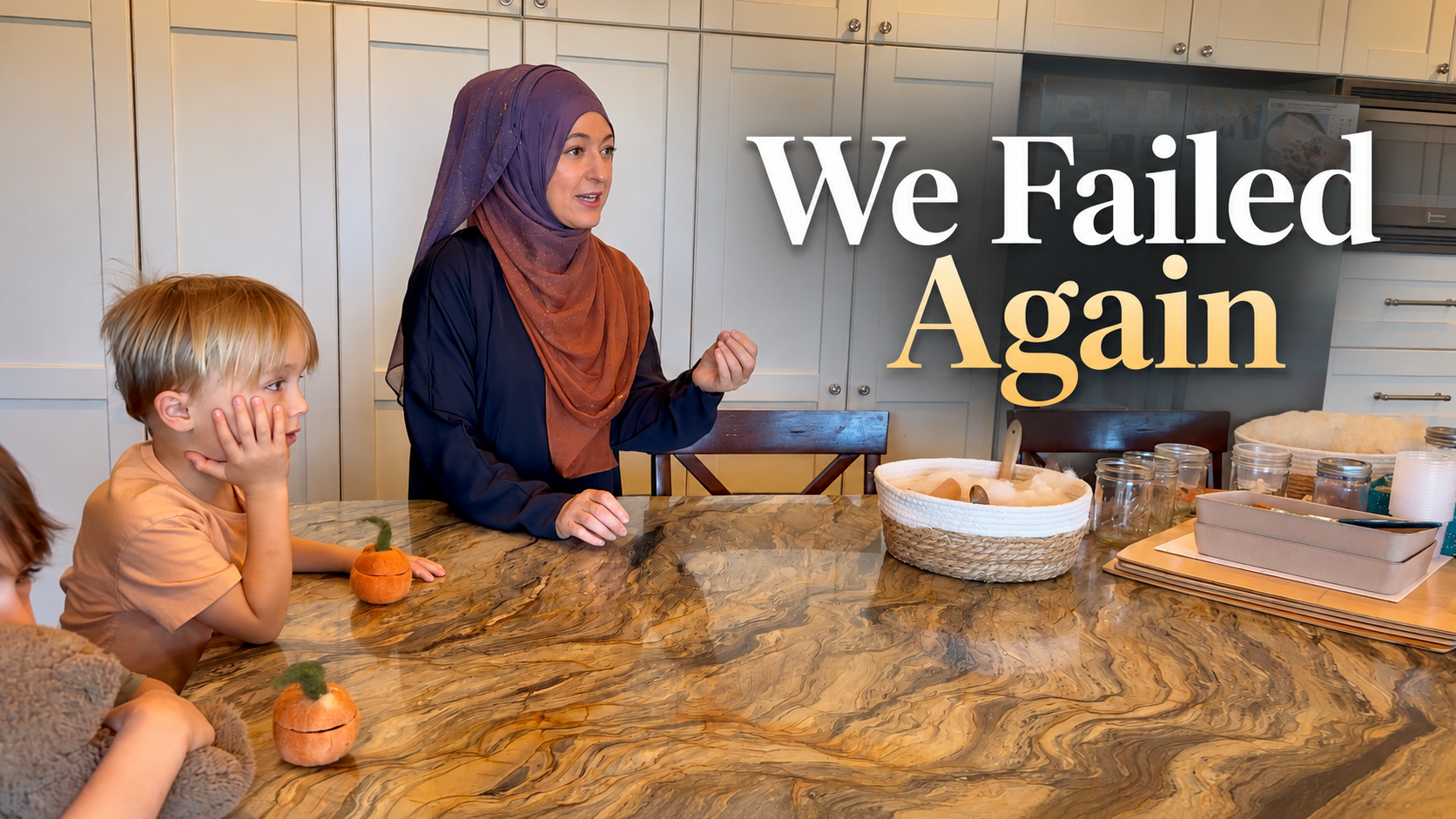
Sometimes our plans and projects fail, and sometimes they fail more than once! That’s exactly what happened during our Waldorf-inspired kindergarten with my triplet nephews, who are four years old. We had three projects that didn’t go quite as planned, but we still managed to have a wonderful day filled with gardening, imaginative play, cooking, storytelling, and a little experimentation.
Letting Go of Perfect in Kindergarten
Thursday, October 1, 2026 | Day 13
It’s been over a month since I started homeschooling my four-year-old triplet nephews for our Waldorf-inspired kindergarten, and we are finally beginning to settle into a really good rhythm on Day 13, Thursday, October 1, 2026.
The children now know to begin in the kindergarten room with our opening activities. We check the weather, look at the calendar, and use our little peg dolls to mark the day and season. Since it is fall, we also have our seasonal basket filled with treasures, handmade objects, and projects that the children can explore.
Some of those projects eventually become part of our kindergarten day simply because the children are drawn to them. I had not planned to make wet-felted pumpkins, but once they saw the little wool pumpkin in our fall basket, they immediately wanted to make one of their own.
While I was pulling out the materials for that project, something completely unexpected happened. The children asked to return to their weaving.
The last time we worked on weaving, it was quite challenging for them. I had originally brought the project for my 11-year-old nephew, who has been doing beautifully with it, and the four-year-olds wanted to try it as well. They struggled quite a bit the first time, so I was genuinely surprised when they asked to do it again.
The child who had struggled the most was actually the one who asked for the weaving first. He sat down, persevered, and nearly completed the entire project.
This time, I approached the weaving differently. I stopped correcting every mistake.
Instead of worrying about whether every row followed the perfect over-under pattern, I allowed them to work through it in their own way. Some sections may have several strands going over or under in the same direction, but that really doesn’t matter. What mattered was that they wanted to return to the work, they were engaged, and they were willing to keep trying.
Once one child began weaving again, his brothers were inspired to come back and continue their projects too. It was such a good reminder that sometimes children simply need another opportunity without the pressure of having to do everything correctly.
My 11-year-old nephew also has projects that are specifically for him. I had purchased four wooden cutting boards for the children, and he has been wood burning each child’s name into their board. I love finding meaningful work for him that allows him to participate alongside the younger children while still giving him something appropriate for his own age and abilities.
There was also plenty of time for imaginative play. Our wooden play structure from Head, Hands, and Heart Boutique in Canada has become such a beautiful part of the room. I draped it with several different fabrics, and now the children have created little cozy spaces inside. It is large enough for all three of them, and they have really made it their own.
Back in the kitchen, we began preparing our wet-felted pumpkins. My sister-in-law helped by wrapping string around the wool balls to create that recognizable pumpkin shape while I made pizza for the children. We usually try to involve them in preparing our snacks, but this time I decided to make the food while they continued with their projects.
Then it was time to wet felt.
Once again, I brought out our buckets of warm water and ice water, and the children worked the wool until it began to felt together. While they were felting, I prepared a madder root dye bath. Each child was able to place their wool pumpkin into the dye so we could begin transforming the natural wool into that beautiful warm pumpkin color.
We ended our day the way we usually do, back in the kindergarten room with our story, The Hedgehog Leaves Home. And after reading it together for so many kindergarten days, we finally finished the story.
More than a month into this experience, I can really feel our rhythm beginning to take shape. The children know what to expect, but there is still so much room for their interests to guide what we do. Sometimes a project I thought was too difficult becomes the one they ask to return to. Sometimes something sitting quietly in a seasonal basket becomes our next handwork project.
I am learning to observe more, correct less, and give them the space to show me what they are ready for.
Who is having more fun & learning?
Tuesday, October 6, 2026 | Day 14
One thing I've learned from homeschooling my triplet nephews, who are four years old, for our Waldorf-inspired kindergarten is that I'm having just as much fun as they are, probably even more!
We're finishing our wet-felted pumpkins that we started in a previous lesson. After popping them in the dryer, they're ready to be opened. I cut around the top third of each pumpkin, and the children removed the racquetballs we used to create their shape. Now they have their own little pumpkin treasures, just the right size for storing nuts, peg dolls, or anything else they'd like.
What really brings these pumpkins to life is adding the stems. We used plant-dyed wool, and I needle felted the stems onto the lids. This is definitely a project for adults and older children. I wouldn't introduce needle felting to younger children until they're around 11 or 12 years old.
My 11-year-old nephew made a slightly larger pumpkin using a tennis ball instead of a racquetball. The tennis ball was a little harder to remove because it had slightly felted to the wool, but it worked beautifully. We also dyed our pumpkins with madder root, which gave them that beautiful, natural pumpkin-orange color.
For our snack, we're keeping things simple with half an apple cut into pieces. Previously, I purchased four acacia cutting boards for the children because they were using mismatched boards that were either too large or too small. My 11-year-old nephew personalized each one with their names using my wood-burning tool. There's something especially meaningful for children about having beautiful, practical tools that belong just to them.
We also saved the apple seeds, which my older nephew carefully labeled and stored in an envelope. While he continued working on his wood-burning projects, the younger children enjoyed playing on our new wooden play structure from Head, Hands, and Heart Boutique. They're loving this addition to our kindergarten playroom!
Later, we returned to the kitchen to crack hazelnuts using my mortar and pestle. Previously, we had cracked walnuts with a nutcracker, so this gave the children another way to explore a familiar activity. These simple, purposeful tasks engage their senses, develop coordination, and bring so much joy and wonder into our days.
After cracking the hazelnuts and sharing them equally, each child had ten to place inside their felted pumpkin. These little pumpkins and hazelnuts are more than just seasonal treasures. I plan to save them for first grade, when the children begin their first math main lesson block. Natural materials like nuts make wonderful manipulatives for introducing mathematical concepts through concrete, hands-on experiences.
I love that something we've made together in kindergarten can become part of their learning years later. For now, there's no need for formal academics. They're learning through play, imitation, practical work, and meaningful experiences.
Meanwhile, my older nephew is finishing another wood-burning project. He's been practicing on his cutting board, and I'm sending the tool home with him so he can personalize his skateboard.
What I appreciate most about these kindergarten days is how much learning happens through ordinary activities. Cutting apples, saving seeds, cracking nuts, working with wool, and caring for our materials all become opportunities for the children to develop independence, confidence, coordination, and creativity.
And perhaps the greatest surprise is how much I'm enjoying every moment of it!
3 Failures in Our Kindergarten Today
Thursday, October 8, 2026 | Day 15
Sometimes our plans and projects fail, and sometimes they fail more than once! That’s exactly what happened during our Waldorf-inspired kindergarten with my triplet nephews, who are four years old. We had three projects that didn’t go quite as planned, but we still managed to have a wonderful day filled with gardening, imaginative play, cooking, storytelling, and a little experimentation.
We’re continuing our exploration of natural plant dyes, and this time I’m experimenting with black bean dye. The color is a beautiful blue-purple, and I thought we might be able to turn it into watercolor paint. My 11-year-old nephew helped me dissolve some gum arabic in water to add to the dye, but unfortunately, our experiment didn’t work. The good news is that the black bean dye worked beautifully on my wool batt, producing one of the most gorgeous shades of blue-purple I’ve seen.
Meanwhile, my older nephew picked the only pomegranate that survived in our garden this season. We’ll enjoy the seeds and save the skins for another natural dye experiment. Unfortunately, that experiment also turned out to be a failure, but I’ll share more about that in another tutorial.
Gardening continues to be a central part of our kindergarten experience. The four-year-olds prepared little planters that fit perfectly inside mason jars. They filled them with soil and planted marigold seeds, which we hope to grow and eventually harvest for another natural dye project. I love how these simple gardening activities connect the children to the seasons and the work we do throughout the year. Some things grow in season, others don’t, and that’s part of the learning experience.
The children also had plenty of time for imaginative play with our wooden play structure from Head, Hands, and Heart Boutique. I’ve draped an enormous piece of fabric over it, creating a wonderful little space where all three boys can play together, sometimes joined by my daughter and their older brother.
Back in the kitchen, the children helped prepare our fall meal by removing the seeds from a spaghetti squash and a honeynut squash. We’re saving the seeds for future planting and roasting the squash with chicken for lunch. It might still be a blistering 85 degrees outside, but we’re enjoying our autumn activities nonetheless.
After the children did a wonderful job cleaning up, we settled in for watercolor painting. This was when we discovered that our homemade black bean watercolor wasn’t going to work. Fortunately, I had our regular Stockmar blue watercolor paint ready, and the children thoroughly enjoyed painting with that instead.
I also decided to introduce a memory game as part of our opening and closing activities. That didn’t go as planned either! I’ve come to realize that cooperative games are probably more appropriate for the children at this stage, rather than games that require them to compete or remember specific placements.
By now, we’d had three failures in one kindergarten day! But I don’t consider the day a failure at all. Each unsuccessful project gives me an opportunity to observe the children, reconsider my approach, and make adjustments for future lessons.
Our usual opening activities became our closing activities. We checked the weather, played with our little felted pumpkin, and revisited our story, The Hedgehog Leaves Home. This time, rather than relying on the puppets, we told the story from memory, continuing the oral storytelling tradition.
We finished with a lovely fall meal before the children gathered their belongings and headed home. They were especially excited to take their gardening projects with them.
One of the things I’m learning through this kindergarten experience is that not every project needs to turn out the way I imagined. Sometimes the materials don’t cooperate, sometimes the activities aren’t developmentally appropriate, and sometimes our carefully planned rhythm changes completely. But the children still have meaningful work, opportunities for imaginative play, and experiences that connect them to the world around them.
And perhaps that’s one of the most valuable lessons for me as their teacher. A successful kindergarten day isn’t measured by how many projects we complete or how perfectly they turn out.