Waldorf Kindergarten
September is marked by building new relationships, establishing rhythms and routines and taking the time to observe the children, their development and their interactions.
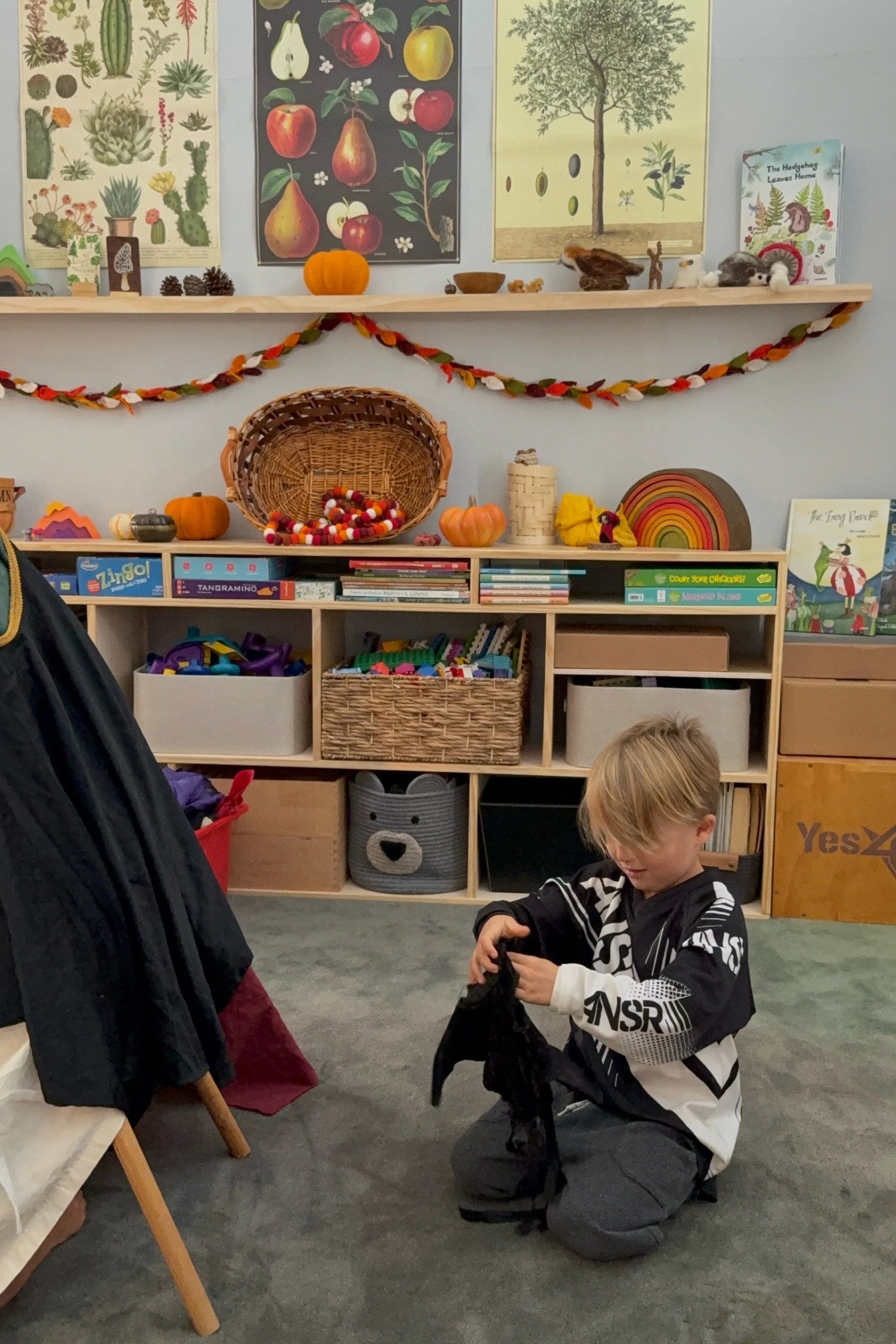
August & September
-
![]()
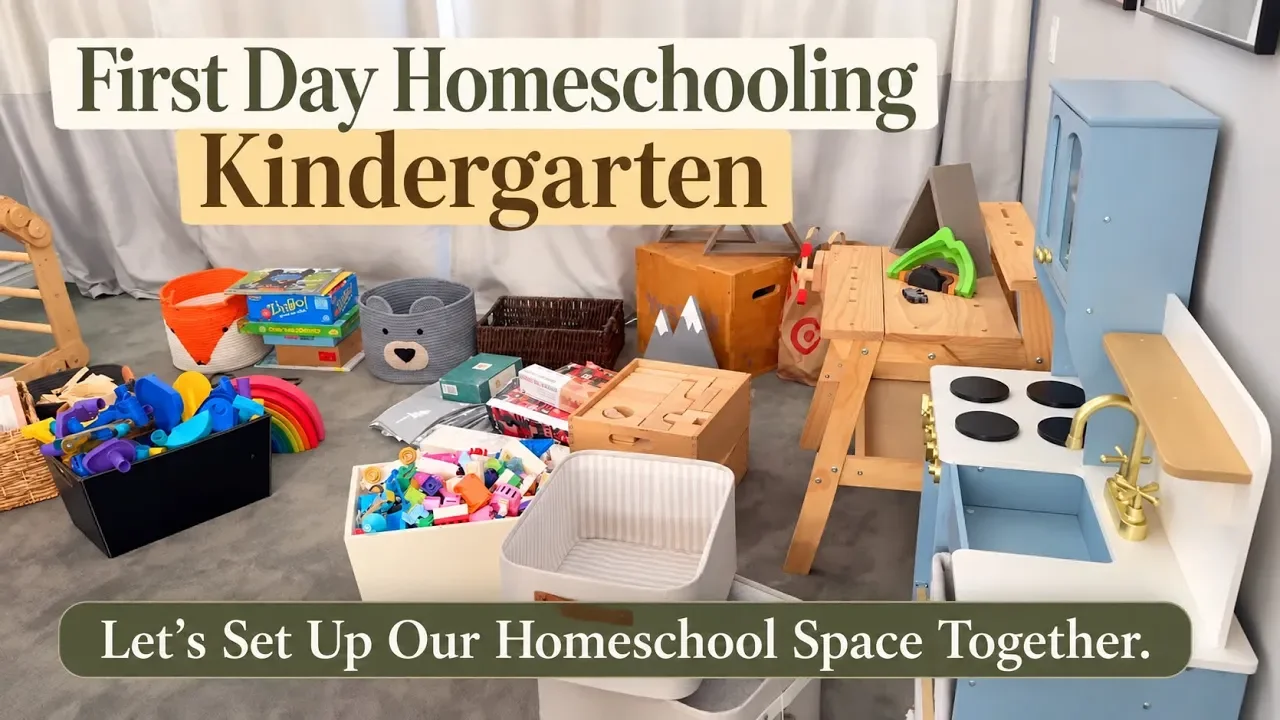
First Day of Kindergarten
Today, Tuesday, August 25, 2026, was our very first day homeschooling my triplet nephews, who are four years old, and I quickly remembered that everything takes more time with younger children, especially when there are three of them. Their older brother joined us for many of the activities, my sister-in-law was here, my daughter helped throughout the day, and together we began what I know is going to be a wonderful season of learning.
-
![]()
2nd Day of Kindergarten
Our second day homeschooling Waldorf-inspired kindergarten was just as joyful as the first, and once again I completely overplanned. I am homeschooling my triplet nephews, who are four years old, along with their 11-year-old brother. We had wet-on-wet watercolor painting planned with beautiful watercolor paper, painting boards, sponges, brushes, and the primary colors ready to go, but we never got to it. And that is perfectly okay because now everything is ready for another day.
-
![]()
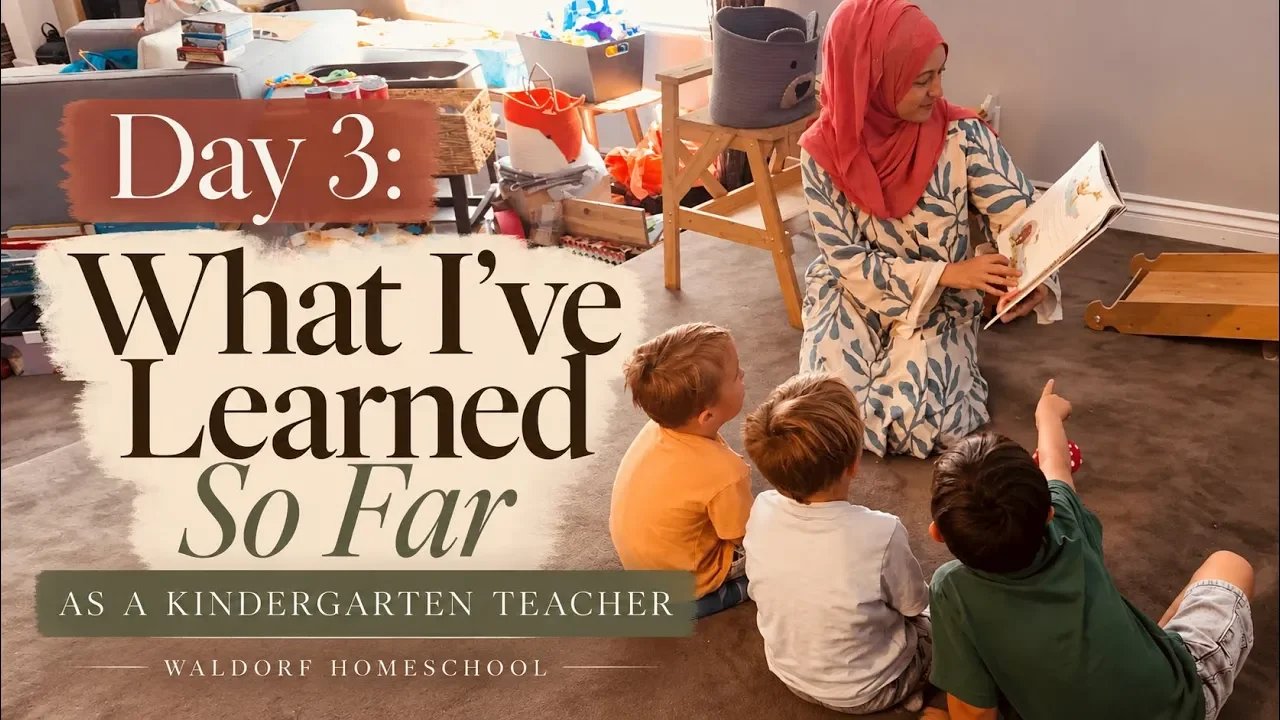
What I've Learned So Far | Day 3
Our third day together reminded me once again that the best kindergarten lessons grow naturally out of everyday life. We started the morning with another batch of our organic decaf cold brew coffee. There was still a little left from our previous lesson, so the triplets enjoyed a small cup before we began our first project of the day.
-
![]()
Waldorf Kindergarten Vlog | Day 3
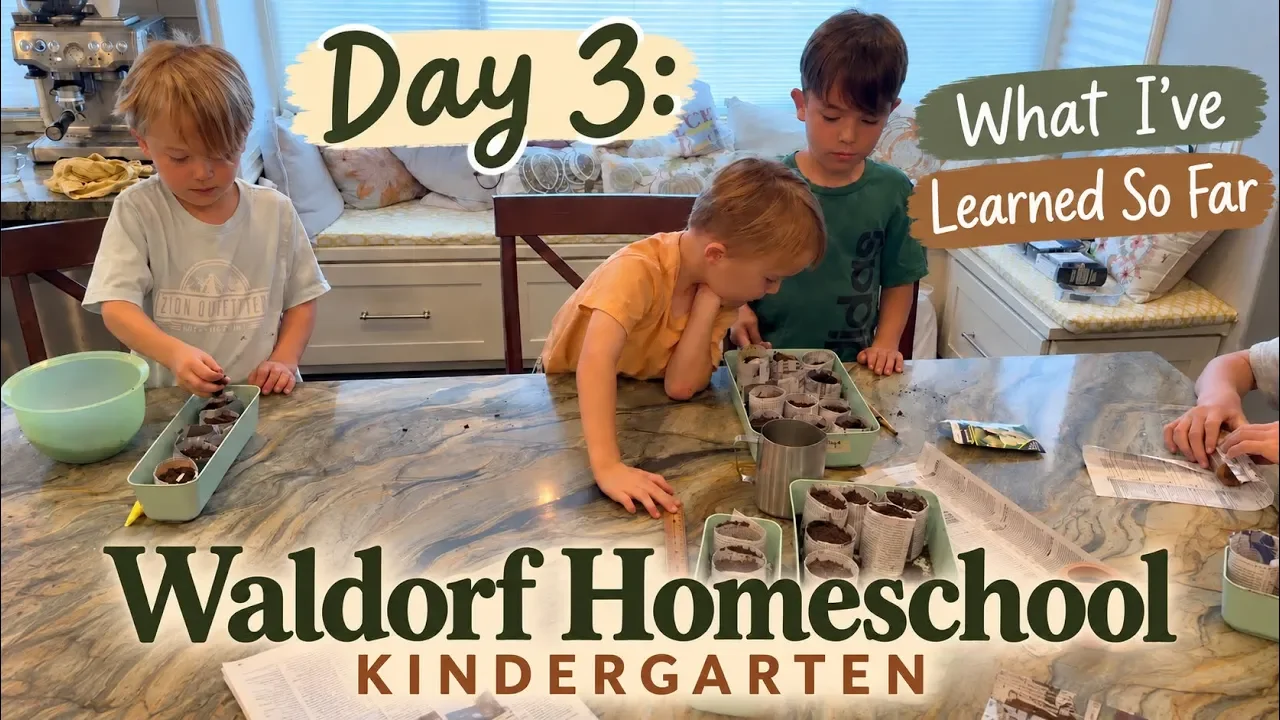
Our main project for the day was gardening. We used a simple tool to make newspaper seedling pots, and my 11-year-old nephew became so proficient that he made nearly 50 of them. My mother was visiting us this week and brought a bag of seeds, so everyone was able to choose what they wanted to plant. The triplets carefully filled their pots with soil, made small holes for their seeds, planted them, and watered them.
-
![]()
Lesson Plans for Waldorf Kindergarten | Day 4
Our fourth day together centered around one of my favorite parts of kindergarten: working together in the kitchen. Every class includes some kind of cooking or baking because kindergarten is really about participating in the work of the home. Alongside those everyday tasks, we're also doing projects that strengthen fine and gross motor skills, develop the imagination, and meet the children where they are developmentally.
-
![]()
No Academics for Kindergarten?
Today was our fourth day homeschooling my four-year-old triplet nephews in our Waldorf-inspired kindergarten, and their 11-year-old brother joined us once again. This week was especially meaningful because my mother was able to spend the day with us as well. Alongside my sister-in-law and my 15-year-old daughter, it truly became a multi-generational learning environment.
-
![]()
What Are Waldorf Kindergarten Activities?
Today was our fifth day, Friday, September 4, 2026, of Waldorf-inspired kindergarten with my four-year-old triplet nephews, and our day looked a little different than usual. We typically meet on Tuesdays and Thursdays, but since I had Friday off this week, I invited my sister-in-law and the children over for an extra day together. We kept some of the familiar elements of our kindergarten rhythm, but shortened our schedule and allowed more time for free play.
-
![]()
Play is Meaningful Work for Kindergarten
I've been homeschooling my four-year-old triplet nephews for a few weeks now, and we're starting to establish a really solid rhythm. I'm still very much in the observation phase, learning more about the children and figuring out how much we can realistically accomplish each day. Time management continues to be one of my biggest challenges because we get so engaged in our projects. I'm realizing that two hours, twice a week, really isn't enough time for everything we want to do.
-
![]()
Wet Felting, Cooking & Storytime
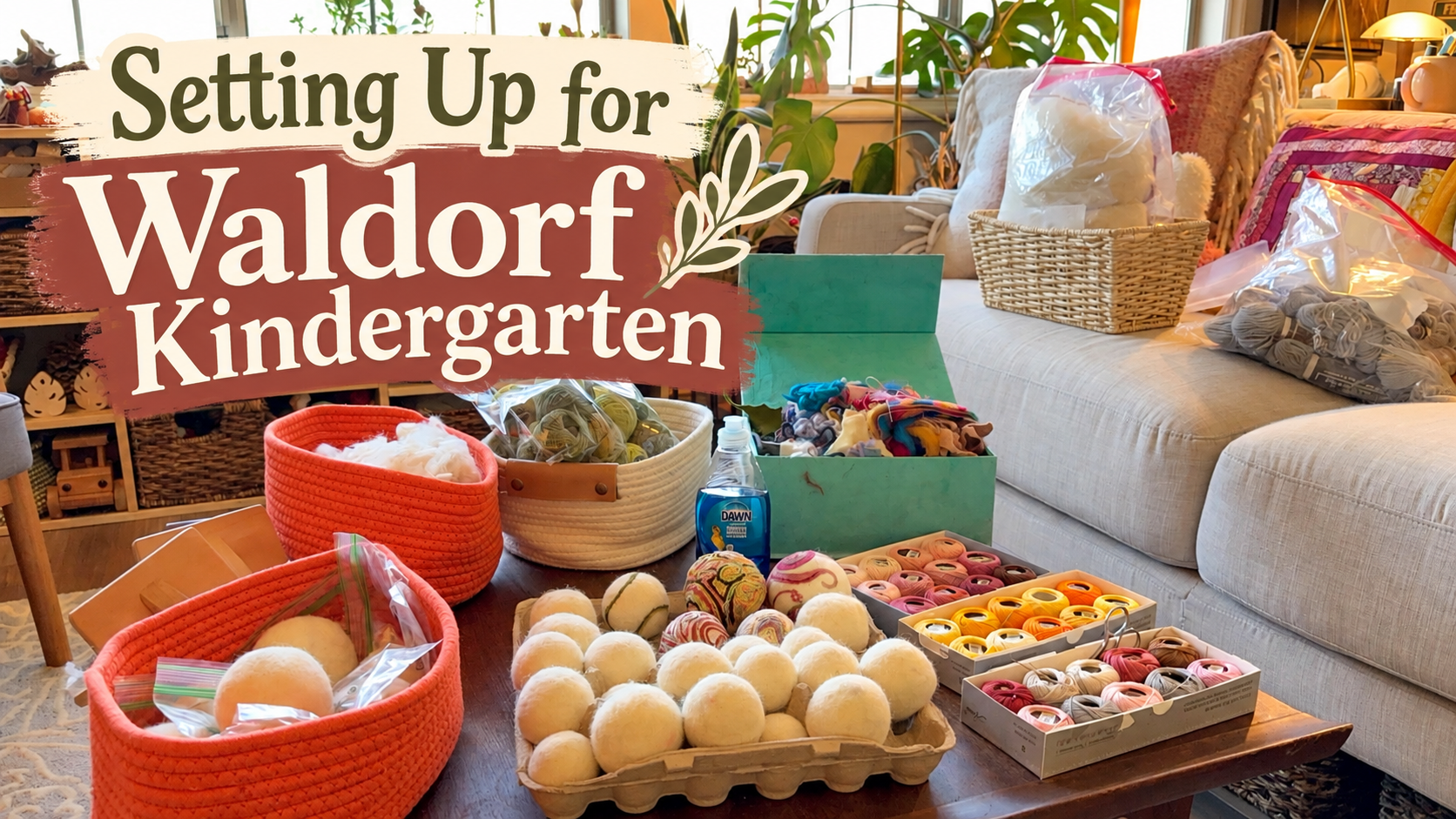
Many of our projects take several days to complete, and today we returned to the wool the children had cleaned and carded during our previous lesson. We're making wet felted wool balls, and I prepared the centers ahead of time using scraps of wool and yarn. The children wrapped their carded wool around the cores before we began felting them in warm and cold water.
-
![]()
How to Teach Watercoloring | Day 7
We started in the kitchen with butternut squash, acorn squash, carrots, and kale. Even though we’ve been doing quite a bit with gardening and seasonal foods, all of our work has had to happen indoors because we’re currently renovating both our front and backyard. Hopefully, eventually, we’ll be able to bring more of this work outside.
-
![]()
Indoor Gardening | Day 8
Each child was supposed to transplant one seedling, but when one of the children selected a little pot containing two seedlings, everyone else wanted two as well. Once the other children had their two seedlings, the first child wanted another pot, which meant he now had three plants. Naturally, the other two children noticed immediately! Everything needs to be either the same or completely different, and they are very particular about making sure everyone has their fair share!
-
![]()
No Academics Kindergarten | Day 8
Gardening is such a natural part of the kindergarten experience, and even when you cannot work outside, there is so much you can do indoors. We have saved seeds from our squash and tomatoes, planted seeds from packets my mom brought while she was visiting, made our own little newspaper seedling pots, watched the seeds sprout, and now we are transplanting them into larger pots.
-
![]()
How to Develop Gross and Fine Motor Skills in Kindergarten | Day 9
This is one of the reasons I love bringing cooking and baking into our kindergarten experience. These simple, meaningful activities provide so many opportunities for developing fine and gross motor skills, following directions, paying attention, practicing patience, and learning to take turns. All of these skills help establish the foundation for later academic learning.
-
![]()
Baking in Waldorf | Fall Recipes | Day 9
Today, we enjoyed a beautiful combination of gardening, baking, weaving, watercoloring, and free play with my four-year-old triplet nephews and their 11-year-old brother. We began our day by observing the growth of our seedlings and watering our plants. Some of our tomatoes didn't survive because we transplanted them a little too late, so my older nephew helped plant a few more seeds.
-
![]()
Developmentally Inappropriate Projects in Kindergarten | Day 10
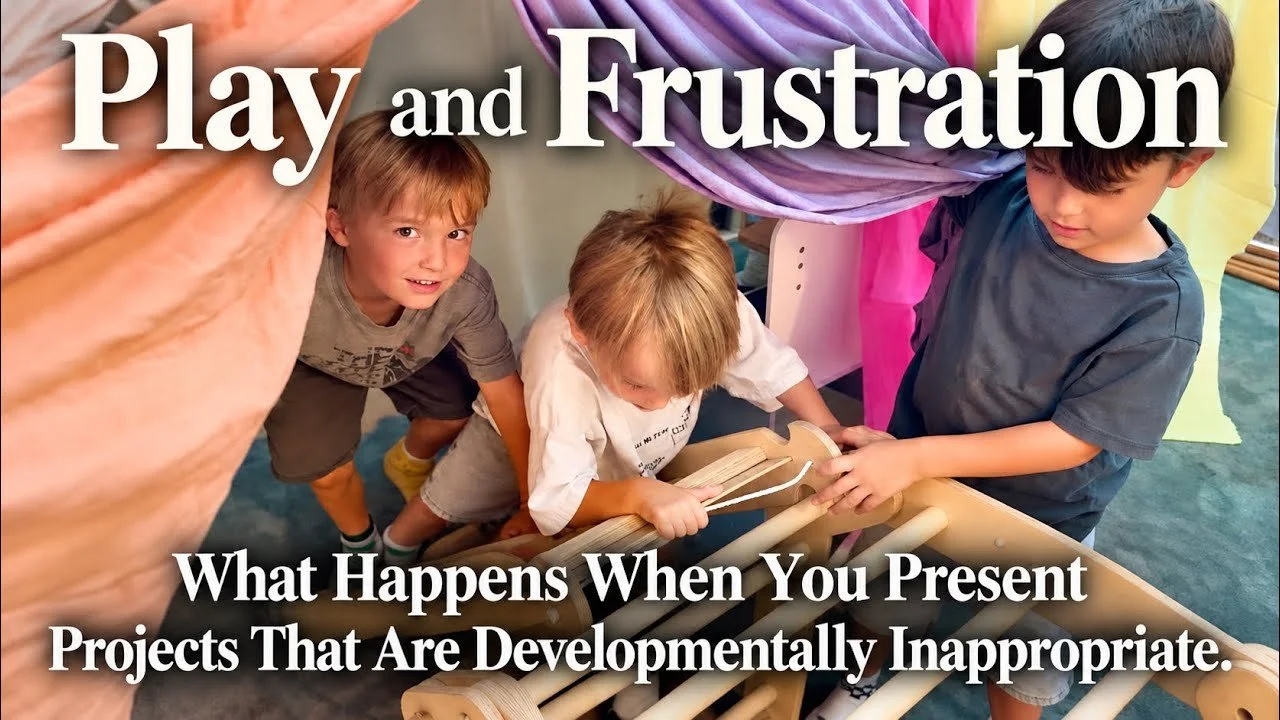
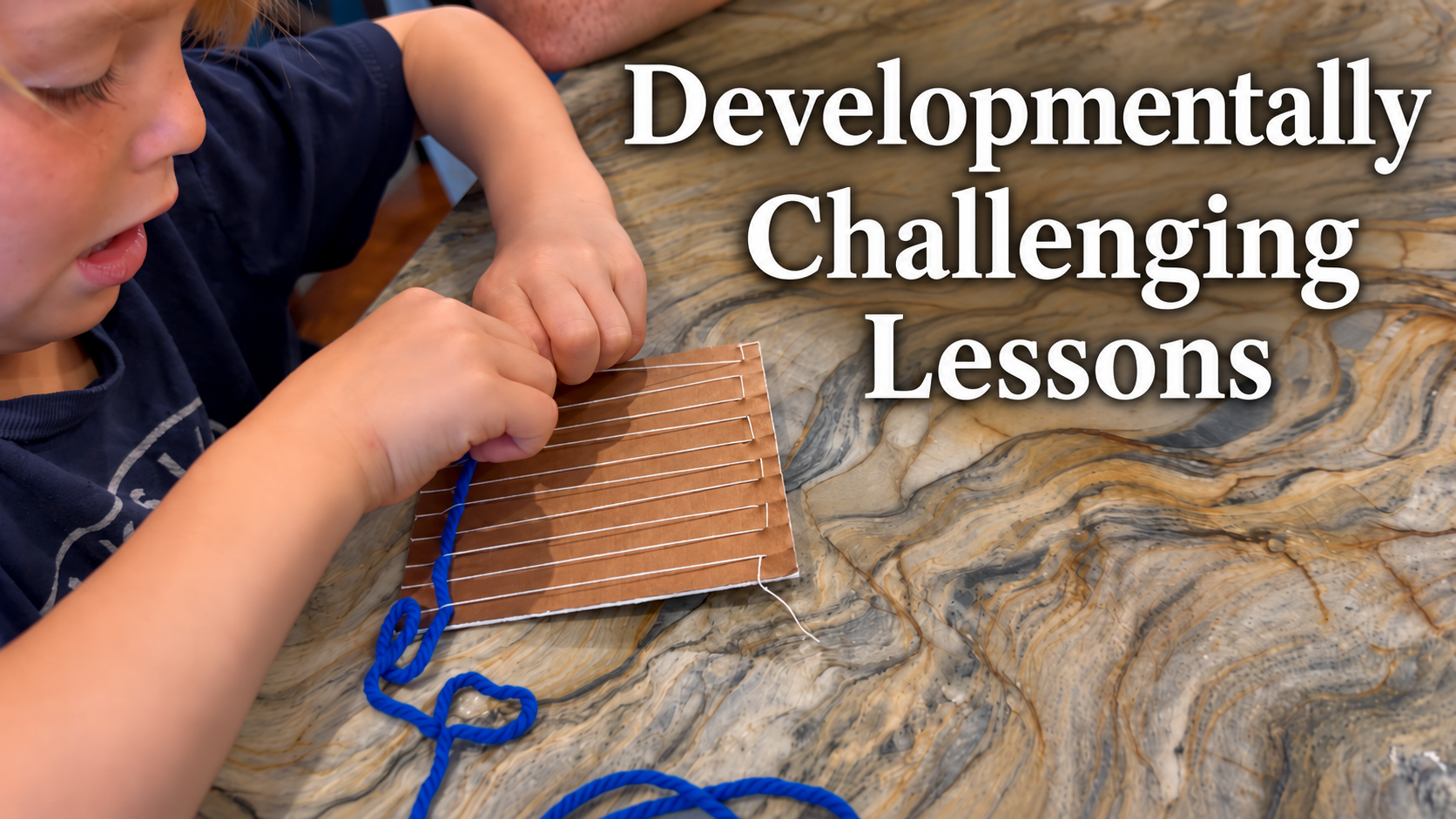
I tried introducing a smaller weaving project to the four-year-olds as well, but this was a good reminder to pay attention to developmental readiness. The process was frustrating for them, and rather than encouraging them to push through something that was simply too advanced, I decided the project needed to be reconsidered. A much larger weaving setup with bigger movements would probably have been more appropriate at this age.
-
![]()
Rising Frustrations with Challenging Lessons | Day 10
For the four-year-olds, though, I realized that this particular weaving project was too advanced. They became frustrated with the process of moving the yarn in and out of the warp. If I bring weaving back at this age, I would make it much larger and simpler so the movements are easier for them. This was another reminder to pay attention to developmental readiness rather than simply focusing on the finished project.
-
![]()
Fall is FINALLY Here | Day 11
The first thing they wanted to do was crack walnuts. I have this beautiful wooden walnut cracker, and each child took a turn cracking a walnut. We tried to keep the shells intact because I would love to turn some of them into little walnut-shell sailboats later. Even something as simple as cracking nuts becomes such satisfying work for young children.
-
![]()
Fall Morning Basket in Kindergarten | Day 11
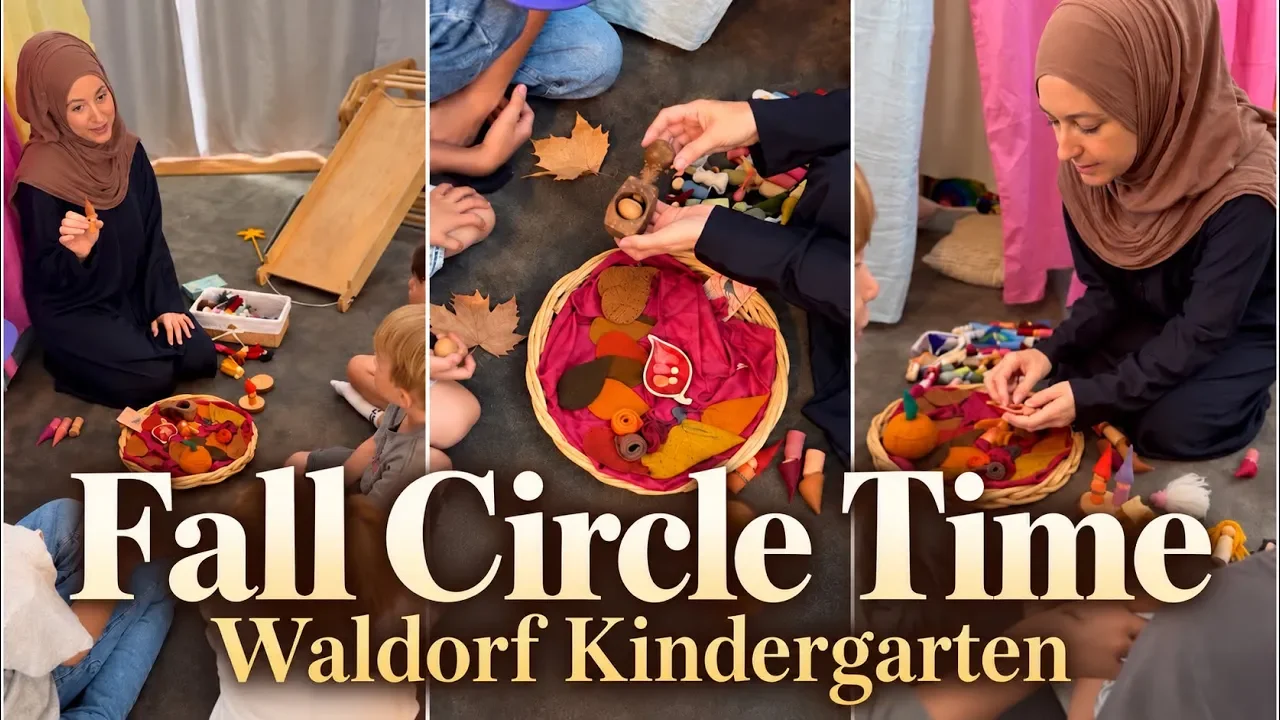
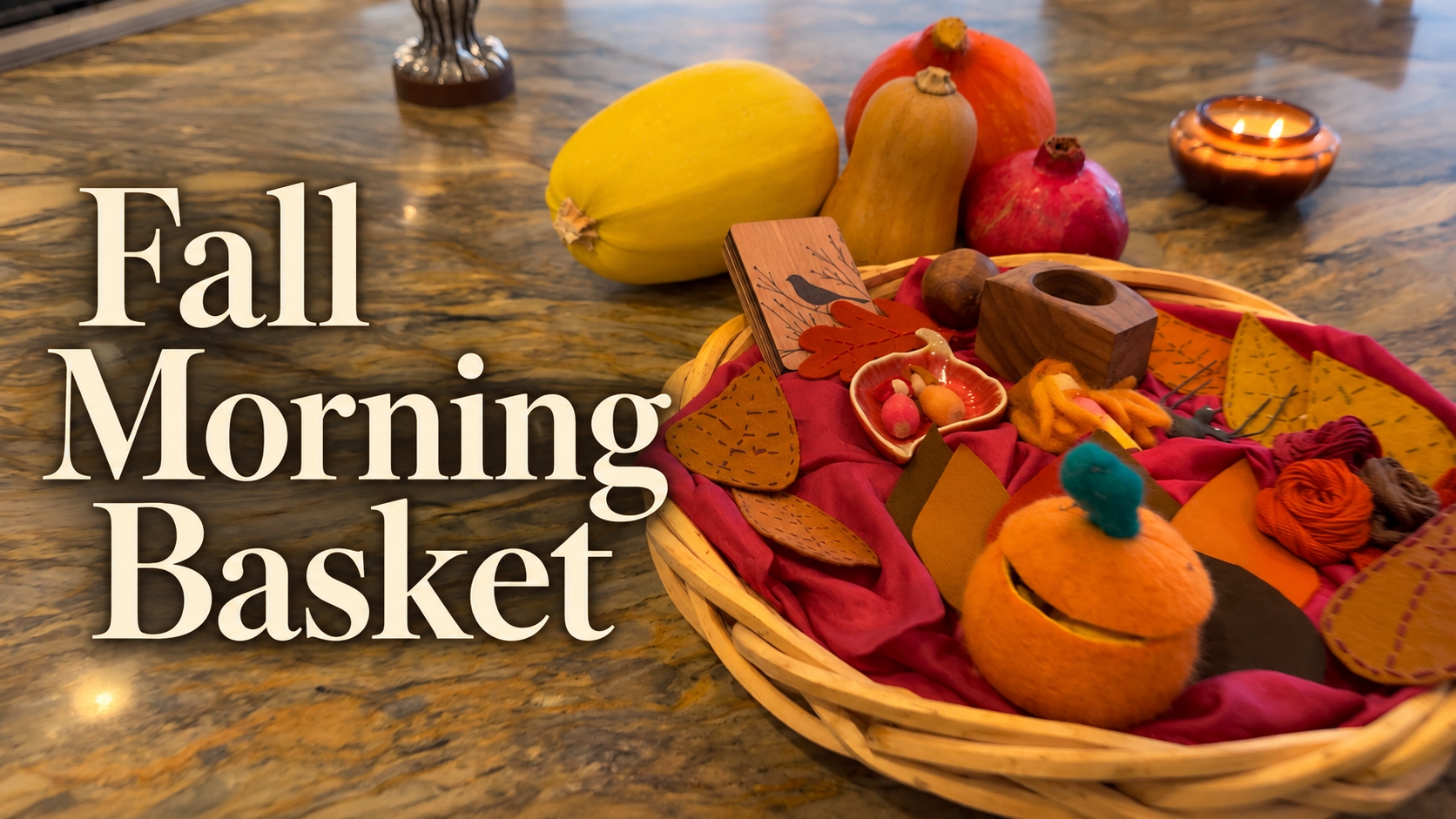
I prepared a basket filled with fall-inspired materials. There were some wool felt leaves that I had planned to use for an embroidery project, but the children were much more interested in some of the other things tucked inside the basket, so we simply followed their curiosity. They were completely charmed by the little wet-felted pumpkin and immediately wanted to make one of their own. I have not made that project in more than 10 years, since my own children were little, so I am absolutely delighted to bring it back for my nephews.
-
![]()
Why Can't Kindergarten Be About Play and Projects
The younger children moved into imaginative play with my 15-year-old daughter. Since we have been allowing more time for free play, our kindergarten days have stretched from about two hours to closer to three, but I think that extra time has been worthwhile. The play structure is large enough that each child can create a little space of their own, and they even have a slide tucked inside.
-
![]()
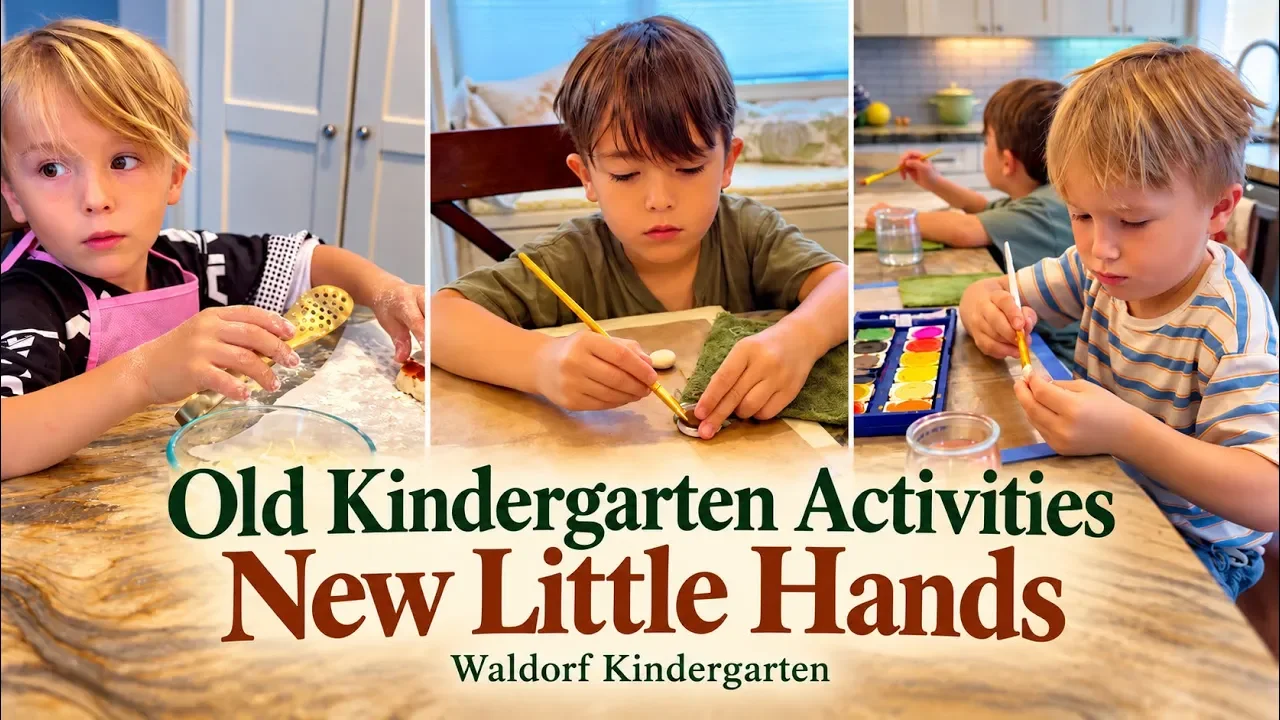
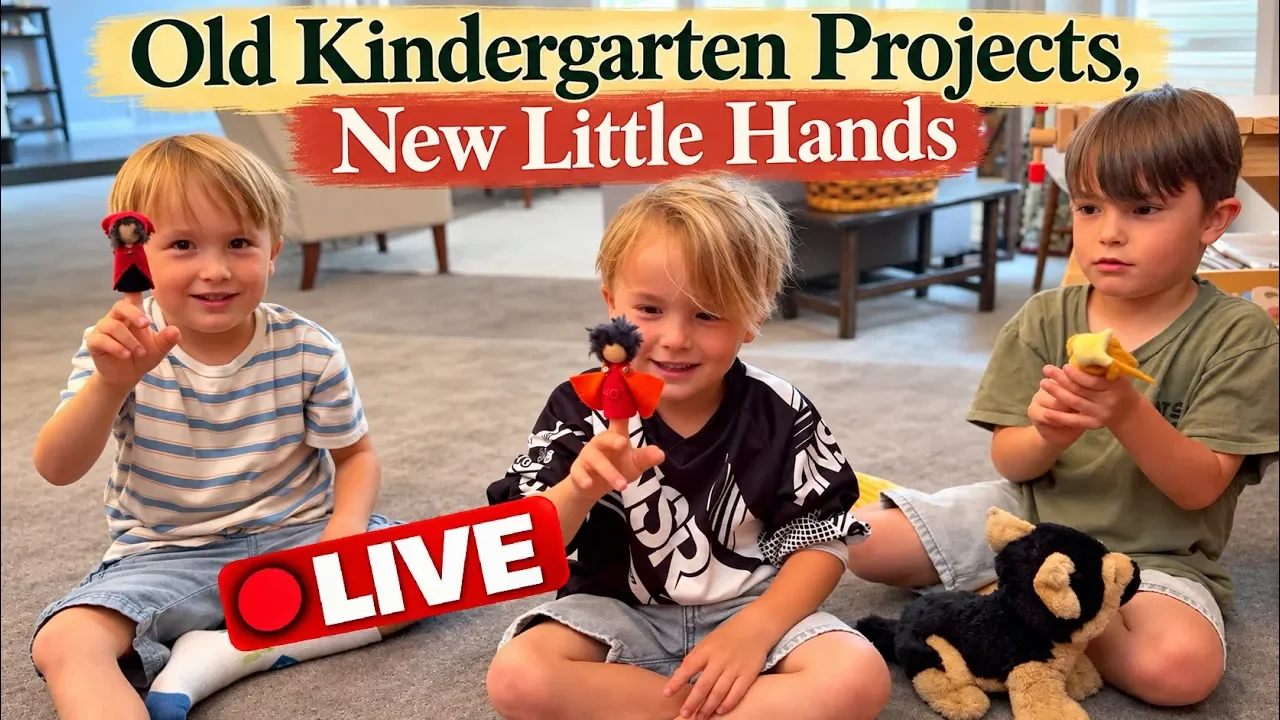
Old Kindergarten Activities, New Little Hands | Day 12
The children painted their own peg dolls in the colors of their choice using Lyra opaque watercolor pan paints. I actually loved that they were able to be part of making something that would become part of our seasonal activities instead of simply receiving something I had already prepared for them.
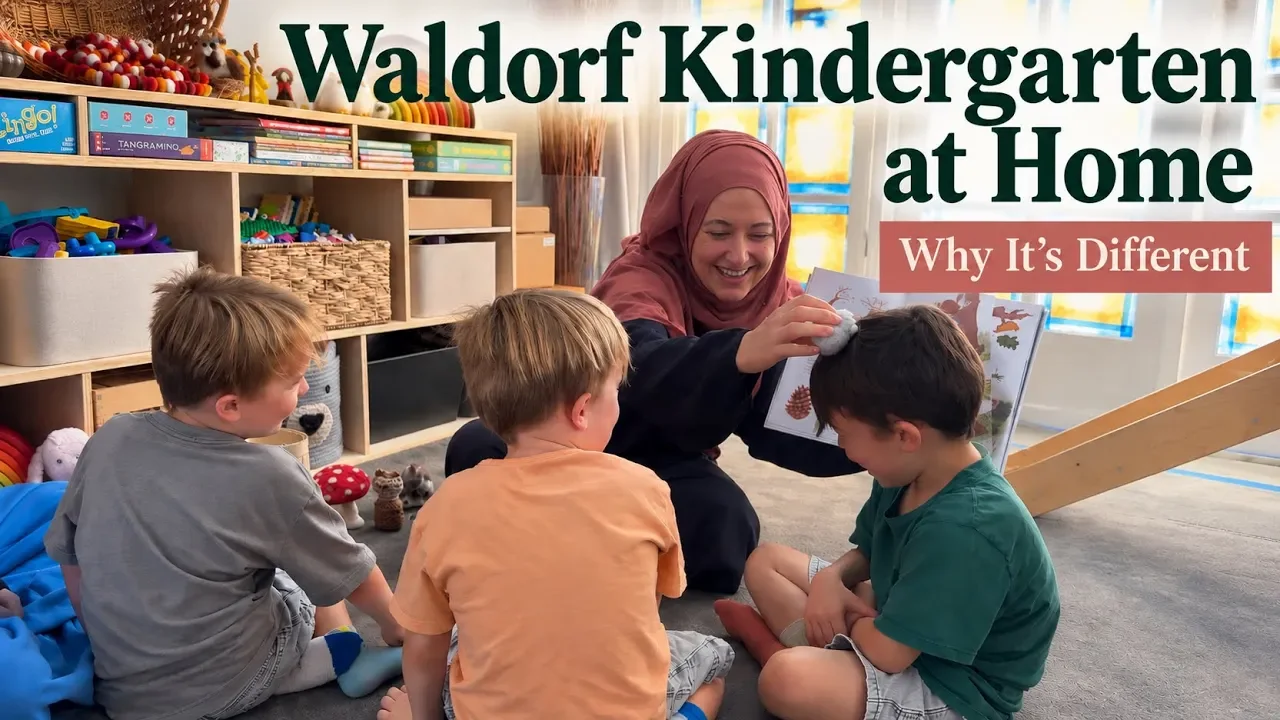
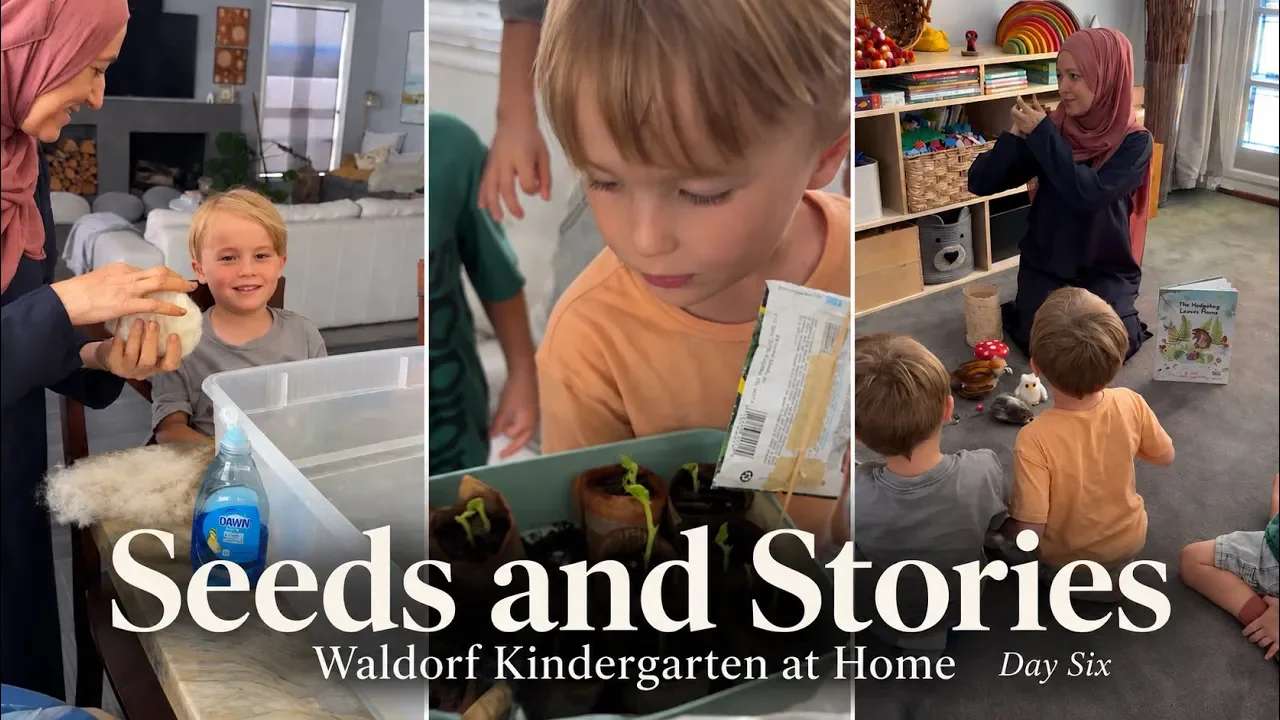
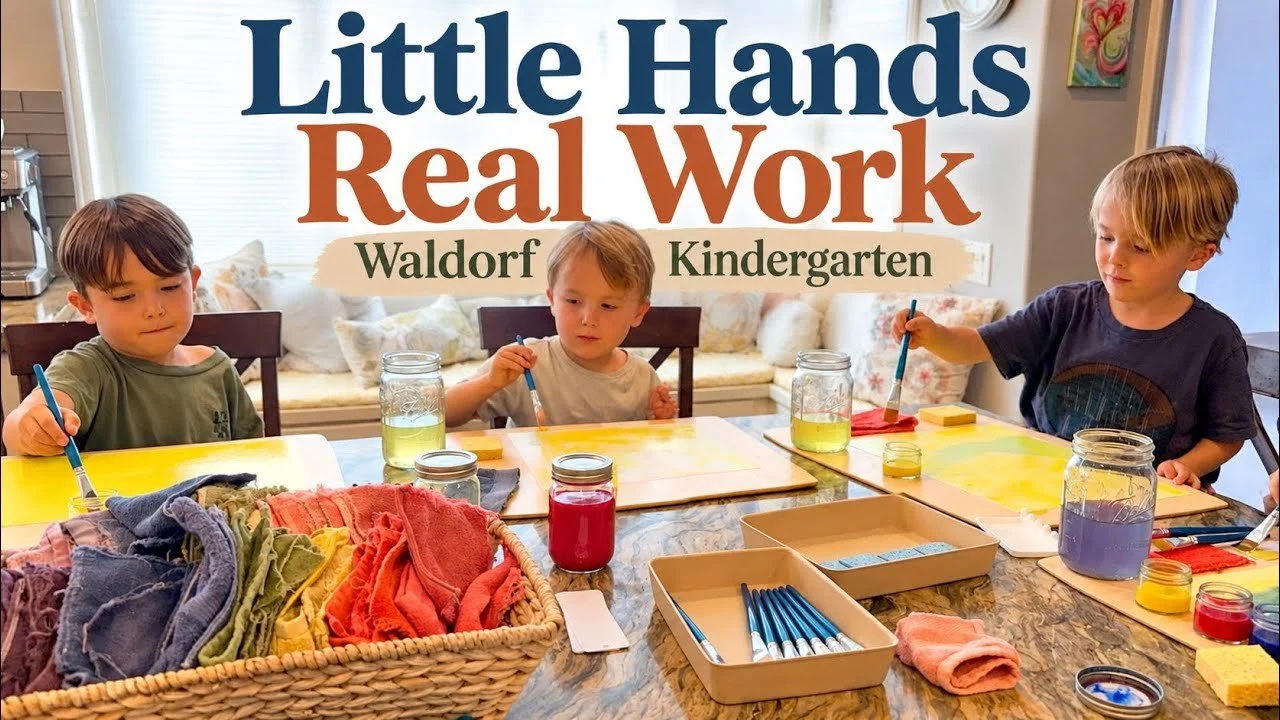
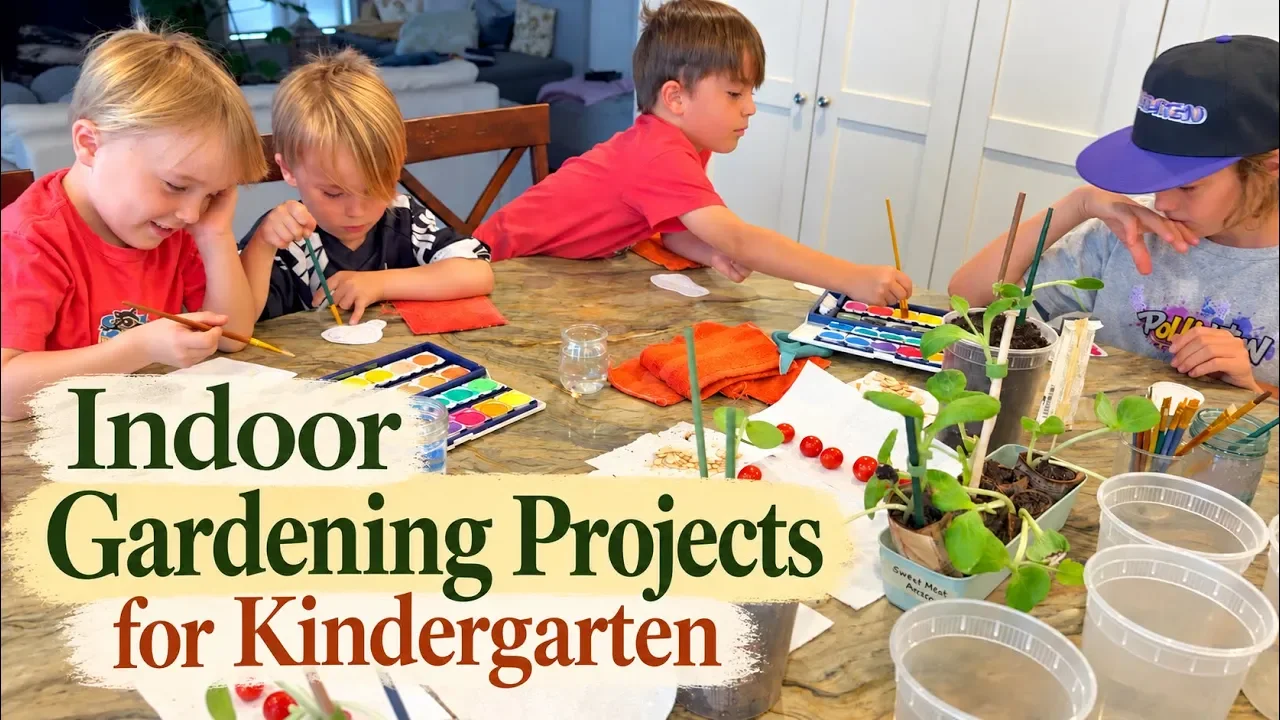

LIVE Vlogs
-
![]()
Lessons that Awaken the Sense | Day 1
Today, Tuesday, August 25, 2026, was our very first day homeschooling my triplet nephews, who are four years old, and I quickly remembered that everything takes more time with younger children, especially when there are three of them. Their older brother joined us for many of the activities, my sister-in-law was here, my daughter helped throughout the day, and together we began what I know is going to be a wonderful season of learning.
-
![]()
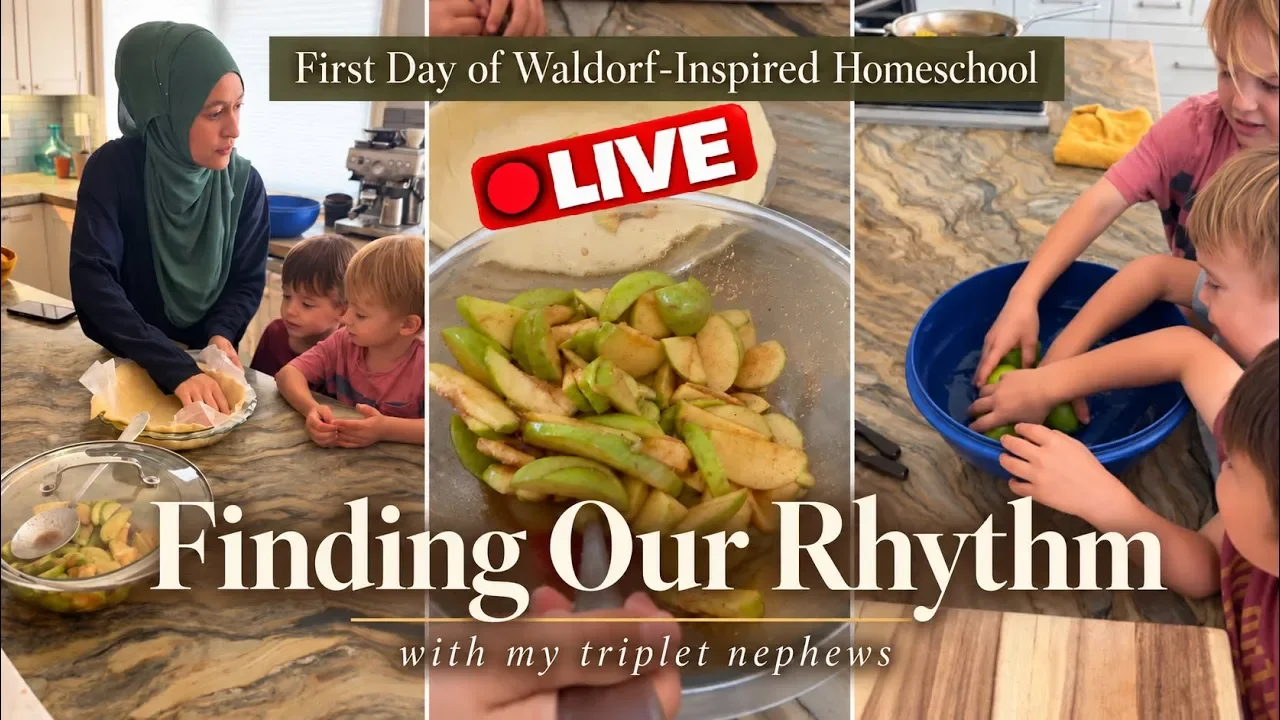
Finding Our Rhythm | Day 1
One of the first things I am already learning is that everything takes a little longer with younger children, especially when there are three of them. I may have a full list of activities planned, but I am quickly realizing that the experience itself is more important than getting through everything on the list.
-
![]()
Imaginative Storytelling | Day 2
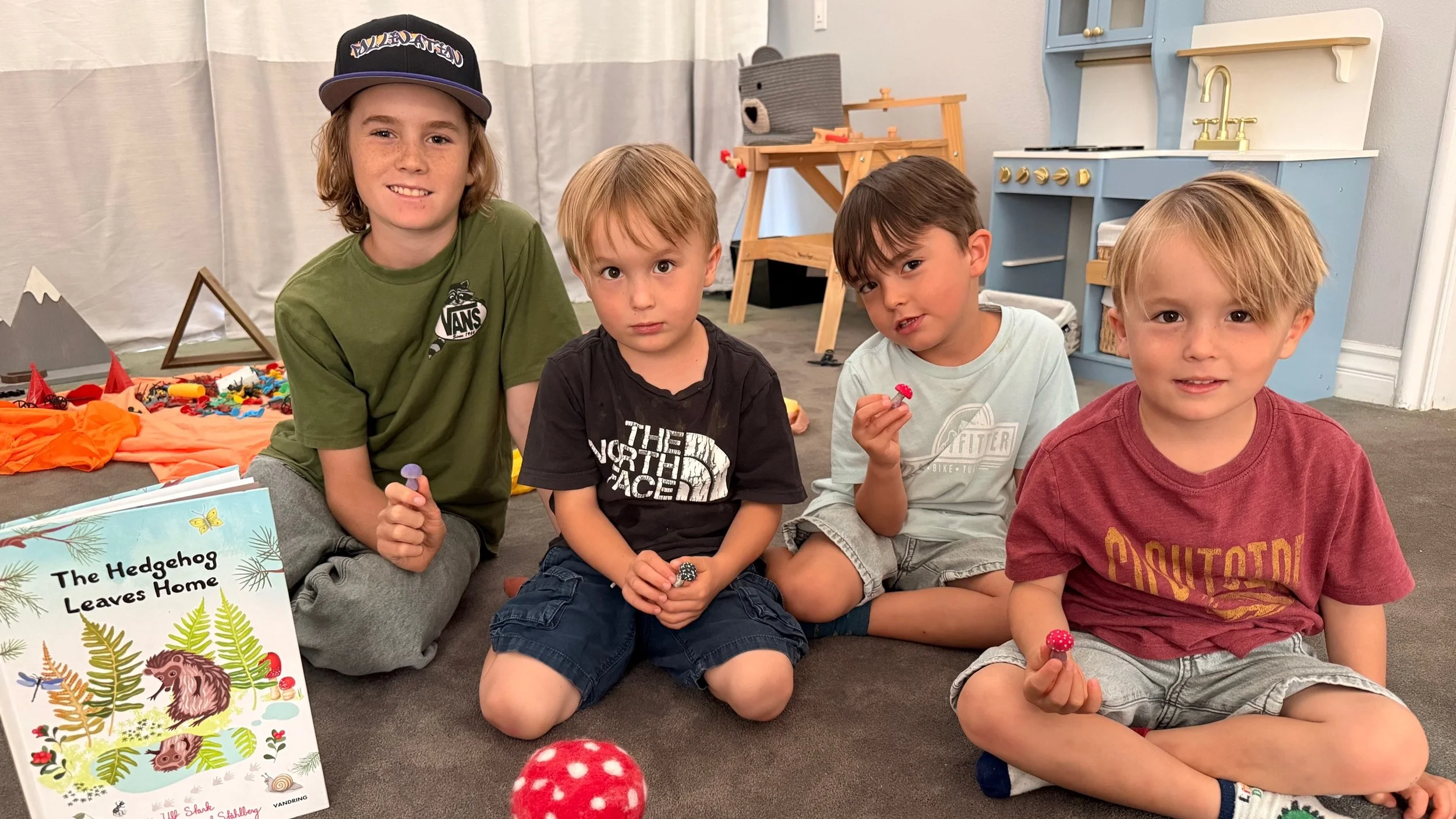
We continue with our story, The Hedgehog Leaves Home. We read just a few pages at a time, and this time the children were able to add their newly painted mushrooms into the storytelling. We also included an owl that we felted earlier in our homeschool journey. They love being part of the story rather than simply listening, and that is one of my favorite things about teaching young children. They are so bright-eyed, curious, and completely engaged.
-
![]()
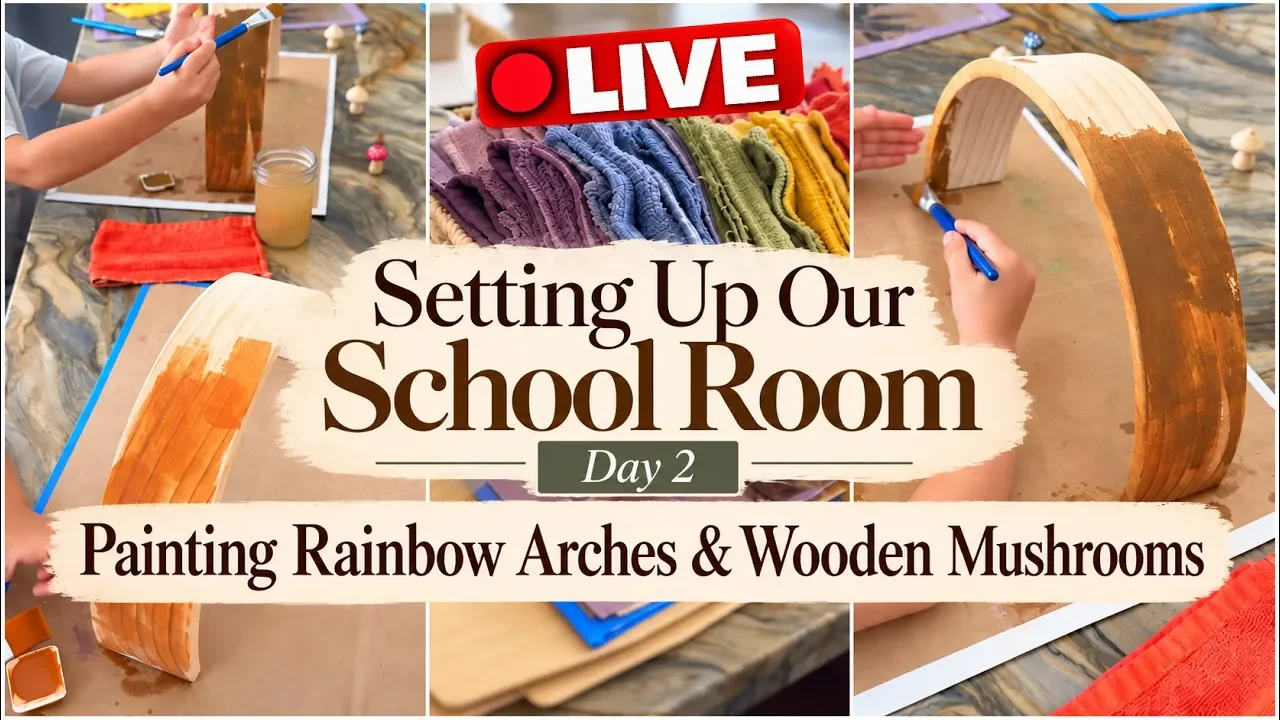
Setting Up Our School Room | Day 2
One of our projects was painting little wooden mushrooms. I have a beautiful deck of cards showing different varieties of mushrooms, which gave us some inspiration. Most of the children were immediately drawn to the classic red mushroom with white dots, but by the end we had a lovely assortment.
-
![]()
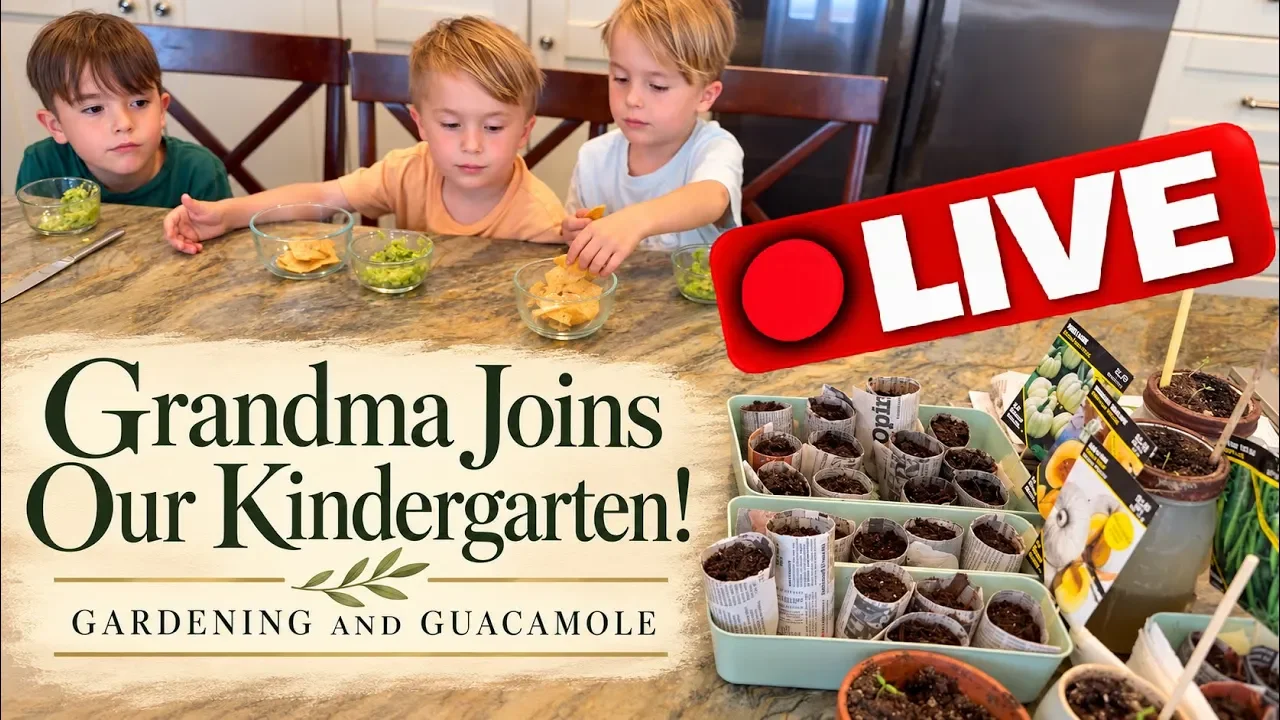
Grandma Joins Today! | Day 3
My mom was visiting this week, and she arrived with a whole bag of seed packets, which made the perfect inspiration for another planting lesson. My older nephew took on the job of making newspaper seedling pots while the triplets filled them with soil. Using a simple wooden pot maker, he wrapped newspaper around the mold, pressed it into shape, and made nearly fifty little seedling pots.
-
![]()
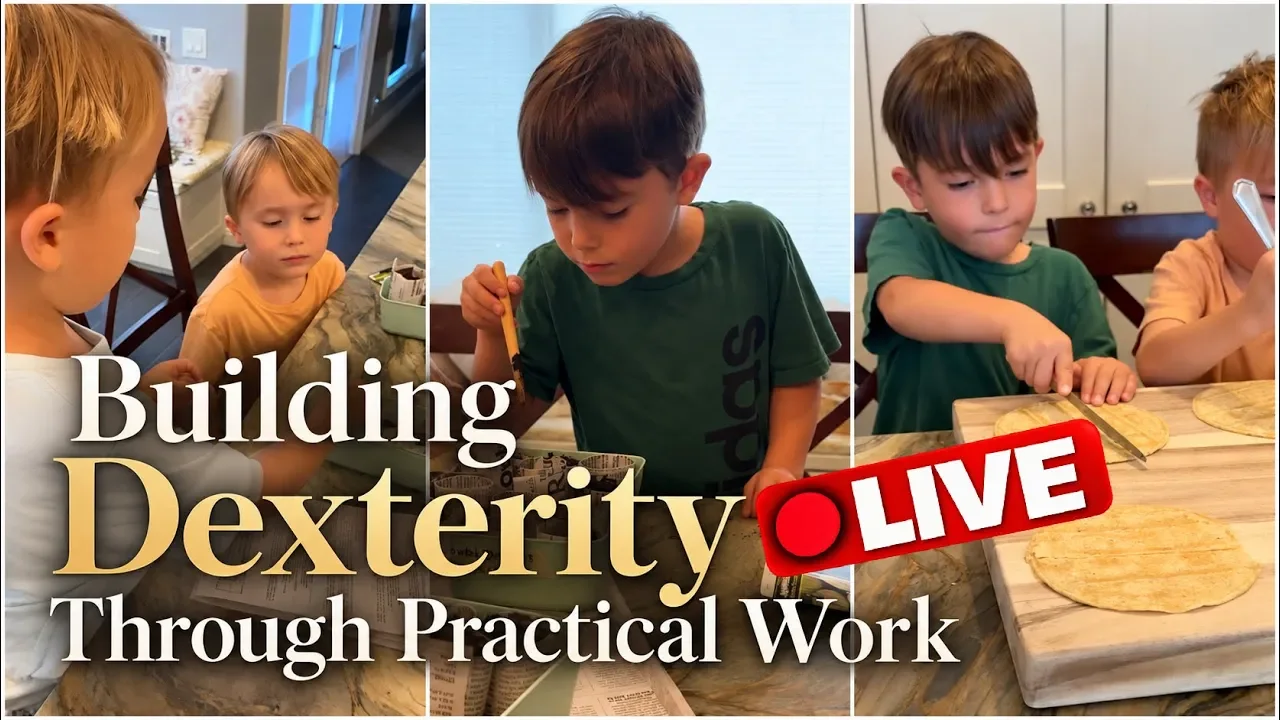
Building Dexterity Through Practical Work | Day 3
Our main project for the day was gardening. We used a simple tool to make newspaper seedling pots, and my 11-year-old nephew became so proficient that he made nearly 50 of them. My mother was visiting us this week and brought a bag of seeds, so everyone was able to choose what they wanted to plant. The triplets carefully filled their pots with soil, made small holes for their seeds, planted them, and watered them.
-
![]()
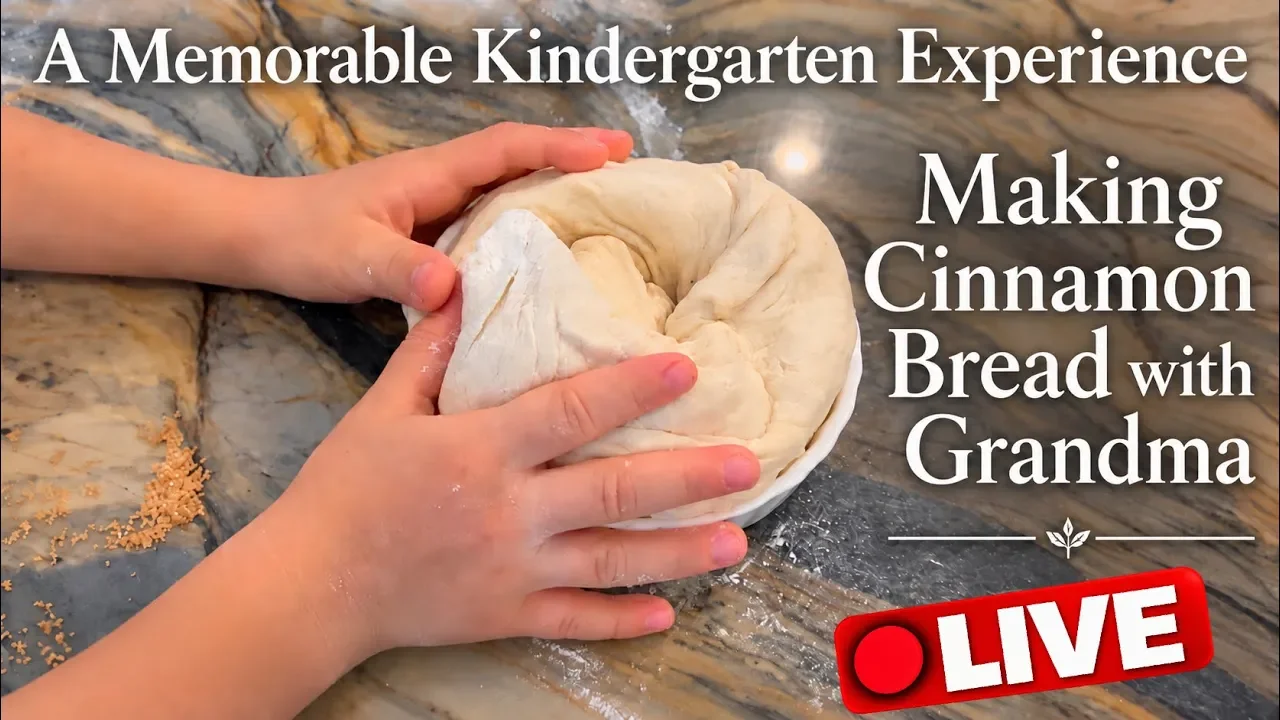
Cinnamon Bread with Grandma | Day 4
This week we made cinnamon rolls. I had already prepared the dough ahead of time, but before the morning was over the children also made another batch of dough that we would use the following day to make homemade pizza. I love when one lesson naturally flows into the next and the children can see that the work they're doing today becomes part of tomorrow's activity.
-
![]()
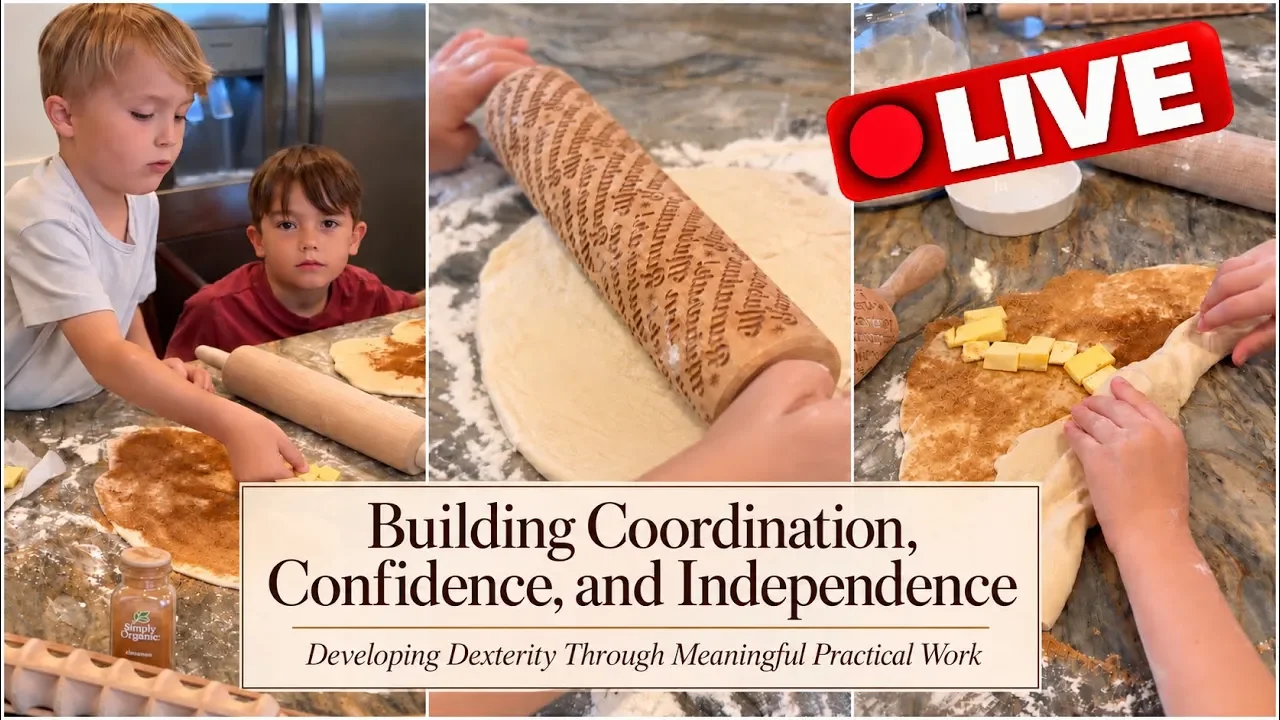
Building Coordination, Confidence, and Independence | Day 4
Our fourth day together centered around one of my favorite parts of kindergarten: working together in the kitchen. Every class includes some kind of cooking or baking because kindergarten is really about participating in the work of the home. Alongside those everyday tasks, we're also doing projects that strengthen fine and gross motor skills, develop the imagination, and meet the children where they are developmentally.
-
![]()
Hands-On Learning Together with Grandma | Day 5
After cleaning up the wool, we moved on to our cooking project for the day: homemade pizza using the dough the children prepared the day before. Each child received a piece of parchment paper, a little flour, and their own portion of dough. They flattened the dough with their hands before adding sauce and toppings.
-
![]()
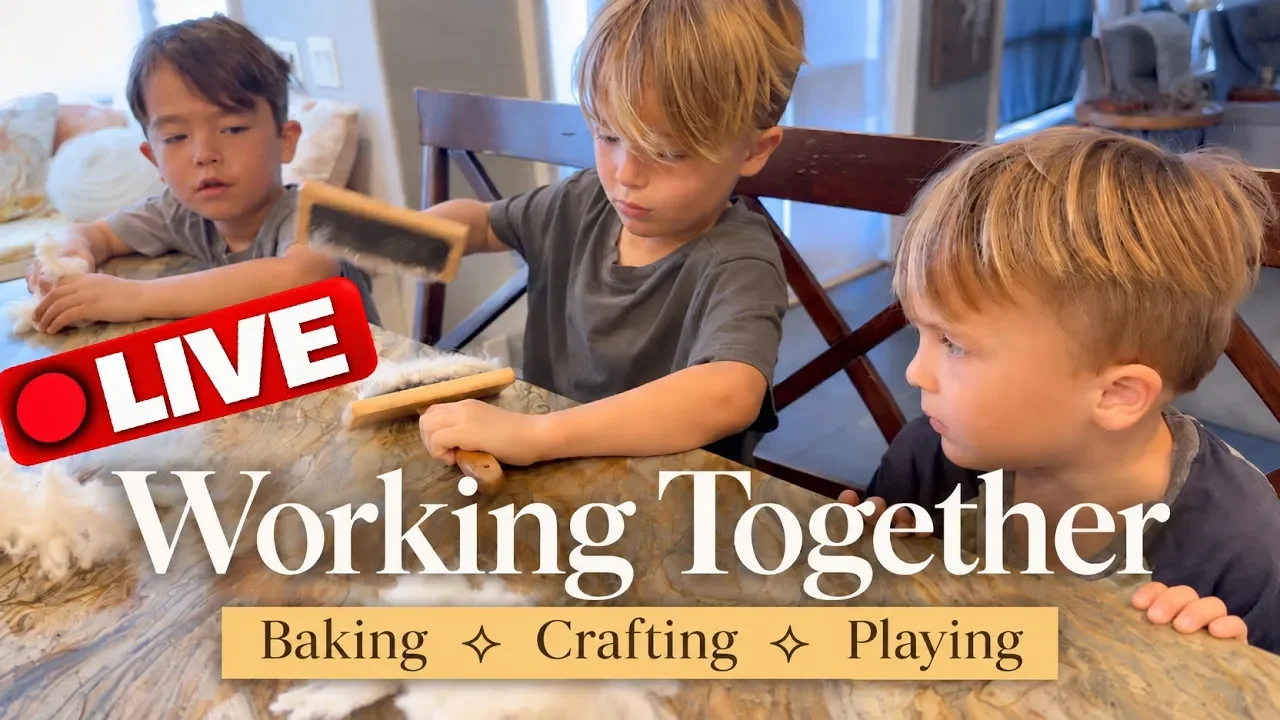
Observing Children Through Everyday Work | Day 5
We began our morning with play before heading into the kitchen for some practical work. Our first project was preparing raw wool for wet felting. Before we can turn the wool into felted balls, it needs to be cleaned and carded. The children carefully picked through the raw wool, removing all the little bits of debris before using small bamboo carding brushes to prepare the fibers.
-
![]()
Remember When KG Was All About Play? | Day 6
Today we continued a project we started last week when the children cleaned and carded raw wool. We're using that wool to make wet felted balls. I prepared the cores ahead of time using leftover pieces of felt and yarn, and then the children wrapped their carded wool around them.
-
![]()
Wet Felted Wool Balls | Day 6
I've done this project with children of different ages, and I've learned that demonstrating is much more effective than giving a lot of verbal instructions. I also found that if I get each child's project started and make sure the wool is beginning to hold together, they can continue quite successfully on their own.
-
![]()
Our Third Week | Day 7
I had actually prepared a watercolor activity for them, but they were playing so beautifully that we decided not to interrupt them. My 15-year-old daughter brought out some of the dress-up clothes my own children played with when they were younger, along with some pirate money, and she kept them engaged for quite a long time.
-
![]()
Imaginative Play in KG | Day 7
Our seventh day homeschooling my four-year-old triplet nephews began in our kindergarten room, which is really starting to come together. I recently finished building a little shelf and have been filling the space with things from our homeschool room along with a few things I've purchased specifically for the children. We meet twice a week for two hours, although I'm quickly realizing that two hours never feels like enough time.
-
![]()
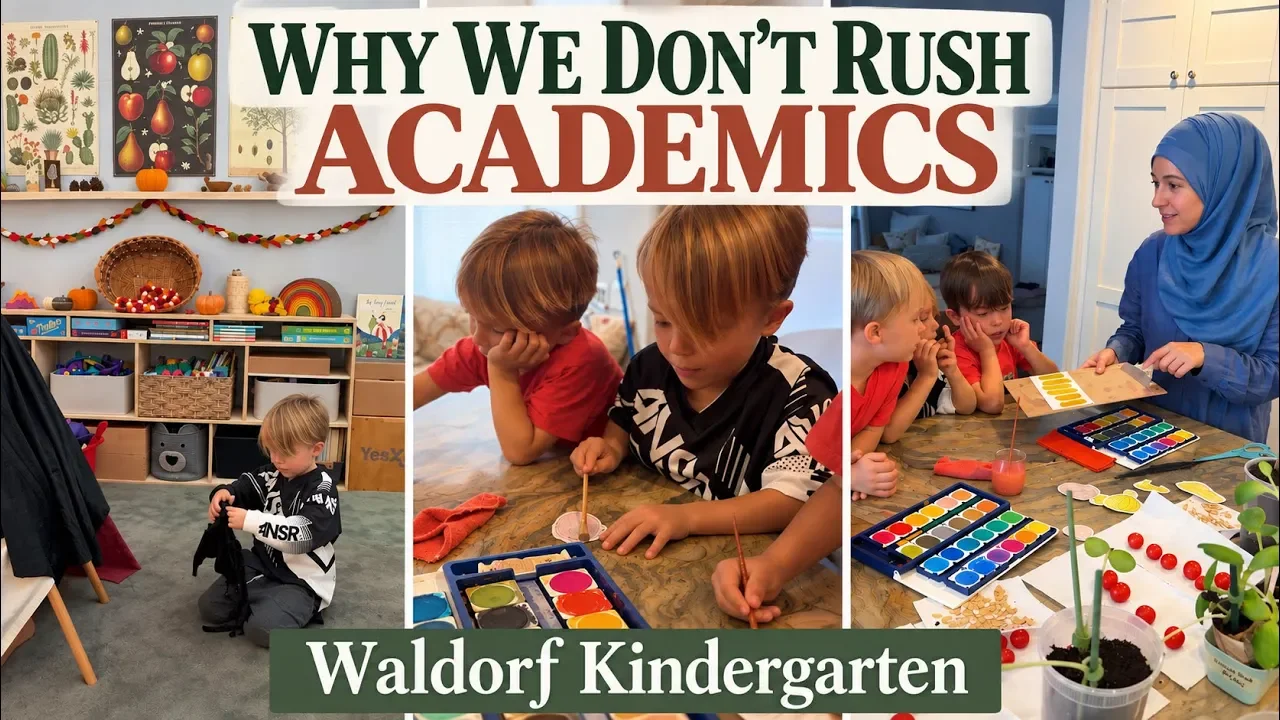
Why We Don't Rush Academics | Day 8
With the triplets, I am not concerned with bringing academics too early. At this age, we are building the foundations they will need for later academic work through movement, fine and gross motor skills, practical work, imaginative play, stories, poems, verses, and beautiful language. Literacy is already present through the rich vocabulary and rhythms they hear throughout the day.
-
![]()
Indoor Gardening Projects | Day 8
Each child was supposed to transplant one seedling, but when one of the children selected a little pot containing two seedlings, everyone else wanted two as well. Once the other children had their two seedlings, the first child wanted another pot, which meant he now had three plants. Naturally, the other two children noticed immediately! Everything needs to be either the same or completely different, and they are very particular about making sure everyone has their fair share!
-
![]()
Fine Motor Skill Development for 4-Year-Olds | Day 9
Today was only their second wet-on-wet watercolor experience, and we introduced the color red. During our first painting session, we worked exclusively with yellow, and now we are allowing the children to experience red on its own. My 11-year-old nephew also participated in the same single-color painting activity, although he approached his work a little differently.
-
![]()
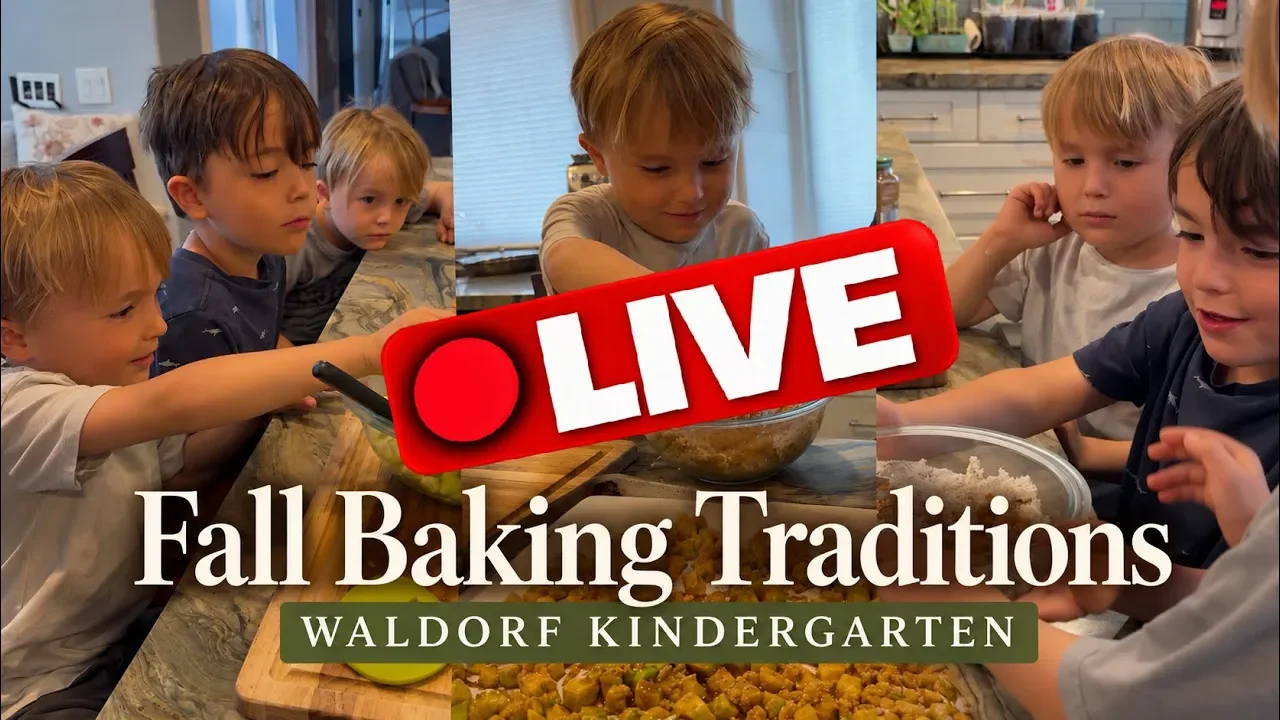
Fall Baking Traditions | Day 9
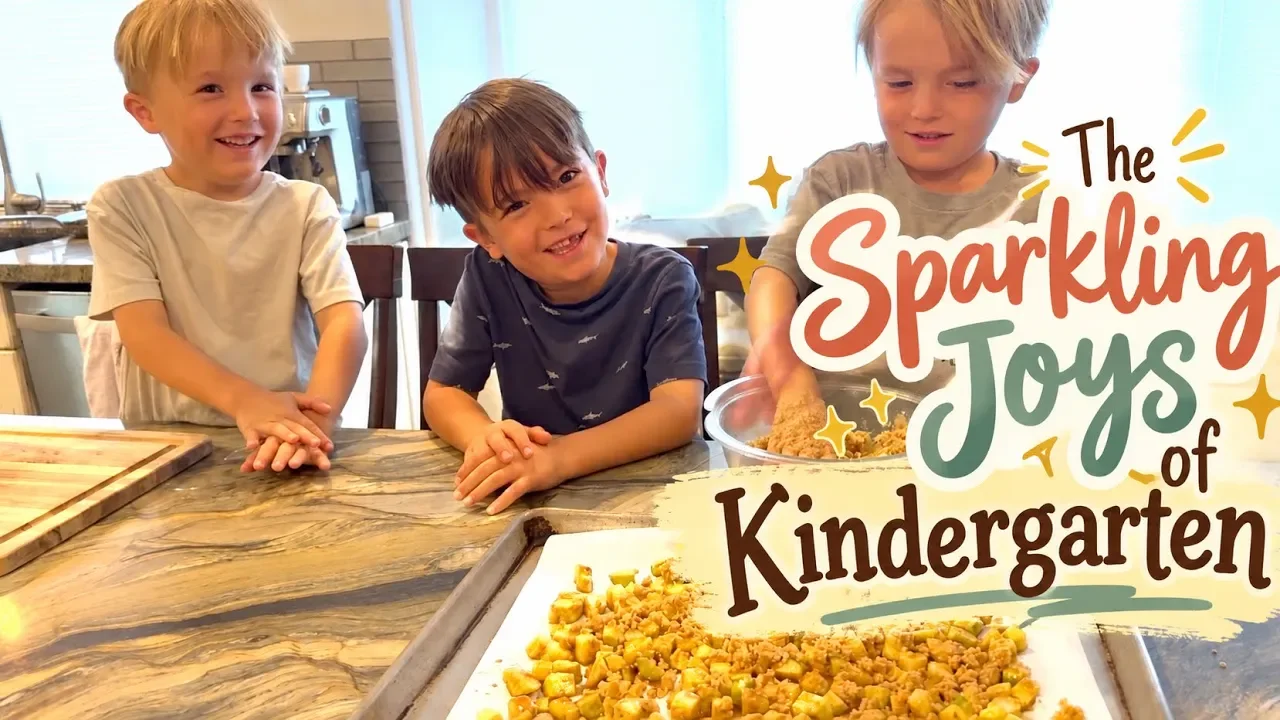
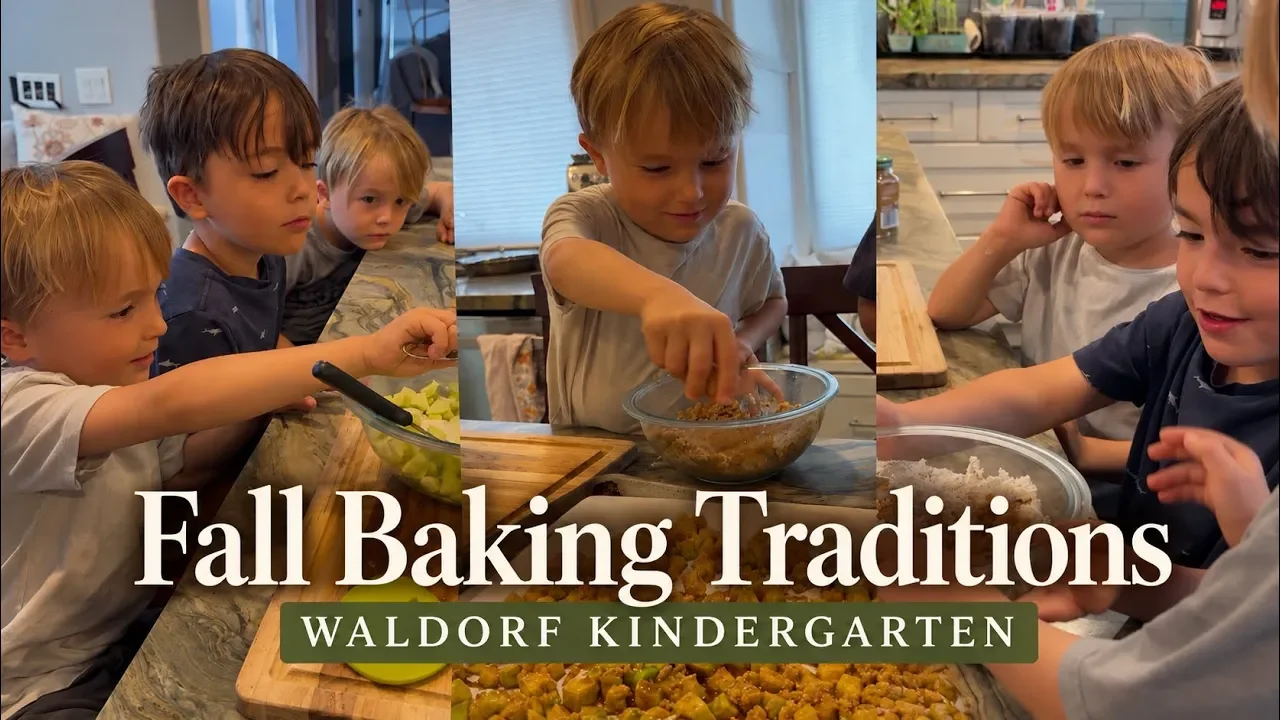
Another beloved kindergarten tradition is baking! Today, my 15-year-old daughter led the children in making a delicious apple crumble with cinnamon. I love incorporating seasonal recipes into our homeschool days, especially during the fall when the beautiful aromas of apples and warm spices fill our home. Our sense of smell is strongly connected to memory, and I hope these familiar scents will become part of the beautiful childhood memories the children carry with them as they grow.
-
![]()
What Kindergarten Should Really Look Like | Day 10
Each class continues to remind me that kindergarten does not need to be filled with complicated projects. There is so much development happening through practical work, sensory experiences, storytelling, gardening, cooking, handwork, and most importantly, time for meaningful imaginative play.
-
![]()
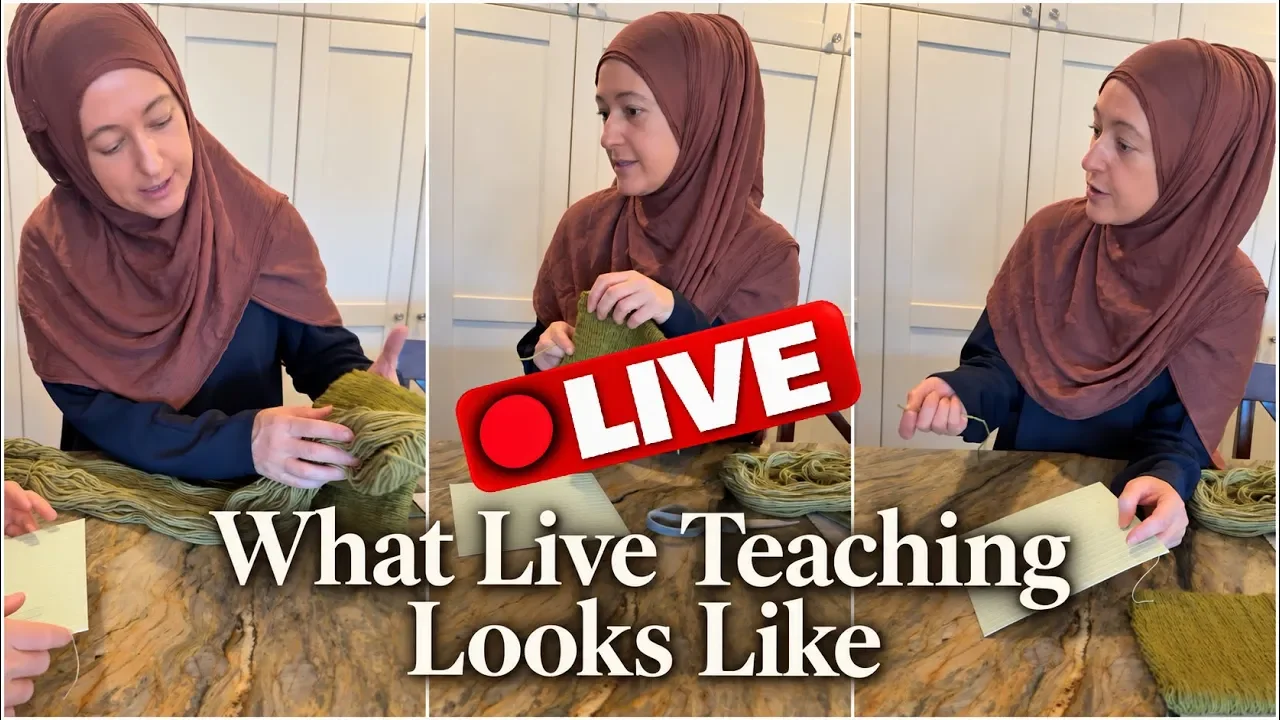
What Teaching Looks Like in Our Homeschool | Day 10
We returned to our weaving project. I demonstrated how to work over and under the warp threads, showing the children how the pattern alternates as they move across the weaving. We began with our hands before introducing a needle, giving them time to understand the movement and rhythm first.
-
![]()
Morning Circle | Weather Peg Dolls & Fall Basket | Day 11
The first thing they wanted to do was crack walnuts. I have this beautiful wooden walnut cracker, and each child took a turn cracking a walnut. We tried to keep the shells intact because I would love to turn some of them into little walnut-shell sailboats later. Even something as simple as cracking nuts becomes such satisfying work for young children.
-
![]()
Fall Circle Time | Day 11
We start into the kindergarten room where we are beginning to establish a really lovely rhythm for the start of our day. We begin with our weather gnomes so the children can observe what the weather is like, and we also use our calendar gnomes to find the day of the week and the season. I love having these simple little rituals at the beginning of class because they create such a gentle transition into the rest of our morning.
-
![]()
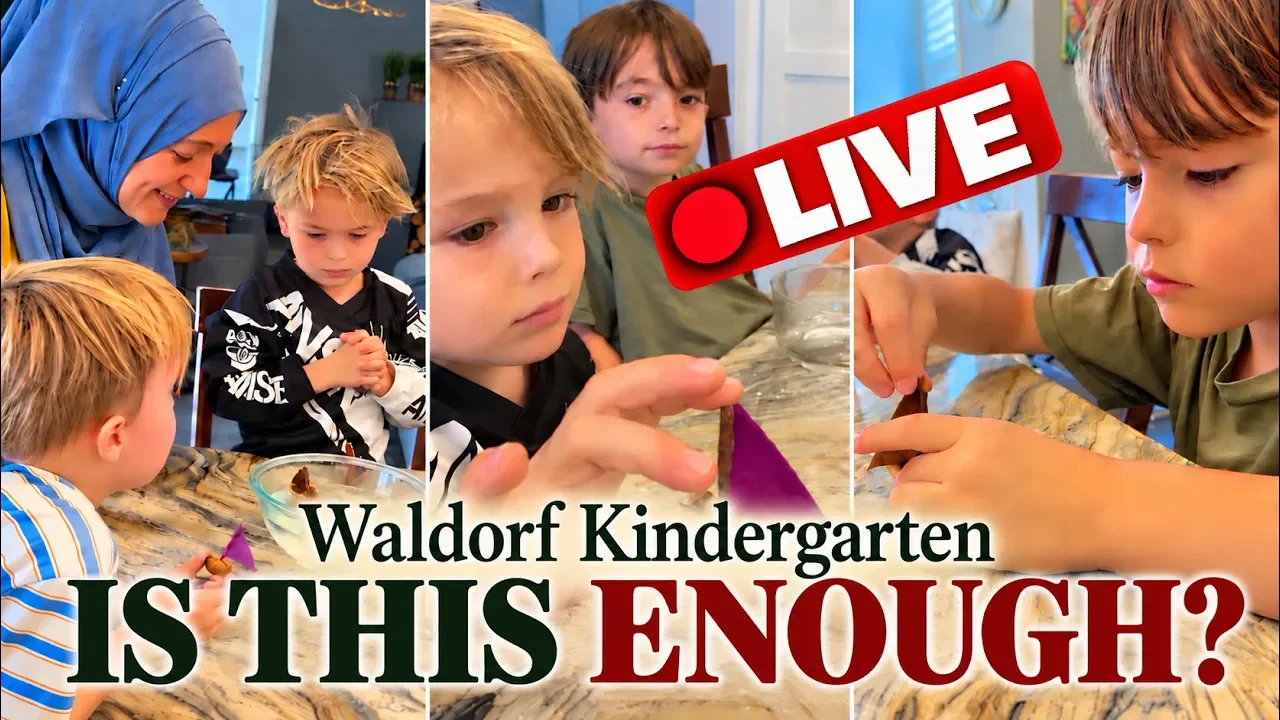
Is This ENOUGH for Kindergarten | Day 12
After pizza and blueberries, we moved on to our walnut sailboats. The children chose pieces of 100% wool felt for their sails, and we used small twigs for the masts. Next time we go on a nature walk, I want them to collect their own twigs because I already know this is an activity they are going to want to repeat.
-
![]()
Kindergarten 2.0 | Day 12
The children used Lyra opaque watercolors to paint the base coat of their peg dolls. They are becoming so comfortable with using their paintbrushes, washing them, drying them, and moving between colors independently. Once their base coats were finished, I added the finer details, including a little leaf on the front, and they chose the color of wool felt they wanted for their hats.




Reels & Shorts
-
![]()
Kindergarten Day 1
Day 1 of homeschooling my triplet nephews for Kindergarten. My sister-in-law is the best! She’s on board with all the plans, even when I over plan we don’t get to everything. She’s perfectly supportive and honors my enthusiasm beautifully! Even when I make mistakes, she’s relaxed about the outcome which is such a relief as I navigate these truly fun years all over again. I have to say I’m equally excited about my 11-year-old nephew joining as well. Some of the most engaging projects are with him. I just don’t know how to split my time because we keep running out of time!
-
![]()
Setting up our lesson for kindergarten today!
Welcome to our Thursday, August 27, 2026 Homeschool day! Today I am are working with my four year-old triplet nephews for our TK/kindergarten experience. We still have a lot of preparation to do like building our bookcase which I’m doing with my 10 year-old nephew and organizing and decorating our school space. Today we have a lot of “wet” activities and painting activities planned. We’re doing wet on a wet water coloring, a pumpkin. There’s a tutorial on my YouTube channel from years ago.
-
![]()
What Waldorf KG Looks Like at Home | Day 3
Welcome to our Tuesday, September 1, 2026 Homeschool day! Today is a kindergarten day! I am homeschooling my triplet nephews who are four years old twice a week for two hours a day and I have to tell you it is not enough time! They are truly amazing students as they follow directions well, wait patiently for their return or tools and are fully engaged in our projects.
-
![]()
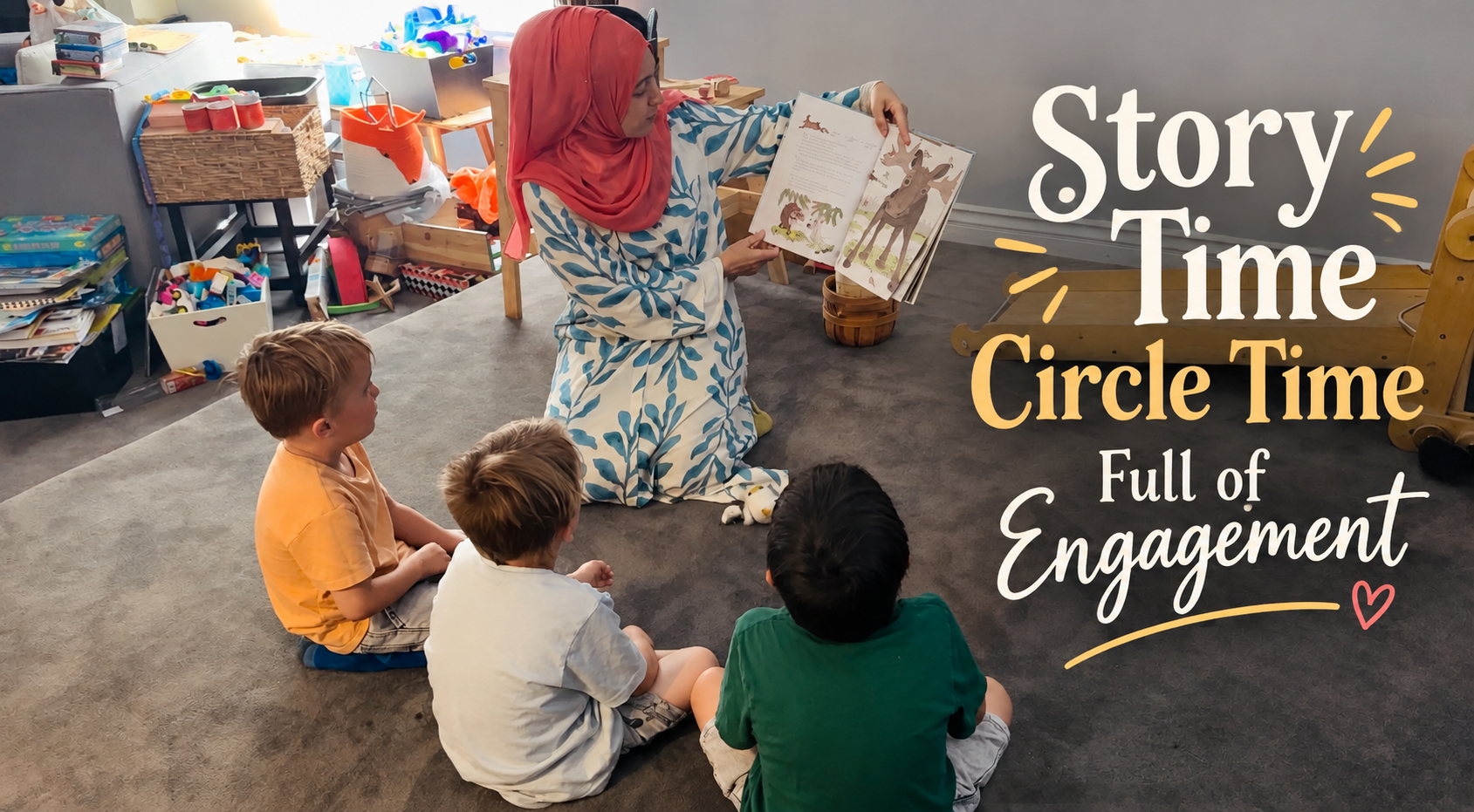
Story Time | Day 3
This is the reality of my homeschool: I'm prepared in some ways and not prepared in other ways. How would I have been prepared for this story time? I would have memorized the story, practiced it ahead of time and had all the props ready. The reality? I didn't even open the book before reading it to the children for the first time; thankfully it turned out to be the perfect seasonal book for the fall.
-
![]()
Waldorf Kindergarten Lesson Plan | Day 4
One of the things I love most about Waldorf kindergarten is that it simply reflects real life. There is no better place to experience that than in the home, surrounded by multiple generations working together. My four-year-old triplet nephews join me a few days each week for our Waldorf-inspired kindergarten, along with their 11-year-old brother. This week my mother is visiting, so she was able to join us as well.
-
![]()
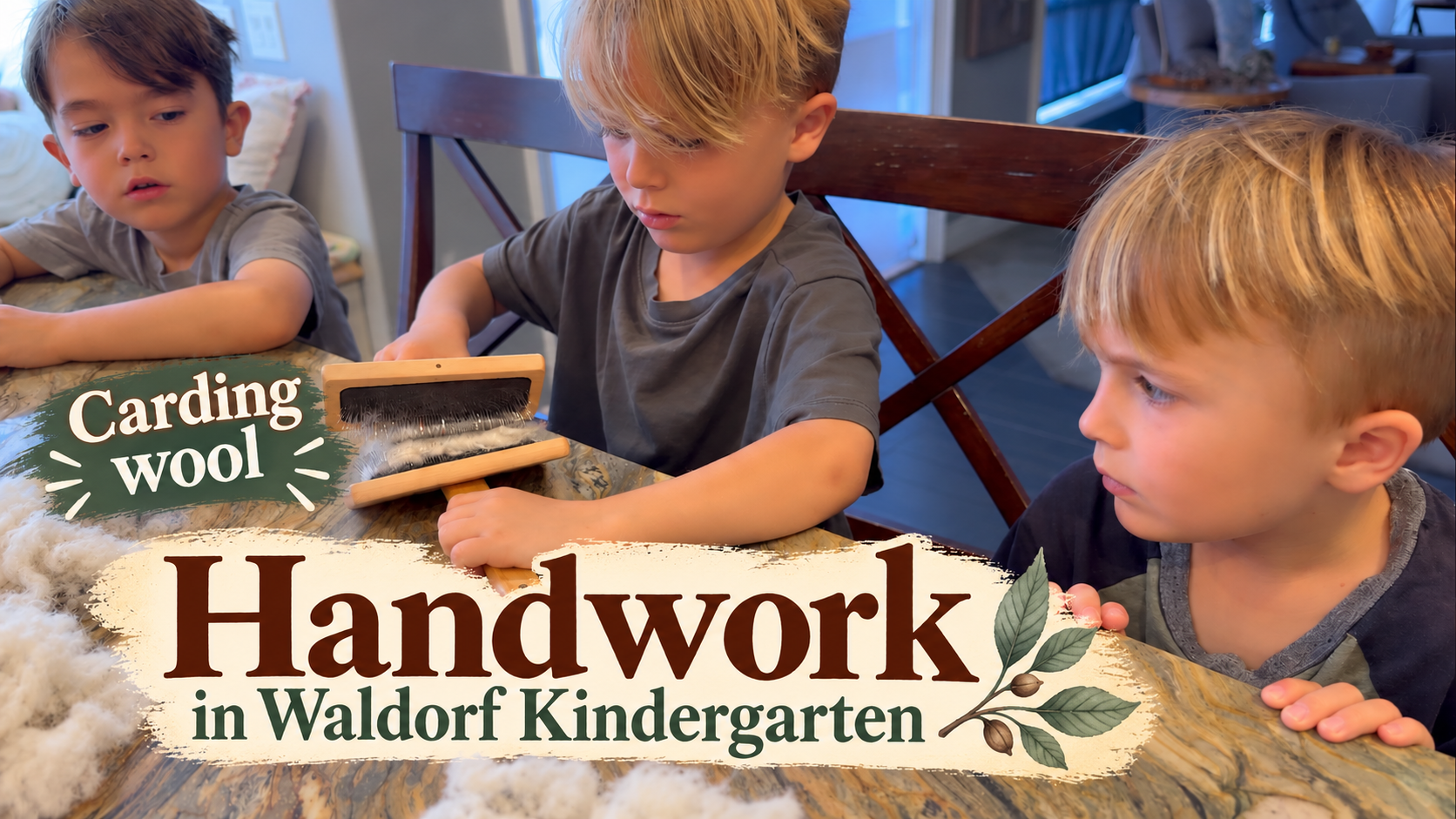
Waldorf Kindergarten | Wool Carding Day 5
Today we continued a project we started last week when the children cleaned and carded raw wool. We're using that wool to make wet felted balls. I prepared the cores ahead of time using leftover pieces of felt and yarn, and then the children wrapped their carded wool around them.
-
![]()
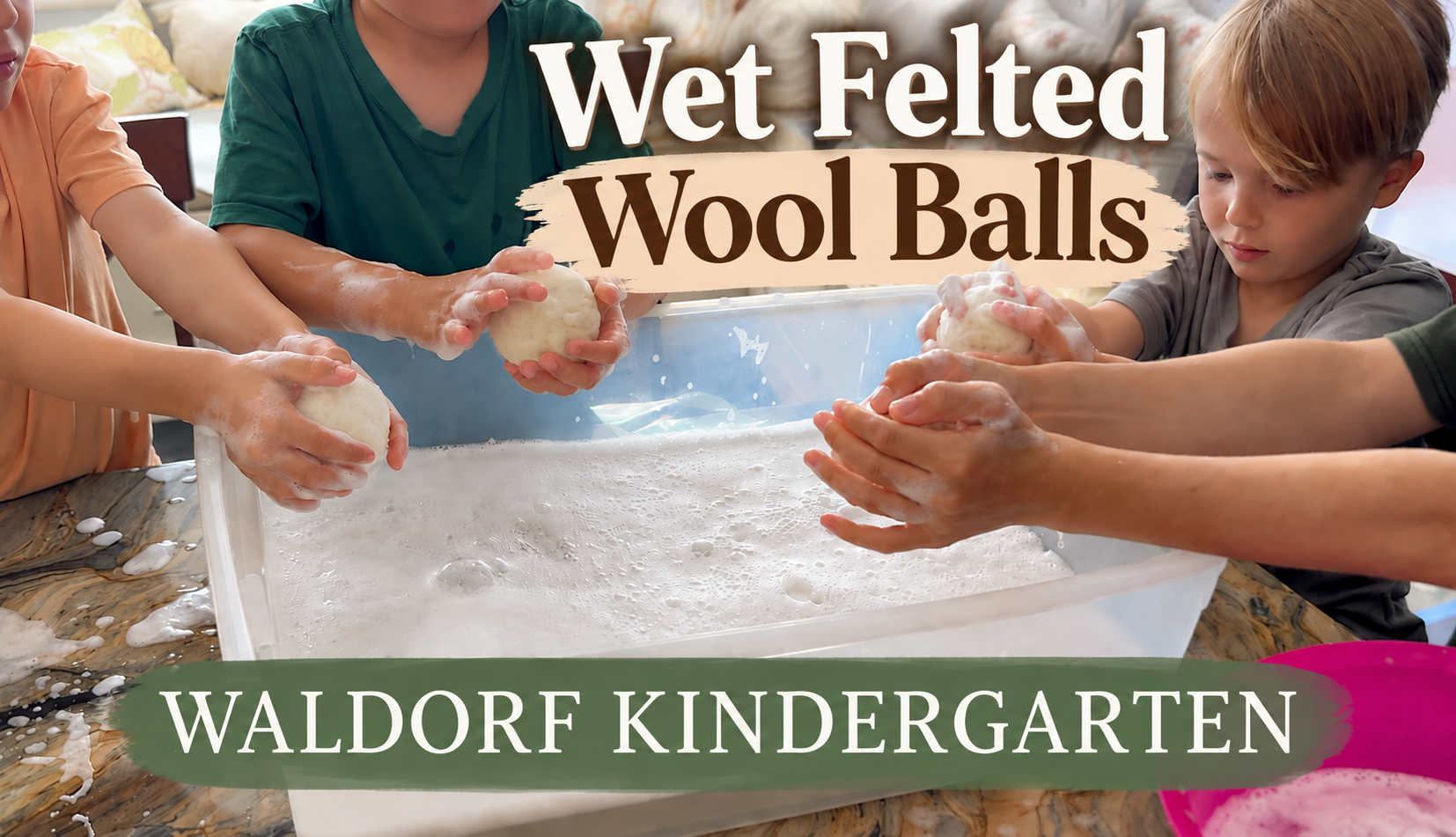
Wet Felted Wool Balls | Day 6
Welcome to Day 6, September 9, 2026, of homeschooling my triplet nephews, who are four years old, using a Waldorf inspired kindergarten approach! We meet twice a week for two hours, and today we are working with wool to make wet felted balls.
-
![]()
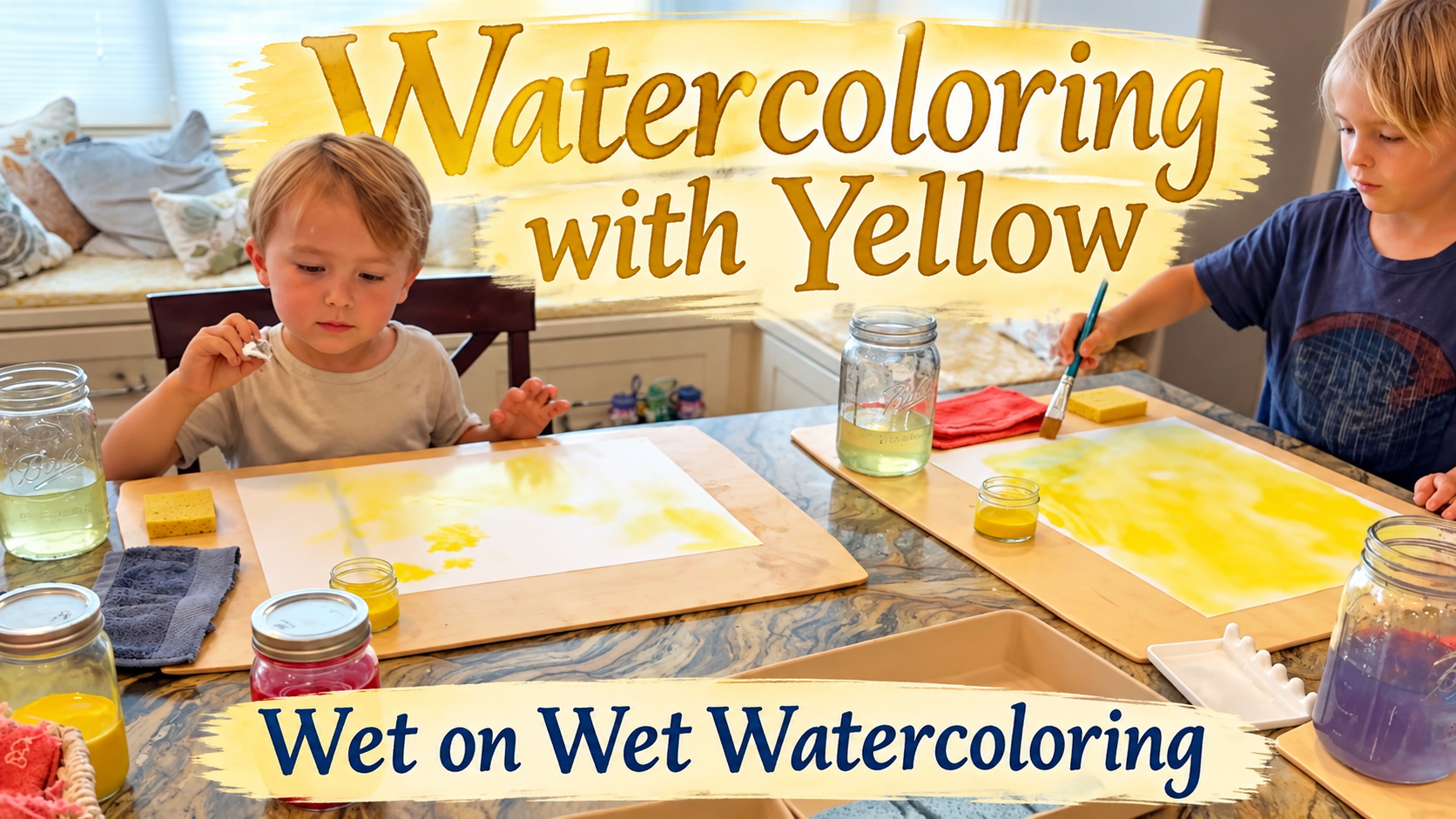
Watercoloring with Just Yellow | Day 7
Welcome to Day 7, September 10, 2026 of homeschooling my triplet nephews, who are four years old, using a Waldorf inspired kindergarten approach! Our little kindergarten space is coming together so beautifully. I have transformed our unused dining room into a cozy space where the children can play, explore, and participate in our daily activities.
-
![]()
Preparing for Gardening | Day 8
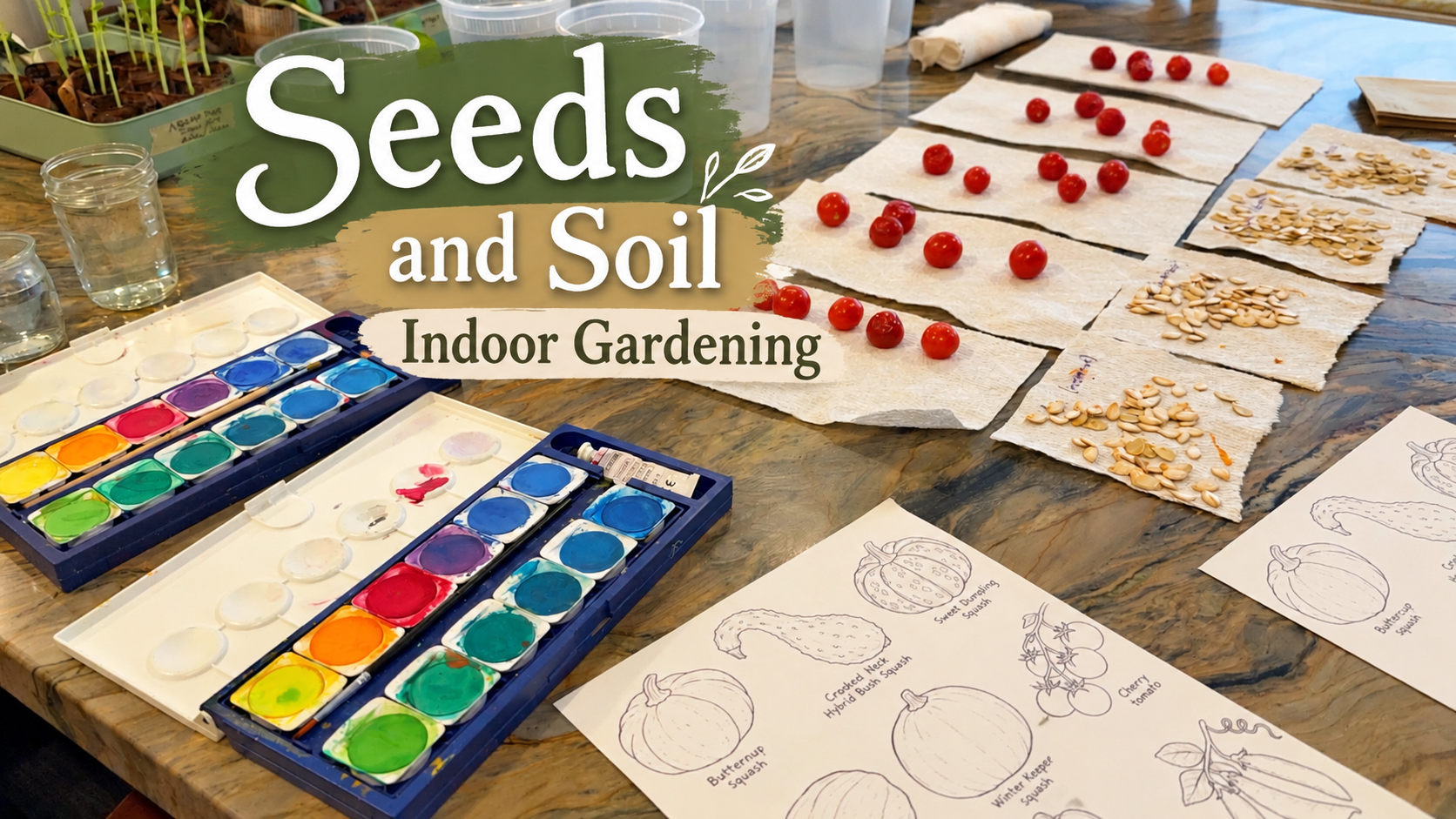
Today we’re continuing some of the work we’ve started over the last few weeks. We saved seeds from our butternut and acorn squash, and I printed out drawings of the different vegetables for the children to watercolor. We’re also collecting more cherry tomato seeds and transplanting the seedlings they planted a few weeks ago, which have been growing so well. Since our front and backyard are being landscaped right now, we’re moving them into larger pots until we can eventually get them outside.
-
![]()
No Academics Kindergarten | Day 8
We are continuing with our gardening projects, even though our backyard is currently being landscaped and we do not have an outdoor space available for planting. Instead, we are bringing our gardening activities indoors and working together at the kitchen table. I love that these experiences remind us that you do not need a backyard or a large garden to introduce young children to gardening.
-
![]()
Fall Baking, Watercoloring & Gardening | Day 9
Our kitchen activity today was making a delicious apple crumble! My 15-year-old daughter led the children through this fall baking project, giving each child an opportunity to add ingredients, stir, and participate in preparing our snack. I love incorporating seasonal recipes into our homeschool days, especially the beautiful aromas of apples and warm spices that fill our kitchen during the fall.
-
![]()
Developmentally Challenging Lessons | Day 10
The weaving was simply too advanced for the younger children at this scale. They were very intent on doing it correctly, and whenever they noticed a mistake, they became frustrated. The interesting thing is that the mistakes really would not have mattered. Their bags still could have turned out beautifully. But at four years old, following the over-under pattern on such a small loom required quite a bit of visual tracking, coordination, and concentration.
-
![]()
Autumn Morning Basket
Our Waldorf-inspired kindergarten is beginning to feel so beautifully seasonal. I’m homeschooling my four-year-old triplet nephews, and one of the things I have been enjoying most is bringing out materials and projects that I haven’t used in so many years.

First Day of Kindergarten
Tuesday, August 25, 2026 | Day 1
Today, Tuesday, August 25, 2026, was our very first day homeschooling my triplet nephews, who are four years old, and I quickly remembered that everything takes more time with younger children, especially when there are three of them. Their older brother joined us for many of the activities, my sister-in-law was here, my daughter helped throughout the day, and together we began what I know is going to be a wonderful season of learning.
We started our morning by making breakfast together. I wanted each of the boys to crack their own egg, something they had never done before, and although we had to fish quite a few shells out of the bowl, they absolutely loved it. Looking back, I realized that many activities work better when every child has their own materials. Next time I'll have three bowls, three eggs, and three whisks so they can all whisk for as long as they'd like. It turned out to be wonderful practice for both fine and gross motor skills, and the egg burritos made the perfect first-day breakfast.
The rest of the morning was filled with meaningful work that will connect to projects throughout the season. We gathered rosemary needles and twigs for a natural dye project we'll do later, started a batch of decaf Joshua Tree cold brew coffee, removed tomato seeds for planting, and saved apple seeds to inspect and plant in a future lesson. I love when one activity naturally leads into another and the children begin to see how everything is connected.
One of our favorite projects was making an apple pie together. Rather than worrying about exact measurements, we measured with our hearts. I wanted every child to smell each ingredient, take a turn adding it to the bowl, and help mix everything together. We used apples, lemon juice, cinnamon, vanilla, sugar, and a pre-made pie crust, although I would love to make the pie crust from scratch with them in the future. They couldn't eat this pie because it needed to bake after they left, so before our next class I made another apple pie sweetened with maple crystals from Wilderness Poets instead of brown sugar. They thoroughly enjoyed it, and I think we'll be making many more apple treats this fall.
One of the things I loved most about the day was having children of different ages working together. My older nephew participated in every activity right alongside the younger boys, and even the adults joined in. Multi-age learning has always been one of my favorite parts of homeschooling. The younger children have something to look forward to, while the older children get to revisit activities they loved when they were little.
We ended our day with movement and balance work before gathering together for a story using some simple props I had made previously. It was the perfect way to bring the morning to a peaceful close.
All in all, it was a wonderful first day. We learned together, cooked together, planted seeds for future projects, and enjoyed the simple rhythms of early childhood. It reminded me that with young children the process is always more important than the product, and I can't wait to share more of our TK and kindergarten homeschool journey throughout the season.
2nd Day of Kindergarten
Thursday, August 27, 2026 | Day 2
Our second day homeschooling Waldorf-inspired kindergarten was just as joyful as the first, and once again I completely overplanned. I am homeschooling my triplet nephews, who are four years old, along with their 11-year-old brother, and I am quickly learning that everything takes more time with younger children. We had wet-on-wet watercolor painting planned with beautiful watercolor paper, painting boards, sponges, brushes, and the primary colors ready to go, but we never got to it. And that is perfectly okay because now everything is ready for another day.
We started with some of the materials I've been gathering from my school room, including Lyra watercolors, wooden pieces, wool for felting, washcloths, and some beautiful new silks from Sarah's Silks. I also baked another apple pie before the children arrived because last time the pie finished baking after they had already gone home. This time I wanted them to walk in and smell that beautiful apple pie and actually be able to enjoy it. I used maple crystals instead of sugar and baked the pies in tiny dishes. I should have made more because they ate every bit of them.
We began by lighting a candle, with my older nephew doing the honors. Even though we are in Southern California and it is still blistering hot, I pulled out a few fall decorations because we are going to enjoy the season whether the weather cooperates or not.
One of our first projects was painting tiny wooden mushrooms. I have a card deck showing different kinds of mushrooms, and although red mushrooms with white dots were definitely the favorite, we ended up with a lovely assortment. What I loved most was knowing that these little mushrooms weren't just an isolated craft. They became part of our storytelling later in the day.
We also finally enjoyed the cold brew coffee we had made earlier in the week. It was decaf and organic, and the children had it with a little maple syrup alongside their apple pie. Having food as part of every lesson has been such a joy, and I really want to continue that rhythm throughout the year.
Another project I'm especially excited about is a plain wooden rainbow arch. I originally thought I would paint it myself in beautiful desert colors, but then I realized it would be much more meaningful to make it together. Our kindergarten space isn't completely set up yet, and that is intentional. Throughout the year, my older nephew and I are going to do some carpentry and build a bookcase where we can store all of these beautiful materials we're making, finding secondhand, or borrowing from my school room.
We also planted the tomato seeds the children had removed earlier in the week. We used mason jars with a little insert at the top and string that reaches down into the water. The children filled them with soil, compost, and coffee grounds and planted about three tomato seeds in each jar. Almost all of them sprouted, which made this such a satisfying continuation of something we had started during our first lesson.
I'm also realizing that the children really want to take something home after every class. They ask to take pieces of nearly everything we're working on, so I think I'm going to make that part of our rhythm and intentionally include something small they can bring home each time.
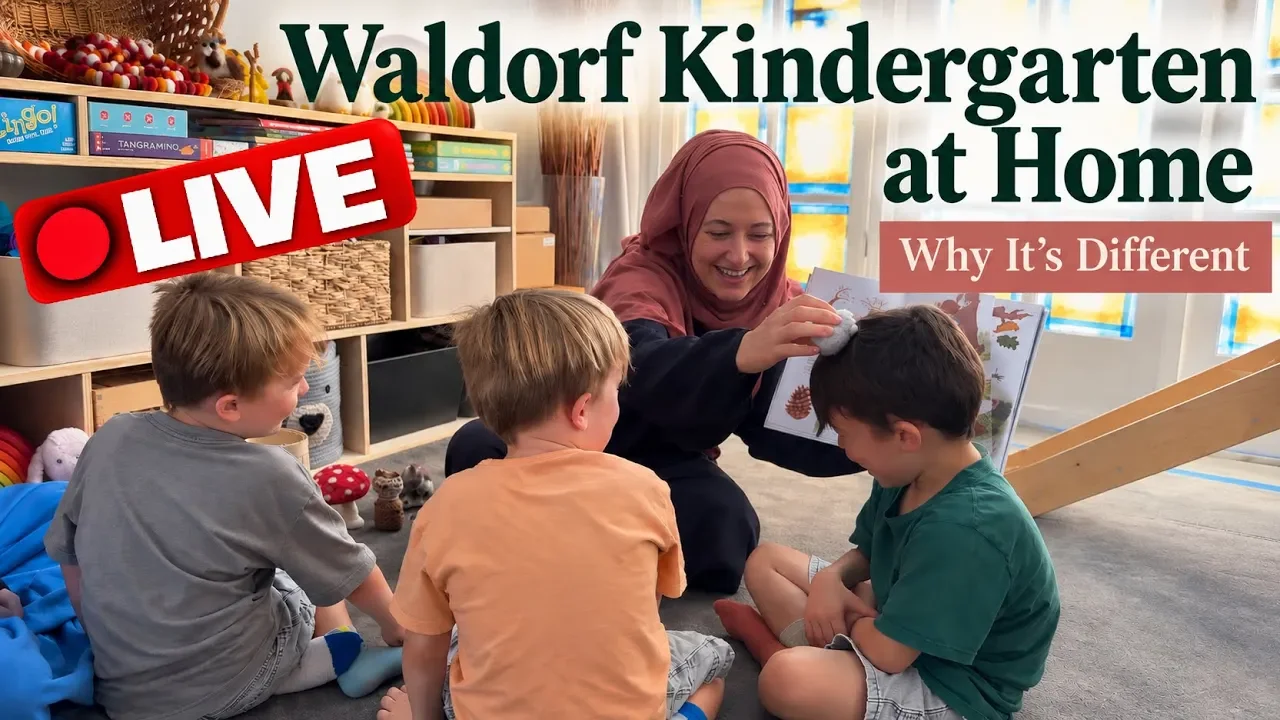
We finished with our story, The Hedgehog Leaves Home. We read just a few pages at a time, and this time the children were able to add their newly painted mushrooms into the storytelling. We also included an owl that we felted earlier in our homeschool journey. They love being part of the story rather than simply listening, and that is one of my favorite things about teaching young children. They are so bright-eyed, curious, and completely engaged.
By the time it was time to go home, everyone wanted a washcloth and even the little paper-bag mats we had been using. I thought that was adorable, so with my sister-in-law's help, I made a few more before we said goodbye.
It was another full, beautiful day of cooking, painting, planting, storytelling, and making things together. We didn't accomplish everything I planned, but I think that may become part of the rhythm of this season: planning plenty and then allowing the children, the work, and the day itself to decide where we actually go.
Day 3 of Waldorf Kindergarten | What I've Learned So Far
Tuesday, September 1, 2026 | Day 3
Our third day, Tuesday, September 1, 2026, together reminded me once again that the best kindergarten lessons grow naturally out of everyday life. We started the morning with another batch of our organic decaf cold brew coffee. There was still a little left from our previous lesson, so the triplets enjoyed a small cup before we began our first project of the day.
My mom was visiting this week, and she arrived with a whole bag of seed packets, which made the perfect inspiration for another planting lesson. My older nephew took on the job of making newspaper seedling pots while the triplets filled them with soil. Using a simple wooden pot maker, he wrapped newspaper around the mold, pressed it into shape, and made nearly fifty little seedling pots. The triplets each chose their own seed packets, planted two or three seeds in every pot, covered them with soil, and carefully followed each step. We planted a variety of squash and beans, even though it isn't quite the right season. The experience itself was what mattered, and we'll certainly do it again when the timing is better.
One of the things I'm noticing already is how much the children enjoy making things they can take home. They seem to love the projects even more than the toys, and these first few weeks are giving me the opportunity to simply observe. I'm watching how they interact, what naturally interests them, what skills they're already developing, and where I can gently support them. Honestly, I don't see many areas that are lacking. There are certainly things I want to incorporate from my Waldorf teacher training, but right now it feels like we're simply living life together, and that seems exactly right for kindergarten.
Another thing I've been so impressed by is how naturally they participate in caring for their environment. After every project comes the cleanup, and they're sweeping, mopping, wiping the tables, washing their hands, and putting everything away. Those everyday tasks are just as important as the projects themselves. Caring for our space is part of life, and that is very much part of kindergarten.
I've also learned something about myself. I have a very hard time saying no. I already knew that, but these little boys have certainly confirmed it. They want to take every project home, even the ones I had planned to keep here, and it is incredibly difficult for me to refuse. My sister-in-law and I have come up with a simple solution. They'll take something home after each lesson, enjoy it for a while, and then she'll quietly bring it back before the next class. It keeps everyone happy, although I suspect learning to say no may become one of my lessons this year. Then again, I'm not only their kindergarten teacher, I'm also their aunt, and I think that gives me permission to say yes a little more often.
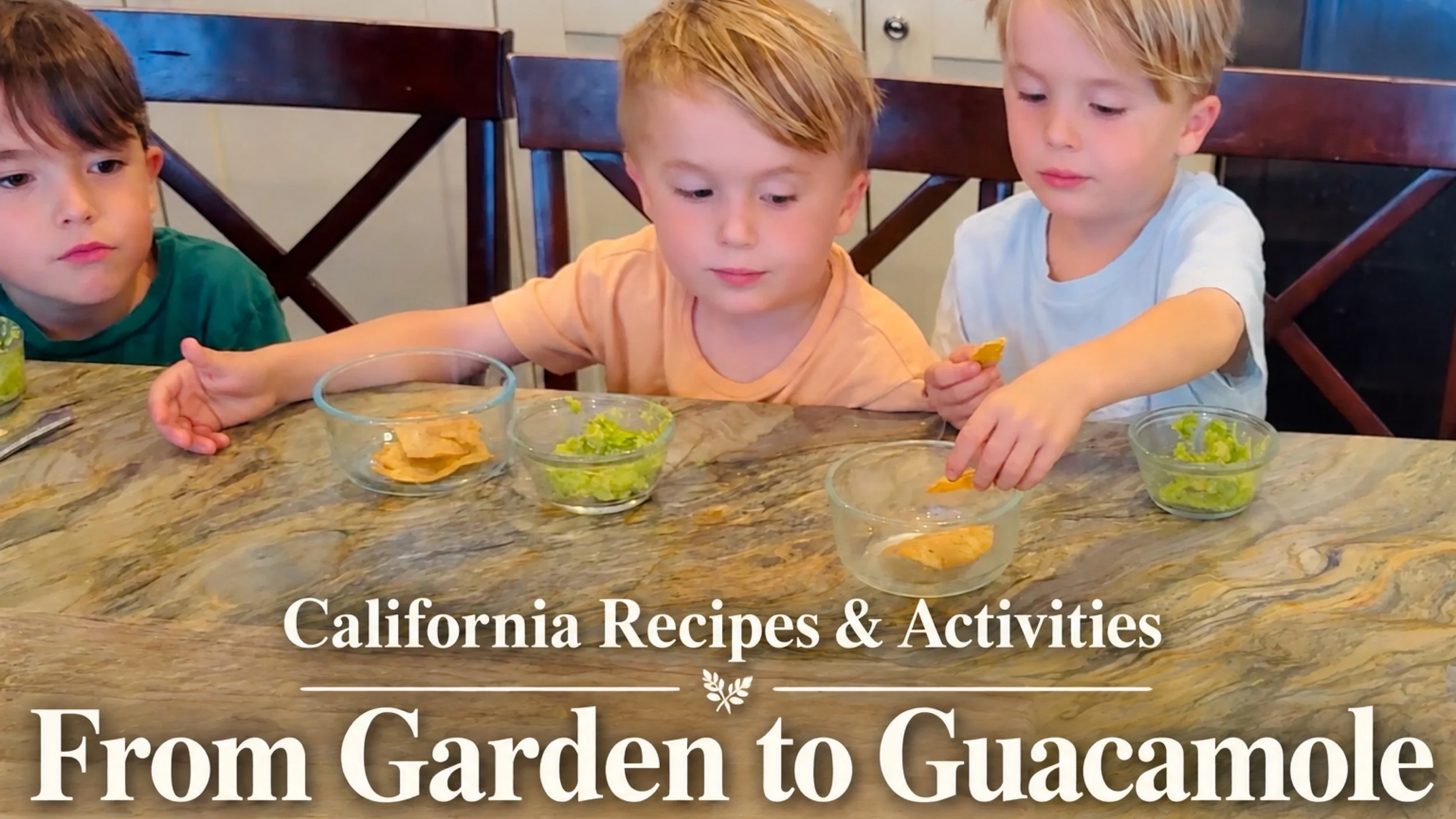
We also spent time making guacamole and tortilla chips together. Besides being a delicious snack, we were saving all of the avocado pits and skins for a natural dye project we'll be doing later this season. Earlier we had already collected rosemary, and now we're simply waiting for our silk and wool to arrive so we can begin dyeing. I love how these projects connect with one another over time. Something we cook today becomes part of an art lesson weeks later.
The one challenge I'm discovering is time. I love including food in our lessons, but with only two hours twice a week, we simply run out of time. Today's lesson went about forty minutes longer than planned, just like the previous lesson did. I may need to become much better at time management, or perhaps the better solution is simply to make our lessons three hours instead of two. I'll have to talk with my sister-in-law about that because, so far, twice a week has been wonderful, but I can already see myself wishing we had even more time together.
We ended our morning the way we've begun to establish as part of our rhythm, by reading a few more pages from The Hedgehog Leaves Home. Each lesson I bring another small prop to accompany the story, and I love watching the children become more and more engaged. Little by little, we're building the rhythm of our kindergarten together, and with every lesson it feels more like home.
Waldorf Kindergarten Vlog | Day 3
Tuesday, September 1, 2026 | Day 3
Our third day, Tuesday, September 1, 2026, of Waldorf-inspired kindergarten was filled with gardening, practical work, cooking, storytelling, and plenty of opportunities for the children to participate in the everyday rhythm of the home.
My triplet nephews are four years old, almost five, and their 11-year-old brother joined us again as we started the day by making another batch of organic decaf cold brew coffee. This has quickly become a little tradition for us, and my older nephew has become quite skilled at preparing it.
Our main project for the day was gardening. We used a simple tool to make newspaper seedling pots, and my 11-year-old nephew became so proficient that he made nearly 50 of them. My mother was visiting us this week and brought a bag of seeds, so everyone was able to choose what they wanted to plant. The triplets carefully filled their pots with soil, made small holes for their seeds, planted them, and watered them.
Even though some of the vegetables we planted are not necessarily ideal for this time of year, I felt that the experience itself was valuable. We will revisit planting again in the spring, but for now the children are learning through doing, observing, caring for something, and participating in meaningful work.
What I especially loved was that everyone joined in. I planted seeds, my mother planted seeds, my sister-in-law planted seeds, and the children planted seeds. This is one of the things I appreciate most about homeschooling and about the kindergarten years. These activities are not simply projects created for children. They are real-life activities that naturally include children of different ages and the adults around them.
I continue to be impressed by the patience of the triplets. They are learning to wait for their turn, follow directions, and work carefully. Watching them pour just the right amount of water into their pots reminded me how much coordination, concentration, and dexterity are being developed through such simple tasks.
After gardening, it was time to clean. The children swept, mopped, and wiped down the counters, and they genuinely enjoyed participating. Sometimes we overlook just how much young children want to be included in every part of the work, including the clean-up afterward.
For snack, we made guacamole and tortilla chips. I am saving the avocado skins and pits for a natural dyeing project later in the season, so even our snack is connected to something we will explore again in the future. I love incorporating food preparation into our lessons because it gives the children another opportunity to participate in the practical work of the home.
We ended our day with our continuing story, The Hedgehog Leaves Home. I have only been reading a few pages each day, and each time another animal is introduced. Somehow, I already had nearly every animal mentioned in the story tucked away in our schoolroom. Each time a new one appeared, the children waited excitedly while I went upstairs to find the matching figure so we could continue the story together.
It has become such a lovely way to close our kindergarten days. The story has a beautiful autumn feeling, which I love incorporating into our homeschool experience, even though Southern California is still very hot and does not always look or feel like the autumn we see in our books.
These two-hour lessons seem to pass so quickly, and today we even went about 40 minutes over. With each day, I am learning more about the children, their abilities, their patience, and the way they respond to the rhythm we are creating. I am also learning quite a bit about myself along the way.
Day three reminded me again that kindergarten does not need to be complicated. Gardening, preparing food, cleaning, storytelling, and participating in the life of the home offer so many meaningful opportunities for young children to learn and grow.
Lesson Plans for Waldorf Kindergarten
Thursday, September 3, 2026 | Day 4
Our fourth day, Thursday, September 1, 2026, together centered around one of my favorite parts of kindergarten: working together in the kitchen. Every class includes some kind of cooking or baking because kindergarten is really about participating in the work of the home. Alongside those everyday tasks, we're also doing projects that strengthen fine and gross motor skills, develop the imagination, and meet the children where they are developmentally.
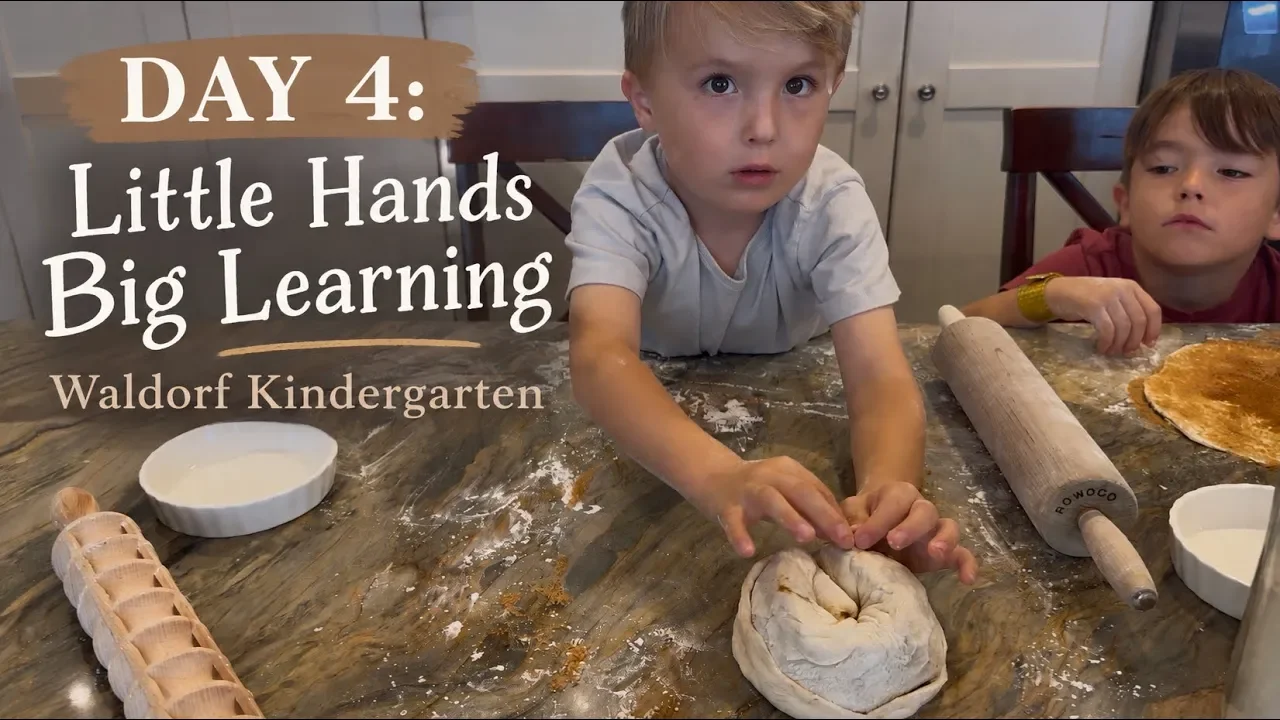
This week we made cinnamon rolls. I had already prepared the dough ahead of time, but before the morning was over the children also made another batch of dough that we would use the following day to make homemade pizza. I love when one lesson naturally flows into the next and the children can see that the work they're doing today becomes part of tomorrow's activity.
One of the things I've been focusing on during these first few weeks is simply observing. I'm watching my triplet nephews, as well as their 11-year-old brother, to see how they approach each project, how they solve problems, how they move, and how their individual personalities and temperaments begin to reveal themselves. Rather than giving long explanations, I try to demonstrate the activity and allow the children to imitate. Often my older nephew naturally becomes the example for the younger boys, and it's been wonderful to watch them learn from one another.
The cinnamon rolls became one of those moments where every child's personality really shined through. One nephew placed his butter vertically instead of horizontally, and we all wondered what would happen when he rolled it up. To our surprise, the butter ended up beautifully distributed throughout the cinnamon roll. Another nephew was incredibly generous with both the butter and the cinnamon sugar, and everyone immediately wanted to taste the center of his cinnamon roll because it was absolutely packed with butter. Watching each child interpret the same activity in a completely different way reminded me how valuable open-ended projects really are.
Each child carefully placed their own cinnamon rolls into the baking tray so they could taste the one they had made themselves. While they baked, we enjoyed our now familiar organic decaf cold brew coffee, mostly milk with just a little coffee, and began making another batch of dough. I don't spend much time worrying about exact measurements with the younger children. Instead, I'm looking for the feel and consistency of the dough. We generally use about two parts flour to one part water, are generous with the sugar, lighter with the salt, and adjust the yeast depending on how quickly we want the dough to rise. The complete recipe is available in the blog post for anyone who would like more exact proportions.
Just as important as baking is cleaning up afterward. We don't send the children off to play while the adults clean the kitchen. We all work together. Washing, wiping, putting things away, and caring for our space is simply part of the lesson. These everyday tasks are just as valuable as the baking itself.
The cinnamon rolls turned out beautifully. Even though some of the butter melted out onto the tray, you could simply scoop it back onto the cinnamon roll, and they were absolutely delicious. It was another reminder that perfection isn't really the goal. The experience of making something together is what matters most.
We finished our morning the way we've begun ending every lesson, with circle time and a few more pages from The Hedgehog Leaves Home. For now, I'm reading the story, but eventually I'd like to transition into telling it from memory. I already have many of the little props from projects we've done over the years, and the children love seeing each new prop appear as the story unfolds.
It was another beautiful morning of baking, observing, working together, and continuing to build the rhythm of our kindergarten. Every lesson teaches me something new, not only about the children, but also about myself, and I'm enjoying watching our little homeschool grow into exactly what it needs to become.
This was Day 4 September 3, 2026 Thursday, Kindergarten Homeschool
No Academics for Kindergarten?
Thursday, September 3, 2026 | Day 4
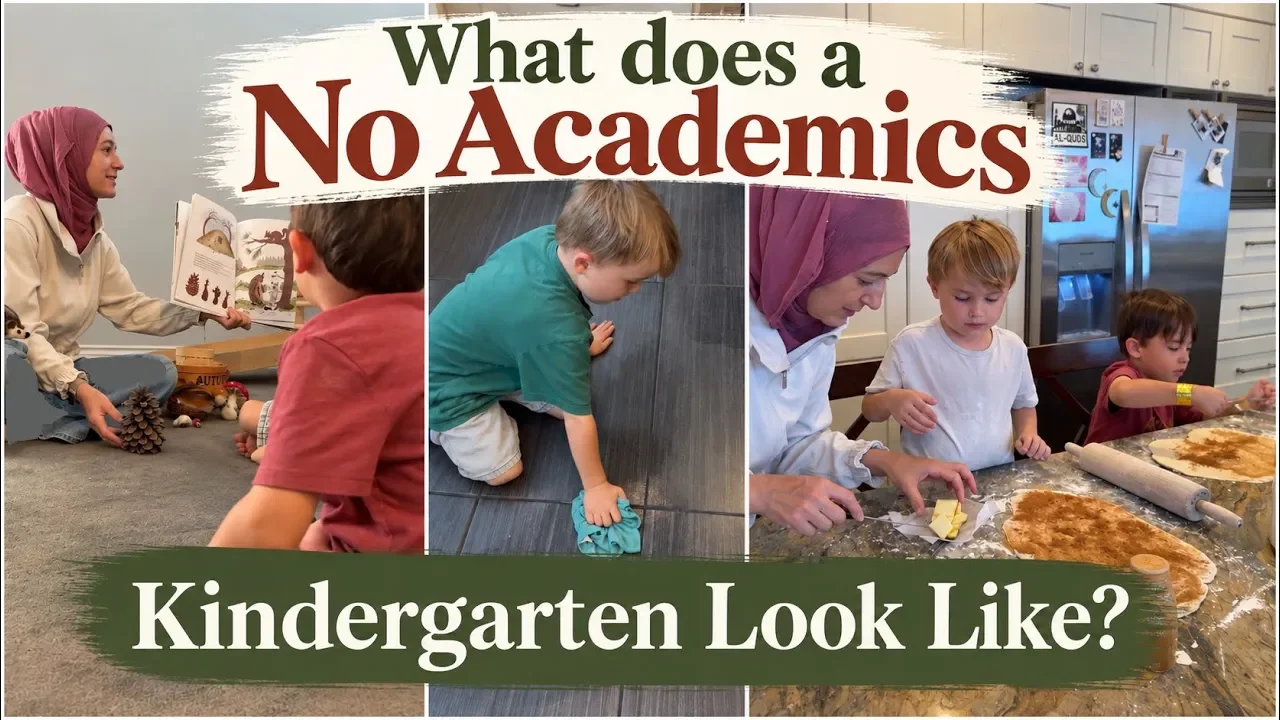
Today was our fourth day homeschooling my four-year-old triplet nephews in our Waldorf-inspired kindergarten, and their 11-year-old brother joined us once again. This week was especially meaningful because my mother was able to spend the day with us as well. Alongside my sister-in-law and my 15-year-old daughter, it truly became a multi-generational learning environment. I love that kindergarten naturally invites the whole family to participate because the children learn best by taking part in real, meaningful work alongside the people they love.
Our main project today was making cinnamon buns. I prepared the dough ahead of time so we could jump right into baking when the children arrived, but I still wanted them to experience making dough for themselves. After our cinnamon buns were in the oven, the children mixed a fresh batch of dough that we'll use for pizza during our next class. Since we're meeting on consecutive days this week, it gave them the opportunity to prepare something today that they'll enjoy tomorrow, helping them experience planning, patience, and the satisfaction of completing a process from beginning to end.
The lesson plans I'm using this year are my own, though I'm sure I'll eventually draw inspiration from other wonderful early childhood resources as the year progresses. At the same time, my Waldorf early childhood teacher training has given me an even deeper appreciation for the unique developmental needs of children in these early years and how every activity can intentionally support their growth.
In Waldorf education, the years from birth to around age seven are understood as the years of the will. Rather than focusing on academics, we concentrate on building the strong foundation children will need for learning later on. Every practical activity develops gross and fine motor skills, strengthens the senses, enriches language, and gives children meaningful experiences that prepare them for future academic work. These early years are also the ideal time to nurture rich vocabulary, listening skills, cooperation, patience, balance, and confidence as children become increasingly comfortable using and understanding their own bodies.
Cleaning up after baking is just as valuable as the baking itself. The boys eagerly swept, mopped, wiped counters, and helped put everything back in order. These everyday tasks build responsibility and reinforce the idea that caring for our environment is simply part of meaningful work.
When the cinnamon buns came out of the oven, each child proudly found the one they had made. Giving them ownership over their own work is such an important part of the experience, and they were excited to enjoy the fruits of their efforts.
We ended our day with our story, The Hedgehog Leaves Home. The children brought the little mushrooms they had made at home, adding them to the growing collection of handmade story props. Eventually I'll have the entire story memorized so I can tell it from memory, but each week our collection grows and the storytelling becomes even more immersive.
Another wonderful day came to an end far too quickly. Every class reminds me how much children learn through meaningful work, imaginative play, and the simple rhythm of everyday life.
Thursday, September 3, 2026, Day 4 Waldorf Kindergarten
What Are Waldorf Kindergarten Activities?
Friday, September 4, 2026 | Day 5
Today was our fifth day, Friday, September 4, 2026, of Waldorf-inspired kindergarten with my four-year-old triplet nephews, and our day looked a little different than usual. We typically meet on Tuesdays and Thursdays, but since I had Friday off this week, I invited my sister-in-law and the children over for an extra day together. We kept some of the familiar elements of our kindergarten rhythm, but shortened our schedule and allowed more time for free play.
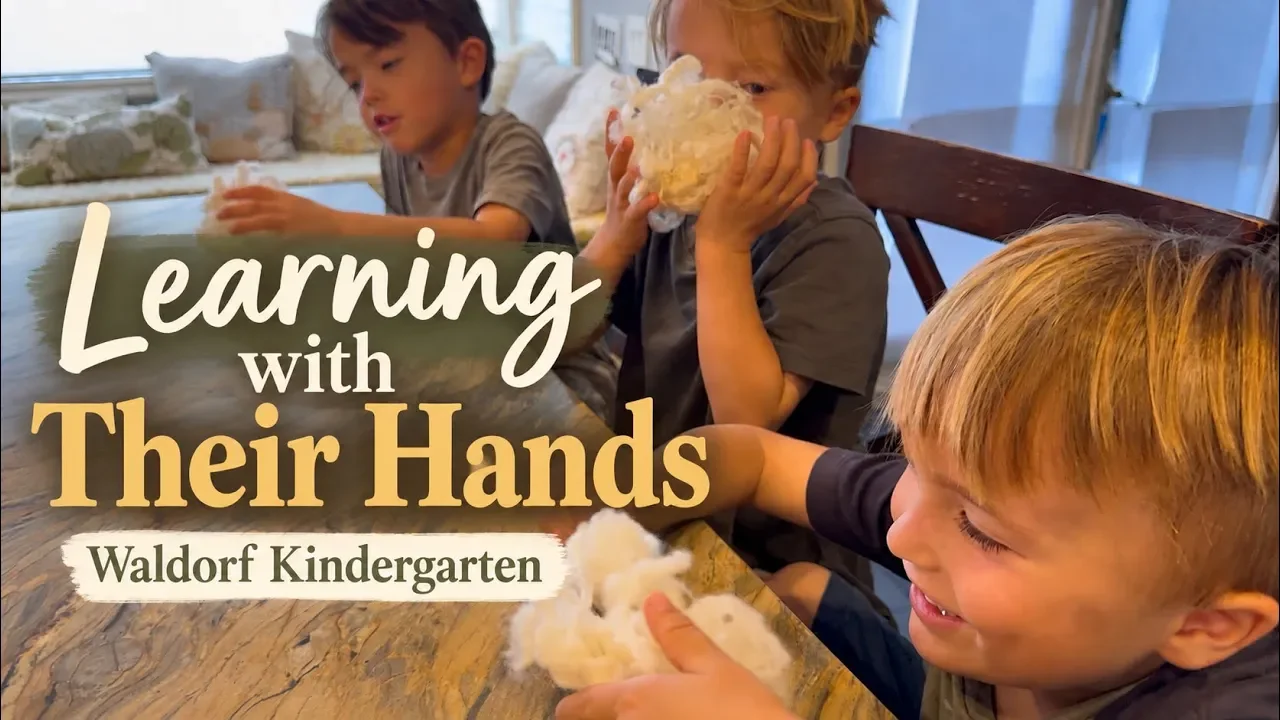
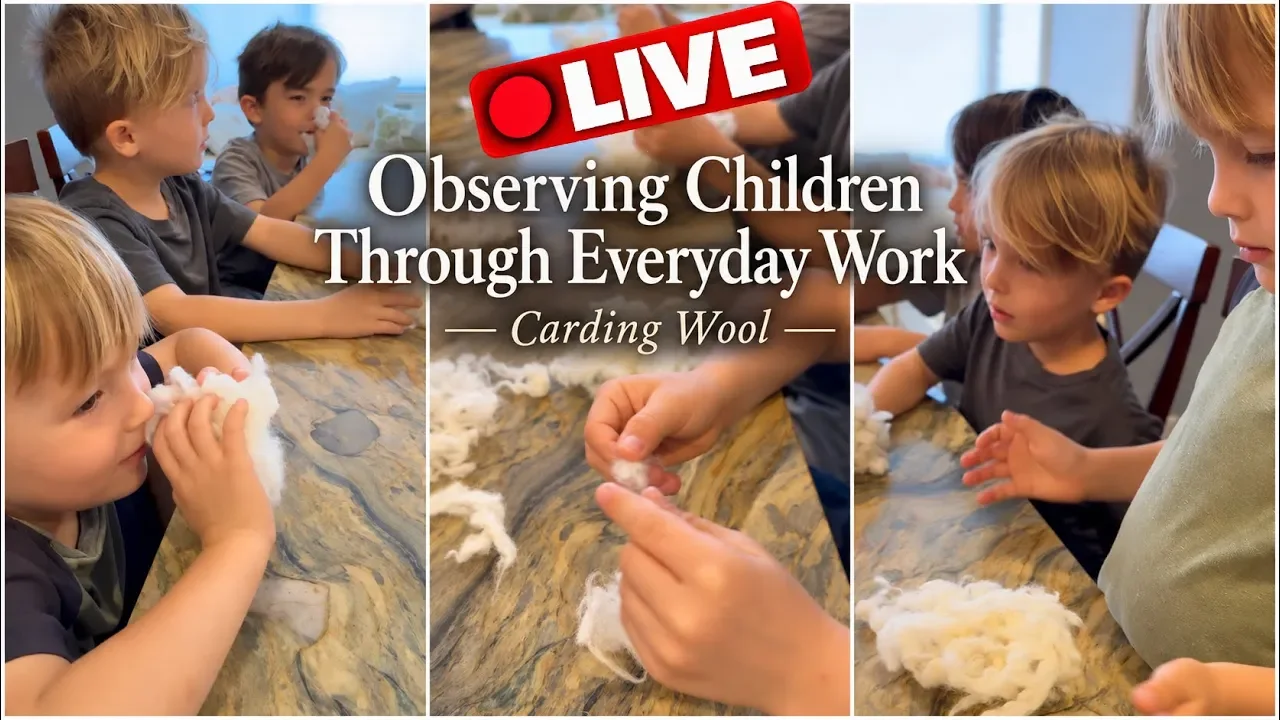
We began our morning with play before heading into the kitchen for some practical work. Our first project was preparing raw wool for wet felting. Before we can turn the wool into felted balls, it needs to be cleaned and carded. The children carefully picked through the raw wool, removing all the little bits of debris before using small bamboo carding brushes to prepare the fibers.
I had originally intended to purchase traditional wool carders, but these smaller brushes ended up being such a happy mistake. They are lightweight and easy for little hands to manage, and the children took to the work beautifully. I was so impressed by how carefully they cleaned and carded their wool. We saved the prepared wool for another project later in the week.
I'm also learning quite a bit about how our environment needs to change to better accommodate young children. We've been doing much of our work at the kitchen counter, but the bar stools are simply too high. Their feet are dangling, and the counter isn't at an appropriate working height for them. I'd like to add child-sized tables where they can sit with their feet firmly on the floor and comfortably engage in their work.
After cleaning up the wool, we moved on to our cooking project for the day: homemade pizza using the dough the children prepared the day before. Each child received a piece of parchment paper, a little flour, and their own portion of dough. They flattened the dough with their hands before adding sauce and toppings.
These simple experiences give me such an interesting opportunity to observe the children. One child is incredibly generous with his toppings, another carefully distributes everything all the way to the edges and wants it perfectly even, while another uses just a little of each ingredient. Through ordinary tasks like making pizza, I'm beginning to see glimpses of their individual personalities and temperaments. As an educator, these observations are incredibly insightful.
And then, of course, came the clean-up.
The children are doing such a wonderful job learning to participate in the entire process—not just making and creating, but sweeping, mopping, wiping the counters, and putting everything away. We certainly make a big mess with each project, but that's part of the work. This is real life, and caring for our environment is just as much a part of the lesson as cooking or crafting.
While the pizzas baked and cooled, the children had some decaf cold brew coffee that I had made earlier with my 11-year-old nephew. Once everything was ready, each child received the pizza they had made, and we all enjoyed our snack together.
Normally, we end our kindergarten day by gathering for The Hedgehog Leaves Home. I read a few pages at a time and use simple props to accompany the story. Because this was an extra and abbreviated Friday session, we skipped our story and ended instead with some free play.
And, surprisingly, we actually finished on time!
I've scheduled two hours, twice a week, for our kindergarten days, but I'm quickly discovering that two hours isn't always enough for everything I want to do. Cooking, handwork, cleaning, stories, and free play all take time: especially when we're allowing the children to truly participate rather than rushing through the work.
It was another lovely day together and another reminder that Waldorf-inspired kindergarten at home doesn't need to be complicated. So much of it is simply inviting children into the meaningful work of everyday life: preparing food, working with natural materials, caring for their environment, playing freely, and giving them the time and space to do these things themselves.
Oh! And by the way, plastic toys are not Waldorf at all! We have had Legos in our family for decades both the regular and Duplo blocks.
Play is Meaningful Work for Kindergarten
Wednesday, September 9, 2026 | Day 6
I've been homeschooling my four-year-old triplet nephews for a few weeks now, and we're starting to establish a really solid rhythm. I'm still very much in the observation phase, learning more about the children and figuring out how much we can realistically accomplish each day. Time management continues to be one of my biggest challenges because we get so engaged in our projects. I'm realizing that two hours, twice a week, really isn't enough time for everything we want to do.
Today, Wednesday, September 9, 2026 Day 6, we continued a project we started last week when the children cleaned and carded raw wool. We're using that wool to make wet felted balls. I prepared the cores ahead of time using leftover pieces of felt and yarn, and then the children wrapped their carded wool around them.
For the wet felting, we worked back and forth between warm water and ice cold water. I found that the project was much more successful when I initially dipped and worked each child's ball myself until the wool was beginning to hold together. Then the children could continue the process, moving their balls between the warm and cold water until they were nearly finished. Once the balls were felted, we added them to a dye pot to dye them yellow.
Next, it was time to prepare our snack. Today we made chia seed pudding with coconut milk, bananas, and coconut flakes. I ground the chia seeds first, although you could certainly leave them whole. Each child held a measuring cup over their own bowl while I poured in the coconut milk. This worked so well because if anything spilled, it simply fell into their bowl. They were so careful and precise with each step.
While the chia pudding began to thicken, I gave each child half a banana to cut. We used their plates instead of cutting boards because that's one thing I still don't have enough of for every child. They've had quite a few opportunities to work with knives now, and I'm seeing them become much more comfortable and confident with them while still being careful. They finished their pudding with a couple of scoops of coconut flakes, and they really enjoyed this snack.
After eating and cleaning up, we headed into the playroom for some free play. While the children were playing, one of them noticed the little pots of seeds they had planted during a previous lesson and wanted to see how much they had grown.
This turned into an unexpected part of our lesson. We brought down all of the pots and looked closely at what had happened. Some seeds hadn't sprouted at all, while others were in different stages of growth. Some pots even had two seeds growing. We counted the seedlings, compared the different pots, and spent some time simply observing what had changed.
I love that this wasn't something I had planned for the day. The children's own curiosity brought us back to the seeds, and there was so much to observe. Soon we'll need to transplant the seedlings into larger pots, which will give us another project for an upcoming lesson.
We concluded our day with our story, The Hedgehog Leaves Home. We're still reading just a couple of pages at a time, and our collection of props continues to grow as new animals appear in the story. I keep finding myself running upstairs to the school room to find another little animal to add.
The children are so engaged with the props. Today they were particularly interested in a little metal spider that they could hold, squeeze, examine, and pass around. As the hedgehog and mouse ran up a hill in the story, each child received a little hedgehog and mouse to run up one arm, over their head, and down the other side. These little interactions are so simple, but they bring so much joy to the children and to me.
There are several more books in this series, and I'm looking forward to adding them as the seasons change. For now, we'll continue reading this story just two pages at a time. Eventually, once the story has become familiar enough, I'd like to tell it from memory using all of our little props.
Once our story was finished, it was time for shoes, socks, water bottles, and goodbyes. And I'm happy to report that today we actually ended on time!
Our rhythm continues to develop with each lesson. There is practical work, cooking, cleaning, free play, stories, and plenty of unexpected moments of curiosity and discovery. I'm still learning how much we can fit into our time together, but I'm also learning when to allow an experience to unfold naturally rather than worrying about getting to the next thing.
Wednesday, September 9, 2026 Day 6
Wet Felting, Cooking & Storytime
Wednesday, September 9, 2026 | Day 6
Our 6th day, September 9, 2026, homeschooling my four-year-old triplet nephews continued the rhythm we're beginning to establish in our Waldorf-inspired kindergarten. Many of our projects take several days to complete, and today we returned to the wool the children had cleaned and carded during our previous lesson.
We're making wet felted wool balls, and I prepared the centers ahead of time using scraps of wool and yarn. The children wrapped their carded wool around the cores before we began felting them in warm and cold water.
I've done this project with children of different ages, and I've learned that demonstrating is much more effective than giving a lot of verbal instructions. I also found that if I get each child's project started and make sure the wool is beginning to hold together, they can continue quite successfully on their own.
The children are also incredibly patient about waiting for their turn. Even though we have plenty of adults and teenagers available to help, they really don't need as much assistance as I expected. They listen, wait for their materials, and are very responsive when I show them how to adjust what they're doing. Teaching them has truly been such a joy.
Wet felting is definitely a messy project, but that's part of the experience. We started with warm water, making sure it wasn't too hot for their hands, and then moved into ice cold water. The children went back and forth between the two, and it was interesting to see which temperatures each child preferred. Once the balls were felted, we added them to our natural dye pots with yellow onion skins and black beans. They'll get to see their finished projects the next time they come.
Then it was time to head into the kitchen for our snack. Today we made chia seed pudding with coconut milk, bananas, and coconut flakes. I ground the chia seeds first for a smoother consistency, and the children helped measure everything into their individual bowls.
While the pudding thickened, each child cut half a banana using a serrated knife. They've now worked with knives during several lessons, and I'm seeing them become much more confident and capable. They added their bananas and coconut flakes to the pudding, and once again, such a simple task gave me an opportunity to observe their different personalities. One child added scoop after scoop of coconut, another added exactly what I asked for, and another was very careful about getting just the right amount.
I'm still in the beginning stages of observing the children and learning about their individual personalities and temperaments. These everyday experiences give me so much information about who they are and help me think about how to bring lessons that are appropriate for each of them.
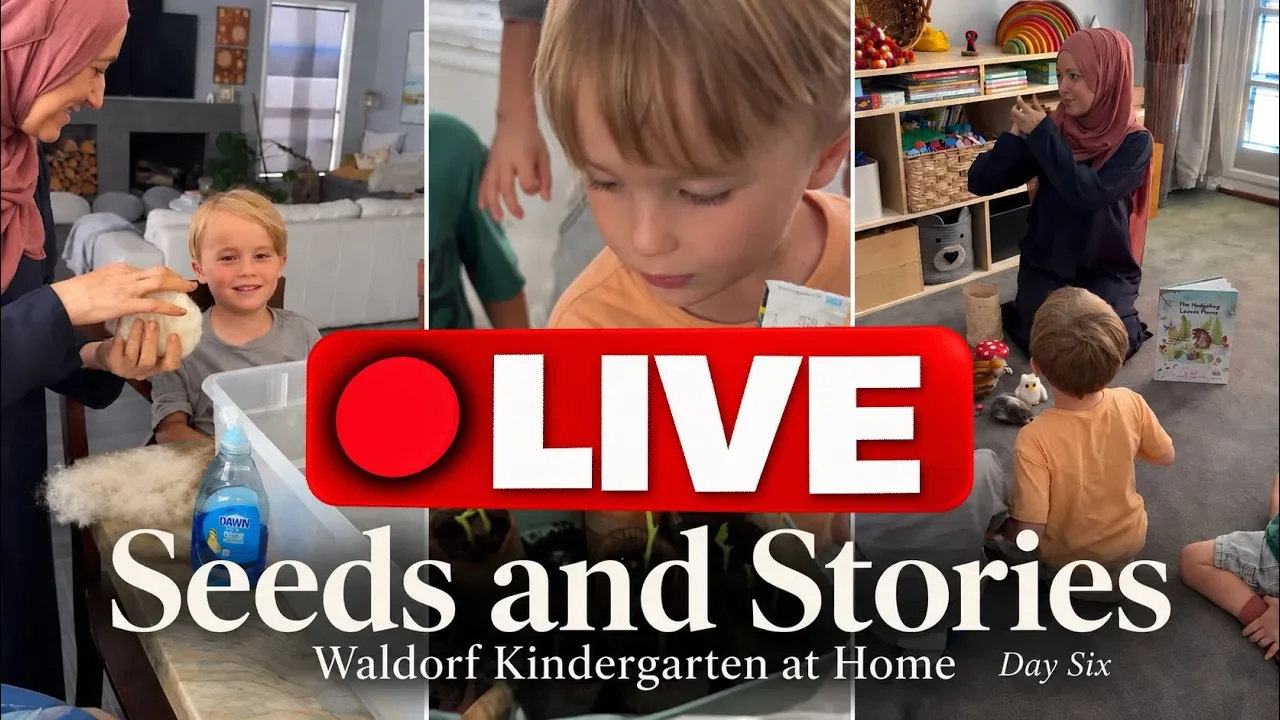
We've also been gardening since our first few classes, and now we're getting to see the exciting part. Our seeds are growing! The children are able to observe the changes, water their plants, and see which seedlings have emerged. Some are already ready to be transplanted, so that will become another project for an upcoming lesson.
We finished our day with The Hedgehog Leaves Home. We're still reading only one or two pages at a time, which feels like just enough for this age. Before we continue, I ask the children what they remember from the previous part of the story, and then we bring out our little animals and props.
Our collection continues to grow as new animals appear in the story. Today the children explored a little metal spider that they could hold and pass around. We also brought out a little mouse that I never quite finished making. I had hesitated to give it to them because it wasn't complete, but of course they didn't care. Their imaginations filled in everything that was missing, and the little mouse crawled up and down their arms while they giggled.
We also have a little bird sitting on two tiny eggs. The children are very curious to see if the eggs have hatched, but not yet. Because they're fragile, this is also an opportunity to learn that some things can be held and played with while others are simply observed.
As new animals appear in the story, the children immediately ask if I have one. Luckily, much of the time I do. Today I brought out knitted bunnies that my own children made years ago along with a little cat. I love seeing these handmade toys become part of another generation's childhood.
Eventually, I'd like to memorize the story and tell it rather than read it so that I can bring it more authentically in the Waldorf tradition. I've also discovered that The Hedgehog Leaves Home is part of a series, and several more books have started arriving. I'm excited to incorporate them as we move through fall and into winter.
The children now know that our story marks the end of our school day. When it's finished, they gather their things, put on their shoes and socks, grab their water bottles, and wave goodbye until next time.
How to Teach Watercoloring in Kindergarten
Thursday, September 10, 2026 | Day 7
We’ve reached the end of our third week and Day 7, Thursday, September 10, 2026, of homeschooling my four-year-old triplet nephews. Their 11-year-old brother joined us again today and began a weaving project that will take him several days to complete, while the younger children helped prepare a fall meal.
We started in the kitchen with butternut squash, acorn squash, carrots, and kale. Even though we’ve been doing quite a bit with gardening and seasonal foods, all of our work has had to happen indoors because we’re currently renovating both our front and backyard. Hopefully, eventually, we’ll be able to bring more of this work outside.
The children began by removing the seeds from the squash and then moved on to peeling carrots. I only had two peelers, so we simply took turns. Even something as ordinary as peeling a carrot becomes an opportunity to learn how to safely use a tool and work with our hands. Each child approached the task differently, and one of them found a particularly unique way to use the peeler. But it worked! The carrots didn’t really need to be peeled, but I wanted the children to have the experience of doing it themselves. They enjoyed it so much that I’m thinking we may make a simple carrot salad in the future using long strips made with the peelers.
Once the carrots were peeled, I sliced them thinly so the children could practice cutting them into smaller pieces. I had intended to roast them with the rest of our vegetables, but I completely forgot about them, so we ended up eating them raw on the side instead.
For the squash, we kept things very simple. We roasted the acorn and butternut squash with olive oil, salt, and pepper, and I added a little cinnamon to the butternut squash. While we worked, I also made kale chips with olive oil and salt. They only take about five minutes at 350°F, but you really have to watch them because kale can go from completely soft to completely burnt in about a minute.
The kale chips gave the children something to snack on while we finished our kitchen work and waited for the rest of the meal.
I had actually prepared a watercolor activity for them, but they were playing so beautifully that we decided not to interrupt them. My 15-year-old daughter brought out some of the dress-up clothes my own children played with when they were younger, along with some pirate money, and she kept them engaged for quite a long time. My sister-in-law and I were able to sit down with a decaf coffee and have a conversation while the children played.
This is one of the things I appreciate about doing kindergarten at home. We have a rhythm and activities planned, but we can also recognize when something valuable is already happening and allow it to continue. Imaginative play is not something we need to interrupt simply because another activity was on the schedule.
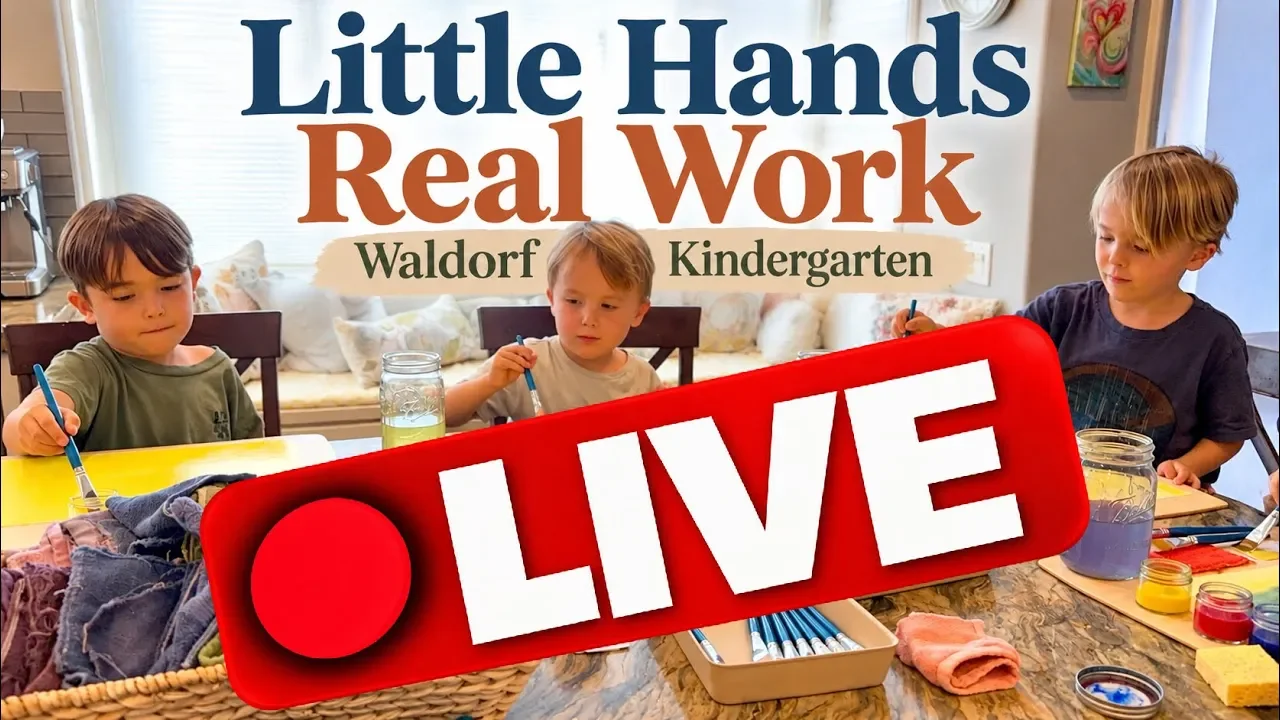
For the triplets, we worked only with yellow. Their 11-year-old brother had all three primary colors for his painting, which naturally made the younger children curious about why they couldn’t have the other colors too. Originally, I had planned a pumpkin painting in which we would begin with yellow, introduce red over the yellow to create orange, and then use a little blue for the stem. But I was reminded that at four years old, there really is no need to rush through all of those experiences. We can simply begin with yellow. In another lesson we can experience red, then blue, and gradually introduce the children to each color.
Each child painted one sheet using wet-on-wet watercolor. This was also a learning experience for me. I found myself verbally explaining each step because I was trying to capture what they were doing, when what they really needed was for me to sit down and demonstrate the process. At this age, showing is so much more effective than explaining.
Our kindergarten days are scheduled for two hours, twice a week, but today we were together for more than three hours. About 45 minutes of that was simply my sister-in-law and me enjoying coffee while the children played with my daughter, which felt completely worthwhile. Because we had already gone well over our usual time, we skipped our closing story and ended the day with our meal.
After everyone left, I still had a little work to do. I made sure the squash seeds the children had collected were drying properly, and I also worked on preserving the avocado skins we had saved from our previous lesson. I had been storing them in the freezer for a future natural dye project, but I've completely run out of freezer space, so I decided to experiment with drying them instead.
Traditionally, I've learned that they should be dried naturally outside in the sun rather than in the oven, so this is definitely an experiment. I'm not sure yet how oven-drying will affect the color when we eventually use the avocado skins for natural dyeing, but I'll share what happens.
Indoor Gardening
Tuesday, September 15, 2026 | Day 8
Welcome to Day 8, September 15, 2026, of homeschooling my triplet nephews, who are four years old, using a Waldorf inspired kindergarten approach! We are still working on establishing a good rhythm for our homeschool days, but I am beginning to understand how much time we need for each activity. I have found that planning approximately one activity per hour works well, especially now that the children are becoming more engaged in free play and imaginative play.
The children are becoming familiar with our routine, and when they arrive, they are ready to begin our projects. Most days, we start in the kitchen, although I would eventually like to begin our mornings in our little kindergarten room, which I have created in our unused dining room.
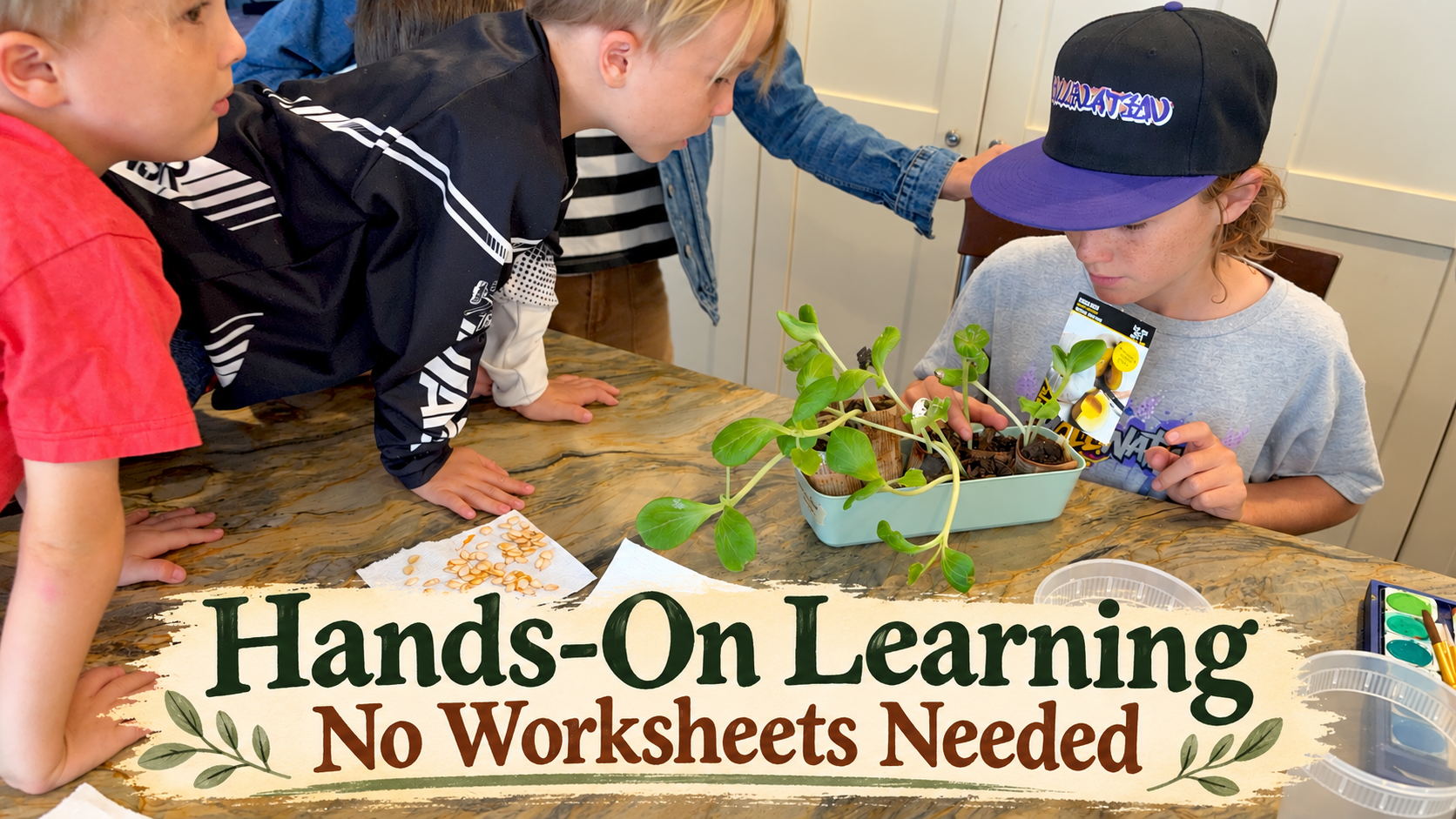
Today, we are continuing our gardening projects by transplanting the beautiful seedlings that the children planted previously. My 11-year-old nephew is joining us, and I love having him participate in these activities alongside the triplets. He is able to approach the same projects with greater complexity and ease, and today he helped demonstrate how to carefully transplant the little seedlings into larger pots.
One of the things I am learning through this experience is the importance of showing rather than telling. In Waldorf kindergarten, we want to demonstrate the work and allow the children to learn through observation and imitation. I have noticed that I sometimes explain much more than is necessary! With my older nephew, I can offer more detailed explanations, but with the younger children, a simple demonstration is often all that is needed.
Each child was supposed to transplant one seedling, but when one of the children selected a little pot containing two seedlings, everyone else wanted two as well. Once the other children had their two seedlings, the first child wanted another pot, which meant he now had three plants. Naturally, the other two children noticed immediately! Everything needs to be either the same or completely different, and they are very particular about making sure everyone has their fair share!
We continued filling our pots with soil, although I quickly realized that our little shovel was not quite large enough for the job. I will need to find a better one for our next gardening project. We are also still working indoors at the kitchen counter because our backyard and front yard are being landscaped, but that has not stopped us from enjoying these wonderful gardening experiences.
Next, we prepared some labels for our little plants. I printed pencil illustrations of butternut squash, acorn squash, and tomatoes, and the children used our Lyra opaque watercolor paints to add color to their vegetable drawings. Some of the children were very particular about choosing the correct colors and staying within the lines, while others simply enjoyed painting however they liked. I love seeing how differently each child approaches the same activity!
As part of our daily rhythm, I try to include some meaningful food preparation during every kindergarten session. Today, we seasoned our butternut squash and acorn squash with salt, pepper, and a little olive oil before roasting them in the oven for about 45 minutes to an hour.
While the squash was baking, we continued with our gardening and painting projects. Once it was soft, the children helped transfer the roasted squash into my NutriBullet, and I blended it with some coconut milk to make a beautiful, creamy soup that we served at room temperature. The children also enjoyed some chia seed pudding with fresh blueberries for a little snack.
We even received an exciting new package for our kindergarten room! The children helped me open the box, but I am saving the full unboxing for our next homeschool day. I cannot wait to show you what is inside!
We ended our day with some wonderful imaginative play. My 15-year-old daughter has been bringing out some of the old dress-up clothes that my boys used to play with, and she has been doing such a beautiful job engaging the triplets in pretend play. My 11-year-old nephew joins them as well, and together they create their own games and stories.
I really appreciate having these different ages together in our kindergarten experience. The older children bring new ideas and possibilities into the imaginative play while also providing gentle guidance when little disagreements arise. It is such a natural way for children of different ages to participate in life together.
Our two hours went by so quickly that we did not even have time for our story today! The children gathered their things, put on their shoes and socks, and said goodbye until our next kindergarten day.
We are still finding our rhythm, but each day brings new opportunities to observe the children, adjust our approach, and create a meaningful kindergarten experience filled with practical work, creativity, and imaginative play!
No Academics Kindergarten
Tuesday, September 15, 2026 | Day 8
Welcome to Day 8, September 15, 2026, of homeschooling my triplet nephews, who are almost five years old, using a Waldorf inspired kindergarten approach. Our garden projects are continuing, and our little seedlings are doing so well! Since our backyard is still being landscaped, many of the plants will be going home with my sister-in-law so the children can eventually transplant them into her garden. I am keeping a few here so we can continue observing their growth together.
Gardening is such a natural part of the kindergarten experience, and even when you cannot work outside, there is so much you can do indoors. We have saved seeds from our squash and tomatoes, planted seeds from packets my mom brought while she was visiting, made our own little newspaper seedling pots, watched the seeds sprout, and now we are transplanting them into larger pots.
One of the things I love about this approach is that these are not activities created specifically for four or five-year-olds. They are simply meaningful things that we are doing as a family, and everyone can participate according to their own abilities. Kindergarten is life, and everyone can participate in life together.
My 11-year-old nephew joins us for many of these projects, but his work can be more complex and appropriate for his age. When we harvested seeds from our vegetables, for instance, he labeled the seed packets. He is also working on handwork projects that are more challenging than what I would bring to the younger children.
With the triplets, I am not concerned with bringing academics too early. At this age, we are building the foundations they will need for later academic work through movement, fine and gross motor skills, practical work, imaginative play, stories, poems, verses, and beautiful language. Literacy is already present through the rich vocabulary and rhythms they hear throughout the day.
We also made little painted labels for our plants using pencil drawings of the vegetables. I recently dyed some fabric using natural plant dyes, so I shared those colors with the children as we begin thinking about future projects using naturally dyed silk and wool. Eventually, this will lead beautifully into handwork. We may even try some simple weaving boards with the triplets, while their older brother works on a more advanced weaving project.
Of course, there was food preparation too! We seasoned and roasted the butternut and acorn squash that the children had previously removed the seeds from. Once the squash was soft, I blended it with a little coconut milk into the creamiest soup. We served it at room temperature for their midmorning snack, bringing the entire experience full circle from preparing the squash, to saving the seeds, to making and sharing the food.
We also set up our teepee, and I was so happy to see the children settling into some wonderful imaginative play. They have been so interested in all of the projects I bring that I especially appreciate seeing plenty of time for free play as well. My 15-year-old daughter has been wonderful at helping lead that imaginative play alongside their 11-year-old brother. Having all of these different ages together adds something really special to our days.
We skipped our story today because we simply ran out of time, and there is still so much more to come. The children even helped me unwrap a new package for our kindergarten space, but you will have to wait until next time to see what was inside!
How to Develop Gross and Fine Motor Skills
Thursday, September 17, 2026 | Day 9
Welcome to Day 9 of homeschooling my triplet nephews, who are four years old, using a Waldorf inspired kindergarten approach! We are continuing to find our rhythm, and today was filled with baking, watercolor painting, imaginative play, and a very special addition to our kindergarten space.
With our front yard still being landscaped, the children entered through the side door before heading into the kitchen to check on our little seedlings. Some of our plants are doing beautifully, while others are struggling a little, so we gave them some water and will continue caring for them for another week before sending them home with the children to plant in their backyard.
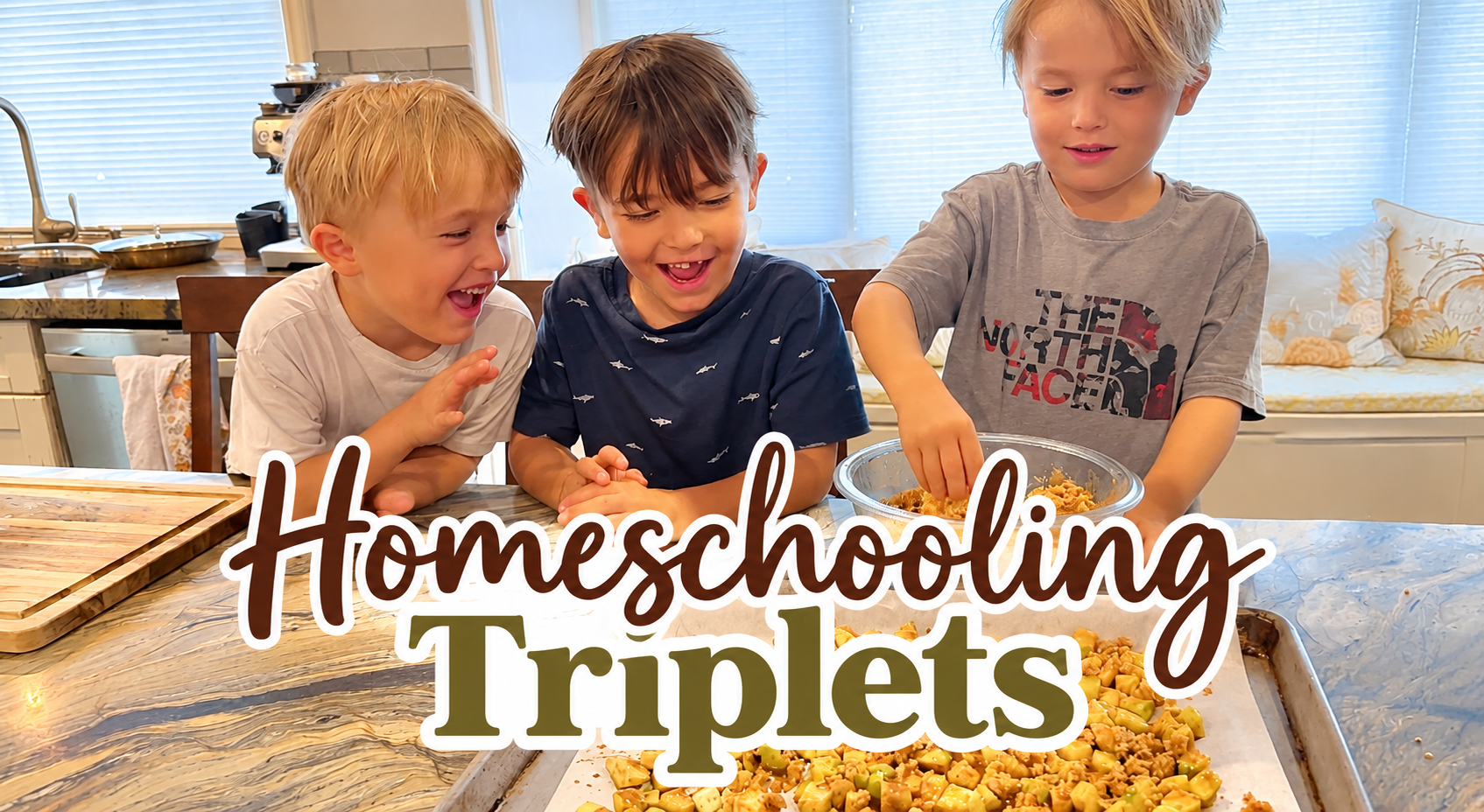
After a little free play, we returned to the kitchen for our first activity. Today, my 15-year-old daughter is leading the children in making a delicious apple crumble! She prepared the apples while the boys were playing, and then invited them to help add the remaining ingredients, including sugar, vanilla, cinnamon, and flour.
I gave my daughter very little instruction other than suggesting that she divide some of the ingredients into smaller cups so that each child could have a turn. She did such a beautiful job guiding them through the process, and I was especially pleased to see how patiently the children waited for their turns.
One of the things I have noticed with the triplets is that everything needs to be either the same or completely different! If one child receives something that the others do not, little disagreements can arise. But today, even when they were not all doing exactly the same task, they understood that everyone would have an opportunity to participate.
This is one of the reasons I love bringing cooking and baking into our kindergarten experience. These simple, meaningful activities provide so many opportunities for developing fine and gross motor skills, following directions, paying attention, practicing patience, and learning to take turns. All of these skills help establish the foundation for later academic learning.
Once the children finished preparing the apple filling, they added the crumble topping, and we placed our dessert in the oven. I love baking fall inspired recipes during this season, even though it is still about 85 degrees outside here in Southern California! There is something so wonderful about having something delicious baking in the oven while the children are playing. The beautiful aromas become part of their kindergarten experience.
While our apple crumble was baking, I began preparing our materials for wet-on-wet watercolor painting. My sister-in-law and 11-year-old nephew helped set everything up while my daughter continued engaging the triplets in imaginative play.
Today was only their second wet-on-wet watercolor experience, and we introduced the color red. During our first painting session, we worked exclusively with yellow, and now we are allowing the children to experience red on its own. My 11-year-old nephew also participated in the same single-color painting activity, although he approached his work a little differently.
The children are doing so well with their watercolor painting! One of the things I want to establish early on is how to hold and care for their brushes and how to work gently with the watercolor paper. Young children can sometimes press too hard or use their brushes in ways that damage the bristles or paper, so I want them to become comfortable using these materials correctly from the beginning.
Of course, the experience is not simply about technique. I want the children to enjoy the beautiful qualities of each color, experience how the paint moves across the wet paper, and develop a natural appreciation for the materials they are working with.
If you have not already, I encourage you to check out our live kindergarten vlogs, where you can hear the children's actual voices as they participate in these projects. It is such a different experience to hear their conversations, questions, and interactions as our homeschool day unfolds.
Once our watercolor paintings were finished, we set them aside to dry and gathered together to enjoy the apple crumble. My daughter did a wonderful job leading the baking project, and the children really enjoyed the delicious snack they had helped prepare.
They also spent quite a bit of time engaged in imaginative play today. Although I did not capture all of their playtime, I did get to see the wonderful little space they created for themselves. Our teepee needs a little repair before we can set it up again, so the children found another way to create their own cozy space.
I have noticed how much they enjoy these small, enclosed spaces where they can gather together, hide away, and create their own imaginative games. It is lovely to see them becoming more engaged in this kind of play as our kindergarten experience continues.
We also received a very special package for our kindergarten room! I ordered a beautiful wooden play structure from Head, Hands, and Heart Boutique, and today the children helped me unpack it.
My 11-year-old nephew began opening the package, and then everyone participated in carefully removing the wooden pieces. The structure has a beautiful natural finish, and I was especially impressed with how wonderful the wood smelled! The pieces are both durable and lightweight, making them easy for the children to handle.
This is such a beautiful addition to our Waldorf inspired kindergarten space, and I cannot wait to see how the children incorporate it into their imaginative play. My 20-year-old son will be helping me assemble the structure since we will need a drill, but the assembly itself looks quite simple.
Once again, our time together went by so quickly that we did not get to our story! I even had some little bees ready to introduce alongside our seasonal story, but those will have to wait until another day.
The children gathered their things, put on their shoes and socks, and headed out through the side gate to say goodbye.
Another beautiful kindergarten day filled with meaningful work, creative experiences, delicious food, and imaginative play. I am especially enjoying seeing how naturally the different ages come together, with my daughter and older nephew participating alongside the triplets and helping create such a warm, family-centered homeschool experience!
Fall Baking Traditions
Thursday, September 17, 2026 | Day 9
Welcome to Day 9, Thursday September 17, 2026 of our Waldorf-inspired kindergarten homeschool! Today, we enjoyed a beautiful combination of gardening, baking, weaving, watercoloring, and free play with my four-year-old triplet nephews and their 11-year-old brother.
We began our day by observing the growth of our seedlings and watering our plants. Some of our tomatoes didn't survive because we transplanted them a little too late, so my older nephew helped plant a few more seeds. Since we're still working on landscaping our front and backyards, the children will be taking their plants home to continue caring for them in their own garden. Gardening is such a quintessential kindergarten activity, and we will continue incorporating it into our homeschool experience throughout the year.
Another beloved kindergarten tradition is baking! Today, my 15-year-old daughter led the children in making a delicious apple crumble with cinnamon. I love incorporating seasonal recipes into our homeschool days, especially during the fall when the beautiful aromas of apples and warm spices fill our home. Our sense of smell is strongly connected to memory, and I hope these familiar scents will become part of the beautiful childhood memories the children carry with them as they grow.
What I especially love about these activities is that they are meaningful. The children are developing their fine and gross motor skills through real work, not simply performing movements for the sake of developing a skill. They are measuring, mixing, stirring, watering, and caring for their environment. These are purposeful activities that allow them to participate in the daily rhythm of family life while experiencing the joy and satisfaction of accomplishing something within their own capabilities.
My 11-year-old nephew also began a weaving project today. I showed him how to prepare his cardboard loom, cut the openings, and add and secure the warp threads. He will also be helping his younger brothers prepare their looms when we introduce weaving to the triplets during our next kindergarten lesson.
For our artistic activity, we continued our wet-on-wet watercoloring experience, this time working exclusively with red. I soaked the watercolor paper and prepared a rich dilution of our watercolor paints. The triplets worked on covering their entire pages with red while practicing how to hold and use their paintbrushes correctly. We are focusing on gentle brushstrokes and learning not to press too firmly against the paper. My older nephew enjoyed a slightly different watercoloring experience, appropriate for his age.
The children are already making wonderful progress with this activity, and I am so excited to see how their watercoloring develops throughout the year. Once they finished, I used the back of a paintbrush to write their names into the corners of their paintings before setting them aside to dry.
After enjoying our freshly baked apple crumble, the children had plenty of time for free play. Although I didn't capture their playtime on camera, I did capture the aftermath! And yes, cleaning up is also part of our kindergarten experience.
We ended our day with a very special delivery from Head, Hands, and Heart Boutique in Canada. After all my years of homeschooling, I finally have a beautiful Waldorf play structure! This is something I had always wanted for our homeschool, and I am so excited to finally be able to introduce it to my nephews. The children helped me unbox our new addition before getting ready to head home.
Another beautiful day filled with meaningful work, artistic experiences, delicious food, and the simple joys of childhood!
Developmentally Inappropriate Projects in Kindergarten
Tuesday, September 22, 2026 | Day 10
Day 10, September 22, 2026, of homeschooling my four-year-old triplet nephews began with a beautiful new addition to our kindergarten room: a wooden play structure from Head, Hands, and Heart Boutique in Canada. My 20-year-old son assembled it over the weekend, and I added some wool felted leaves to decorate it for fall. I chose the extender piece, so it is quite large, but I love that it gives the children plenty of space to create an enclosed area with fabric and cloth for imaginative play.
The boys were excited to see it, but one of the things I have noticed is how much they love when my 15-year-old daughter joins them in their play. Later in the day she draped fabrics over the structure and helped transform it into a little enclosed space where they could settle into their own imaginative world.
My mother had also recently noticed the red and white mushrooms in the story we are reading, The Hedgehog Leaves Home, and picked up the sweetest mushroom hats for the children. Even though she was not with us that day, she sent the hats along with some little aprons she thought the children would enjoy using during our kindergarten work.
We also spent some time bringing the senses into our morning. The children smelled a cinnamon stick, which is such a simple way to bring the season into the room. I love incorporating the smells, textures, colors, and experiences of fall into our kindergarten rhythm rather than separating them into a formal lesson.
Our gardening work continued as well. Some of the seedlings were beginning to struggle in their small pots, so the children added a few more seeds and watered them. At this point, most of the seedlings really need to be transplanted outdoors. Since we still have landscaping happening in both our front and backyard, I decided to send the majority of the plants home so the children could continue caring for them and eventually put them into the ground.
The main handwork project for the day was weaving. This was primarily intended for my 11-year-old nephew. I taught him how to make his own weaving board, add the string, and begin working with some of the plant-dyed wool yarn.
I also prepared smaller weaving boards for the four-year-olds, but this ended up being a really useful reminder for me about developmental readiness. The project was simply too advanced for them. They recognized when they made mistakes and became frustrated trying to correct them. If I introduce weaving again at this age, I would make it much larger and much more open-ended. Unless they specifically ask to try it again, I will probably wait before bringing this particular project back.
This is one of the things I appreciate most about working with young children. The activity itself tells you quite a bit. If the process creates unnecessary frustration rather than meaningful engagement, sometimes the best thing to do is simplify the work or set it aside.
Every kindergarten day also includes time in the kitchen. For this class, I cut two zucchinis in half lengthwise so that each piece had a flat surface and the children could safely practice cutting them with their serrated knives. Zucchini turned out to be a wonderful vegetable for this kind of work because it is firmer than a banana but much softer than an apple or carrot.
The children have already worked with bananas, apples, carrots, and now zucchini, and I can really see their confidence and coordination developing each time they practice. I did discover that I definitely need more cutting boards because one of the children ended up working on a cutting board that had literally split in half.
We sautéed the zucchini simply with olive oil, salt, and pepper. While it was cooking, the children had bagels and cream cheese for snack. Usually they are more inclined to eat the foods they help prepare, but this time my sister-in-law and my 11-year-old nephew were the ones who enjoyed the zucchini while the younger boys returned to their play.
We ended our day with The Hedgehog Leaves Home, as we have been doing throughout this kindergarten block. The children put on their mushroom hats while we continued the story. I usually review a few pages before moving forward, and sometimes I weave in personal stories or other little experiences along the way.
Eventually, once we have finished the book, I would like to return to the beginning and begin telling the story from memory rather than reading directly from the pages. We have also used a little hedgehog and other handmade props on previous days, although this time we simply enjoyed the story without them.
Before the children left, I gathered all of their seedlings for them to take home along with their mushroom hats and the little aprons from my mother. They love leaving with these small treasures, and I love seeing how the work of our kindergarten day continues beyond the time we spend together.
Each class continues to remind me that kindergarten does not need to be filled with complicated projects. There is so much development happening through practical work, sensory experiences, storytelling, gardening, cooking, handwork, and most importantly, time for meaningful imaginative play.
Rising Frustrations with Challenging Lessons
Tuesday, September 22, 2026 | Day 10
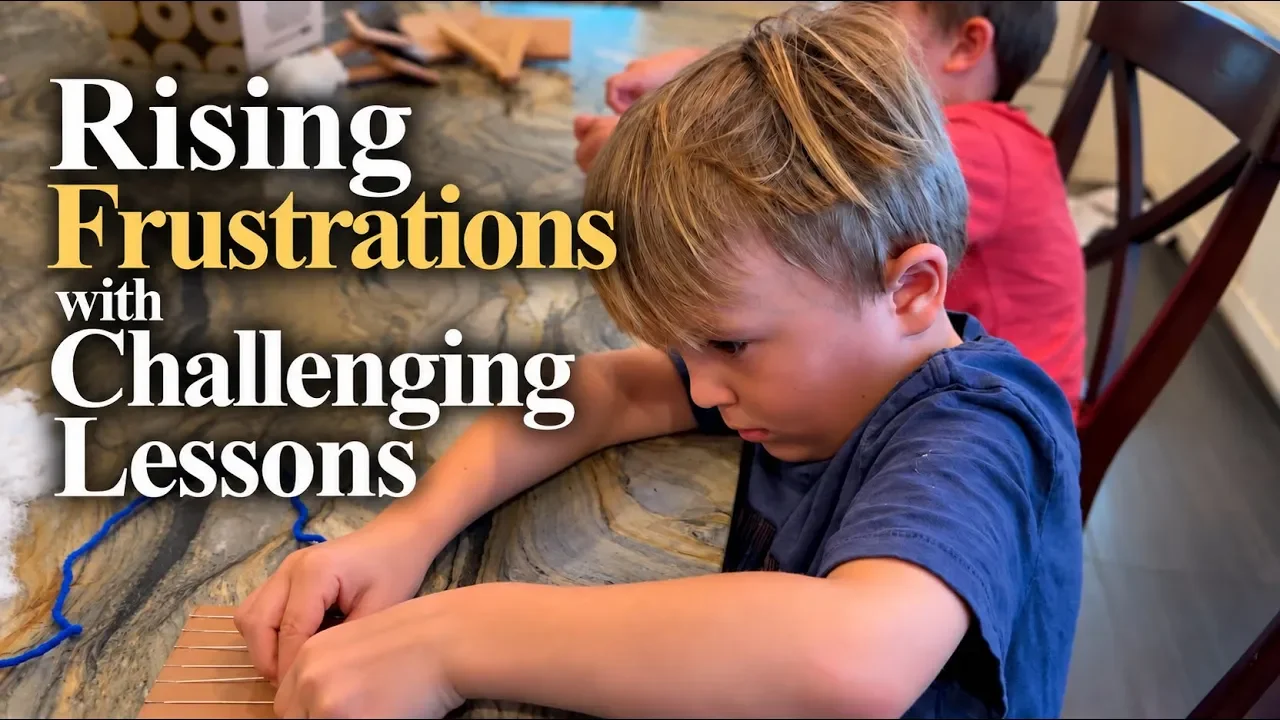
It has been 10 days since I started homeschooling my four-year-old triplet nephews for our Waldorf-inspired kindergarten, and I finally feel like we are beginning to find our rhythm.
We start our school day in the kindergarten room with a few simple opening activities. The children check the weather using our little weather and seasonal peg dolls, along with the calendar figures that now have a place on our bookshelf. I like beginning the day this way because it gives us a gentle transition into our work before we head into the kitchen.
Most of our projects naturally happen in the kitchen, which has worked really well for us. The only thing I would still like to change is the height of our work surface. The kitchen counter is a little too tall for the children, and I think a child-sized table would make many of these practical activities easier for them.
We have also been consistently observing the plants we started from seed during our first few weeks together. The children planted seeds, watched them become seedlings, and then helped transfer them from our little newspaper pots into larger containers. At this point, many of the plants are ready to be transplanted outdoors.
Because we currently have landscaping happening in both the front and backyard, we cannot put them into our own garden yet. I decided to send most of the seedlings home with my sister-in-law so the children can continue caring for them there. We will keep a few plants with us so we can continue observing their growth from week to week.
Eventually, I would love for the children to experience the entire process from seed to harvest. We have already begun saving seeds from some of the fruits and vegetables we eat during snack time. My 11-year-old nephew has been especially helpful with this work. He washes the seeds, allows them to dry completely, places them into envelopes, labels them, and records the date they were collected. Later, when we plant them, we can add the planting date as well.
His involvement also allows the same activity to meet him at a different developmental level. The younger children can participate through planting, watering, transferring soil, and observing growth, while he can take on more detailed work that will eventually connect beautifully with his botany main lesson block.
The children have really enjoyed these gardening projects. There is so much happening through this kind of work, from fine and gross motor development to patience, observation, care, and responsibility. On this particular day, however, the landscaping happening outside became part of the experience too. The children spent quite a bit of time watching the workers in the backyard. Once the yard is complete, I am really looking forward to spending more of our kindergarten time outdoors.
We also continued with weaving. My 11-year-old nephew helped make weaving boards for his younger brothers and created a larger one for himself. I showed him some of the plant-dyed wool we could use, including a beautiful green yarn that we dyed with red onion skins. I also have some vintage green velvet that could eventually become a lining for his finished bag.
His project is designed so that he can weave on both sides of the board and eventually create a small bag. For the four-year-olds, though, I realized that this particular form of weaving was too advanced. They began to become frustrated with the process of moving the yarn in and out of the warp.
If I introduce weaving again at this age, I would make it much larger so the movements are easier and more visible. I would also keep the project to one side rather than asking them to weave both the front and back. They may enjoy having a finished little bag, but the process itself needs to meet them where they are developmentally.
Our kitchen work continued with zucchini. The children have been using serrated knives since our first day together, and I can already see how much more capable they are becoming. Zucchini turned out to be a really good vegetable for them to practice with because it is firmer than a banana but softer than a carrot or apple.
I also realized that I need to purchase more cutting boards so each child can have their own workspace. These little practical details become much more obvious once you are actually working alongside the children.
We cooked the zucchini simply with olive oil, salt, and pepper. The children had already eaten bagels with cream cheese, so in the end it was mostly my 11-year-old nephew and my sister-in-law who enjoyed the zucchini while the younger boys returned to the kindergarten room to play.
One of the newest additions to the room is our wooden play structure from Head, Hands, and Heart Boutique in Canada. My 20-year-old son assembled it, and I added wool felted leaves for fall. The children absolutely loved it. With fabric draped over the structure, it quickly became the kind of enclosed space children naturally seem drawn to for imaginative play.
We ended our day with The Hedgehog Leaves Home. The children wore the little mushroom hats my mother gave them, which made the story even sweeter. I did not use any of our handmade props this time. Instead, I reviewed a few pages from earlier in the story, added a couple of my own stories along the way, and then continued reading.
Our days are beginning to settle into a rhythm of opening activities, gardening, practical work, handwork, cooking, imaginative play, and finally story time. There is still quite a bit I am adjusting as I observe the children and learn what works best for them, but I can finally feel the rhythm beginning to take shape.
Fall is FINALLY Here!
Thursday, September 24, 2026 | Day 11

On Day 11, September 24, 2026, I can say, it’s finally fall! Autumn is our favorite, which means I’ve been pulling out some of our favorite autumn activities that I haven’t used with my own children in nearly 10 to 15 years. I am so excited to bring these projects back and introduce them to my four-year-old triplet nephews for our Waldorf-inspired kindergarten.
We began by exploring a basket filled with some of our fall materials. There was a little wet-felted pumpkin filled with walnuts, our weather and calendar peg dolls, and some sweet autumn peg dolls that immediately caught the children’s attention. Of course, they wanted to take the peg dolls home, so instead we decided that we’ll make some of our own in an upcoming class. They also loved the little felted pumpkin and want to make one of those too. Just one basket gave us so many ideas for projects we can work on throughout the season.
The first thing they wanted to do was crack walnuts. I have this beautiful wooden walnut cracker, and each child took a turn cracking a walnut. We tried to keep the shells intact because I would love to turn some of them into little walnut-shell sailboats later. Even something as simple as cracking nuts becomes such satisfying work for young children.
Meanwhile, my 11-year-old nephew peeled a pomegranate for us. We saved all of the pomegranate skins because I want to experiment with them for a natural dyeing project later. I love how one activity naturally becomes material for another. Very little needs to be wasted when we begin looking at the things around us as materials we can work with.
Our kitchen work for the day was preparing two different varieties of winter squash, a honeynut squash and a red kuri squash, which was actually new to me. The children scooped out all of the seeds, and we roasted the squash alongside chicken for our fall meal. My 11-year-old nephew carefully processed and saved the seeds so that we can plant them later in the season.
The children were especially charmed by the little wet-felted pumpkin that I made with my own children many years ago. Seeing them enjoy something that has been tucked away for so long makes bringing these old projects back feel especially meaningful. We’ll be making our own felted pumpkins in one of our upcoming classes, along with another wet-felted wool ball that we plan to dye with madder root. There are so many beautiful autumn projects ahead of us, and I’m delighted that the children are just as excited about them as I am.
And then, of course, it was time for free play.
Honestly, I don’t think we ever leave enough time for imaginative play. I’m realizing more and more that our classes probably need to be longer because this is the part of the day when the children become completely absorbed in what they are doing. They need enough uninterrupted time to create their play scenarios, develop them, change them, and really live inside that imaginative world.
Our new wooden play structure has been wonderful for this. The children draped it with all of our different fabrics and turned it into a little fort. Then they incorporated the slide, first using it as the entrance and then flipping it over so they could climb out the other side. It was completely adorable.
At first, I worried that the play structure might be too large for our kindergarten room, but now I think it is exactly the right size. It gives all three children enough room to play together and leaves so many possibilities for how they can transform it. It is from Head, Hands, and Heart Boutique in Canada, and I’ll include more information in the description box.
I love bringing the children projects and activities that meant so much to me when my own children were little, but I equally love stepping back and watching what happens when they are given time for their own play. There is so much learning happening in those moments. They are creating, problem-solving, negotiating, moving their bodies, using their imaginations, and building an entire world together.
Eventually, it was time to gather their things, say goodbye, and wrap up another beautiful fall kindergarten day.
Fall Morning Basket in Kindergarten
Thursday, September 24, 2026 | Day 11
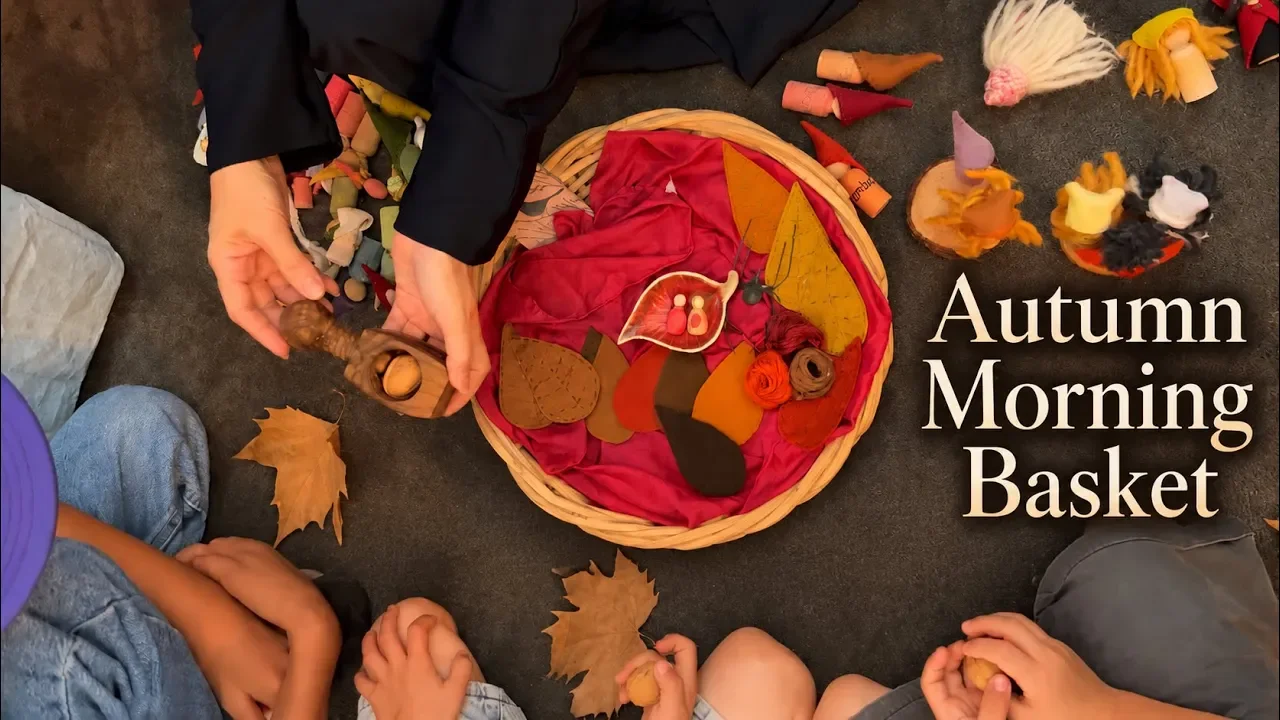
Day 11 of homeschooling my four-year-old triplet nephews for our Waldorf-inspired kindergarten began in the kitchen because I had a project I knew would immediately catch their attention. I had been plant dyeing some wet-felted wool balls with madder root, and the children were completely inspired by them. Since we have already made wet-felted wool balls together, it felt very natural to add another one to our upcoming projects so they can experience dyeing their own.
From there, we headed into the kindergarten room where we are beginning to establish a really lovely rhythm for the start of our day. We begin with our weather gnomes so the children can observe what the weather is like, and we also use our calendar gnomes to find the day of the week and the season. I love having these simple little rituals at the beginning of class because they create such a gentle transition into the rest of our morning.
For today, I had prepared a basket filled with fall-inspired materials. There were some wool felt leaves that I had planned to use for an embroidery project, but the children were much more interested in some of the other things tucked inside the basket, so we simply followed their curiosity.
They were completely charmed by the little wet-felted pumpkin and immediately wanted to make one of their own. I have not made that project in more than 10 years, since my own children were little, so I am absolutely delighted to bring it back for my nephews. Their sense of wonder, excitement, and curiosity over these simple handmade things brings me so much joy.
Inside the felted pumpkin were walnuts in their shells, which led us into our next activity. We used a wooden walnut cracker and each child took a turn trying to open one. These walnuts had actually been stored for many years, so I warned the children that they probably would not taste very good anymore. They did taste just a little, but because walnuts have such a high fat content, they had gone rancid. Thankfully, there were no little critters living inside.
Even though we could not eat them, the shells are still useful. I would love to turn some of them into tiny walnut-shell sailboats that actually float, and I also want to experiment with the shells for another natural dye project later in the season. I love when one activity naturally leads into another and even something that can no longer be eaten still has a purpose in our work.
The nutcracker was a little challenging at first, but eventually the children were able to crack their walnuts and see what was inside. They have eaten walnuts before, of course, but they had never really experienced them still inside their shells. It turned something very ordinary into such an interesting little experience.
After that, we went back into the kitchen for our cooking project. I had found a red kuri squash at the grocery store along with one of my favorite varieties, honeynut squash. We cut both open and the children scooped out all of the seeds.
My 11-year-old nephew took responsibility for processing the seeds. He washed them, dried them, and labeled everything so that we can try planting them later in the season. He also peeled a pomegranate for us, and we saved all of the skins because I want to use those for another plant dye experiment as well.
Once the squash and chicken were cooked, we sat down together to enjoy our fall meal. I was especially excited for the children to try the different varieties of squash and experience another seasonal meal made from the foods we had just worked with.
Then it was time for one of their favorite parts of the day: imaginative, pretend, cooperative play.
The children love this kind of play, especially when my 15-year-old daughter joins them. She enjoys creating little scenarios with them and becoming part of their world, and they absolutely love having her involved. It is fun for her, but I think it is even more exciting for the children.
This is also the part of our kindergarten day that I continually feel we do not leave enough time for. Once they become deeply engaged in their imaginative play, they need time to build on their ideas, work together, create their own little worlds, and simply stay immersed in the experience.
Whenever we can, I want to protect more time for this kind of play because there is so much happening within it. They are cooperating, communicating, problem-solving, moving their bodies, and using their imaginations in ways that simply cannot be rushed.
Eventually, it was time to collect their belongings, put on their shoes, and say goodbye after another beautiful fall kindergarten day filled with seasonal work, curiosity, food, handwork, and play.
Why Can't Kindergarten Be About Play and Projects
Tuesday, September 29, 2026 | Day 12
Day 12, Tuesday, September 29, 2026, of homeschooling my four-year-old triplet nephews for our Waldorf-inspired kindergarten began with our beautiful new play structure from Head, Hands, and Heart Boutique. I made an extra-large fabric cover for it by cutting a large piece of fabric in half, sewing the pieces together with a French seam, and hemming both sides. It is large enough to drape over most of the structure, and the children absolutely love it.
We started the day with a few new projects. I found four acacia cutting boards for the children, and my 11-year-old nephew is going to personalize each one by wood burning their names into the corners. I have been trying to differentiate his projects from the four-year-olds while still allowing him to participate in the same general activities. His peg dolls are larger, his weaving projects are more complex, and he is able to take on things like wood burning independently.
The triplets have incredible memories when it comes to projects I have mentioned, and there were a few things I had promised that I had completely forgotten about. So we started by painting fall peg dolls together.
The children used Lyra opaque watercolors to paint the base coat of their peg dolls. They are becoming so comfortable with using their paintbrushes, washing them, drying them, and moving between colors independently. Once their base coats were finished, I added the finer details, including a little leaf on the front, and they chose the color of wool felt they wanted for their hats.
Then it was time to head into the kitchen.
Working with dough has become one of my easiest go-to kindergarten activities. Homemade dough is simple to make, and children love working with it. The recipe is linked in the description box below.
Each child shaped an individual pizza, added tomato sauce and cheese, and I marked each one before baking so they would receive the pizza they had made themselves. Eventually I would love for each child to have their own rolling pin as well, but for now, they simply shaped the dough with their hands.
While the pizzas were baking, my 11-year-old nephew worked independently on blueberry muffins, reading the ingredients and instructions and completing most of the recipe himself.
The younger children moved into imaginative play with my 15-year-old daughter. Since we have been allowing more time for free play, our kindergarten days have stretched from about two hours to closer to three, but I think that extra time has been worthwhile. The play structure is large enough that each child can create a little space of their own, and they even have a slide tucked inside.
After pizza and blueberries, we returned to our projects.
We had boiled some old walnuts because we needed the shells for walnut sailboats. My sister-in-law carefully cracked them, and the children chose pieces of 100% wool felt for their sails. We used small twigs for the masts, although next time I want the children to collect their own twigs during a nature walk.
These little sailboats only require a few materials, and they actually float. Once each child had one, I brought out a bowl of water so they could test them. There is a complete tutorial linked in the description box below if you would like to make them as well.
By then, the blueberry muffins were ready, so the children had another snack with warm muffins and cold milk.
We had skipped our normal opening activities because we jumped straight into our projects, so we used them to close the day instead. We checked on our little eggs, which still have not hatched, although they look very close. We checked the weather and season using our handmade peg dolls and finger puppets, and the children had time to explore some of the other peg dolls before story time.
We are almost finished with The Hedgehog Leaves Home, with only a few pages left.
We definitely went over our usual time, but it was worth it. After a full morning of painting, cooking, imaginative play, handwork, storytelling, and little boats floating across the water, it was finally time for the children to gather their treasures, put on their shoes and socks, and say goodbye for the day.
Check out the blog post that accompanies this video:
Old Kindergarten Activities, New Little Hands
Tuesday, September 29, 2026 | Day 12
Day 12, Tuesday, September 29, 2026, of homeschooling my four-year-old triplet nephews for our Waldorf-inspired kindergarten started a little differently. We skipped our usual opening rhythm of checking the weather, season, and calendar and went straight into making our fall peg dolls because I had completely forgotten to make them earlier in the week.
The children painted their own peg dolls in the colors of their choice using Lyra opaque watercolor pan paints. I actually loved that they were able to be part of making something that would become part of our seasonal activities instead of simply receiving something I had already prepared for them.
From there, we moved into making homemade pizza. The children love working with dough, and homemade pizza has become such an easy and enjoyable activity for us. I have the recipe linked in the description box below.
My 11-year-old nephew was also working independently on blueberry muffins while we prepared another project for later in the day. We boiled walnuts so they would hopefully be easier to crack cleanly in half because we wanted to turn the shells into little sailboats.
While everything was cooking, the children had plenty of time for imaginative play on their wooden play structure from Head, Hands, and Heart Boutique in Canada. My 15-year-old daughter often joins them in their play, which gives them even more ideas for how to transform the structure.
After pizza and blueberries, we moved on to our walnut sailboats. The children chose pieces of 100% wool felt for their sails, and we used small twigs for the masts. Next time we go on a nature walk, I want them to collect their own twigs because I already know this is an activity they are going to want to repeat.
My sister-in-law carefully cracked the walnuts after they had been boiled, and surprisingly, many of the shells stayed intact enough to use. I glued the felt sails onto the twigs and then secured them inside the shells with hot glue.
The little boats were definitely delicate, but they actually floated.
The children experimented with placing them gently into a bowl of water and blowing on the sails to make them move. They quickly discovered that if the boats were dropped too roughly or tipped to one side, they would take on water and capsize. It became much more than a craft. They were experimenting, observing, adjusting, and trying again.
Of all the projects we have done so far, I think this may have been one of their favorites simply because they could immediately play with what they had made.
Eventually, our blueberry muffins were ready and cooled enough to eat with a big cup of cold milk.
Since we skipped our opening activities, we returned to them at the end of the day. We checked our little eggs to see whether the chicks had hatched yet. They have not, but the shells are beginning to crack, so I think we may finally have little chicks by the next time the children come.
We also checked the weather, which is still very hot and sunny, looked at our calendar, and read The Hedgehog Leaves Home before wrapping up our kindergarten day.
The children put on their shoes and socks, gathered their little treasures, and headed home with their peg dolls and walnut sailboats after another very full day of work, play, food, and imagination.
Old Kindergarten Activities, New Little Hands
Tuesday, September 29, 2026 | Day 12
Day 12, Tuesday, September 29, 2026, of homeschooling my four-year-old triplet nephews for our Waldorf-inspired kindergarten started a little differently. We skipped our usual opening rhythm of checking the weather, season, and calendar and went straight into making our fall peg dolls because I had completely forgotten to make them earlier in the week.
The children painted their own peg dolls in the colors of their choice using Lyra opaque watercolor pan paints. I actually loved that they were able to be part of making something that would become part of our seasonal activities instead of simply receiving something I had already prepared for them.
From there, we moved into making homemade pizza. The children love working with dough, and homemade pizza has become such an easy and enjoyable activity for us. I have the recipe linked in the description box below.
My 11-year-old nephew was also working independently on blueberry muffins while we prepared another project for later in the day. We boiled walnuts so they would hopefully be easier to crack cleanly in half because we wanted to turn the shells into little sailboats.
While everything was cooking, the children had plenty of time for imaginative play on their wooden play structure from Head, Hands, and Heart Boutique in Canada. My 15-year-old daughter often joins them in their play, which gives them even more ideas for how to transform the structure.
After pizza and blueberries, we moved on to our walnut sailboats. The children chose pieces of 100% wool felt for their sails, and we used small twigs for the masts. Next time we go on a nature walk, I want them to collect their own twigs because I already know this is an activity they are going to want to repeat.
My sister-in-law carefully cracked the walnuts after they had been boiled, and surprisingly, many of the shells stayed intact enough to use. I glued the felt sails onto the twigs and then secured them inside the shells with hot glue.
The little boats were definitely delicate, but they actually floated.
The children experimented with placing them gently into a bowl of water and blowing on the sails to make them move. They quickly discovered that if the boats were dropped too roughly or tipped to one side, they would take on water and capsize. It became much more than a craft. They were experimenting, observing, adjusting, and trying again.
Of all the projects we have done so far, I think this may have been one of their favorites simply because they could immediately play with what they had made.
Eventually, our blueberry muffins were ready and cooled enough to eat with a big cup of cold milk.
Since we skipped our opening activities, we returned to them at the end of the day. We checked our little eggs to see whether the chicks had hatched yet. They have not, but the shells are beginning to crack, so I think we may finally have little chicks by the next time the children come.
We also checked the weather, which is still very hot and sunny, looked at our calendar, and read The Hedgehog Leaves Home before wrapping up our kindergarten day.
The children put on their shoes and socks, gathered their little treasures, and headed home with their peg dolls and walnut sailboats after another very full day of work, play, food, and imagination.